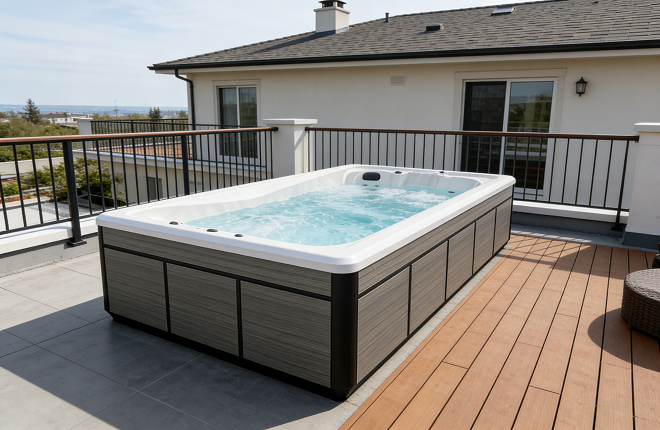
Acrylic integrated pools, celebrated for their sleek design and durability, demand advanced noise control in their circulation and massage systems to ensure a tranquil user experience. Excessive noise often stems from pump vibrations, water turbulence, and mechanical friction, but innovative engineering solutions effectively mitigate these issues.
Firstly,vibration isolationis critical. High-efficiency circulation pumps equipped with rubber dampening mounts or spring-loaded bases minimize mechanical vibrations transmitted to the pool structure. Acoustic enclosures, lined with sound-absorbing materials like foam or mineral wool, further contain pump noise, reducing airborne sound by up to 30 dB. For in-pool massage jets, anti-vibration gaskets and flexible PVC piping prevent vibration transfer to the acrylic shell, a common source of resonant noise.
Secondly,hydraulic optimizationreduces water-related noise. Specially designed impellers with curved blades in circulation pumps minimize turbulence, lowering flow-induced noise. Massage systems employ variable-speed pumps that adjust output based on demand, avoiding the high-pitched hum of constant full-speed operation. Additionally, smooth, gradual pipe bends and oversized manifolds reduce pressure fluctuations, eliminating water hammer and whistling sounds in the plumbing network.
Thirdly,acoustic engineeringof components enhances quiet performance. Brushless DC motors in pumps and blowers operate with less friction than traditional motors, cutting operational noise by 15–20%. Sound-dampening covers for air blowers, used in jet massage systems, absorb high-frequency noise, while insulated ducting ensures quiet air delivery. Acrylic panels themselves, when combined with soundproofing underlays, act as barriers to block noise transmission from equipment rooms to the pool area.
Finally,system integration and testingensure holistic noise reduction. Computer-aided simulations model sound propagation, guiding optimal placement of equipment—such as locating pumps in separate, insulated rooms. Post-installation acoustic testing, measuring noise levels at the pool edge (typically targeting ≤50 dB), verifies compliance with comfort standards.
By combining vibration isolation, hydraulic design, acoustic engineering, and rigorous testing, acrylic integrated pools achieve serene environments where circulation and massage systems operate unobtrusively, enhancing both relaxation and user satisfaction.
How to Exercise in a Spa Hot Tub Without Overheating or Overdoing It
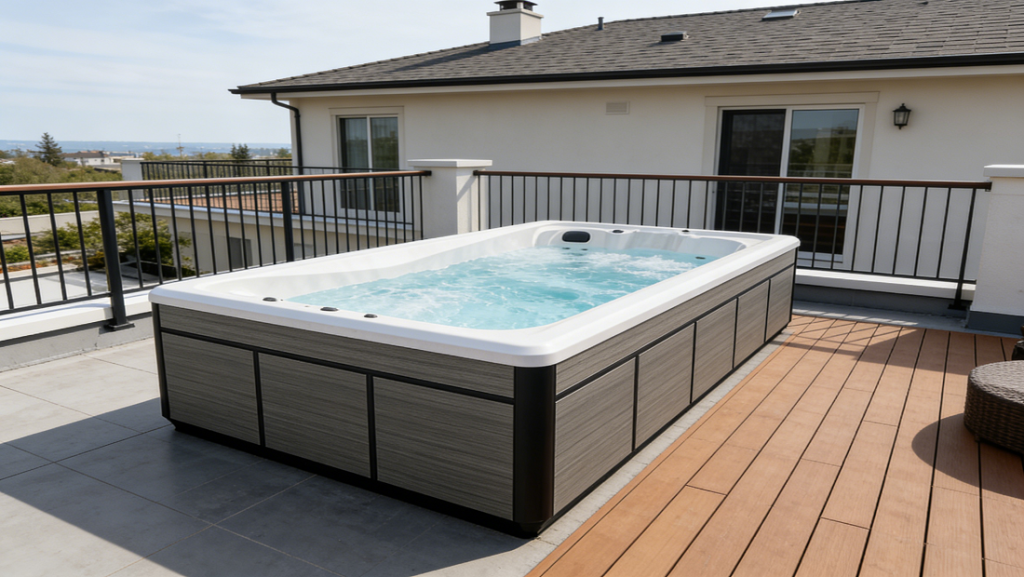
Soaking after a workout feels good, but exercising inside the tub itself is a different question entirely. People search for ways to move, stretch, and stay active in warm water without stressing the heart or wasting energy fighting a system that was never built for laps. An exercise spa hot tub blends therapeutic heat with enough hydraulic force to make gentle resistance training possible, and understanding how that works changes how you use the water.
Most standard hot tubs are built for sitting, not moving. The seats are molded, the footwell is shallow, and the jets are aimed at specific muscle groups rather than spread out for full-body motion. That’s fine for recovery soaks, but it limits what you can actually do if your goal is light cardio or joint-friendly resistance work. Knowing the difference between a soaking tub and one suited for movement helps set realistic expectations before you buy or before you get in the water.
Water at spa temperature, typically between 100 and 104°F, does two things to your body at once. It raises your heart rate slightly just from ambient heat, and it reduces the load on your joints because buoyancy offsets a large portion of your body weight. That combination means a slow arm sweep or a leg lift in a hot tub can feel like moderate effort even though you’re barely moving.
This is why physical therapists and rehabilitation centers have used warm water for decades, particularly with patients recovering from joint replacements or dealing with arthritis. The heat loosens tissue, the water supports the limbs, and the resistance from moving through liquid — however light — still asks the muscles to work. It’s a narrow window of exercise, more accurately described as therapeutic movement than a cardio session, but it fills a real gap for people who can’t tolerate high-impact activity.
The tradeoff is thermal load. Warm water raises core temperature over time, and vigorous movement adds to that. Anyone with cardiovascular conditions, or anyone who is pregnant, should treat a hot tub as a place for gentle motion only, and check with a doctor first. This isn’t a caution meant to scare people off the water — it’s just the honest boundary of what warm-water exercise can safely include.
The jets are the part of an exercise spa hot tub that do the real work, and their placement matters more than their count. A tub with jets clustered around the lower back and calves is built for someone who sits still and lets the water massage sore muscles. A layout with jets spread across a wider seating area, paired with adjustable air flow, gives more room for controlled arm and leg movement without fighting a single concentrated stream.
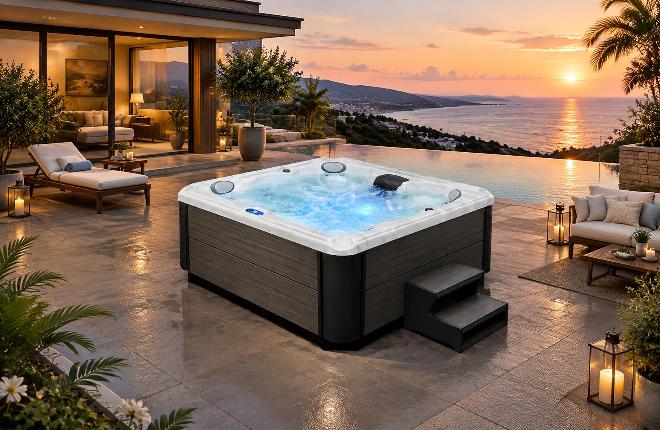
Models in the Fspa Hot Tub series, according to the manufacturer’s product information, range from 16 to 80 water jets depending on configuration, with customizable air flow that lets users dial intensity up or down. That range matters because a higher jet count spread across a 6-person shell gives more usable space to stretch and shift position than a compact 3-person tub where the footwell is tight. If the goal is light hydrotherapy-style movement rather than just sitting still, the layout of the jets — not just the total number — should guide the decision.
Before comparing specific models, it helps to think through how much space a body actually needs to move safely in warm water. Sitting still requires far less room than lifting a leg, rotating a shoulder, or shifting from one seat to another mid-session.
Dimensions vary quite a bit across the market. In the Fspa lineup, per the manufacturer’s published specifications, shells range from roughly 1870x1330mm for compact models up to 2530x2300mm for larger 6-person units, which gives a sense of how much floor space translates into usable movement room.
The table below lays out how capacity, jet count, and power typically scale together, based on the specification ranges published for the Fspa Hot Tub series. It’s a useful reference point for anyone comparing options rather than a claim about any single fixed model.
| Feature | Compact Range | Mid-Size Range | Large Range |
|---|---|---|---|
| Capacity | 3 adults | 4–5 adults | 6 adults |
| Approx. Dimensions | 1870x1330x800mm | ~2100x2100x850mm | 2530x2300x900mm |
| Jet Count | 16–24 jets | 30–50 jets | Up to 80 jets |
| Heater Output | 2kW | 2–3kW | 3kW |
| Total System Power | Lower end | Mid-range | Up to 5.55kW |
| Sanitization | Ozone system | Ozone system | Ozone system |
Higher jet counts and larger footprints generally suit group use or anyone wanting more room to shift positions during a session. Smaller units still deliver full hydrotherapy benefit, just with less physical space to move through.
Movement increases how much skin contact and splashing happens in the water, which means sanitation becomes more important, not less. Ozone systems, used across the Fspa range, work by oxidizing organic contaminants in the water, which can reduce the chemical load needed to keep water clear. This matters practically because heavy chlorine use can dry out skin and irritate eyes, which is the last thing you want during a session meant to be relaxing and low-impact.
Regular filtration paired with ozone sanitization can also reduce how often the water needs full chemical treatment, which lowers long-term maintenance effort. For anyone using the tub several times a week for gentle exercise, that maintenance rhythm becomes part of the actual user experience, not just a technical detail buried in a spec sheet.
A productive session in an exercise spa hot tub doesn’t need to be long or intense. The value comes from consistency and controlled movement, not from pushing hard against the jets.
This kind of session pairs well with the kind of ambient features many modern spas include. Select models in the Fspa series add LED lighting and integrated audio, which sound like extras but actually help people relax into a slower pace rather than rushing through movements just to get out of the heat.
Can a hot tub replace a pool workout?
No. The water volume and space are too limited for swimming or sustained cardio. A hot tub supports gentle resistance and stretching, not aerobic training in the traditional sense.
Is it safe to exercise in a hot tub every day?
For most healthy adults, short sessions of gentle movement several times a week are reasonable. Daily use should stay brief, and anyone with heart conditions should get medical guidance first.
Do more jets mean a better workout?
Not necessarily. Jet placement and adjustable air flow matter more than raw count. A well-arranged 30-jet system can offer more useful resistance than a poorly spaced 60-jet layout.
Does water temperature affect how hard I’m working?
Yes. Higher temperatures raise heart rate passively, which means the same movement feels more demanding in hotter water. This is why session length should shrink as temperature rises.
The right choice depends less on the longest feature list and more on how the tub matches daily habits. Someone doing solo rehabilitation stretches after a knee injury has different needs than a household of four using the tub for shared evening relaxation with light movement mixed in.
Manufacturers building for both residential backyards and commercial settings — hotels, wellness centers, rehabilitation clinics — have to account for that range of use. For us, that has meant designing shells across multiple sizes, from compact 3-person units up to 6-person models, each with jet configurations suited to different intensities of use, along with ozone sanitization as a standard feature across the line to keep water quality manageable regardless of how often the tub sees activity.
Anyone shopping seriously should test sit in a floor model if possible, checking whether the footwell allows the kind of leg movement they intend to do. Specification sheets tell you jet count and power draw, but they can’t tell you how it feels to stretch a hamstring against that particular water flow. That single detail, more than any number on a spec sheet, decides whether an exercise spa hot tub actually earns its name in daily use.
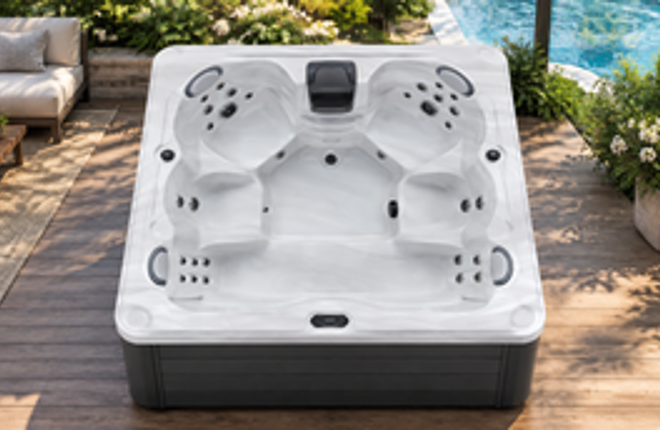
What to Look for in the Best Above Ground Hot Tub
Shopping for the best above ground hot tub usually starts with a simple constraint: no in-ground plumbing, no excavation, no permanent commitment to one spot in the yard. That freedom matters more than it sounds. A homeowner renting a property, or one who simply wants to relocate the tub next season, needs a unit that sits on a deck or patio without tearing anything up. This guide walks through the practical factors that separate a good above ground hot tub from one that ends up as an expensive regret.
The term itself just means the spa shell sits fully above the surface it rests on, supported by its own cabinet and base, rather than being recessed into a deck or built into the ground. Almost every residential spa sold today falls into this category. The real decision isn’t about ground placement at all. It’s about capacity, jet configuration, insulation, and how the unit fits the space you actually have.
Capacity is the first filter, and it’s where a lot of buyers guess wrong. A tub sized for three adults feels generous for a couple but cramped the moment guests show up. Spas in this category typically range from compact three-person models around 1870 x 1330mm up to six-person units near 2530 x 2300mm.
Think about how the tub will actually get used before picking a footprint:
Deck load capacity deserves a mention here too. A filled six-person spa can weigh several hundred kilograms with water and bathers combined, so it’s worth confirming the deck or patio surface can bear that load before ordering.
Jet count gets thrown around as a headline number, but it’s a poor proxy for actual therapy quality. Models in this category range from 16 jets on smaller shells up to 80 jets on the most elaborate configurations. What matters more is jet placement relative to where muscle tension actually accumulates.
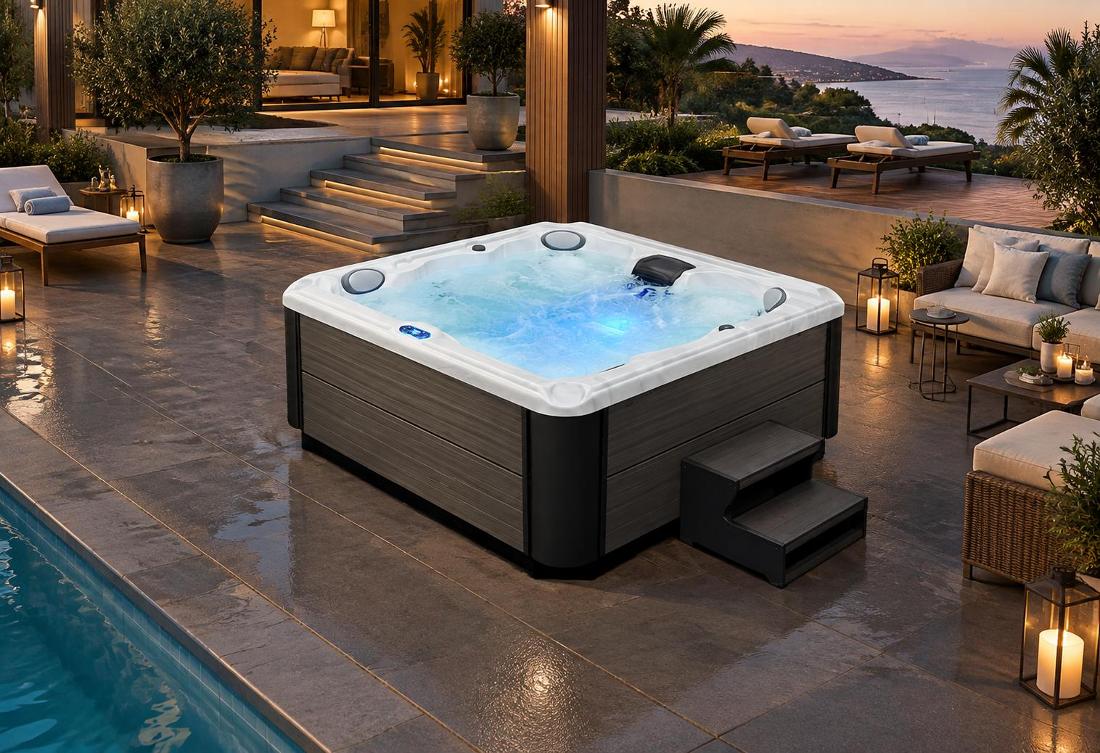
A tub with jets clustered around the lumbar region and calves tends to outperform one that scatters the same jet count evenly across the shell. Air-adjustable jets, which let bathers control the intensity of air-water mixing, give more control than fixed-pressure water jets alone. Several models in the Fspa lineup pair high-performance massage jets with customizable air flow, which lets bathers dial in a gentler or more forceful hydrotherapy session depending on the day.
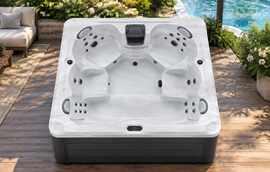
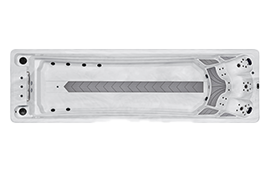
That top-down layout matters because it shows how seating position and jet clusters relate to each other, something a front-facing photo never communicates well.
Heater wattage directly affects how long you wait between filling the tub and actually using it. Units in this range typically ship with 2kW to 3kW heaters, and total system power (heater plus pumps plus auxiliary systems) can reach up to 5.55kW on fully-loaded models.
A smaller heater isn’t necessarily a downgrade. In climates that rarely drop below freezing, a 2kW heater run continuously on a well-insulated cabinet holds temperature just fine. In colder regions, or for households that drain and refill more often, the extra headroom from a 3kW heater cuts down the wait considerably. Insulation quality around the cabinet and shell matters just as much as raw heater wattage, since a poorly insulated spa bleeds heat regardless of how strong the heater is.
Chlorine and bromine still dominate spa water treatment, but ozone sanitization has become a common secondary system on higher-end above ground hot tubs. Ozone is generated on-site and injected into the water line, where it oxidizes organic contaminants and reduces the chemical load needed to keep water clear.
This doesn’t eliminate the need for sanitizer entirely. What it does is reduce how much chlorine or bromine you need to dose manually, which cuts down on the sharp chemical smell and the skin irritation some bathers experience with heavily-chlorinated water. Several models integrate ozone systems alongside the standard filtration housing, positioned so maintenance access stays straightforward.
| Feature | Entry-Level Configuration | Higher-End Configuration |
|---|---|---|
| Capacity | 3-4 adults | 5-6 adults |
| Jet count | 16-30 jets | 40-80 jets |
| Heater | 2kW | 3kW |
| Sanitization | Standard filtration | Ozone system integrated |
| Extras | Basic control panel | LED lighting, audio system |
LED lighting and integrated audio systems show up on several premium models, and they’re easy to dismiss as gimmicks. In practice, ambient lighting changes how usable a spa is after sunset, particularly for households that mainly soak in the evening after work. Audio systems, when built into the shell rather than bolted on as an afterthought, hold up better against splashing and humidity than a portable speaker propped on the edge.
Neither feature should be the deciding factor over jet quality or heater sizing, but for buyers comparing two otherwise similar units, they’re a reasonable tiebreaker.
Does "above ground" mean lower quality than an in-ground spa?
No. Shell construction, pump quality, and insulation determine durability, not whether the unit sits above or below the surrounding surface. Most consumer spas, including high-end models, are above ground by design.
How much clearance does an above ground hot tub need?
Beyond the footprint itself, leave at least 60 to 90cm of access space around at least one side for maintenance and equipment panel access. Check the specific model’s service panel location before finalizing placement.
Can these tubs sit directly on grass or soil?
It’s not recommended long-term. A level, load-rated base, such as a reinforced concrete pad or a properly rated deck, prevents shifting and protects the shell’s underside from moisture damage.
Do more jets always mean better massage quality?
Not necessarily. Jet placement relative to key muscle groups, and whether air flow is adjustable, matters more than raw jet count for actual therapeutic benefit.
Working through capacity, jet configuration, heater size, and sanitization together, rather than picking based on one spec in isolation, produces a much better outcome. A compact 3-person unit with a 2kW heater suits a couple in a mild climate who wants low running costs. A 6-person spa with a 3kW heater and ozone sanitization suits a family that entertains often and wants to minimize manual chemical dosing.
For us, this range of configurations exists precisely because no single spec sheet fits every backyard or budget. Buyers comparing options across capacity, jet layout, and heating power are, in effect, already doing the real work of finding the best above ground hot tub for their own household, rather than chasing a single number on a brochure.
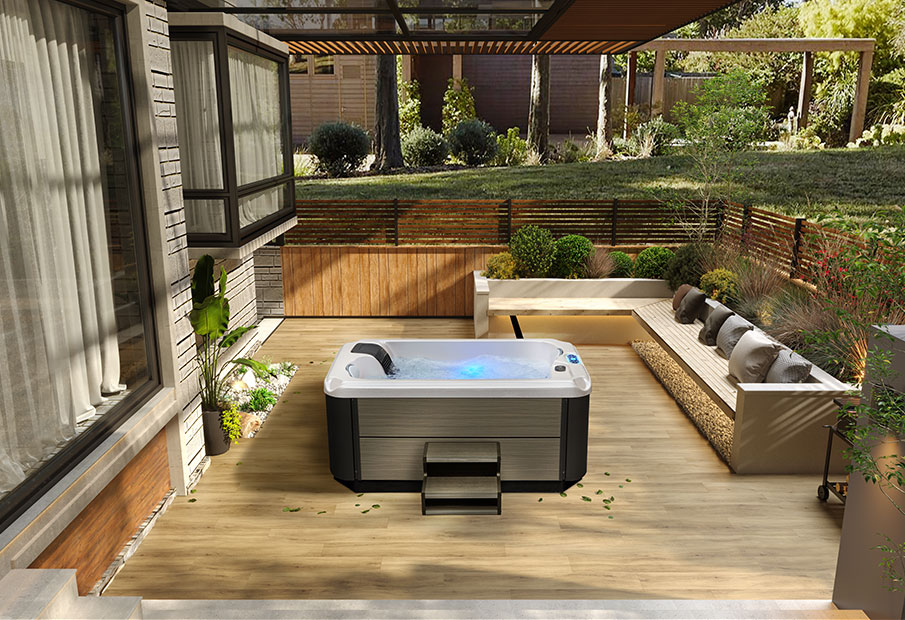
The Fspa BD-016 Hot Tub, designed for 2 adults, offers luxurious comfort with a spacious interior, powerful 1.5kW massage pump, 0.35kW filter pump, 2kW heater, customizable water flow with 14 jets, ozone sanitation, LED lighting, comfortable pillows, and a total power of 3.85kW, providing a tranquil escape for ultimate relaxation.
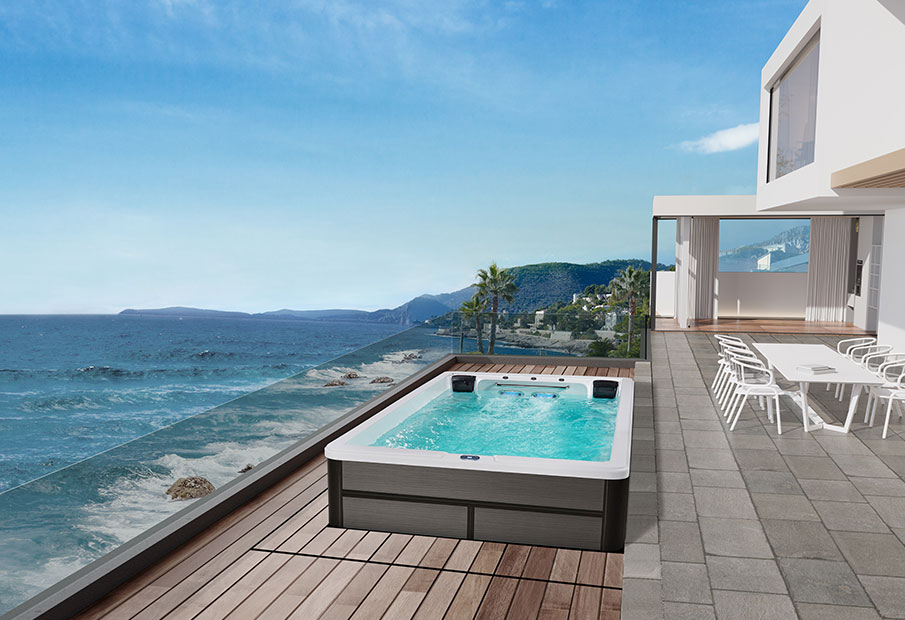
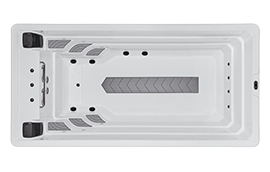
The Infinipool Fspa IP-001 is the ideal choice for anyone seeking a premium swimming experience at home or in a fitness facility.
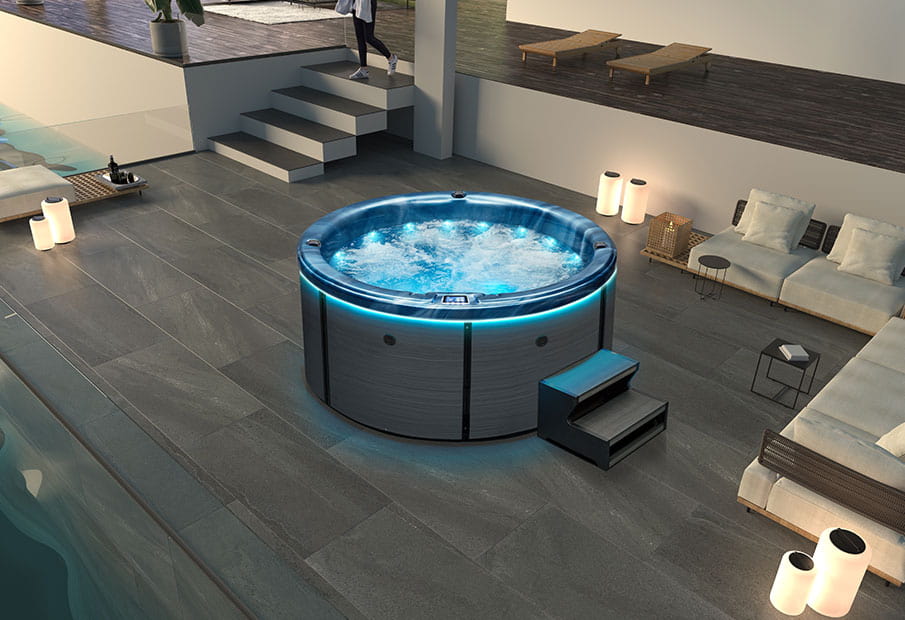
The Fspa BD-009Pro Hot Tub, a compact 2000x900mm spa for up to 6 adults, combines power and efficiency with luxurious features like a 7.97kW system, 50 water & 20 air bubble jets, LED lighting, and music speakers, making it ideal for residential and small commercial spaces.
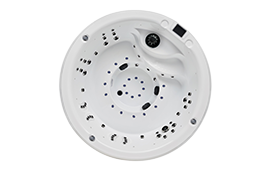
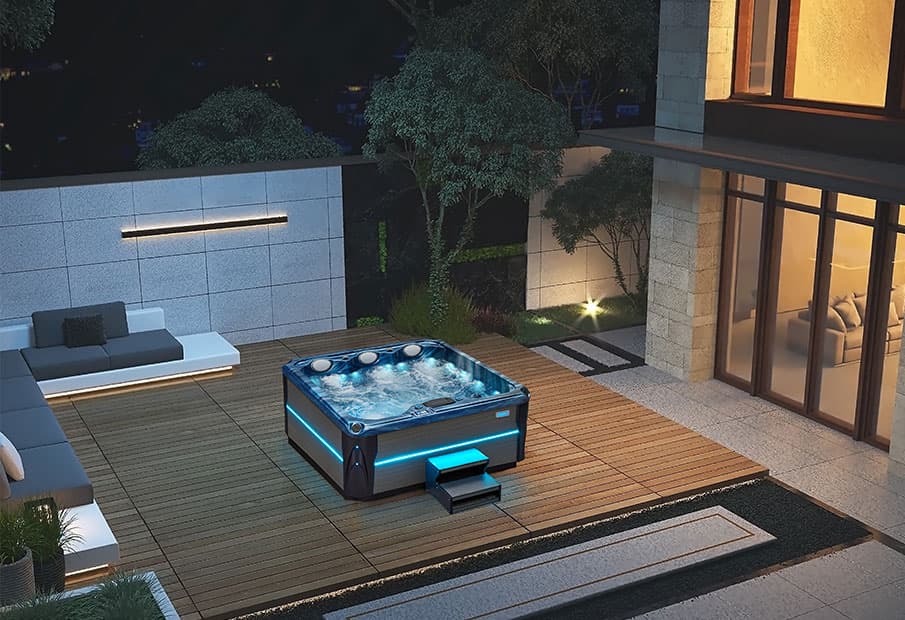
The Fspa BD-013Pro Hot Tub, a spacious and stylish premium spa for residential and commercial use, offers a luxurious and rejuvenating experience with its powerful massage system, pristine water quality, customizable water flow, calming LED lighting, music speakers, and comfort accessories.
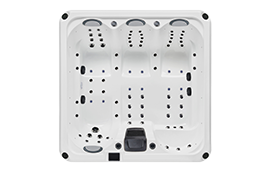
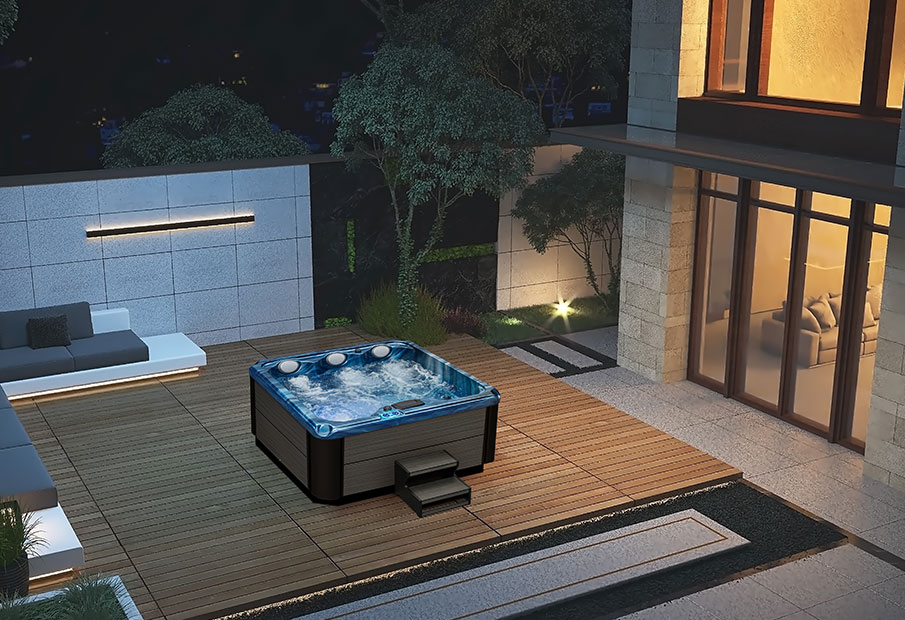
The Fspa BD-013 hot tub, with its spacious design for 6 adults, advanced 2.2kW massage pump with 35 jets, robust 3kW heater, energy-efficient filter pump, ambient LED lighting, and ozone system, offers ultimate relaxation and transforms any space into a private spa retreat, ideal for both residential and commercial use.
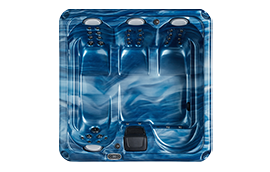
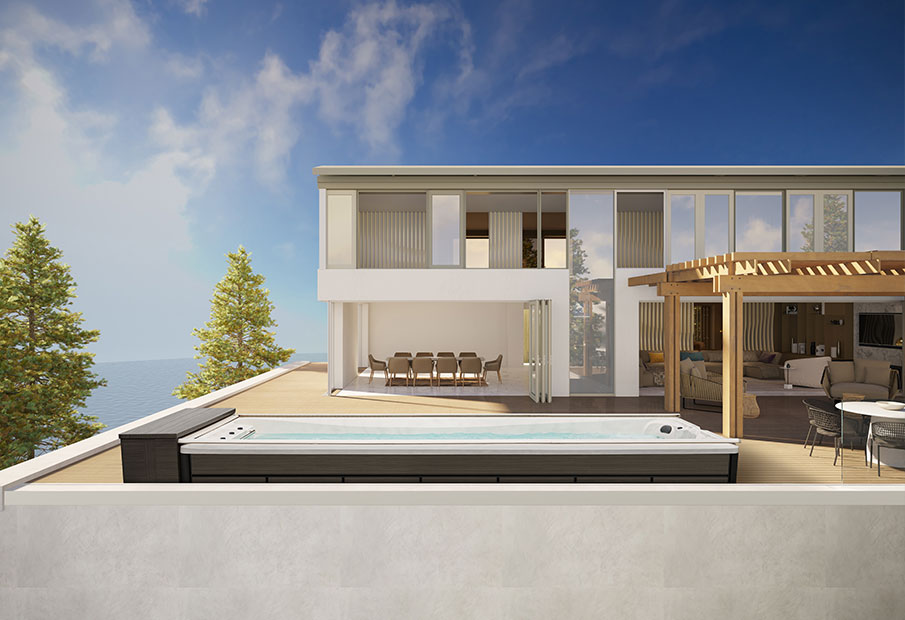
The Infinipool Fspa IP-004 is a luxurious, spacious, and technologically advanced swimming pool.
PRODUCTS
INQUIRY
Thank you for your message!Our Chinese New Year holiday from 7th Feb to 28th Feb. Apologise to make your inconvenience so that responses may be delayed during this period. We'll back to you with regular service on 2th March .Thank you for understanding.


