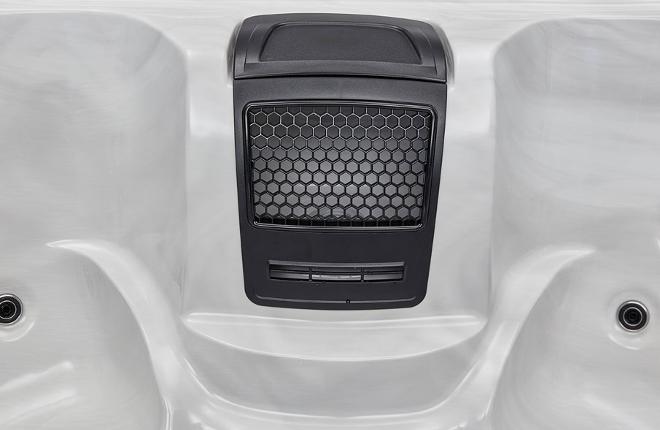
Search "wine barrel cold plunge" and you’ll find dozens of rustic-looking tubs promising ice-bath benefits in a charming wooden shell. Before buying one, it helps to understand what these barrels actually do well, where they fall short, and when a different kind of spa setup serves your goals better. Cold exposure and hydrotherapy solve different problems, and mixing up the two leads to disappointing purchases.
A wine barrel cold plunge is a stave-built wooden vessel, often repurposed from actual wine or whiskey barrels, filled with cold or ice water for short-duration immersion. There’s no jet system, no heater, no filtration loop in most basic models. You fill it, chill it, sit in it for a few minutes, then drain or maintain it manually.
The appeal is straightforward. Wood has a warm, artisanal look that plastic or acrylic shells can’t replicate. Round barrel shapes also use less material than square tanks of similar volume, which keeps manufacturing costs lower for smaller producers. That’s part of why these plunges show up so often at boutique gyms and backyard wellness setups.
But simplicity cuts both ways. Without integrated filtration, most wine barrel plunges need manual water changes every few days, more often in warm climates or with frequent use. Owners who skip this step deal with cloudy water and bacterial growth, since stagnant water doesn’t sanitize itself just because it’s cold.
People often ask whether they should buy a cold plunge or a hot tub, as if one replaces the other. They don’t overlap much. Cold plunges target acute recovery, reducing inflammation and numbing soreness after intense training. Hot tubs use warm water and hydrotherapy jets to relax muscles, improve circulation, and ease chronic tension over longer soaks.
Some athletes and wellness facilities run both, alternating between hot and cold for contrast therapy. If your goal is daily relaxation rather than athletic recovery, a heated hydrotherapy spa will likely deliver more consistent value than a barrel that only does cold.
This is where the conversation shifts from rustic charm to practical engineering. A cold plunge barrel without proper filtration is essentially a large cooler you sit in. Compare that to a purpose-built spa pool designed with dedicated filter pumps and ozone treatment systems, and the maintenance gap becomes obvious.
Take the Fspa BD-001 as a reference point for what a fully engineered spa system looks like. It’s not a cold plunge, it’s a 2100x2100x900mm hydrotherapy spa built for up to 6 adults, but its filtration architecture illustrates the standard that basic wine barrels typically lack.
| Feature | Basic Wine Barrel Plunge | Engineered Spa (BD-001 reference) |
|---|---|---|
| Filtration | Manual water changes | Dedicated 0.35kW filter pump plus ozone system |
| Temperature control | None or basic | Digital control panel with 3kW heater |
| Circulation | Static water | 2.2kW massage pump with 31 jets |
| Water capacity | Varies by barrel size | 1000L |
| Total power draw | None | 5.55kW |
| Certifications | Rarely certified | CE, CTUVus, CB, SAA |
The takeaway isn’t that barrels are inferior for cold therapy specifically. It’s that anyone comparing wellness tubs broadly should weigh maintenance burden against upfront cost, not just aesthetics.
Wood barrels vary wildly in quality. Some manufacturers use food-grade cedar or oak staves sealed with proper liners, while cheaper versions use thin wood prone to leaking within a season. A few questions help separate durable options from short-lived ones.
Skipping these questions is how people end up with a barrel that looks great in photos but leaks by the second month.
Space and water usage matter more than people expect when planning outdoor wellness setups. A cold plunge barrel takes up relatively little footprint, which works well for small patios or gym corners. Larger hydrotherapy spas need more room but serve a broader range of uses.
For colder-climate rehabilitation centers or physiotherapy clinics, a heated spa with adjustable jet intensity often serves treatment goals better than a static cold barrel, since therapists can tailor water temperature and massage pressure to each patient.
Cold plunge barrels are usually built for standing or crouched immersion, not extended seating, since prolonged cold exposure isn’t meant to be comfortable in the traditional sense. Hydrotherapy spas take the opposite approach, prioritizing seated comfort for longer sessions.
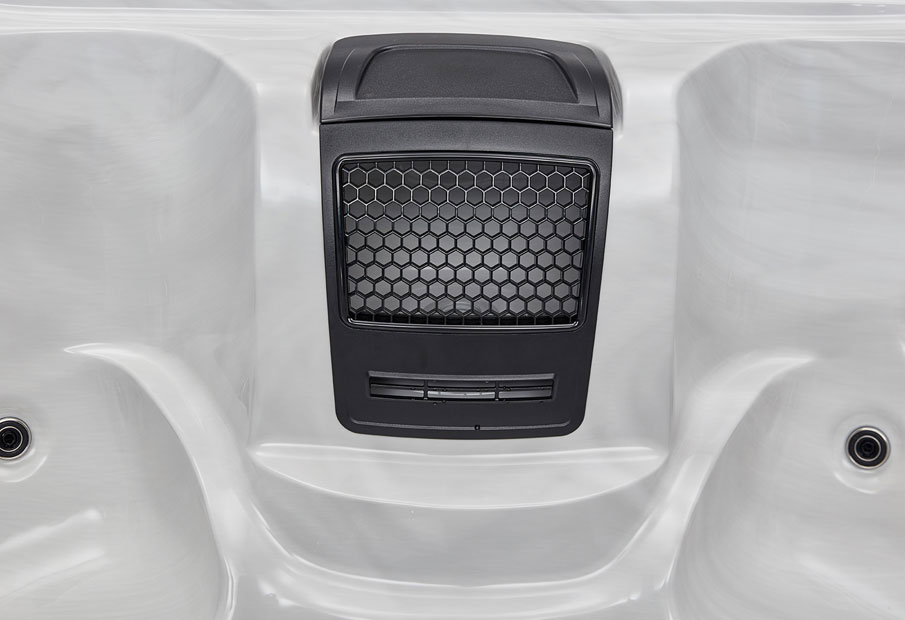
Ergonomic design shows up in details easily overlooked during a quick product scan. Integrated headrests that support the neck and align the spine, for example, make a measurable difference during 20-30 minute soaks. Jet placement matters too, since poorly positioned jets miss the shoulders and lower back where tension typically concentrates.
Can I turn a real wine barrel into a cold plunge myself?
Yes, though it requires sealing the interior properly and adding a drainage system. Without a food-safe liner, tannins and residue from the original wine can leach into the water.
How cold does a wine barrel plunge typically get without a chiller?
Without a dedicated chiller unit, water temperature depends entirely on ambient conditions and ice added manually, which makes consistent cold therapy harder to maintain than with temperature-controlled systems.
Is a wine barrel cold plunge sanitary without filtration?
Not reliably. Cold temperatures slow bacterial growth but don’t eliminate it, so manual water changes and regular cleaning remain necessary even in cold water.
Do hydrotherapy spas serve the same recovery purpose as cold plunges?
No. Hydrotherapy spas focus on warm-water muscle relaxation and circulation, while cold plunges target inflammation reduction through cold exposure. They address different phases of physical recovery.
The decision between a wine barrel cold plunge and a full hydrotherapy spa comes down to what problem you’re solving. If short, intense cold exposure for recovery is the goal, a well-built barrel with proper liner and drainage can work fine, provided you accept the manual maintenance involved.
If your priority is relaxation, circulation, and longer soaking sessions, especially in settings like hotels, villas, or wellness centers, a heated spa with proper filtration and ergonomic seating will hold up better over time and require less hands-on upkeep. For us, working across both wellness categories has made clear that the best choice isn’t about which product sounds more premium. It’s about matching water temperature, maintenance tolerance, and session length to what you’re actually trying to achieve, whether that’s a quick wine barrel cold plunge after a workout or a longer soak in a fully equipped hydrotherapy system.
Budget Swim Spa Options: What You Actually Get for the Price
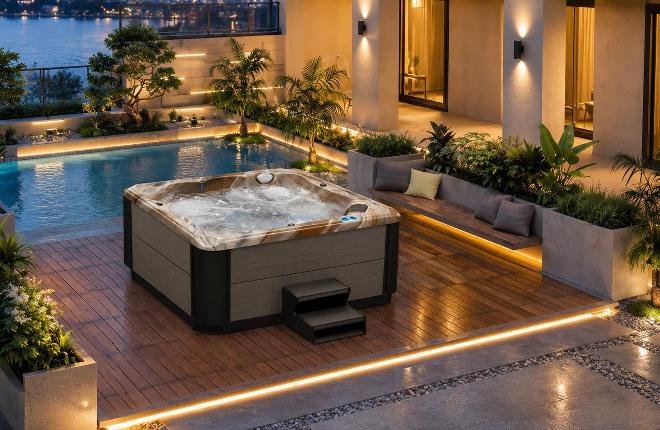
Shopping for a budget swim spa means balancing cost against what the unit can realistically deliver day to day. Many buyers assume "budget" translates to fewer jets or a weaker pump, but the real tradeoffs usually show up in materials, insulation, and control features. Understanding where manufacturers cut costs, and where they don’t, helps you avoid a unit that looks affordable on paper but costs more in energy bills or repairs later. A well-specified 6-person hot tub, like the Fspa BD-004, shows that mid-range pricing doesn’t have to mean stripped-down performance.
Price sensitivity is the top concern for most first-time spa buyers. Villas, boutique hotels, and small wellness centers all want hydrotherapy without committing to a five-figure installation. The good news is that the mid-tier segment has matured, and units in this range now include features that used to be reserved for premium models.
Take jet count and pump power as an example. The BD-004 runs 35 massage jets driven by a 2.2kW massage pump, paired with a separate 0.35kW filter pump and a 3kW heater, for 5.55kW total system power. That’s a meaningful jet-to-power ratio for a 6-person unit, and it suggests the manufacturer sized the pump to the jet load rather than undersizing it to save on the bill of materials.
Before comparing specific models, it helps to know which components actually move the price needle. Four factors tend to matter most:
None of these factors alone determines whether a spa is a good value. A unit with a thick acrylic shell but a weak pump will still feel underpowered. The value comes from how well these components are matched to each other, not from any single spec.
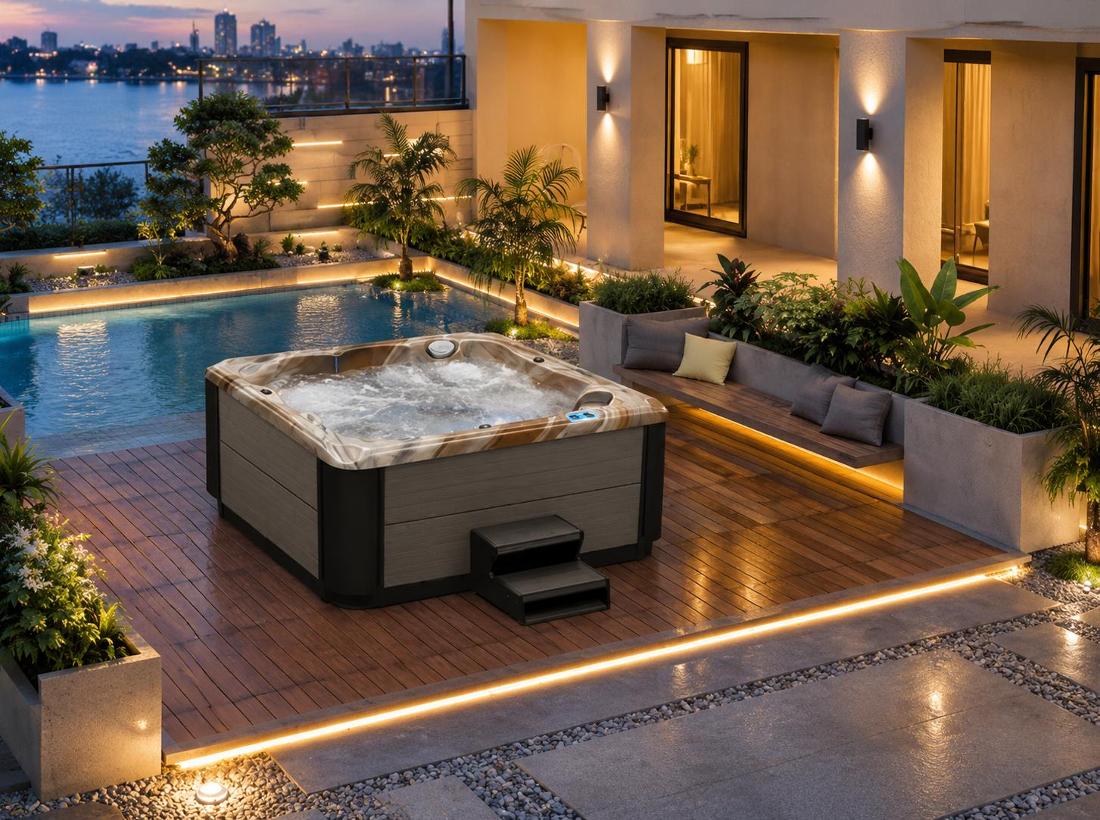
Capacity planning is where many budget-focused buyers get tripped up. Buying too large wastes water and electricity; buying too small means guests wait their turn. For a household or small commercial setting, a 6-person capacity tends to hit the sweet spot between usable space and running cost.
The BD-004, for reference, measures 2350 x 2350 x 900mm and holds 1450 liters of water, with a net weight of 317kg empty. Those numbers matter beyond curiosity. Deck load capacity, doorway clearance during delivery, and even the crane or lift needed for rooftop installations all depend on knowing the empty and filled weight ahead of time.
| Specification | Value |
|---|---|
| Capacity | 6 Adults |
| Dimensions | 2350 x 2350 x 900mm |
| Water Capacity | 1450L |
| Net Weight | 317kg |
| Total Power | 5.55kW |
| Jet Count | 35pcs |
Purchase price only tells half the story. The ongoing cost of chemicals, water changes, and filter replacements often exceeds what buyers expect. This is where sanitization method becomes a budgeting question, not just a health one.
Ozone-based sanitization systems reduce how often you need to shock the water with chlorine, which cuts down on chemical spend over a season. The BD-004 includes an integrated ozone system as part of its water circulation, according to the manufacturer’s product data, which is meant to ease the maintenance burden compared to chlorine-only setups. If you’re comparing two similarly priced spas, ask about sanitization method before you ask about jet count. It affects your monthly costs more than most buyers realize.
It’s tempting to chase the lowest sticker price, but a few comfort-related features tend to pay for themselves in usage satisfaction. Ergonomic seating is one of them. When backrests are contoured to the body rather than flat, users sit longer and get more consistent contact with the jets, which matters for hydrotherapy use in physiotherapy or rehabilitation settings.
The BD-004’s seating and backrests are shaped around the body’s natural curves, with jets and controls positioned for reach and comfort, per the manufacturer. It also includes supportive pillows positioned to help align the spine during a soak, described by the manufacturer as part of its wave propulsion system. For a swim spa or hot tub used daily by hotel guests or rehab patients, these small ergonomic details reduce complaints about arm fatigue or awkward seating angles.
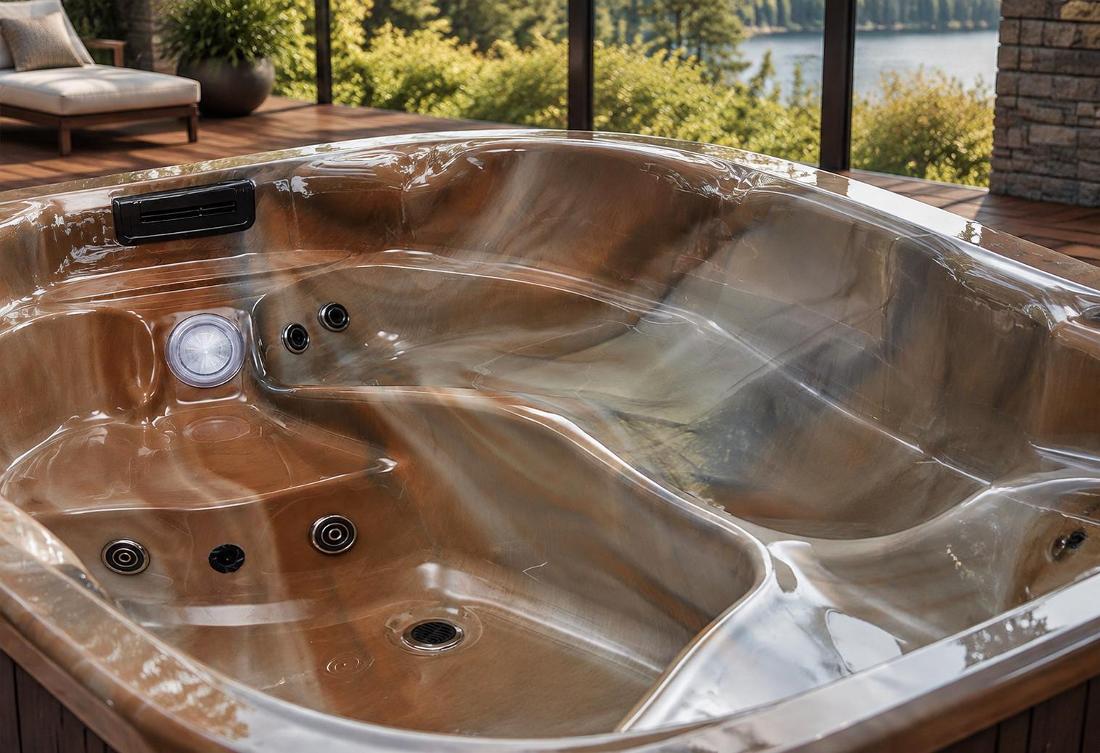
LED lighting is often dismissed as a cosmetic add-on, but it plays a functional role in how a spa is perceived and used at night. Bottom-mounted lighting, positioned below the waterline, creates even illumination through the water rather than harsh spot lighting from above.
The BD-004 uses blue LED lighting positioned at the bottom of the tub, which the manufacturer describes as part of a biomagnetic therapy system intended to support a calming atmosphere. Whether or not this lighting feature has a measurable physiological effect is not something we can verify independently, but the ambient benefit for evening use, especially at hotels or seaside homestays, is straightforward.
A digital control panel might look like an unnecessary upgrade on a budget swim spa, but it often reduces long-term frustration. Analog dials require guesswork on temperature; digital panels display exact readings and let you program heating schedules, which matters if you’re running a spa for guest turnover at a hotel or B&B.
The BD-004 includes one digital control set, backlit and mounted on the tub rim, that displays temperature and function settings. For unattended commercial installations, that kind of visibility reduces the number of service calls related to "the water feels wrong" complaints, since staff can check the actual reading instead of relying on touch.
Matching the spa to its intended use matters more than chasing the lowest price. Here’s a simple decision path:
Does a lower price mean fewer jets or weaker massage performance?
Not necessarily. Price is influenced by materials, cabinet construction, and control system complexity as much as jet count. Some mid-range units, including the BD-004 with its 35 jets, offer jet counts comparable to higher-priced models.
Is ozone sanitization enough on its own?
Ozone systems reduce chemical use and maintenance frequency, but most manufacturers still recommend periodic water testing and occasional chlorine or bromine use to maintain water balance.
Can a budget swim spa be installed indoors?
Many portable units, including 6-person models like the BD-004, are designed for both indoor and outdoor placement, though indoor installation requires attention to ventilation and floor load capacity.
How much does a 6-person spa typically weigh once filled?
Weight varies by model, but as a reference, the BD-004 weighs 317kg empty and holds 1450 liters of water, which adds roughly 1450kg once filled, before accounting for users.
A budget swim spa isn’t about finding the cheapest unit available. It’s about identifying which features matter for your specific setting, whether that’s a villa backyard, a hotel gym, or a seaside homestay, and paying for those without overspending on features you won’t use. Models like the BD-004 illustrate that a reasonably priced 6-person spa can still include ergonomic seating, ozone sanitization, and a capable 5.55kW power system. For us, the goal has always been building units where the specifications match real usage patterns rather than marketing claims. If you’re comparing options, focus on jet-to-pump ratio, sanitization method, and installation weight before price alone, since those three factors will shape your experience with any budget swim spa far more than the number on the price tag.
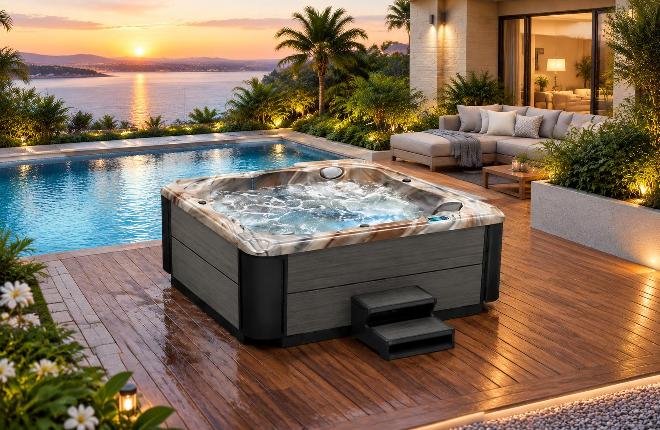
Corner Swim Spa Setup: Fitting a 6-Person Hot Tub Into Tight Outdoor Spaces
Every backyard has that one awkward, underused corner. It’s rarely big enough for furniture, too small for a garden bed, and yet it’s often the sunniest, most private spot on the whole property. A corner swim spa turns that dead zone into the most-used square footage in the house.
The appeal isn’t just about saving space. Corner placement changes how a spa integrates with a deck, patio, or courtyard wall, and it affects everything from plumbing runs to how many people can actually soak comfortably at once.
Rectangular spas placed mid-yard tend to fight with sightlines. They block a path, split a lawn in half, or sit awkwardly next to a fence line that was never designed around them. A corner installation, by contrast, uses the two boundary walls that already exist as a natural frame.
This matters more in villa backyards and B&B courtyards, where outdoor square meterage is often already committed to a pool, a dining area, or landscaping. Tucking a spa into a 90-degree nook leaves the center of the yard open for movement, which is the layout most homeowners actually prefer once they see it in person.
There’s also a thermal argument for corners that gets overlooked. Two adjacent walls, whether they’re a house exterior and a fence, or two sections of a privacy screen, cut wind exposure from two directions instead of one. Less wind chill across the water surface means the heater works less to hold temperature, which is a small but real efficiency gain over a season.
Corner spots are unforgiving about footprint. A unit that’s technically "compact" on paper can still feel oversized once it’s wedged against two walls with clearance for steps and drainage. The Fspa BD-004, for example, holds 6 adults within a 2350 x 2350 x 900mm footprint, which is a reasonable benchmark for what a corner-friendly, multi-seat spa should target.
Getting six people into that footprint without cramming them shoulder to shoulder comes down to seat geometry, not just overall dimensions. According to the manufacturer, the BD-004 uses contoured seats and backrests shaped to the body’s natural curves, with jets and controls positioned to stay within easy reach rather than forcing users to shift position constantly.
Weight is the other number that corner installs can’t ignore. At 317kg net (empty), plus 1450L of water at roughly one kilogram per liter, a filled unit pushes past 1.7 metric tons. Any deck, especially a raised timber deck common in backyard installs, needs to be checked against that load before the spa ever goes near the corner it’s destined for.
There’s a common assumption that more jets always means a better spa. It’s not quite that simple once six people are sharing one shell. Jet placement matters more than raw count, because a jet aimed at an empty seat back does nothing for anyone.
The BD-004 carries 35 jets across its six-seat layout, according to product specifications, which averages out to just under six jets per occupant. That’s a workable ratio for shoulder, lower-back, and calf coverage without turning the tub into standing room only. Per the manufacturer, corner seats in this model include ergonomic headrests, which matters because corner seating positions in any hot tub tend to get less attention in generic designs.
| Spec | BD-004 | Why It Matters for Corner Installs |
|---|---|---|
| Footprint | 2350 x 2350 x 900mm | Fits standard corner deck sections without custom framing |
| Capacity | 6 adults | Matches family or small-group use without overcrowding |
| Jet count | 35 | Balanced coverage across all six seats |
| Total power | 5.55kW | Manageable load for most residential electrical setups |
| Water capacity | 1450L | Moderate fill volume, reasonable heat-up time |
| Net weight | 317kg | Must be checked against deck or patio load rating |
Corner spas, tucked against walls or under partial shade, tend to collect more leaf litter and debris than open, mid-yard placements. That makes filtration and sanitation a bigger factor in the buying decision than most first-time owners realize.
Per the manufacturer, the BD-004 pairs a 2.2kW massage pump with a separate 0.35kW filter pump, so filtration keeps running on its own cycle independent of jet use. It’s also equipped, according to product documentation, with an integrated ozone sanitization system intended to reduce the frequency of manual chemical dosing. Ozone systems are a fairly standard sanitation approach in the spa industry, and pairing one with a dedicated filter pump is a sensible way to cut down on the chlorine smell that puts a lot of people off backyard hot tubs in the first place.
None of this eliminates water testing. It just reduces how often you’re doing it.
Not every corner spa buyer wants the same thing, and it’s worth being honest about that before spending on a six-seat unit.
In each case, the corner isn’t just a placement choice. It’s shaping how the spa gets used day to day.
Corner installations sit closer to walls and structures, which makes lighting design more noticeable than it would be in an open lawn setup. Light reflects off adjacent surfaces, amplifying whatever glow the spa itself produces at night.
The BD-004 includes bottom-positioned blue LED lighting, described by the manufacturer as part of a biomagnetic therapy feature intended to create a calming atmosphere during use. We’d note that "biomagnetic" claims of this kind are the manufacturer’s own characterization rather than an independently verified therapeutic effect, so it’s best understood as an ambiance feature rather than a clinical one. Functionally, it works the way most integrated spa lighting does: illuminating the water from below for a calmer visual effect during evening soaks.
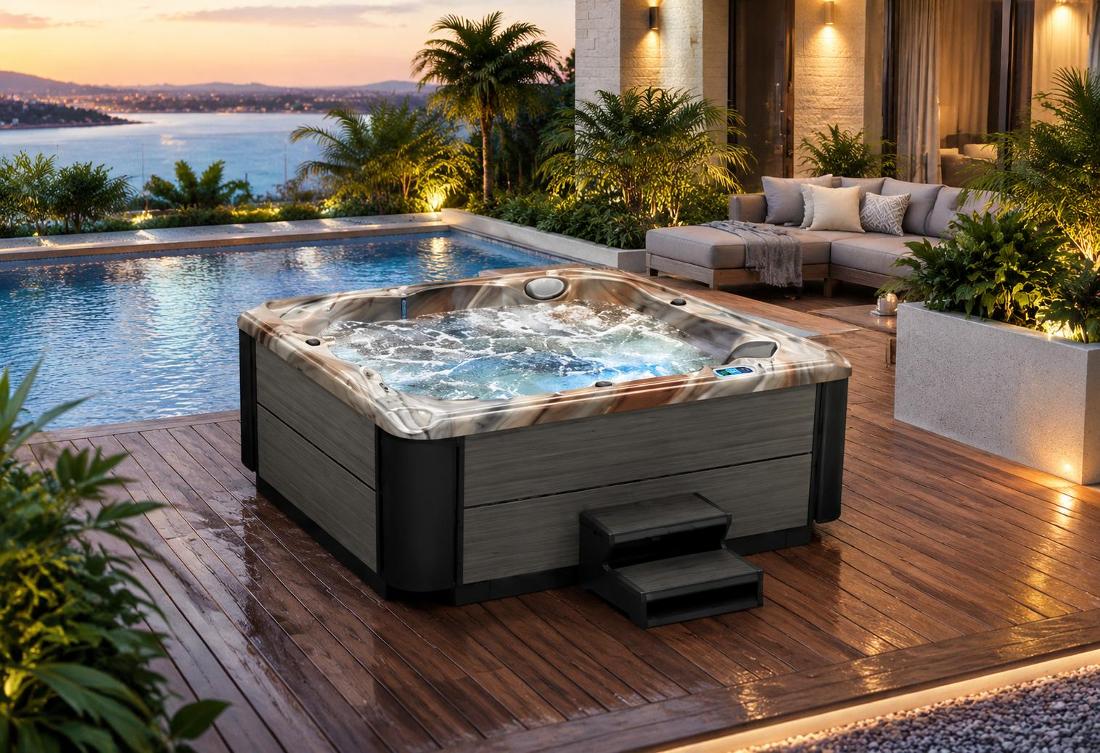
Does a corner spa need special plumbing or electrical work?
Not typically. Most corner installs use the same 240V circuit and drainage approach as a mid-yard placement. The main difference is planning cable and drain routes along the two adjacent walls rather than in open ground.
Can a corner swim spa go on an existing deck?
Only after the deck’s load rating is confirmed against the filled weight of the unit, which for a model like the BD-004 exceeds 1.7 metric tons with water. A structural check is worth the cost before installation, not after.
Is a 35-jet, 6-person spa too big for a small courtyard?
Not usually, since the 2350mm square footprint is close to a standard corner deck bay. The bigger constraint is usually clearance for the access steps and cabinet panels, not the tub itself.
How much power does a unit like this draw?
The BD-004 runs a 5.55kW total system, combining a 2.2kW massage pump, 0.35kW filter pump, and 3kW heater, according to its listed specifications. That’s within range of what most residential 240V spa circuits are built to handle.
A corner swim spa isn’t a compromise choice, it’s often the smarter one. It respects the boundaries of a small yard while still delivering full six-person capacity, real hydrotherapy jet coverage, and a sanitation system that doesn’t demand constant attention. Whether it’s a villa’s backyard nook, a B&B courtyard, or a hotel gym corner meant for recovery sessions, matching the footprint, weight, and jet layout to the actual space is what separates a spa that gets used daily from one that becomes an expensive lawn ornament. For anyone weighing a corner installation, the numbers above are the ones worth checking first.
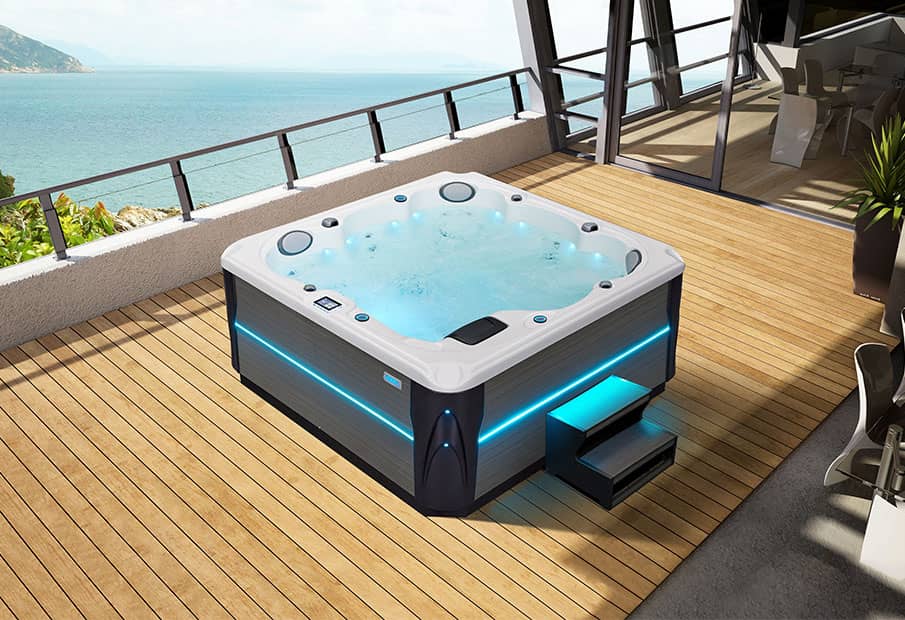
The Fspa BD-012Pro Hot Tub, a luxurious 2160x2160x900mm spa for 6 adults, balances power (4.97kW) and efficiency with features like 34 water & 12 air bubble jets, customizable water flow, LED lighting, music speakers, and pillows, making it a stylish and ideal choice for both residential and commercial relaxation.
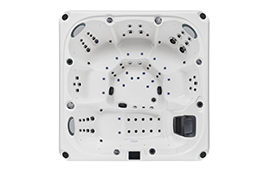
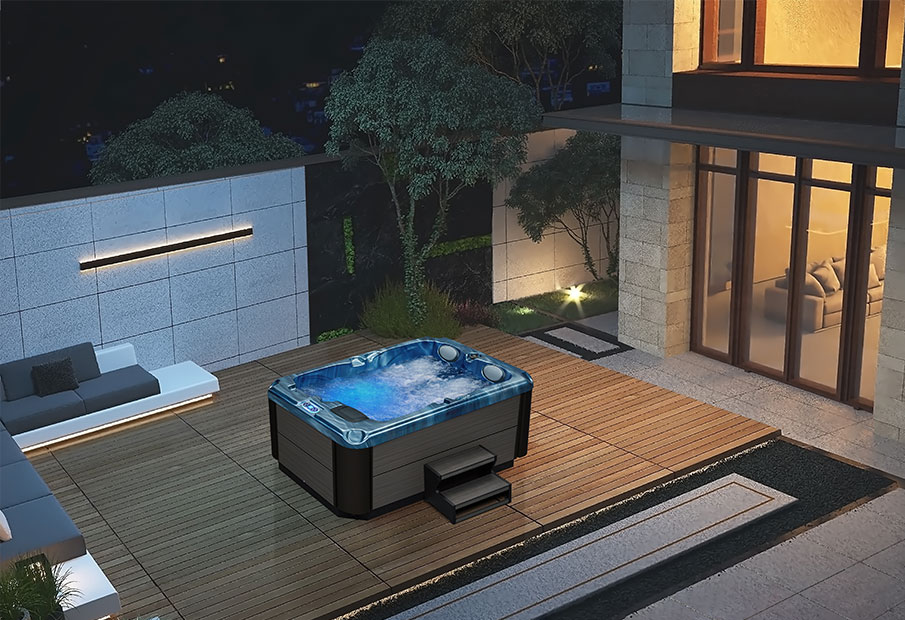
The Fspa BD-011 hot tub, designed for luxurious relaxation, offers a spacious interior for 6 adults, powerful pumps and heater, strategic jet placement, soothing LED lighting, adjustable features, and easy maintenance, making it the ultimate choice for both residential and commercial use.
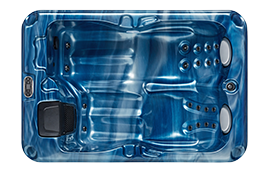
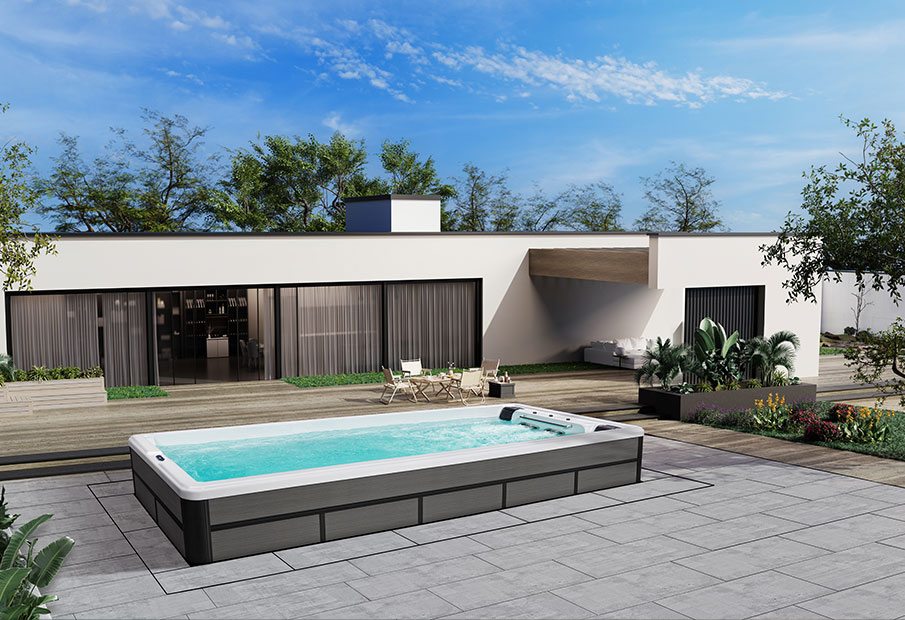
The Infinipool Fspa IP-002 offers a premium swimming experience ideal for residential and commercial use.
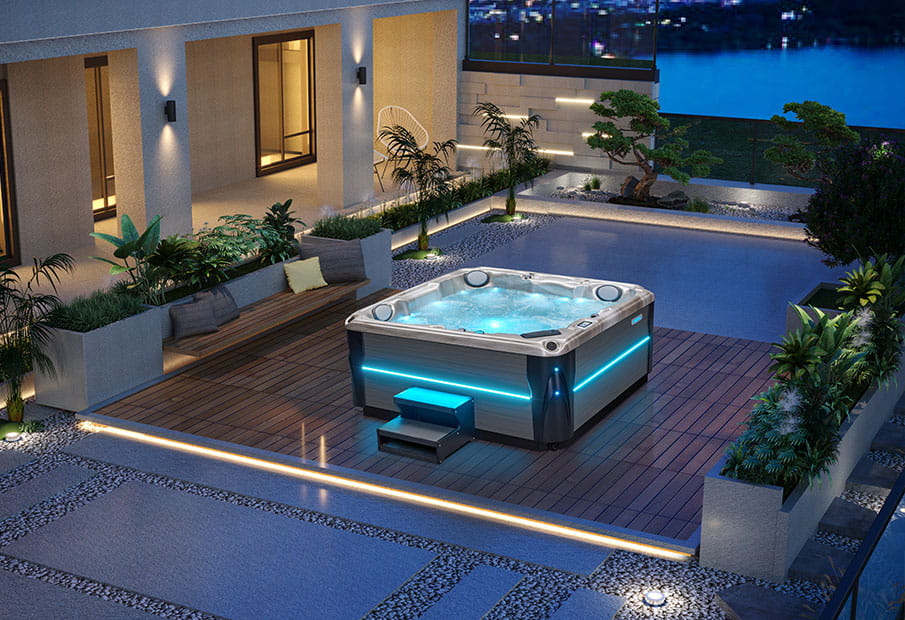
The Fspa BD-006Pro Hot Tub, with its compact spacious design for 5 adults, advanced massage system, 80 water & 18 air bubble jets, efficient heating and filtration, ozone sanitization, and sleek design, offers unparalleled luxury, relaxation, and convenience for both residential and commercial use.
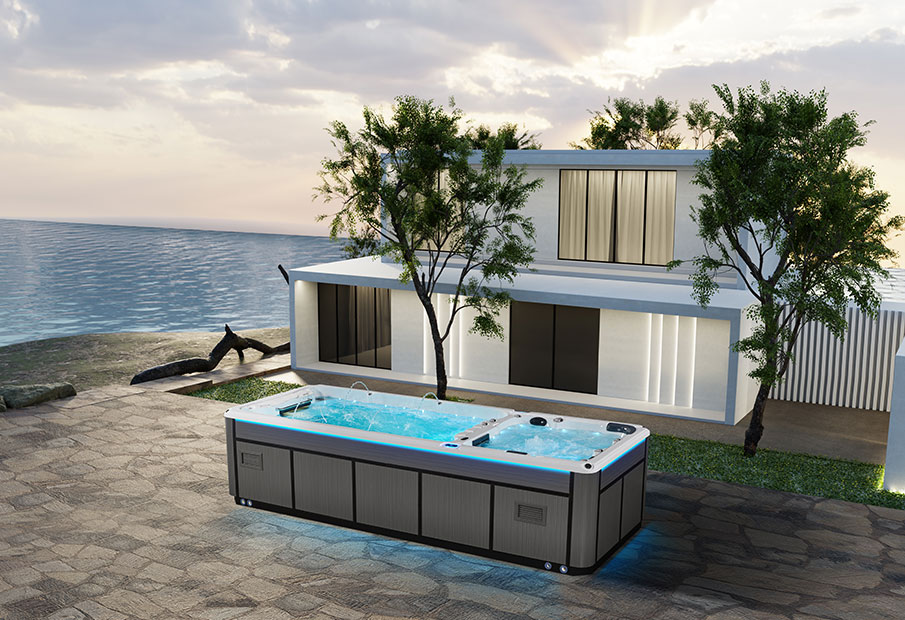
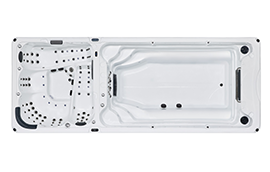
The Infinipool Fspa IP-007Pro is a versatile, luxurious hot tub and swim spa combo, featuring dual systems and customizable options for a complete spa and aquatic therapy experience.
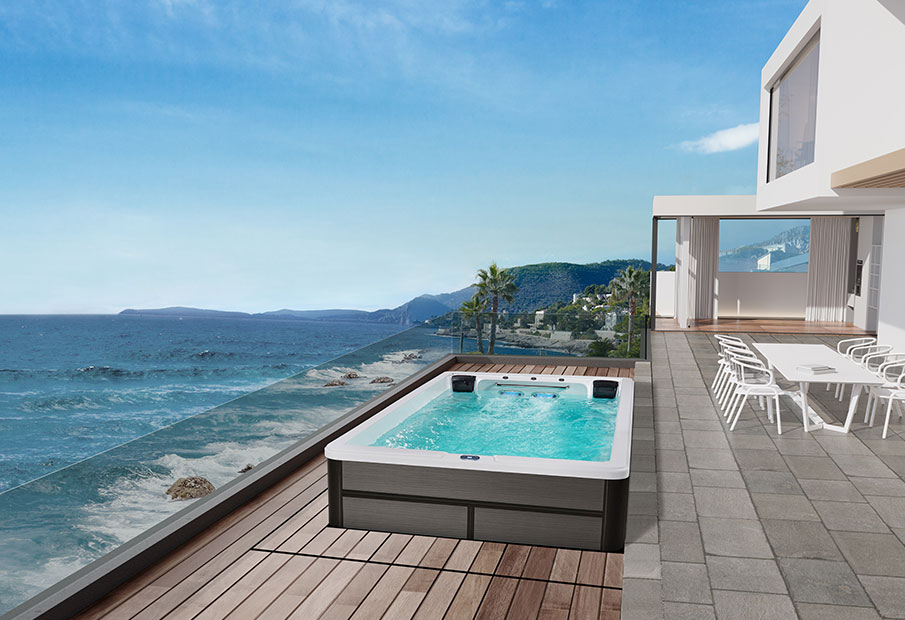
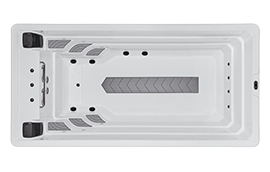
The Infinipool Fspa IP-001 is the ideal choice for anyone seeking a premium swimming experience at home or in a fitness facility.
PRODUCTS
INQUIRY
Thank you for your message!Our Chinese New Year holiday from 7th Feb to 28th Feb. Apologise to make your inconvenience so that responses may be delayed during this period. We'll back to you with regular service on 2th March .Thank you for understanding.


