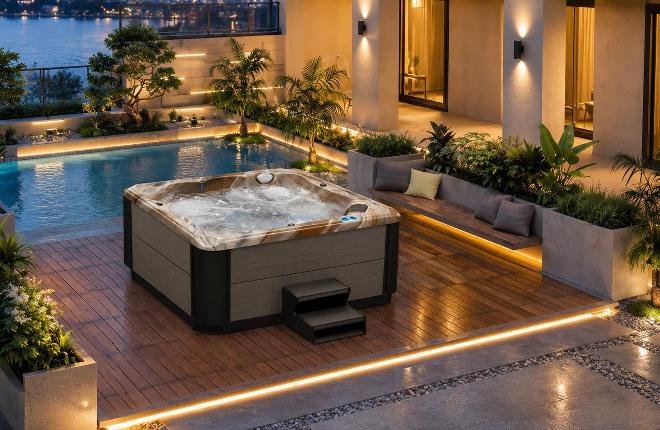
Shopping for a budget swim spa means balancing cost against what the unit can realistically deliver day to day. Many buyers assume "budget" translates to fewer jets or a weaker pump, but the real tradeoffs usually show up in materials, insulation, and control features. Understanding where manufacturers cut costs, and where they don’t, helps you avoid a unit that looks affordable on paper but costs more in energy bills or repairs later. A well-specified 6-person hot tub, like the Fspa BD-004, shows that mid-range pricing doesn’t have to mean stripped-down performance.
Price sensitivity is the top concern for most first-time spa buyers. Villas, boutique hotels, and small wellness centers all want hydrotherapy without committing to a five-figure installation. The good news is that the mid-tier segment has matured, and units in this range now include features that used to be reserved for premium models.
Take jet count and pump power as an example. The BD-004 runs 35 massage jets driven by a 2.2kW massage pump, paired with a separate 0.35kW filter pump and a 3kW heater, for 5.55kW total system power. That’s a meaningful jet-to-power ratio for a 6-person unit, and it suggests the manufacturer sized the pump to the jet load rather than undersizing it to save on the bill of materials.
Before comparing specific models, it helps to know which components actually move the price needle. Four factors tend to matter most:
None of these factors alone determines whether a spa is a good value. A unit with a thick acrylic shell but a weak pump will still feel underpowered. The value comes from how well these components are matched to each other, not from any single spec.
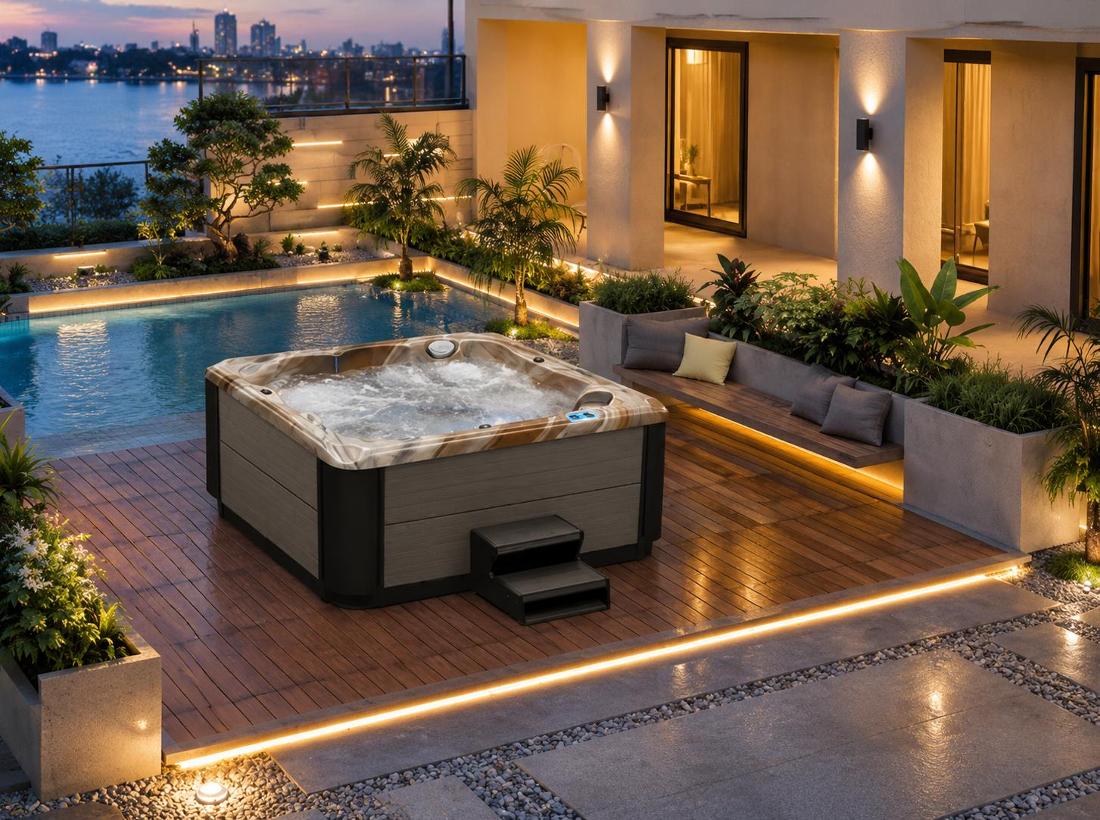
Capacity planning is where many budget-focused buyers get tripped up. Buying too large wastes water and electricity; buying too small means guests wait their turn. For a household or small commercial setting, a 6-person capacity tends to hit the sweet spot between usable space and running cost.
The BD-004, for reference, measures 2350 x 2350 x 900mm and holds 1450 liters of water, with a net weight of 317kg empty. Those numbers matter beyond curiosity. Deck load capacity, doorway clearance during delivery, and even the crane or lift needed for rooftop installations all depend on knowing the empty and filled weight ahead of time.
| Specification | Value |
|---|---|
| Capacity | 6 Adults |
| Dimensions | 2350 x 2350 x 900mm |
| Water Capacity | 1450L |
| Net Weight | 317kg |
| Total Power | 5.55kW |
| Jet Count | 35pcs |
Purchase price only tells half the story. The ongoing cost of chemicals, water changes, and filter replacements often exceeds what buyers expect. This is where sanitization method becomes a budgeting question, not just a health one.
Ozone-based sanitization systems reduce how often you need to shock the water with chlorine, which cuts down on chemical spend over a season. The BD-004 includes an integrated ozone system as part of its water circulation, according to the manufacturer’s product data, which is meant to ease the maintenance burden compared to chlorine-only setups. If you’re comparing two similarly priced spas, ask about sanitization method before you ask about jet count. It affects your monthly costs more than most buyers realize.
It’s tempting to chase the lowest sticker price, but a few comfort-related features tend to pay for themselves in usage satisfaction. Ergonomic seating is one of them. When backrests are contoured to the body rather than flat, users sit longer and get more consistent contact with the jets, which matters for hydrotherapy use in physiotherapy or rehabilitation settings.
The BD-004’s seating and backrests are shaped around the body’s natural curves, with jets and controls positioned for reach and comfort, per the manufacturer. It also includes supportive pillows positioned to help align the spine during a soak, described by the manufacturer as part of its wave propulsion system. For a swim spa or hot tub used daily by hotel guests or rehab patients, these small ergonomic details reduce complaints about arm fatigue or awkward seating angles.
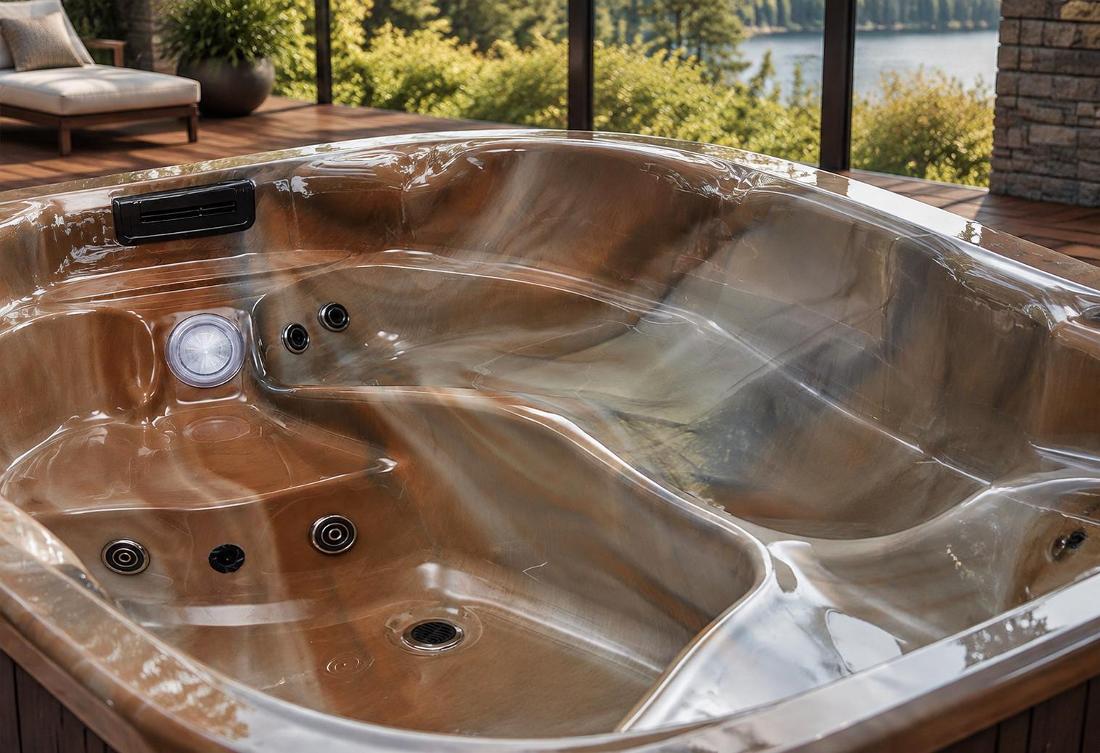
LED lighting is often dismissed as a cosmetic add-on, but it plays a functional role in how a spa is perceived and used at night. Bottom-mounted lighting, positioned below the waterline, creates even illumination through the water rather than harsh spot lighting from above.
The BD-004 uses blue LED lighting positioned at the bottom of the tub, which the manufacturer describes as part of a biomagnetic therapy system intended to support a calming atmosphere. Whether or not this lighting feature has a measurable physiological effect is not something we can verify independently, but the ambient benefit for evening use, especially at hotels or seaside homestays, is straightforward.
A digital control panel might look like an unnecessary upgrade on a budget swim spa, but it often reduces long-term frustration. Analog dials require guesswork on temperature; digital panels display exact readings and let you program heating schedules, which matters if you’re running a spa for guest turnover at a hotel or B&B.
The BD-004 includes one digital control set, backlit and mounted on the tub rim, that displays temperature and function settings. For unattended commercial installations, that kind of visibility reduces the number of service calls related to "the water feels wrong" complaints, since staff can check the actual reading instead of relying on touch.
Matching the spa to its intended use matters more than chasing the lowest price. Here’s a simple decision path:
Does a lower price mean fewer jets or weaker massage performance?
Not necessarily. Price is influenced by materials, cabinet construction, and control system complexity as much as jet count. Some mid-range units, including the BD-004 with its 35 jets, offer jet counts comparable to higher-priced models.
Is ozone sanitization enough on its own?
Ozone systems reduce chemical use and maintenance frequency, but most manufacturers still recommend periodic water testing and occasional chlorine or bromine use to maintain water balance.
Can a budget swim spa be installed indoors?
Many portable units, including 6-person models like the BD-004, are designed for both indoor and outdoor placement, though indoor installation requires attention to ventilation and floor load capacity.
How much does a 6-person spa typically weigh once filled?
Weight varies by model, but as a reference, the BD-004 weighs 317kg empty and holds 1450 liters of water, which adds roughly 1450kg once filled, before accounting for users.
A budget swim spa isn’t about finding the cheapest unit available. It’s about identifying which features matter for your specific setting, whether that’s a villa backyard, a hotel gym, or a seaside homestay, and paying for those without overspending on features you won’t use. Models like the BD-004 illustrate that a reasonably priced 6-person spa can still include ergonomic seating, ozone sanitization, and a capable 5.55kW power system. For us, the goal has always been building units where the specifications match real usage patterns rather than marketing claims. If you’re comparing options, focus on jet-to-pump ratio, sanitization method, and installation weight before price alone, since those three factors will shape your experience with any budget swim spa far more than the number on the price tag.
Rectangular Pools with Spa: Choosing a Layout That Actually Works
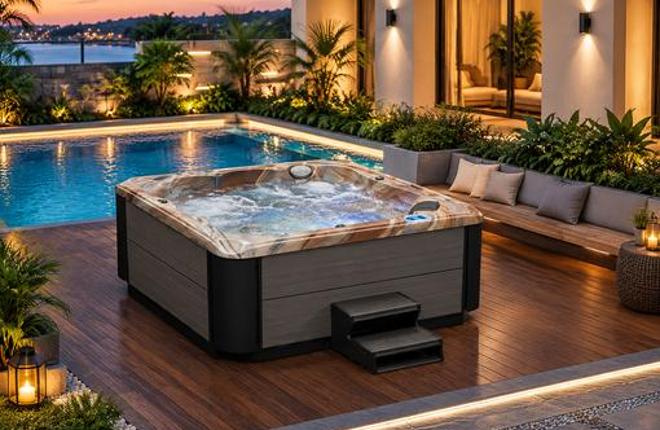
Rectangular pools with spa combinations remain the most requested layout among homeowners, hoteliers, and wellness operators for one simple reason: geometry solves problems that curved shells cannot. A rectangular footprint stacks cleanly against property lines, fits standard deck materials without custom cuts, and leaves a defined corner or end for a spa module. This guide breaks down how to plan that pairing, what technical factors matter, and where a portable spa unit fits into the equation when a built-in isn’t practical.
A straight-edged pool gives designers a fixed reference line. That matters more than it sounds. Curved pools force a spa into an awkward tangent, often wasting deck space around the seam. Rectangles avoid that entirely.
Placing the spa at one narrow end creates a natural flow: laps in the long axis, soak at the short end. This layout also simplifies plumbing runs, since straight pipe paths between filtration equipment and the spa jets reduce friction loss compared to curved routing. For contractors working on tight lots, that efficiency translates into shorter install timelines and fewer custom fittings.
There’s also a psychological angle worth mentioning. Rectangular geometry reads as calm and orderly, which is part of why hotels and spas gravitate toward it. A homeowner soaking after a long day doesn’t need visual noise; a clean edge against water does more for relaxation than an elaborate shape ever could.
Not every rectangular pool project has room, budget, or structural approval for a poured-in-place spa. Retrofitting an existing rectangular pool with a built-in spa often means breaking concrete, rerouting plumbing, and waiting weeks for curing. That’s a lot of disruption for a feature meant to add relaxation.
This is where a standalone portable hot tub earns its place. Positioned at the end of a rectangular pool deck, a unit like the Fspa BD-004 delivers the soaking experience without touching the pool’s structure. It ties into the same outdoor space visually while staying completely independent mechanically, which matters if the pool ever needs resurfacing or plumbing work later.
Before adding a spa element next to a rectangular pool, it helps to know what a mid-size unit actually offers on paper. Below is a breakdown of a 6-person configuration, the size most commonly paired with residential rectangular pools.
| Specification | Detail |
|---|---|
| Capacity | 6 adults |
| Dimensions | 2350 x 2350 x 900 mm |
| Total power draw | 5.55 kW |
| Massage pump | 2.2 kW x 1 |
| Filter pump | 0.35 kW x 1 |
| Heater | 3 kW x 1 |
| Jet count | 35 |
| Water capacity | 1450 L |
| Net weight | 317 kg |
| Certifications | CE, CTUVus, CB, SAA |
That jet count and pump split matter for a practical reason. A dedicated 2.2 kW massage pump keeps hydrotherapy pressure separate from filtration, so water clarity doesn’t suffer while jets are running. Homeowners who’ve dealt with underpowered spas know the frustration of weak jets whenever the filter cycle kicks in; separating the two circuits avoids that entirely.
Deciding where a spa unit sits relative to the pool shape isn’t just aesthetic. It affects deck traffic, sightlines, and even electrical routing. A few placement patterns work consistently well:
Each approach has tradeoffs. End-cap placement looks the most integrated but requires more careful deck leveling. Separated zones sacrifice visual unity for easier maintenance access, since a technician can reach the equipment bay without stepping around pool furniture.
Jet count gets quoted often, but it’s not the only spec that determines comfort. Seat contouring, lighting, and water treatment all shape the actual experience once someone steps in.
The BD-004, for example, uses ergonomically contoured seats and backrests designed to follow the body’s natural curve, which reduces pressure points during longer soaks. Headrests use a padded pillow design intended to support neck alignment, a detail that sounds minor until you’ve sat in a spa with a flat, unsupported rim.
Lighting plays a role too, though more for ambiance than function. Bottom-mounted blue LED lighting, as used in this model, creates a calm visual tone rather than a functional therapeutic effect. It’s worth being clear about that distinction: LED lighting sets mood, while jet placement and pump power handle the actual massage performance.
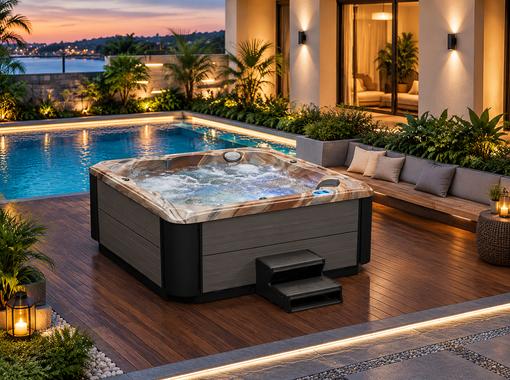
Running a rectangular pool and a spa side by side doubles the water chemistry work unless the spa handles part of it independently. This is where sanitization method matters more than people expect during initial planning.
An integrated ozone system, included in the BD-004, is designed to support water circulation and cleanliness, which according to the product specifications can reduce how often chlorine or bromine levels need manual adjustment. That’s a meaningful convenience for a hotel gym or a B&B where staff turnover means maintenance routines can’t rely on specialized knowledge every shift.
For homeowners, the practical benefit is fewer weekend hours spent testing water. Pools already demand regular monitoring; a spa that manages part of its own sanitization removes one more recurring task from the list.
Does a spa next to a rectangular pool need its own separate filtration system?
Yes, in nearly all portable spa setups. The spa’s pump and heater run independently from the pool’s circulation, which is actually a benefit — it means one system going down for service doesn’t shut off the other.
Can a portable spa be installed on the same deck as an in-ground rectangular pool without structural changes?
Generally yes, provided the deck surface can support the unit’s filled weight. A 6-person spa with 1450 L of water plus a 317 kg shell adds meaningful load, so checking deck rating before installation is a reasonable step.
Is a rectangular pool shape better for lap swimming when paired with a spa?
Rectangular shapes do provide a straighter, unobstructed swim path compared to freeform designs, which is part of why fitness centers and natatoriums favor them even before a spa is added to the plan.
How much power does a typical spa add to a property’s electrical load?
A unit in the 5.55 kW range, like the BD-004, needs a dedicated circuit sized appropriately by a licensed electrician. This is separate from the pool pump’s circuit and should be planned during the same electrical review.
Different environments call for different priorities when selecting a spa to pair with a rectangular pool. A villa backyard benefits most from a visually integrated end-cap placement, since the setting already emphasizes calm and privacy. A hotel gym, by contrast, prioritizes recovery function over aesthetics, making jet configuration and durability the deciding factors over lighting or shell finish.
A seaside homestay sits somewhere in between: guests want the view as much as the soak, so placement near a rail or open sightline outweighs strict alignment with the pool’s rectangle. Recognizing which category a property falls into before shopping specs saves time and avoids overpaying for features that won’t get used.
Choosing rectangular pools with spa add-ons comes down to matching structural reality with how the space will actually be used. A straight-edged pool gives flexibility that curved designs don’t, and a well-specified portable spa, whether it’s a compact two-person unit or a 6-person model like the BD-004, extends that flexibility without demanding structural changes to the existing pool. For us, having worked across villa, hotel, and homestay installations, the pattern holds consistently: plan the spa’s placement around real usage first, then let the rectangular geometry do the organizing work it’s naturally suited for.
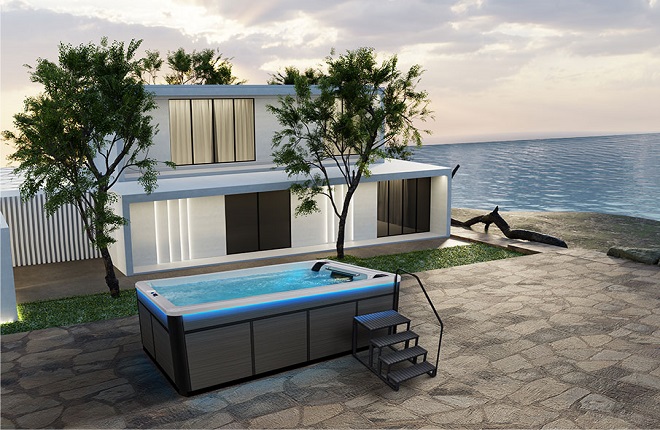
Understanding Ozone in Swim Spas: A User’s Perspective
When I first heard my swim spa came with an ozone system, I thought it sounded like something from a sci-fi movie. Was my spa secretly turning into a spaceship? Not quite. After some reading (and testing it myself), I’ve learned that ozone is actually just oxygen with an extra atom—three instead of two. And that tiny difference makes it a cleaning superhero in the water.
So, how does it work? Inside the spa, there’s a little machine called an ozone generator. It makes ozone and then bubbles it into the water. Those extra oxygen atoms are unstable, which means they love to attack and break apart things like bacteria, oils, and other “not-so-nice” stuff floating around. In simple terms, ozone zaps the bad guys so I don’t have to pour in a mountain of chlorine.
The effects are pretty easy to notice. The water feels fresher, my eyes don’t sting, and there’s way less of that “public pool smell.”Some users online say ozone makes their spa water look like liquid glass, and honestly, I agree. It also saves me money on chemicals, which means more budget left over for snacks after a workout in the spa.
Now, the big question: does it need cleaning? Thankfully, no scrubbing of ozone itself. The gas does all the cleaning for me. But the generator that makes it isn’t immortal. Depending on the type, the lamp or cell might need replacing every couple of years. Also, I still have to clean the spa filters—unfortunately, ozone hasn’t invented a way to fold laundry or clean filters for me yet.
In the end, I think of ozone as my silent spa assistant. It doesn’t brag, it doesn’t make noise, but it quietly keeps the water crystal clear and my swim spa experience a lot more enjoyable. Space-age name, down-to-earth benefits.
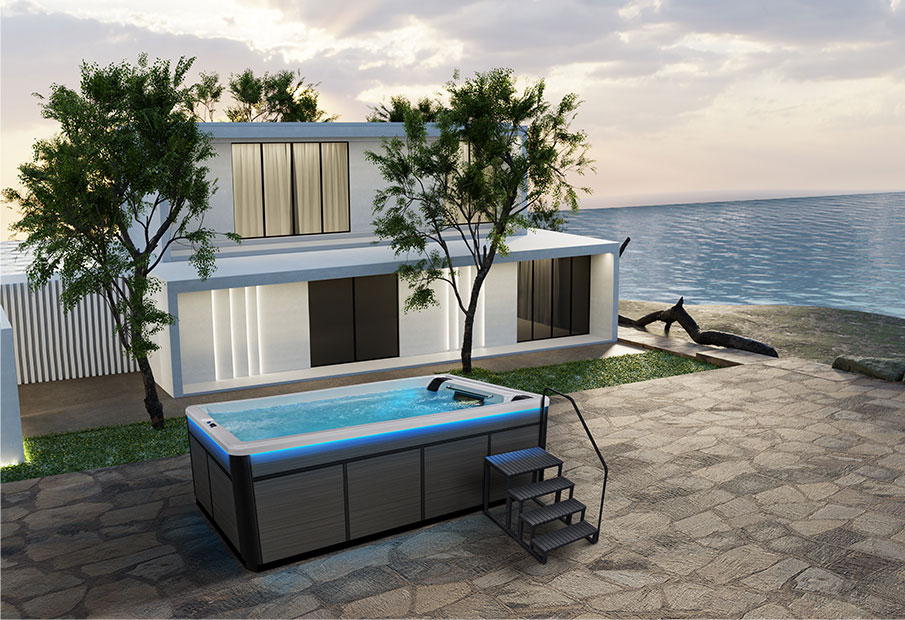
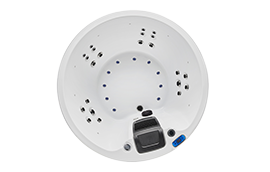
The Fspa BD-018Pro Hot Tub is a stylish, spacious spa for 5 adults, featuring a powerful massage system, modern amenities, and an advanced filtration system for a luxurious, relaxing, and healthy indoor/outdoor retreat.
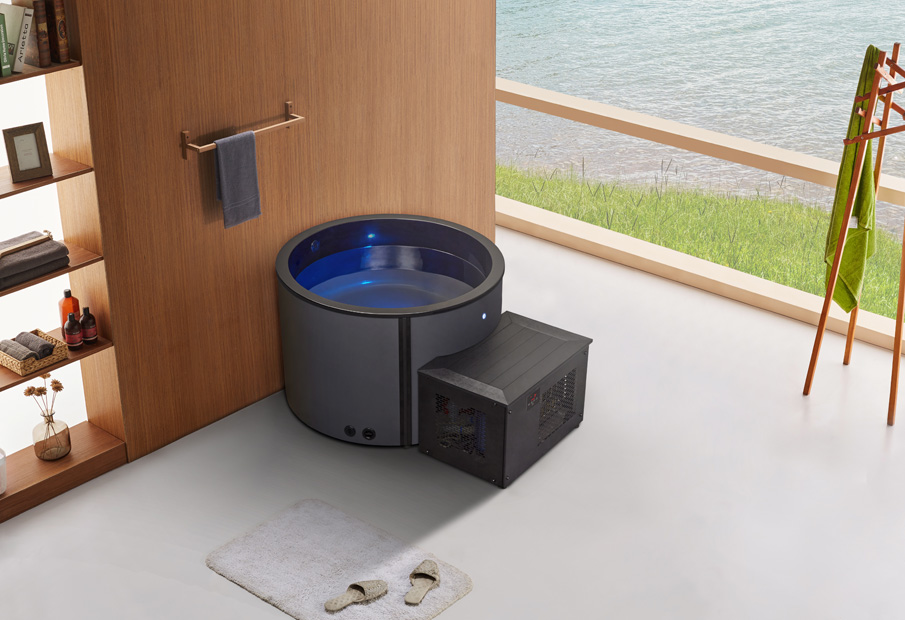
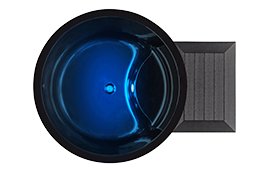
Combined design, plug and play, Include filter, circuit pump, Ozone, Ice-blue underwater light, and high-efficiency Chilling system.
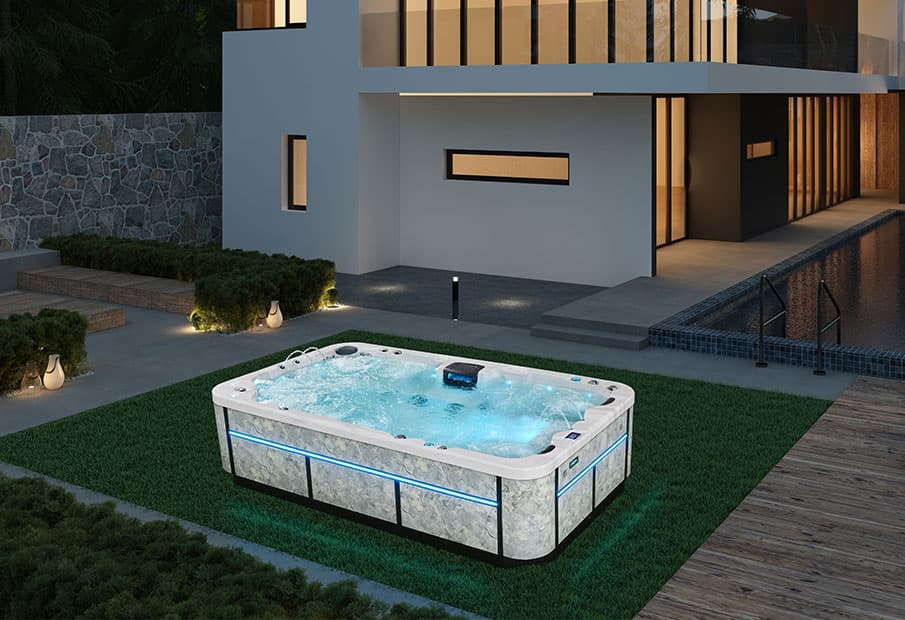
The Fspa BD-020Pro Hot Tub, accommodating up to 9 adults, is a luxurious and therapeutic indoor/outdoor spa featuring a powerful massage system, advanced filtration, modern conveniences, and water features, making it the ultimate choice for relaxation and wellness at home.
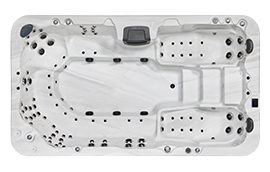
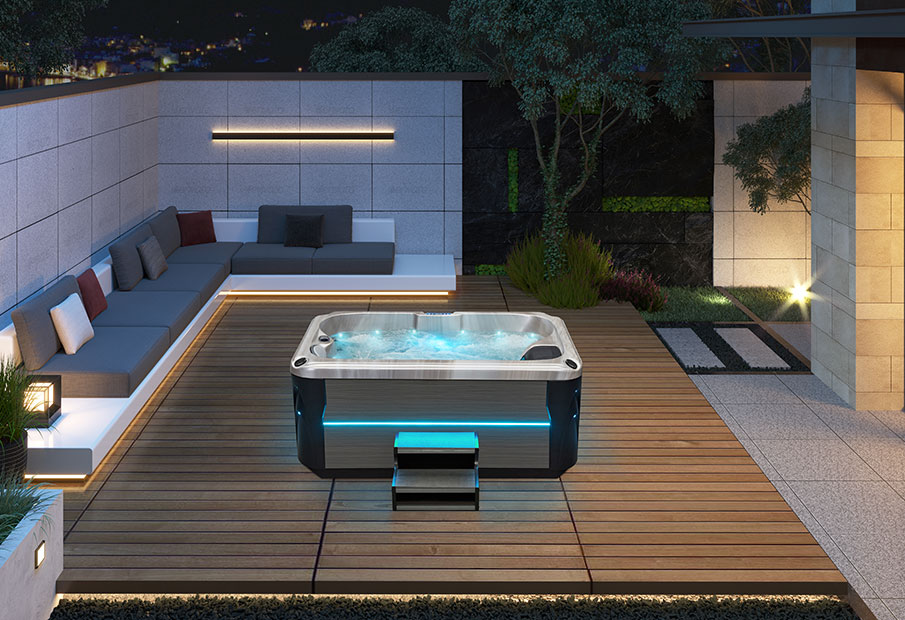
The Fspa BD-003Pro Hot Tub, offers ultimate relaxation with a robust 1.85kW massage system, pristine water filtration, 28 water & 14 air bubble jets, customizable air flow, ozone sanitization, 4 speakers, and a sleek design perfect for outdoor settings.
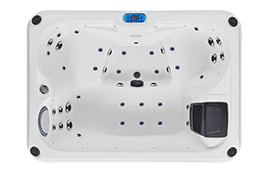
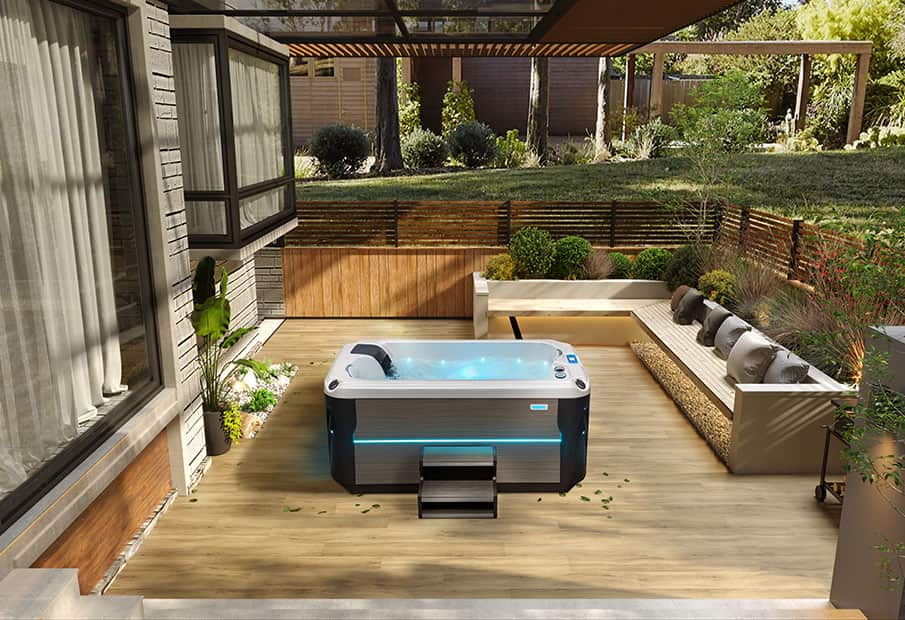
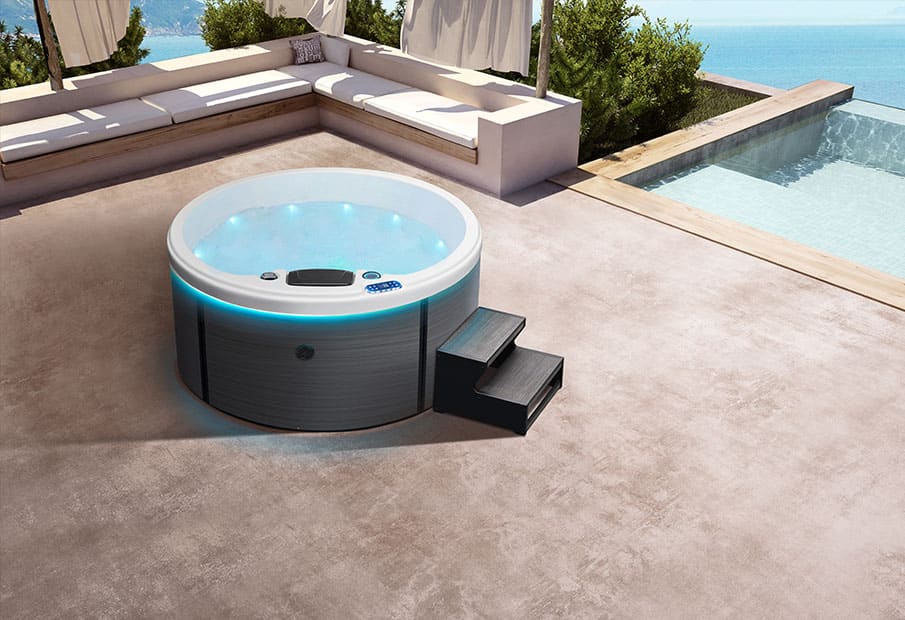
The Fspa BD-016Pro Hot Tub, a compact spa for up to 2 adults, offers a rejuvenating experience with an efficient control system, soothing massage features, consistent water temperature, modern amenities, advanced filtration, and suitability for indoor or outdoor placement.
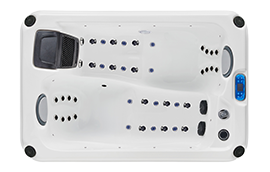
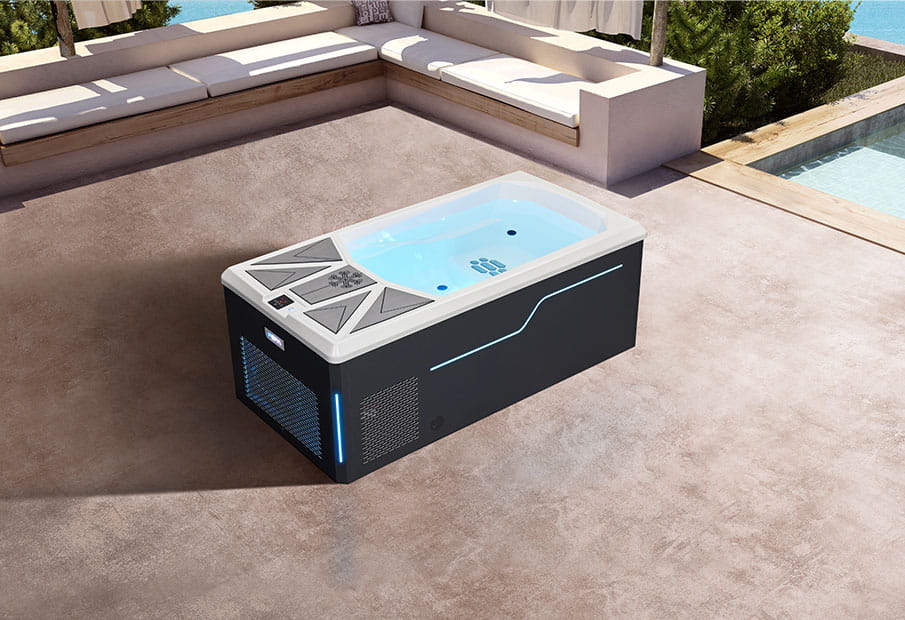
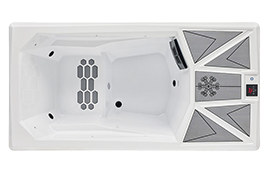
All in one design, plug and play, snowflake pattern, Welcome lights up as you approach Include filter, circuit pump, Ozone, Ice-blue underwater light, and high-efficiency chilling system.
PRODUCTS
INQUIRY
Thank you for your message!Our Chinese New Year holiday from 7th Feb to 28th Feb. Apologise to make your inconvenience so that responses may be delayed during this period. We'll back to you with regular service on 2th March .Thank you for understanding.


