In the realm of family-oriented pool solutions, FSPA Infinipool stands out for its commitment to blending cutting-edge technology with child-centric safety features. While specific official articles detailing proprietary designs are limited, industry standards and comparable innovations provide insights into its likely safety mechanisms.
FSPA Infinipool likely incorporates textured, non-slip materials around pool edges and entry points, reducing slip risks for children. Depth gradients are probably engineered to create shallow zones ideal for kids, avoiding sudden drops common in standard pools.
Integrated surveillance likely includes motion-sensitive cameras and AI-driven alerts to detect unsupervised access or distressed swimmers. Emergency shut-off buttons near the pool perimeter could enable rapid response to accidents.
Automated filtration and UV disinfection systems would ensure hygienic conditions, critical for children’s sensitive skin and immune systems. Real-time water quality monitors might also sync with parental apps for remote oversight.
Structural designs probably feature rounded corners and shock-absorbing materials in pool fixtures to minimize injury risks during playful collisions
Gradual entry steps and removable depth dividers could allow customization for children’s swimming lessons or games, balancing fun with controlled environments.
While direct technical specifications from FSPA remain publicly undocumented, these inferred features align with global safety benchmarks (e.g., ASTM pool standards, EU toy safety directives). Parents seeking Infinipool solutions should inquire about certifications like ISO 13489 for pool safety or request demonstrations of its monitoring technologies. By prioritizing preventable hazards through thoughtful engineering, FSPA Infinipool exemplifies how innovation can harmonize family enjoyment with peace of mind.
Cheap Ice Plunge Options: What Actually Matters Before You Buy
Searching for a cheap ice plunge usually starts with sticker shock. Cold therapy tubs range from bucket-and-ice setups to fully plumbed systems costing thousands, and the gap between them confuses first-time buyers. This guide breaks down what drives cost, where corners get cut, and how a compact plunge pool like the IP-001 fits into the budget conversation.
The price of a cold plunge setup comes down to three variables: insulation quality, pump specification, and filtration. A styrofoam cooler with ice bags is technically an ice plunge, but it demands daily manual refilling and offers no water treatment. That labor cost is invisible until you’ve done it for three weeks straight.
Manufactured units shift that burden onto mechanical components. A chiller or a robust pump system maintains temperature and clarity without you lifting a single ice bag. The tradeoff is upfront cost. Buyers chasing a cheap ice plunge often don’t realize they’re really choosing between paying now in equipment or paying later in time and inconsistent water quality.
Cheap can mean two very different things: a lower sticker price, or lower cost per session over the unit’s lifespan. A $300 inflatable tub might need replacing within a year and offers no filtration, so mold and bacteria buildup become a real concern without constant manual draining. A mid-range multi-functional pool with built-in filtration spreads its cost across years of use.
Buyers should decide which column matters more before comparing prices side by side.
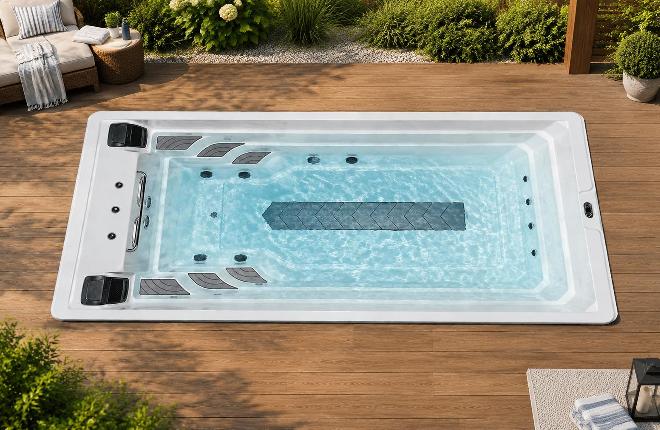
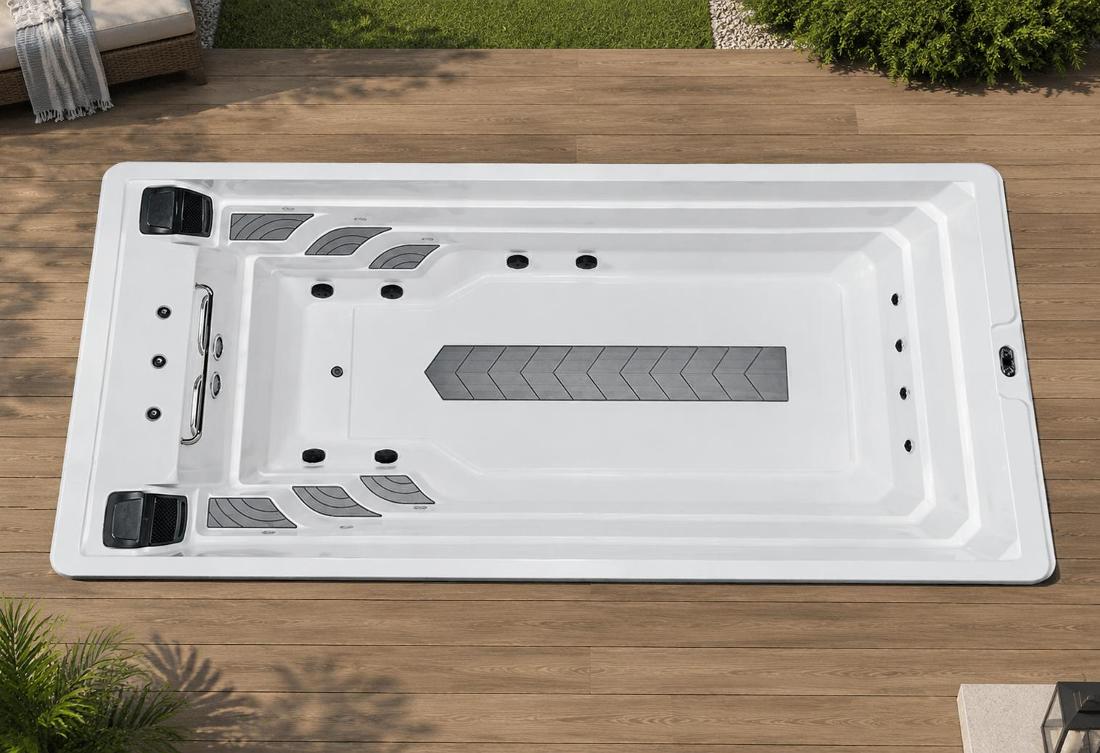
The IP-001 isn’t marketed as a dedicated ice plunge, it’s a compact swimming pool measuring 5000mm x 2500mm x 1600mm, built around a 3HP water pump and dual river jet system for swim training and recovery. But the same qualities that make it useful for after-gym recovery, namely strong water circulation and proper filtration, are exactly what separates a functional cold therapy setup from a stagnant tub of cold water.
According to the product specifications, the unit runs on a total power draw of 10.35kW, combining three 2.2kW water pumps with a 0.75kW filter pump. That filtration includes a skimmer box and sand filter, which matters more than people expect once they’ve dealt with a plunge tub that grows algae after a week of standing water.
Ice bath enthusiasts frequently underestimate how fast standing cold water turns unpleasant. Cold slows bacterial growth compared to warm water, but it doesn’t stop it, and without circulation you’re still marinating in your own sloughed skin cells and sweat residue after a few sessions.
This is where genuinely cheap ice plunge setups fall short structurally, not just financially. A bucket or inflatable tub has no filtration path at all. The IP-001’s skimmer box and sand filter combination pulls surface debris and fine particulate continuously, which is the same principle used in residential pools, just scaled down. For anyone doing cold exposure several times a week, that ongoing water treatment is arguably more valuable than the cold itself.
True ice plunges rely on either mechanical chillers or manual ice replenishment to hit target temperatures, typically between 10 and 15 degrees Celsius for therapeutic cold exposure. The IP-001, per its specifications, includes a 3kW heater rather than a chiller, positioning it more for warm therapeutic use and swim training than deep cold immersion.
That distinction matters for buyers specifically hunting cold plunge equipment. If deep cold immersion below 10 degrees is the goal, a dedicated chiller unit is still necessary. If the goal is moderate cold water recovery after exercise, using naturally cooler tap water combined with the pool’s circulation system, a multi-functional unit like this can serve double duty as both a training pool and a recovery tool.
| Setup Type | Upfront Cost | Filtration | Temperature Control | Labor Required |
|---|---|---|---|---|
| Cooler + ice bags | Very low | None | Manual, inconsistent | High, daily |
| Inflatable tub | Low | None or minimal | Manual, inconsistent | High, frequent draining |
| Compact acrylic pool (pump + filter) | Moderate | Skimmer, sand filter | Ambient or heated | Low, periodic maintenance |
| Chiller-integrated spa | High | Full system | Precise, automated | Minimal |
This table isn’t about declaring a winner. It’s about matching the setup to how often someone actually plans to use it. Daily users benefit from low labor options even at higher upfront cost, while occasional users may find a simple tub perfectly adequate.
According to the manufacturer’s specifications, the IP-001 uses an acrylic shell with an insulated cabinet structure, plus anti-skid mats on the steps and floor. Insulation reduces energy loss when the water is heated or maintained at a set temperature, which lowers the running cost compared to an uninsulated shell losing heat to ambient air constantly.
Net weight is listed at 1318kg, which reflects a build using multiple reinforced layers rather than a single thin acrylic sheet. Buyers evaluating truly cheap ice plunge alternatives should ask suppliers directly about shell thickness and insulation, since these details rarely show up in marketing photos but directly affect how long a unit stays structurally sound.
Cold water immersion research generally credits vasoconstriction and reduced inflammation as the primary recovery mechanisms, and circulation from jets can enhance the sensation of relief without changing that underlying physiology. The IP-001 includes eight nozzles total, split between two river jets, four filter jets, and two power jets, based on the listed technical specifications.
For athletes using the pool after training, that jet layout supports localized muscle work in addition to general immersion. It’s a different use case than a static ice bath, but one that overlaps meaningfully with what recovery-focused buyers actually want: something that helps sore legs and shoulders, not just cold exposure for its own sake.
Application scenarios listed for the IP-001 include resort hotels, villa gardens, courtyard installations, and fitness facilities needing a compact aquatic training and recovery solution. That spread makes sense given the dual heating and jet system, since a hotel spa wants warm therapeutic use while a fitness center wants both cold-leaning recovery and swim training in one footprint.
Space-constrained buyers in particular gravitate toward compact units. A footprint of 5 meters by 2.5 meters fits in many backyard or courtyard settings where a full lap pool wouldn’t, which is part of why multi-functional compact pools have become popular substitutes for single-purpose cold plunge tanks.
Is a bucket with ice bags actually functional as an ice plunge?
Yes, physically it works, but it lacks filtration and requires constant manual ice replenishment to maintain temperature, which becomes a real time cost over weeks of regular use.
Do compact pools like the IP-001 replace a dedicated ice bath?
Not directly. This unit is built with a heater rather than a chiller, so it suits therapeutic warm use and swim training more than deep cold immersion below 10 degrees Celsius.
What’s the biggest hidden cost in a cheap setup?
Labor and water quality management. Without filtration, standing water needs frequent draining and cleaning, which adds up in time even if the initial purchase price stays low.
Does insulation really matter for a plunge pool?
Yes. Insulated cabinets reduce heat loss, which lowers the energy needed to maintain a set water temperature over time, according to standard pool construction principles.
Choosing between a genuinely cheap ice plunge and a compact multi-functional pool comes down to how often you’ll use it and whether filtration matters to you long-term. Occasional users chasing a quick cold exposure session might be fine with a basic tub. Regular users, especially those combining recovery with actual swim training, tend to get more sustained value from a filtered, pump-driven system like the IP-001.
For us, the goal has always been building pools that serve more than one purpose, whether that’s therapeutic recovery, family use, or training. If you’re comparing a cheap ice plunge against a compact pool investment, weigh the ongoing labor and water quality tradeoffs, not just the number on the price tag.
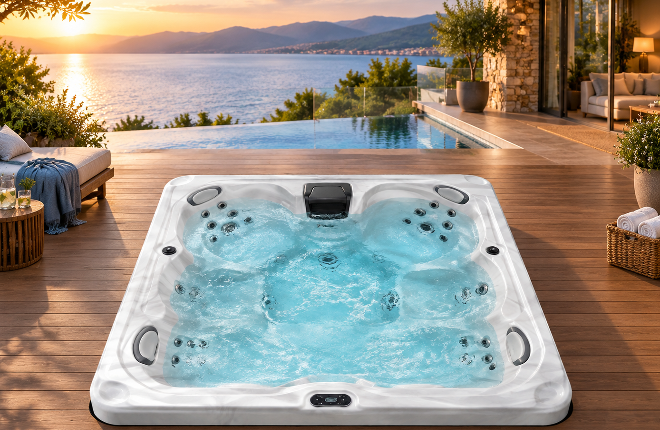
Why Swim Jets Are Changing What People Expect From a Hot Tub
Hot tubs with swim jets sit at an odd intersection between two categories that used to stay separate. One side is relaxation, the warm water, the massage, the evening soak after a long day. The other is exercise, resistance training, and the kind of cardio you’d normally drive to a gym for. Swim jet systems merge both into a single footprint, and that shift is exactly why the search interest around this term keeps growing.
Anyone researching hot tubs with swim jets is usually trying to solve a space problem, a time problem, or both. A lap pool needs real square footage and a real budget. A spa alone gets boring if you’re trying to stay active. Swim jets close that gap by generating a current strong enough to swim against, inside a shell no bigger than a standard hot tub.
The mechanism is simpler than it sounds. A dedicated pump forces water through a nozzle at high velocity, creating a steady countercurrent in one section of the tub. You swim into that current, and the water pushes back. Distance becomes irrelevant. You’re not covering meters, you’re holding position against resistance, the same principle a rowing machine uses with water instead of a flywheel.
This differs from a standard massage jet in purpose, not just intensity. Massage jets are aimed at specific muscle groups, usually the lower back, shoulders, or calves, for therapeutic pressure. Swim jets are aimed at open water space, built to sustain a continuous flow rather than a pulsing one. Some tubs run both systems independently, so you can swim for twenty minutes and then switch to a seated massage cycle once the pump load shifts.
Not everyone needs a countercurrent system, and it’s worth being honest about that before spending on one. It tends to make the most sense for a few specific situations.
Sizing a swim spa comes down to balancing how many people will use it against how much open water you actually need for the current to feel usable. A tub built for six adults to sit and soak isn’t automatically good for swimming, because seating often eats into the clear swim lane.
Manufacturers address this in different ways. Some models pack in a dense jet array purely for hydrotherapy, favoring seat count over open water. Others reduce seating to widen the swim channel. Fspa’s hot tub lineup, for example, ranges from compact 3-person units around 1870x1330mm up to 6-person spas near 2530x2300mm, which gives buyers a spread between a tight therapeutic soak and a larger multi-use footprint.
| Model Tier | Typical Capacity | Jet Count | Heater Output | Best Fit |
|---|---|---|---|---|
| Compact | 3 adults | 16 jets | 2kW | Small patios, couples |
| Mid-size | 4-5 adults | 30-50 jets | 2-2.5kW | Family use, moderate space |
| Large | 5-6 adults | Up to 80 jets | 3kW | Multi-user households, rehab use |
Jet count alone doesn’t tell the full story. Eighty jets spread across a seated hydrotherapy layout does something entirely different from a smaller, concentrated swim current. Before comparing numbers, it helps to ask what the jets are actually positioned to do.
Running a swim spa harder and more often changes the water chemistry demands compared to a tub used mainly for evening soaks. More activity means more organic load entering the water, from sweat to skin oils, and that load needs consistent oxidation to keep things clear.
Ozone sanitization systems are the standard response here. According to Fspa’s product documentation, their hot tub series integrates ozone systems specifically to maintain water clarity and reduce the manual maintenance burden. Ozone works by oxidizing contaminants rather than relying solely on chlorine or bromine, which can lower the amount of chemical you need to add by hand, though it typically works alongside a residual sanitizer rather than replacing it outright.
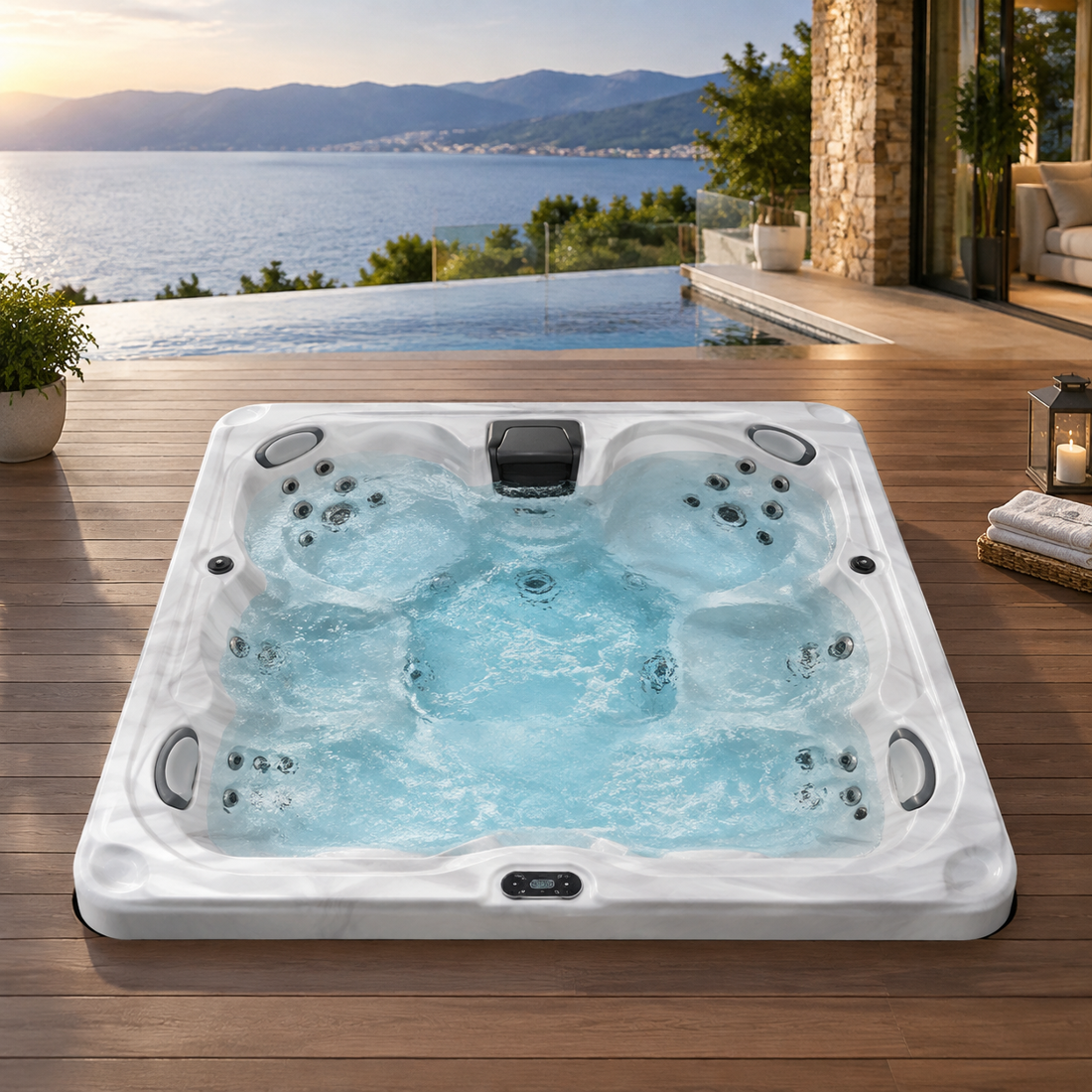
A swim jet pump pulls noticeably more power than a standard circulation pump, since it has to move a large volume of water fast enough to create resistance. That has a direct effect on your heater sizing and your electrical planning, and it’s worth checking before installation rather than after.
Across the Fspa range, total system power reaches up to 5.55kW, with heaters specified between 2kW and 3kW depending on the model. Larger tubs generally need the higher end of that range, particularly in colder climates where the heater has to fight ambient heat loss while the swim pump is also running. If you’re on a standard residential circuit, this is exactly the kind of detail to confirm with an electrician before committing to a model.
Rather than comparing every spec side by side, it helps to work through a short sequence of questions.
Can you actually get a real workout in a swim jet hot tub?
Yes, within limits. The resistance is adjustable on most systems, and swimming against a countercurrent engages similar muscle groups to lap swimming. It won’t replicate open-water distance training, but for cardio and resistance work in a small footprint, it holds up.
Do swim jets and massage jets run at the same time?
On most dual-zone systems, no, they run on separate pump circuits so you can use one without overloading the system. Check the specific model’s plumbing layout, since some smaller units share a single pump across both functions.
How much space does installation actually require?
Beyond the tub’s footprint, you need clearance for the equipment bay, drainage access, and usually a reinforced pad or deck section to handle the added weight of water and the swim pump. A mid-size unit around 2000x2200mm typically needs a few hundred additional millimeters of clearance on the service side.
Is ozone sanitization enough on its own?
Not typically. It reduces the sanitizer load significantly, but most systems still call for a low residual level of chlorine or bromine to handle contaminants between ozone cycles.
The appeal of hot tubs with swim jets isn’t really about novelty. It’s about compressing two separate purchases, a spa and some form of home cardio equipment, into one installation that fits a backyard instead of a renovation project. That’s a meaningful trade-off for households short on space or short on time to maintain two separate systems.
We work across residential, hotel, and rehabilitation settings, and the pattern holds across all three: the buyers who end up satisfied are the ones who sized the swim zone to their actual routine, not just their guest count. If you’re comparing hot tubs with swim jets for a home installation, spend more time on the swim lane dimensions and pump specs than on jet count alone. That’s where the real difference in daily use shows up.
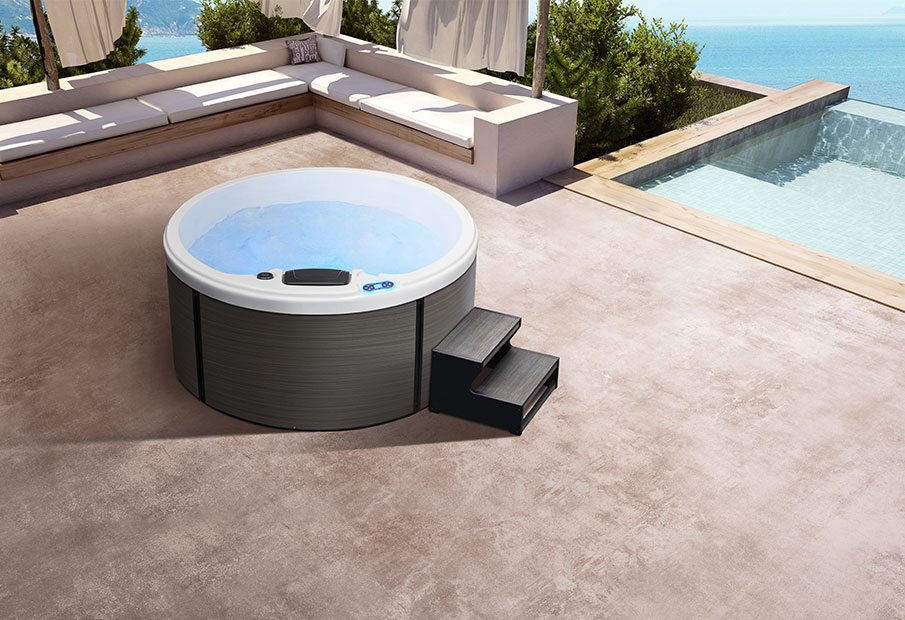
The Fspa BD-018 Hot Tub, designed for 2 adults with spacious dimensions, features a robust control system, 1.5kW massage pump, 0.35kW filter pump, 2kW heater, 14 customizable water jets, LED lighting, ozone sanitation, and a total power of 3.85kW, providing exceptional comfort and relaxation for a luxurious and rejuvenating soak.
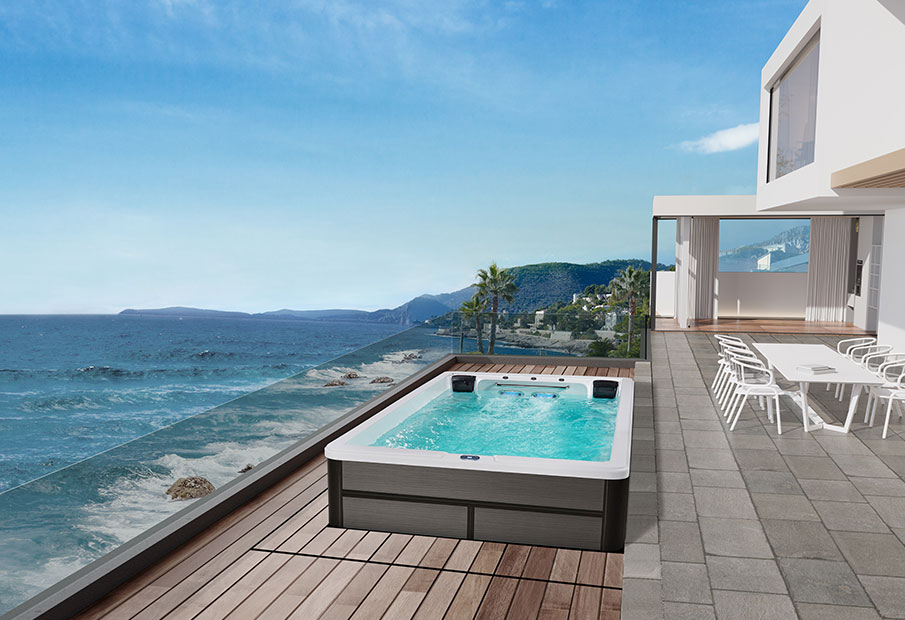
The Infinipool Fspa IP-001 is the ideal choice for anyone seeking a premium swimming experience at home or in a fitness facility.
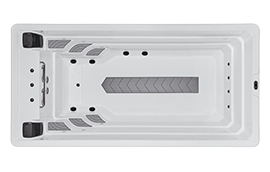
The Fspa BD-018Pro Hot Tub is a stylish, spacious spa for 5 adults, featuring a powerful massage system, modern amenities, and an advanced filtration system for a luxurious, relaxing, and healthy indoor/outdoor retreat.
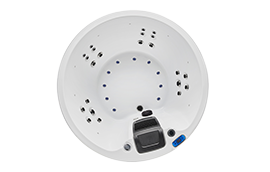
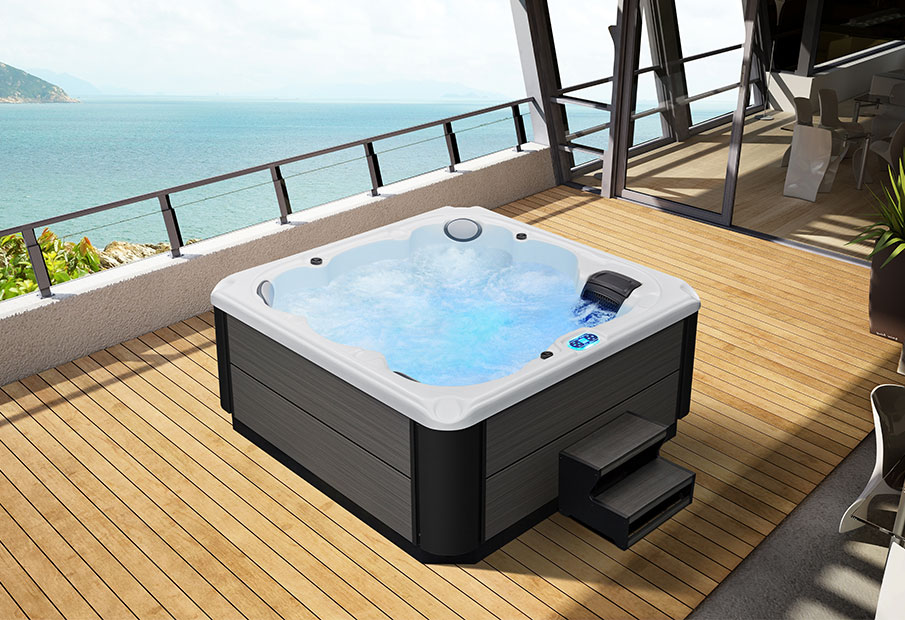
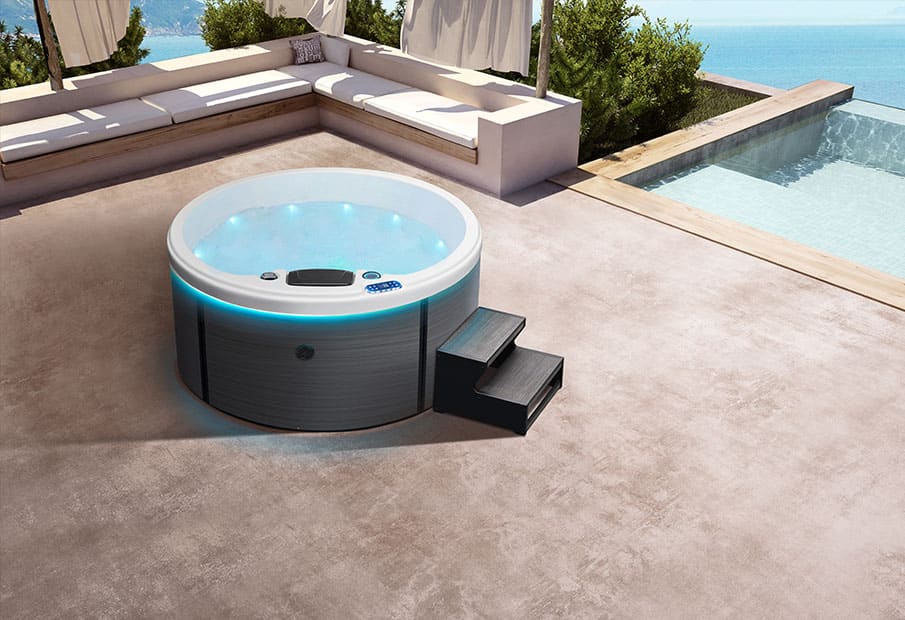
The Fspa BD-012 hot tub, designed for intimate relaxation, features a spacious size for 2 adults, powerful massage pump with 20 jets, temperature-controlled heater, energy-efficient filter pump, ambient LED lighting, and sanitized water with an ozone system, offering a private oasis for ultimate relaxation.
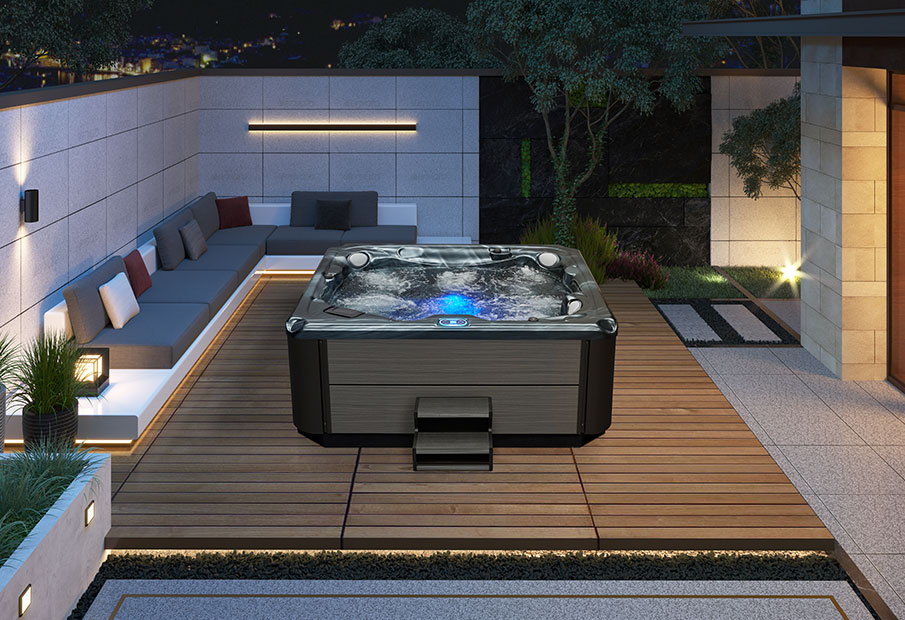
The Fspa BD-005 hot tub, accommodating 6 adults with advanced features including a 2.2kW massage pump, 0.35kW filter pump, 3kW heater, 42 jets, and ozone purification, offers ultimate relaxation in a spacious 2530x2300x900mm pool.
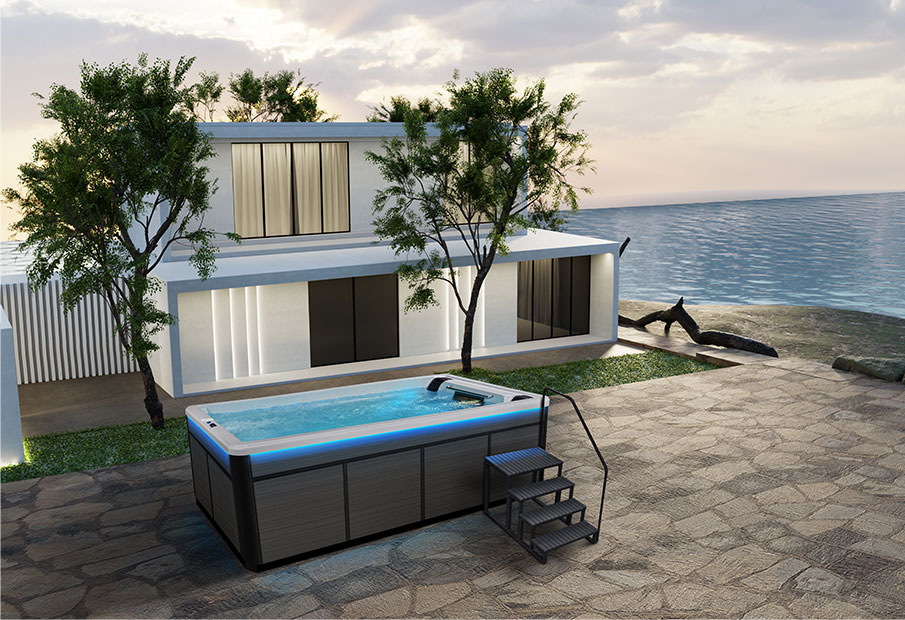
The Infinipool Fspa IP-001Pro is a premium, spacious pool with advanced filtration, ozone sanitization, insulation, and optional accessories, transforming backyards into luxurious oases for swimming, relaxation, and entertainment.
PRODUCTS
INQUIRY
Thank you for your message!Our Chinese New Year holiday from 7th Feb to 28th Feb. Apologise to make your inconvenience so that responses may be delayed during this period. We'll back to you with regular service on 2th March .Thank you for understanding.


