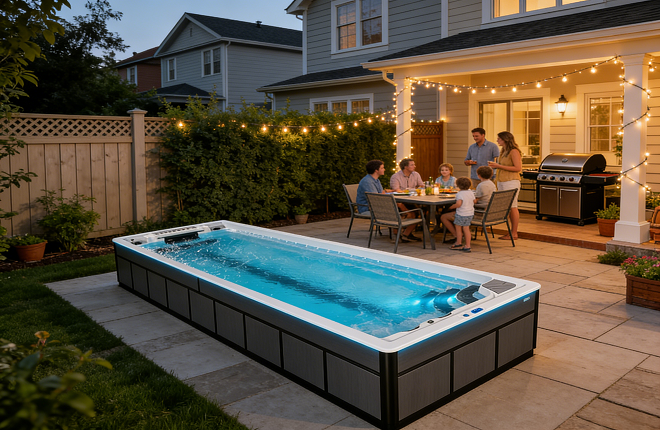
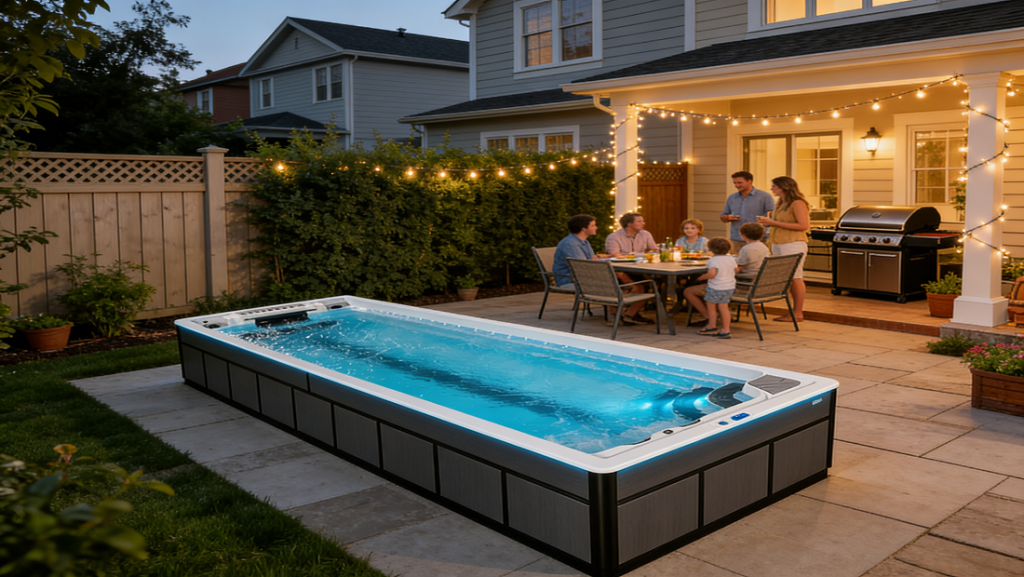
The presence of an acrylic integrated swimming pool at home significantly enhances mental well-being and family connections through multifaceted benefits.
For mental health, the pool serves as a private sanctuary for stress relief. The visual transparency of acrylic creates an illusion of spaciousness, while the calming effect of water movement reduces anxiety hormones like cortisol. Daily morning swims provide low-impact exercise that stimulates endorphin release, promoting sustained mood elevation. Evening sessions under ambient lighting offer meditative moments, allowing individuals to decompress from work pressures in a controlled environment free from external distractions. The consistent availability eliminates barriers to physical activity, fostering long-term mental resilience through routine and achievement.
Regarding family dynamics, the pool transforms ordinary moments into shared experiences. Weekend pool games encourage intergenerational interaction, with parents and children bonding over water volleyball or synchronized swimming. Evening barbecues by the poolside become regular social events, strengthening relationships through relaxed conversation. The pool’s year-round usability (with proper heating systems) ensures continuous family engagement regardless of weather conditions. These shared activities create lasting memories while teaching children water safety skills and healthy lifestyle habits. The pool area naturally becomes a central hub for family gatherings, reducing screen time and encouraging active participation in group activities.
In essence, an acrylic home pool acts as both a personal wellness retreat and a family connection catalyst, offering tangible improvements to psychological health and interpersonal relationships through accessible, enjoyable aquatic experiences.
The Real Trade-Offs of Choosing a Wooden Cold Plunge Tub
A wooden cold plunge tub sits at an odd intersection of tradition and performance gear. People want the aesthetic warmth of timber, but they also want reliable cold exposure without babysitting a chiller or scrubbing algae off staves every week. That tension is worth unpacking before you spend money on one.
Cold plunging itself is simple: submerge in water well below body temperature for a short, controlled period. The container, though, changes almost everything about the daily experience, from maintenance time to how long the tub lasts outdoors.
Wood has a sensory pull that acrylic or plastic tanks don’t match. Cedar and spruce staved tubs look like something built by hand, not molded in a factory, and that matters to people who use their backyard as a retreat rather than a utility space.
There’s also a thermal argument, though it gets exaggerated online. Wood insulates somewhat better than thin plastic, so a wooden tub loses heat more slowly than a bare polymer shell of similar thickness. That’s a modest practical benefit, not a dramatic one, and it shouldn’t be the deciding factor on its own.
The bigger draw is usually visual integration. A cedar plunge tub fits naturally on a wooden deck, next to a sauna, or in a garden setting where a stark white acrylic shell would look out of place.
Wood is a porous, living material, and that’s precisely what makes it beautiful and difficult at the same time. Left untreated, staved tubs can develop leaks as the wood dries and shrinks, especially in low-humidity climates or during winter heating season indoors.
Owners typically need to:
None of this is unmanageable, but it’s a real time commitment that a rigid acrylic or fiberglass spa shell simply doesn’t require. Anyone comparing a wooden cold plunge tub against a manufactured hot tub shell should weigh upkeep hours, not just sticker price.
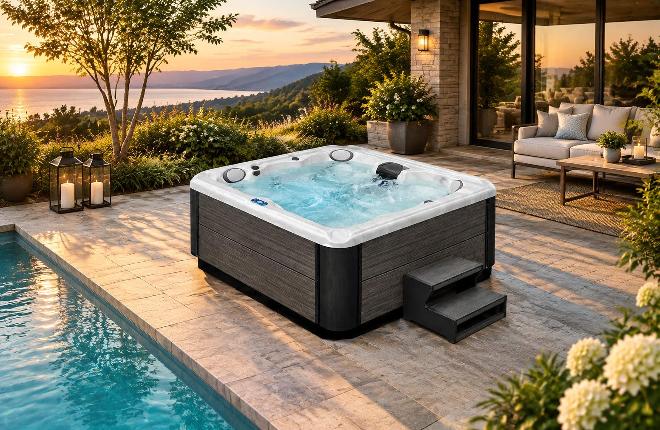
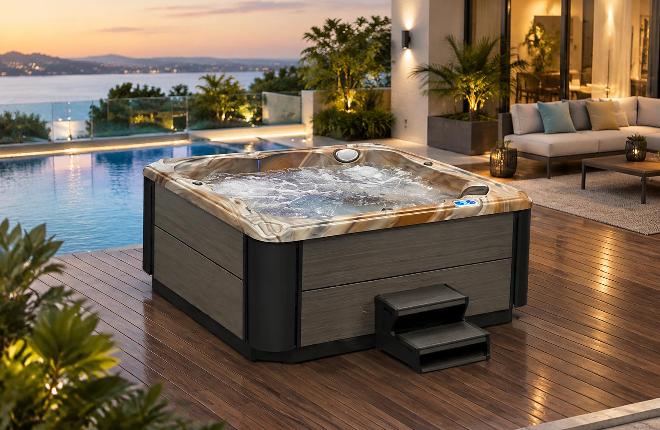
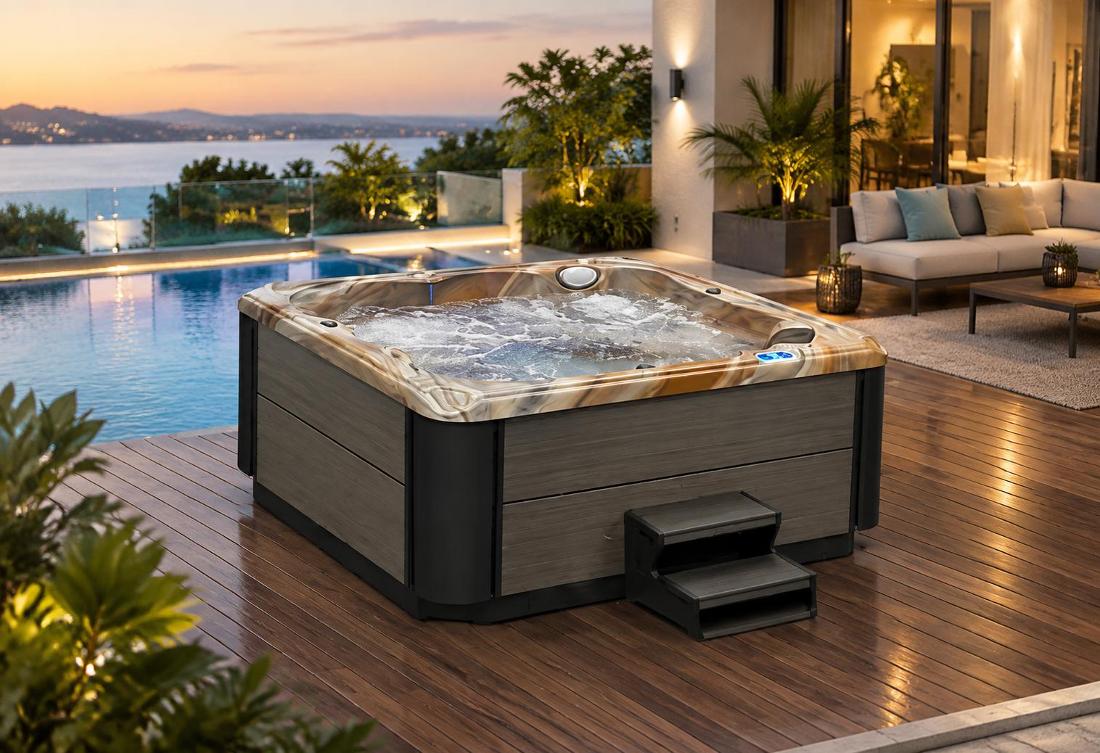
This is where it’s worth stepping back from wood entirely and looking at how modern spa manufacturing solves some of the problems wood creates. We build spa shells like the BD-001, a 2100 x 2100 x 900mm acrylic unit designed for up to six adults, using a marble-effect composite shell paired with a wood-grain exterior cabinet.
That combination matters for a specific reason. The cabinet gives you the visual warmth people associate with timber tubs, dark, horizontal-slat wood-grain panels that sit well against a stone patio or garden deck. Meanwhile, the acrylic shell underneath avoids the shrinkage, leaking, and sealant maintenance that raw wood staves demand.
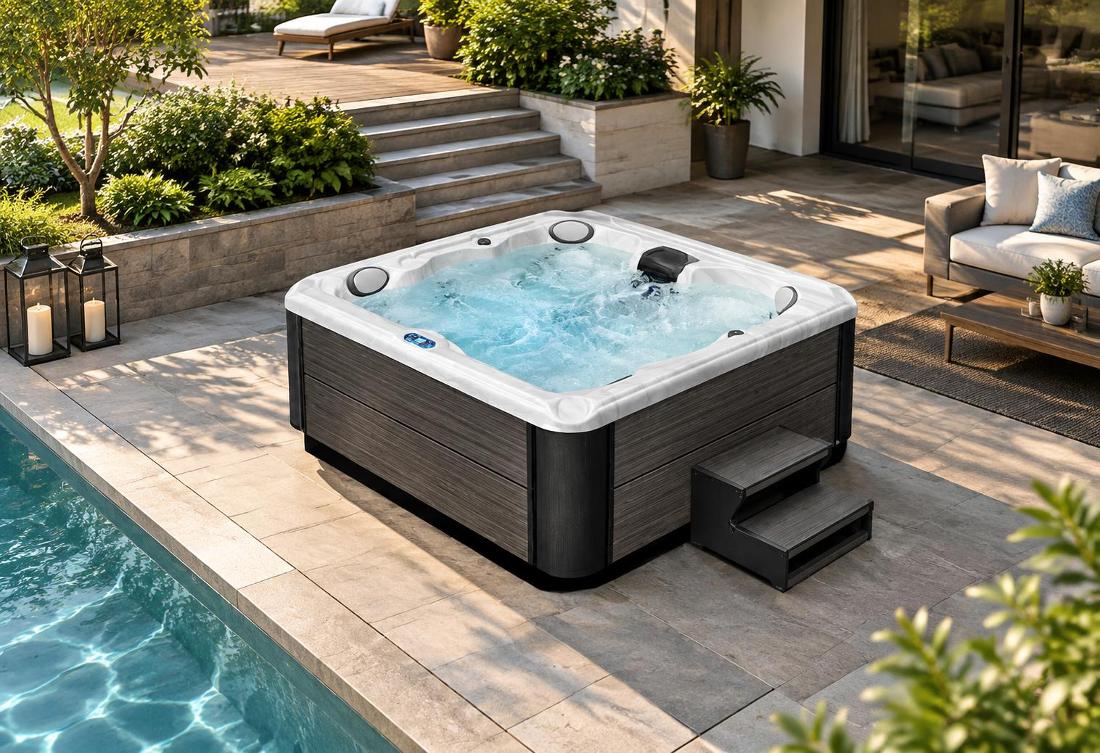
It’s not a direct substitute for a true wooden plunge tub, since the interior experience and material feel are different. But for buyers who want the wood aesthetic without the seasonal maintenance load, it’s a relevant middle path.
Traditional wooden cold plunge tubs vary widely in size, from single-person barrels around 700-900mm in diameter to larger communal versions. Manufactured alternatives tend to specify capacity more precisely because the tooling is fixed.
| Consideration | Traditional Wood Stave Tub | Manufactured Shell with Wood-Grain Cabinet |
|---|---|---|
| Typical capacity | 1-4 adults, model dependent | Up to 6 adults (e.g. BD-001) |
| Water volume | Varies by stave diameter and height | Fixed, e.g. 1000L on BD-001 |
| Insulation | Moderate, wood-dependent | Depends on shell and cabinet construction |
| Temperature control | Usually manual, ice or chiller add-on | Digital control panel with built-in heater |
| Maintenance | Seasonal sealing, hoop checks, shrink monitoring | Standard filtration and water chemistry upkeep |
The heater point is worth pausing on. Most wooden cold plunge tubs are cold-only by design, and adding a chiller is a separate purchase and installation step. A unit like the BD-001 goes the opposite direction, with a 3kW heater built in per the product’s specifications, since its intended use spans warm hydrotherapy rather than cold immersion specifically.
Choosing between a wood stave tub and a manufactured shell really comes down to what you’re solving for.
Jet count and pump configuration also factor into the decision when the tub will double as a hydrotherapy space. The BD-001, for example, is specified with 31 jets driven by a 2.2kW massage pump, alongside a separate 0.35kW filter pump and ozone system for water hygiene, features that pure cold plunge tubs generally skip since they’re not designed for warm, jetted use.
Does a wooden cold plunge tub need a chiller to stay cold?
In warm climates or during summer, yes, most owners add a chiller since ambient groundwater or hose-filled water isn’t reliably cold enough year-round. In cooler regions, some owners rely on ice or simply cold tap water.
Can wood staves crack in freezing weather?
Extreme freeze-thaw cycles can stress wood joints, particularly if the tub is drained and left empty over winter. Manufacturer guidance on winterizing should be followed closely in cold climates.
Is a wood-grain cabinet on an acrylic spa the same as real wood?
No. It’s a composite or engineered panel styled to resemble wood grain, chosen specifically because it doesn’t carry the same maintenance requirements as untreated timber.
How long does a wooden plunge tub typically last?
With consistent maintenance, staved wood tubs can last many years, but lifespan drops sharply if sealing and moisture upkeep are neglected.
Before settling on a wooden cold plunge tub, it helps to be honest about how much upkeep you’re willing to do. The material rewards attention and punishes neglect, which is a fair trade for some buyers and a dealbreaker for others.
For those who want the timber look integrated into a more versatile, lower-maintenance product, hybrid options exist. Spas built with acrylic shells and wood-style cabinet panels, applicable in hotel outdoor areas, backyard installations, or even indoor balcony setups, offer a related but distinct path that trades some material authenticity for convenience and multi-temperature functionality.
Either route can deliver a genuinely good outdoor wellness feature. The right call depends on whether you’re chasing the ritual of true cold plunge therapy in a classic wooden vessel, or a broader hydrotherapy setup that borrows wood’s visual character without its seasonal demands. Weigh water volume, heating needs, and realistic maintenance time before deciding, since a wooden cold plunge tub is as much a commitment to upkeep as it is a wellness purchase.
What Actually Makes a Swim Spa the Best Value Swim Spa
Shopping for a swim spa usually starts with a spreadsheet of jet counts and horsepower ratings, then quietly turns into a question of trust. Buyers want to know if the unit sitting in a backyard for the next decade will actually earn its price tag, not just look good in a showroom. The phrase "best value swim spa" gets thrown around by nearly every manufacturer, but value is not a marketing label. It is a ratio between what the tub delivers in daily use and what it costs to own over time, including energy bills, water treatment, and the inevitable service call.
This piece breaks down what genuinely separates a well-priced swim spa from an overpriced shell, using a mid-size hydrotherapy tub as a working example. We will look at capacity, jet layout, sanitation systems, and where a unit like this actually fits into a household or a hospitality business, so the decision comes down to facts rather than adjectives.
A low sticker price on a swim spa often hides deferred costs. Thin acrylic shells crack under seasonal temperature swings, undersized pumps struggle to maintain heat, and weak filtration means more chemicals and more manual cleaning. None of that shows up until months after installation.
Real value comes from matching the equipment to the actual use case. A 6-person unit built around a 5.55kW total power draw, for instance, is sized for households that want group soaking without the operating costs of a full lap-swimming spa. That distinction matters because oversizing a system wastes energy, while undersizing it leaves the water lukewarm on a cool evening.
Before comparing jets or lighting, the physical footprint decides whether a swim spa is even viable for a given yard, deck, or gym floor. A compact 6-adult model measuring roughly 2350 x 2350 x 900mm occupies a modest footprint compared to full-length swim spas that can stretch well beyond four meters.
That smaller footprint opens up placement options that longer units cannot use:
Water capacity follows the same logic. At around 1450L, this size class fills and heats faster than larger swim spas, which shortens the wait after a refill and keeps the heater’s 3kW element from running excessively long.
Jet count gets quoted constantly, but placement determines whether those jets actually reach sore muscles or just churn water. A layout built around 35 jets distributed across contoured seating targets the lower back, shoulders, and calves differently at each seat, rather than repeating the same pattern six times.
The seating itself plays an equally large role. Contoured seats and backrests that follow the body’s natural curve keep bathers positioned correctly against the jets instead of sliding out of range, which is a common complaint with flat-bottomed, budget tubs. According to the manufacturer’s product documentation, this model also includes ergonomic headrests and pillow supports intended to help align the spine during longer sessions, a detail aimed at users doing post-exercise recovery rather than a quick dip.
Total system power is where long-term value either holds up or falls apart. This unit runs on a combined 5.55kW load, split across a 2.2kW massage pump, a 0.35kW filter pump, and a 3kW heater. That split matters more than the headline number.
| Component | Power Rating | Function |
|---|---|---|
| Massage Pump | 2.2kW x 1 | Drives the 35 jets |
| Filter Pump | 0.35kW x 1 | Continuous water circulation |
| Heater | 3kW x 1 | Maintains target temperature |
| Total System | 5.55kW | Combined operating load |
Running the filter pump continuously at 0.35kW costs far less than cycling the full massage system all day, which is why most owners run jets in short sessions and let the smaller pump handle circulation between uses. Understanding this split helps buyers estimate electricity costs before installation instead of guessing after the first bill arrives.
Water chemistry is the least glamorous part of swim spa ownership and the most frequent source of regret. Chlorine-only systems demand constant monitoring, and skipping a week of testing often means cloudy water or a rotten-egg smell that nobody wants near a hot tub.
An integrated ozone sanitization system, as included in this model, works alongside standard sanitizer rather than replacing it entirely. Ozone breaks down organic contaminants in the water before they build up, which reduces how often chemical levels need adjusting and how quickly filters clog. For anyone weighing swim spa cost against swimming pool cost long term, this is one of the few features that directly cuts recurring maintenance time.
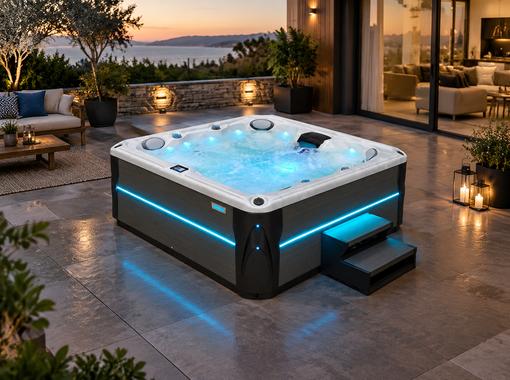
Blue LED lighting positioned at the base of the tub is a common addition across the mid-to-premium tier of the market, and it serves a purpose beyond aesthetics. Soft lighting at night makes it easier to gauge water clarity and creates a calmer environment for evening use, which is why hospitality buyers in particular request it for guest-facing installations.
The manufacturer’s materials describe this lighting as part of what they call a "biomagnetic therapy system," a proprietary term specific to their product line. Buyers should treat that label as a branded feature name rather than an independently verified therapeutic mechanism, and evaluate it primarily as ambient lighting with a calming visual effect rather than a clinical treatment.
Application context tells you more about a swim spa’s real-world value than any spec sheet. Three settings come up repeatedly for compact, 6-person hydrotherapy tubs:
Each scenario shares one requirement: the tub needs to be reliable with minimal onsite technical support, since hotels and homestays rarely have a dedicated maintenance team standing by.
Certification marks get listed on spec sheets constantly, but few buyers know what each one covers. For electrical and safety compliance, look for markings such as CE, CB, SAA, or CTUVus, which indicate the unit has been tested against recognized electrical safety standards in their respective regions.
These certifications confirm electrical and construction safety. They do not verify massage performance, water clarity claims, or how long a shell will last outdoors. Treat them as a baseline requirement rather than a differentiator, since any legitimate manufacturer selling internationally should hold equivalent certification for their target markets.
Narrowing down options gets easier with a short, ordered process rather than comparing every spec side by side:
Does a lower jet count always mean a weaker massage?
Not necessarily. Jet placement and pump pressure matter more than raw count. A well-positioned 35-jet layout can outperform a poorly distributed 60-jet system.
Is ozone sanitization a replacement for chlorine or bromine?
No. Ozone systems reduce the workload on chemical sanitizers by breaking down contaminants faster, but most manufacturers still recommend a low-level chemical sanitizer alongside it.
How much space does a 6-person swim spa actually need?
For a unit sized around 2350 x 2350mm, plan for the footprint plus clearance on at least two sides for panel access during servicing.
Do LED lighting features affect running costs significantly?
LED lighting draws minimal power compared to the heater and pumps, so its impact on the electricity bill is negligible.
Buyers chasing the best value swim spa are better served comparing power draw, sanitation design, and seat ergonomics than chasing the highest jet count or flashiest lighting package. For us, and for most manufacturers building in this mid-size category, the goal is a unit that holds up under daily use without demanding constant attention. That balance, more than any single spec, is what actually defines value in this market.
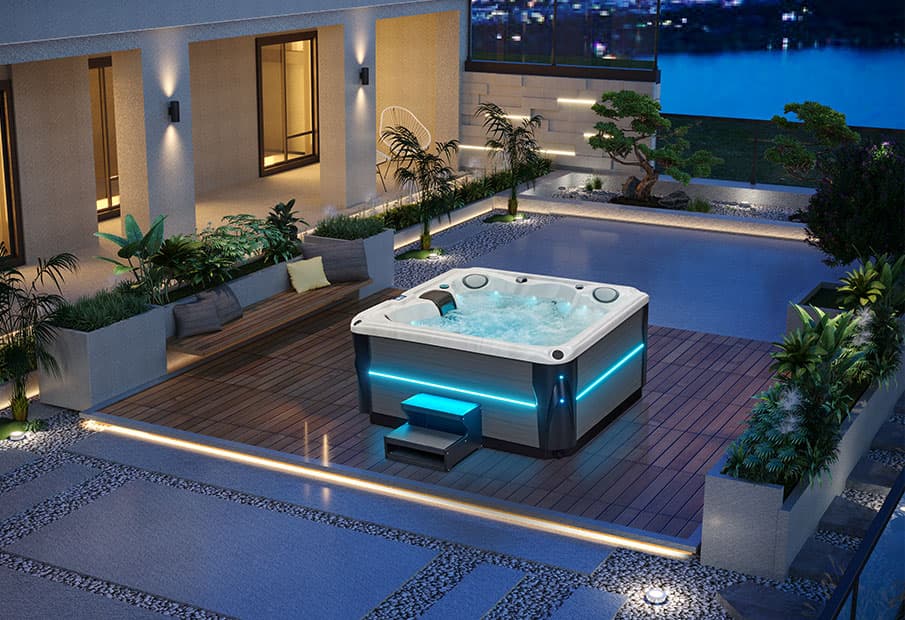
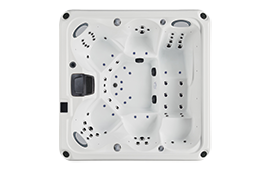
Introducing the Fspa BD-008Pro Hot Tub, a luxurious and spacious sanctuary designed for ultimate relaxation. With dimensions of 2080x2080x900mm, this hot tub comfortably fits up to 6 adults, making it perfect for family gatherings, parties, or a personal retreat.
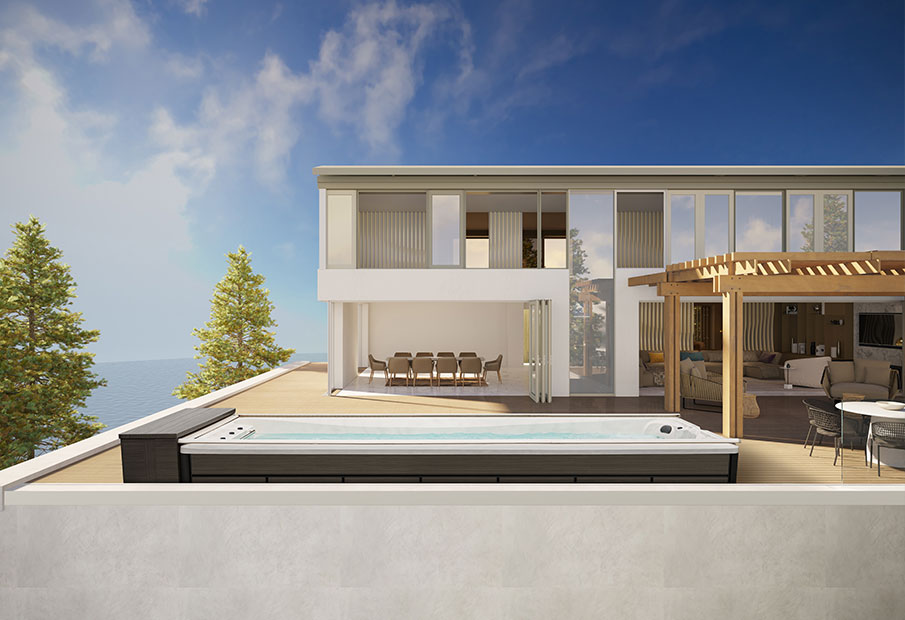
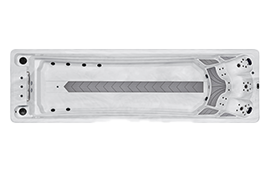
The Infinipool Fspa IP-004 is a luxurious, spacious, and technologically advanced swimming pool.
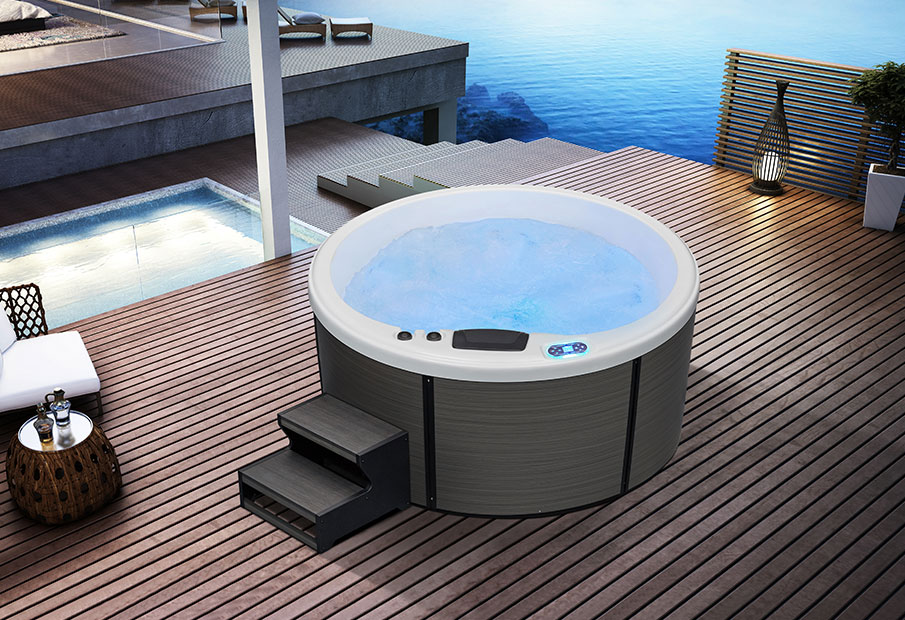
The Fspa BD-017 Hot Tub, accommodating up to 5 adults with spacious dimensions, features a reliable control system, powerful 1.5kW massage pump, 0.35kW filter pump, 3kW heater, 28 customizable water jets, LED lighting, an ozone sanitation system, and a total power of 4.85kW, offering ultimate relaxation and a luxurious soak for any occasion.
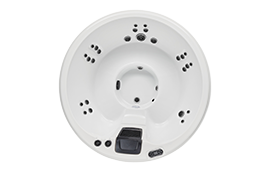
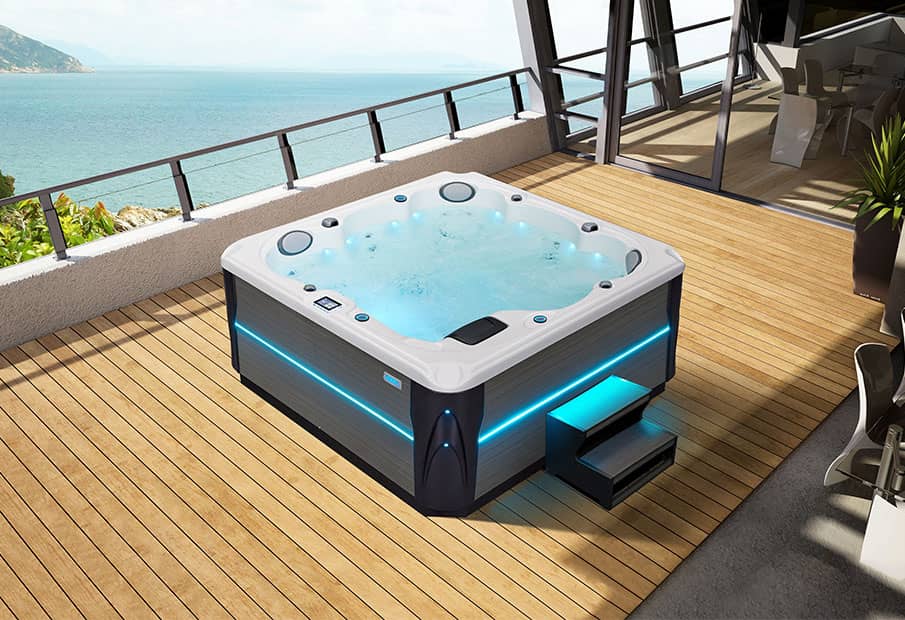
The Fspa BD-012Pro Hot Tub, a luxurious 2160x2160x900mm spa for 6 adults, balances power (4.97kW) and efficiency with features like 34 water & 12 air bubble jets, customizable water flow, LED lighting, music speakers, and pillows, making it a stylish and ideal choice for both residential and commercial relaxation.
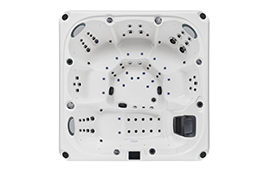
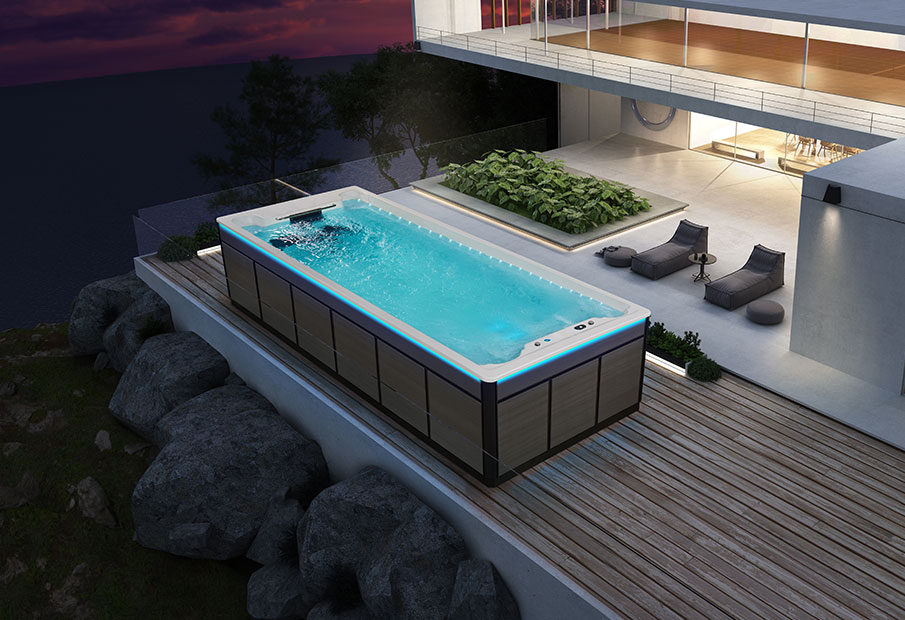
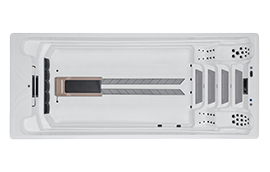
The Infinipool Fspa IP-005Pro is a state-of-the-art, spacious hot tub with advanced features, offering an unparalleled spa retreat for residential and commercial use.
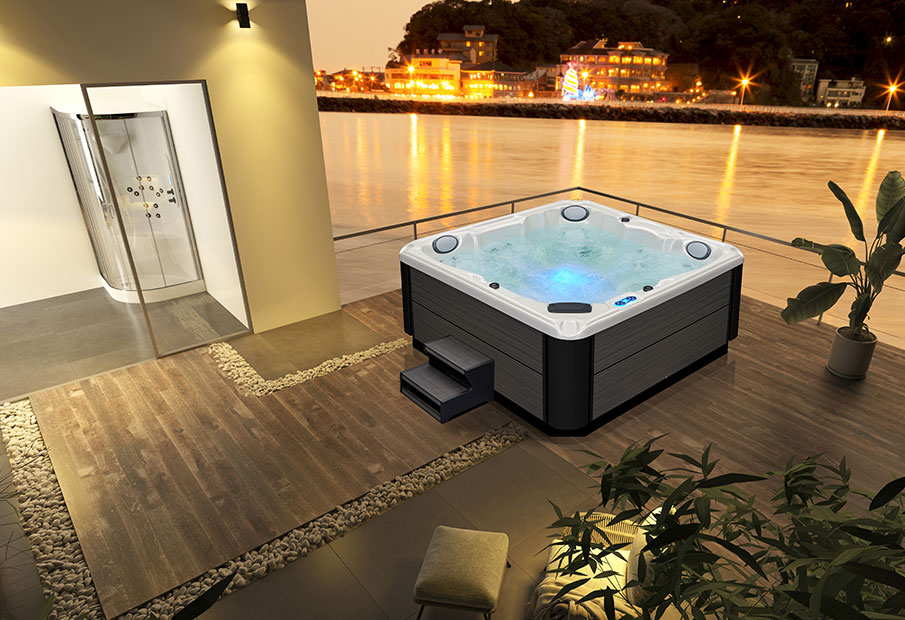
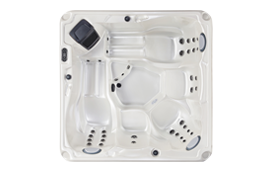
Our premium spa, spacious enough for 5 adults, combines luxury and functionality with a robust control system, high-performance components, advanced filtration and ozone sanitization, 36 jets, adjustable air pillows, and user-friendly controls for ultimate relaxation at home.
PRODUCTS
INQUIRY
Thank you for your message!Our Chinese New Year holiday from 7th Feb to 28th Feb. Apologise to make your inconvenience so that responses may be delayed during this period. We'll back to you with regular service on 2th March .Thank you for understanding.


