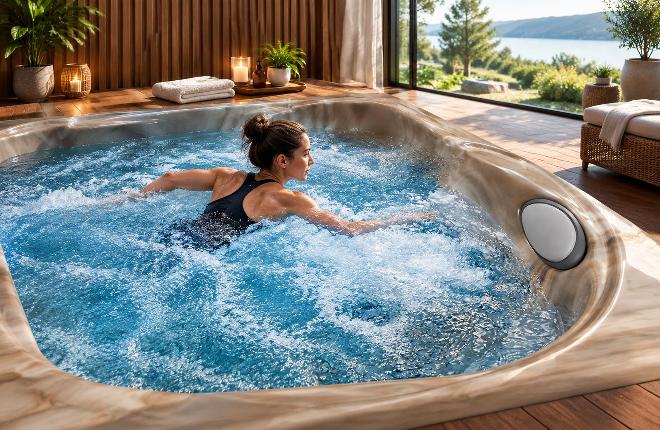
A swim spa for exercise sits at the intersection of two very different needs. One is fitness, the other is recovery. Most people shopping this category are trying to solve a space problem too: they want swimming-style resistance training without building a full lap pool. That single fact shapes almost every decision that follows, from jet placement to water volume to how the unit gets used across a typical week.
Land is the real constraint for most homeowners. A conventional lap pool needs 25 meters of open run and a excavation budget most backyards can’t absorb. A swim spa compresses that into a footprint closer to a large hot tub, using jet-generated current instead of physical length to create resistance.
This matters most for three groups: people rehabbing an injury who need low-impact cardio, swimmers who want to maintain stroke technique without commuting to a facility, and homeowners who simply don’t have room for a full pool. The tradeoff is real, though. You’re not swimming laps in open water, you’re swimming against a current in a fixed position. Some people love the focus that creates. Others find it takes a session or two to adjust.
The exercise function in most swim spas comes from high-output pump systems pushing water through directional jets, creating a steady current the swimmer works against. It’s a mechanical solution, not a magic one. The strength of that current depends directly on pump wattage and jet count, which is why spec sheets matter more here than the marketing copy around them.
Take a unit like the Fspa BD-004 as a reference point for how these systems are typically built. According to the product’s specifications, it runs on a 5.55kW total power draw, split across a 2.2kW massage pump, a 0.35kW filter pump, and a 3kW heater, feeding 35 jets distributed through the shell. That’s a hydrotherapy configuration rather than a dedicated swim-current system, and it illustrates a distinction worth understanding before you shop: not every "swim spa" is built the same way internally.
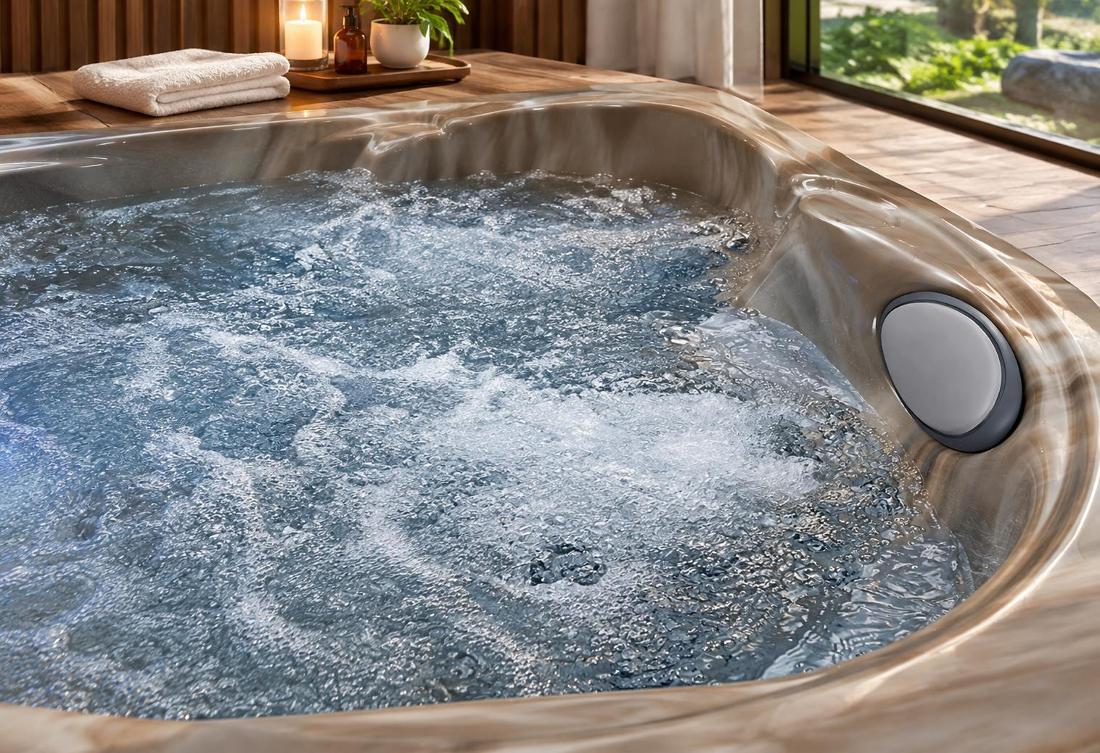
Buyers often use "swim spa" loosely, but the category actually splits into two distinct product types. Understanding which one you’re looking at prevents a mismatched purchase.
| Feature | Hydrotherapy/Massage Spa | Dedicated Swim Spa |
|---|---|---|
| Primary function | Muscle recovery, relaxation | Continuous swim-against-current training |
| Typical capacity | 4-8 people, seated | 1-2 swimmers, open swim zone |
| Jet purpose | Targeted massage on specific muscle groups | Broad, sustained current generation |
| Footprint | Compact, similar to a large hot tub | Longer, pool-like dimensions |
| Best for | Post-workout recovery, joint relief | Structured swim training |
A unit like the BD-004, with its 6-person seated capacity and 2350x2350x900mm footprint, sits firmly in the hydrotherapy category. Its 35 jets and massage pump are configured for targeted muscle recovery rather than open swim resistance, based on the manufacturer’s product specifications. That’s not a shortcoming, it’s a different use case, and it’s a genuinely good one for anyone whose main goal is post-exercise recovery rather than swim training itself.
Here’s something training programs underemphasize: the adaptation from exercise happens during recovery, not during the workout itself. Muscle fiber repair, inflammation reduction, and nervous system reset all occur in the hours after exertion. A spa built around hydrotherapy addresses that half of the equation directly.
Warm water immersion combined with jet massage increases local blood flow to fatigued muscle groups, which is the working principle behind most post-exercise soaking protocols used in physical therapy settings. This is why hotel gyms and rehabilitation centers frequently install spa units alongside their exercise equipment rather than treating them as separate amenities.
For someone strength training four times a week, a 15-20 minute soak afterward isn’t indulgence. It’s part of a recovery routine that keeps the next session productive.
Jet count and placement reveal a lot about a unit’s intended function, more than the headline number usually suggests. On the BD-004, the manufacturer’s specifications describe 35 jets distributed across seating positions with chrome-rimmed nozzles set into contoured seats, following the natural curve of the back and legs rather than blasting a flat pressure zone.
That ergonomic seat design matters for anyone with lower back strain from running or lifting, since poorly angled jets can miss the muscle groups that actually need pressure. A few things worth checking when comparing jet layouts across products:
The BD-004’s product documentation also references a pillow-based support system intended to help spinal alignment during longer soaks, alongside the seat contouring itself.
Water chemistry is the part of spa ownership that surprises new buyers most. A 1450-liter tank, which is the water capacity listed for the BD-004, needs consistent sanitization to stay usable, and manual chlorine dosing gets tedious fast for anyone using the spa multiple times a week.
The BD-004’s integrated ozone sanitization system is described in its specifications as supporting continuous water treatment through the filtration cycle, which can reduce how often you’re manually testing and adjusting chemical levels. It doesn’t eliminate maintenance entirely, but it can lower the weekly time commitment compared to a chlorine-only setup. For a household using the spa for daily post-workout recovery, that difference in upkeep effort adds up over a year.
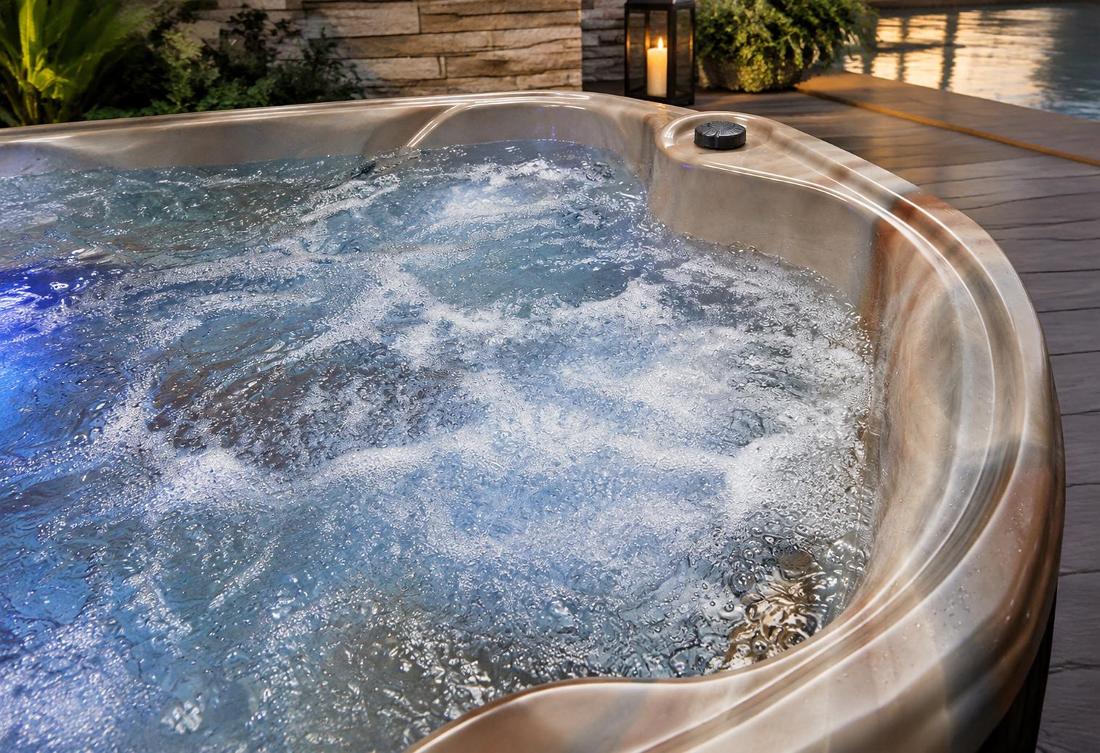
Total power draw and pump wattage tell you what a unit can actually do, independent of how many jets are advertised. A 35-jet system running on a 2.2kW massage pump, as with the BD-004, distributes pressure across all jets simultaneously, so per-jet output is naturally lower than a system with fewer jets on the same pump size.
This is worth understanding before comparing two spec sheets side by side. A few questions to ask when sizing a unit for exercise or recovery use:
Application context shapes expectations more than most buyers realize going in. A spa installed in a hotel gym setting typically serves guests looking for quick post-workout recovery between activities, prioritizing fast turnover and simple controls over extended soak sessions.
A villa backyard installation tends to function differently, often becoming a standing feature for evening relaxation rather than a strictly exercise-adjacent tool. Seaside homestays represent a third pattern entirely, where the spa serves guests unwinding after travel or beach activity rather than structured fitness use.
None of these contexts require a different product, necessarily, but they do suggest different priorities. A gym setting favors quick heat-up and easy panel controls. A residential backyard setting rewards ambiance features like the LED lighting many units include along seating and cabinet edges.
Is a hydrotherapy spa a substitute for swim training?
No. A hydrotherapy spa, even one with a strong jet system, is built for massage and muscle recovery rather than sustained swim-against-current training. If structured swim exercise is the primary goal, look specifically for a dedicated swim spa with a longer swim channel and continuous current design.
Can jet massage actually reduce muscle soreness after exercise?
Warm water immersion combined with directed jet pressure increases blood flow to targeted areas, which supports standard recovery protocols used in physical therapy. Results vary by individual and intensity of prior exercise.
How much maintenance does an ozone-equipped spa need?
Ozone systems reduce the frequency of manual water treatment but don’t eliminate it. Regular filter checks and periodic water changes are still required regardless of sanitization method.
Does jet count alone indicate a stronger massage?
Not necessarily. Jet count matters alongside pump wattage and jet placement. A high jet count on a lower-wattage pump distributes pressure more thinly than fewer jets on the same pump.
The right choice comes down to matching product type to routine, not chasing the highest jet count or the largest seating capacity. Someone doing structured swim training four mornings a week needs a dedicated swim spa with real current resistance. Someone lifting weights or running who wants a recovery ritual afterward is better served by a hydrotherapy-focused unit with well-placed jets and reliable sanitization.
For us, that distinction guides how we describe products like the BD-004: as a recovery-oriented hydrotherapy spa suited to post-workout use, hotel gym settings, and residential relaxation, rather than a swim-training device. Buyers evaluating any swim spa for exercise should start with that same question. What does a typical week of use actually look like, and which product category matches it? Getting that answer right before purchase saves far more frustration than any spec sheet comparison ever will.
The Wim Hof Method and Hot Tub Recovery: What Cold Exposure Fans Should Know About Heat Therapy
The wim hof method has pulled cold exposure out of niche wellness circles and into mainstream conversation. Breathing exercises, ice baths, and controlled hyperventilation now sit alongside yoga and running as recognizable self-improvement routines. But contrast therapy, the practice of alternating cold and heat, has always been part of the bigger picture. Anyone serious about the wim hof method eventually asks a practical question: what happens after the cold?
This article looks at where heat exposure fits into a cold-training routine, why the body responds the way it does, and how a home spa pool can support the recovery half of the equation.
The wim hof method combines three pillars: controlled breathing, gradual cold exposure, and mental focus. Practitioners typically start with breathing cycles that raise blood oxygen and temporarily lower carbon dioxide levels, followed by breath retention. Cold exposure comes next, often through cold showers or ice baths.
The claimed benefits circulating online range from improved immune response to reduced inflammation. Some of these claims come from limited clinical studies with small sample sizes, and results vary between individuals. What is better established is the subjective effect: people report feeling more alert, calmer under stress, and more in control of their physiological responses after consistent practice.
None of this happens without risk. Breath retention combined with cold water can cause dizziness or, in rare cases, blackout. Anyone with cardiovascular conditions should talk to a doctor before starting.
Cold water triggers vasoconstriction, meaning blood vessels narrow and blood flow to the skin and extremities drops. This is part of why cold exposure feels invigorating. It also means muscles tighten, and the nervous system shifts into a mild stress response.
That stress response is the point of cold training. But a body that stays constricted and tense doesn’t recover well on its own. Heat does the opposite job. Warm water causes vasodilation, blood vessels widen, circulation increases, and muscles loosen. Athletes have used hot-cold contrast for decades in physical therapy settings for exactly this reason.
Think of cold exposure as tightening a spring and heat as letting it unwind. Skip the unwinding phase often enough, and soreness or stiffness tends to build up over time, especially for people combining ice baths with regular training.
Contrast therapy is not a new invention paired with the wim hof method, but the two practices overlap naturally. A structured contrast routine generally follows a simple pattern:
The heat phase is where a dedicated spa pool becomes genuinely useful rather than optional. A bathtub can work in a pinch, but it lacks the water volume, jet placement, and sustained temperature control that make the recovery phase consistent day after day.
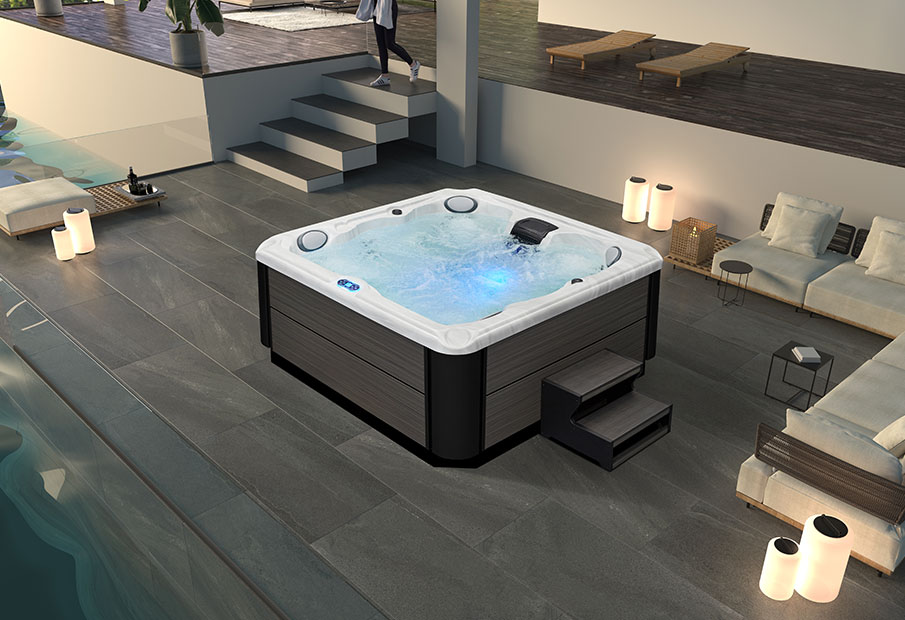
Not every hot tub is built with recovery in mind. Some are designed purely for social soaking, which is fine, but doesn’t address the muscular tension that follows intense cold exposure. A few practical factors matter more than aesthetics here.
Jet placement and count affect how targeted the hydrotherapy feels. A pool with jets concentrated around the back, shoulders, and calves addresses the areas that tighten most during cold immersion. Heater power determines how quickly the water returns to a usable temperature after it’s been sitting, which matters if contrast sessions happen daily rather than occasionally. Water capacity and pump strength together decide whether the massage effect feels strong enough to be therapeutic rather than just warm.
The Fspa BD-001, for example, is built around this kind of specification profile rather than pure aesthetics.
| Specification | BD-001 Detail |
|---|---|
| Dimensions | 2100 x 2100 x 900mm |
| Seating Capacity | 6 adults |
| Water Capacity | 1000L |
| Jets | 31 pcs |
| Massage Pump | 2.2kW |
| Heater | 3kW |
| Filter Pump | 0.35kW |
| Total Power | 5.55kW |
| Net Weight | 268kg |
According to the product specifications, the unit’s 31 jets and 2.2kW massage pump are arranged to cover the seating area, with ergonomic placement described in the product details as supporting back and shoulder hydrotherapy. That kind of coverage is relevant for anyone using heat as the second half of a contrast routine rather than just for casual soaking.
Recovery sessions after cold exposure tend to run longer than a quick dip, sometimes fifteen to twenty minutes of sitting in warm water while the nervous system downshifts. Comfort features that seem minor in a showroom start to matter once someone is actually using the tub regularly.
The BD-001 includes four integrated pillows designed to support the neck and align the spine, according to its product details. That’s a small thing until the fifth session in, when neck strain from poor positioning starts undercutting the relaxation benefit entirely.
Ambient lighting plays a role too, though it’s easy to dismiss as decorative. The unit’s LED lighting and blue-lit control panel create a calmer visual environment, which pairs naturally with the mental-focus component that the wim hof method already emphasizes. Recovery isn’t purely physical, and a harshly lit, clinical-feeling tub works against the mental settling that contrast therapy is partly meant to encourage.
Anyone doing contrast therapy regularly is refilling or maintaining their spa water more often than a once-a-week soaker would. Filtration becomes a bigger deal under that usage pattern, not a minor spec sheet line.
The BD-001 uses a dedicated 0.35kW filter pump paired with an ozone system, intended to keep water hygienic between full changes. Ozone systems work by oxidizing organic contaminants, which reduces the chemical load needed to keep water sanitary. This matters practically: nobody wants to step from an ice bath into cloudy or poorly maintained water, since it undercuts the entire point of the recovery ritual.
Is it safe to go straight from an ice bath into a hot tub?
Most contrast therapy guidance recommends a brief rest between cold and heat phases rather than an immediate switch, allowing heart rate and blood pressure to stabilize first. People with cardiovascular conditions should consult a doctor before attempting contrast routines.
How hot should the water be for the recovery phase?
Therapeutic soaking is generally done between 37°C and 40°C. Going much higher increases strain on the cardiovascular system, especially right after cold exposure has already stressed it.
Do I need a hot tub, or is a warm shower enough?
A warm shower can work for basic recovery, but it doesn’t provide the sustained immersion, hydrotherapy jets, or consistent temperature control that make a dedicated spa pool more effective for repeated use.
Can heat exposure replace the cold phase of the wim hof method?
No. The cold exposure phase is what drives the physiological training effect the method is built around. Heat supports recovery afterward; it isn’t a substitute for the cold component itself.
Consistency matters more than intensity when it comes to both cold exposure and recovery. A punishing ice bath followed by no recovery phase at all tends to produce diminishing returns and, for some people, injury from overly tense muscles during daily activity afterward.
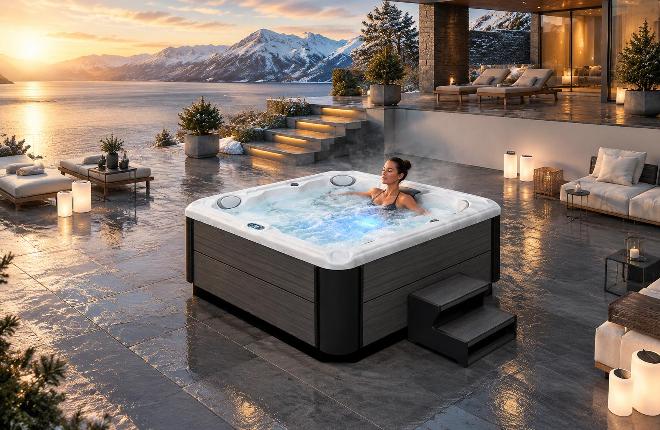
Setting up a home space where both phases are easy to access changes adherence dramatically. Outdoor installations work well for this, whether in a backyard, on a covered patio, or as part of a small home wellness area. Fspa’s product line, including compact multi-functional pools like the BD-001, is built for these kinds of residential outdoor setups rather than commercial-scale installations.
For us, the goal with this category of product has been building spa pools sized and equipped for exactly this kind of daily-use recovery routine, not just occasional entertaining.
The wim hof method will likely keep growing in popularity as more people look for structured ways to build resilience to cold and stress. Pairing it thoughtfully with a proper heat recovery phase, supported by the right equipment, turns an intense practice into a sustainable one. Whether someone is just starting cold showers or already deep into ice bath training, treating the warm-up phase with the same intention as the cold phase tends to produce better long-term results than focusing on discomfort alone.
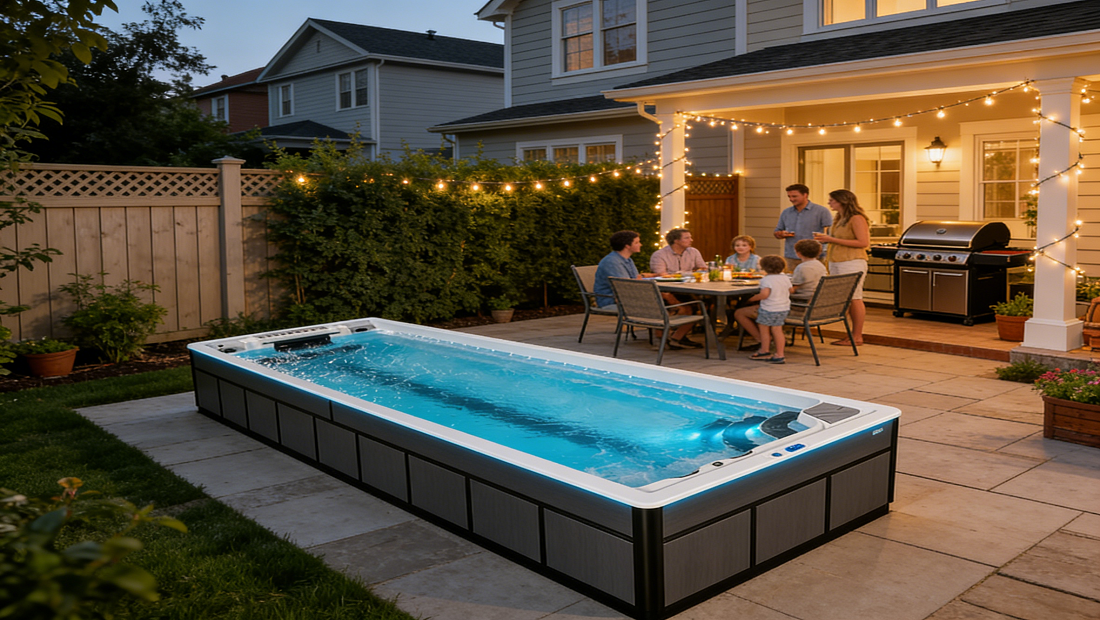
Transform Your Home with a Backyard Jacuzzi
Investing in a backyard jacuzzi is one of the best ways to create a personal retreat at home. Whether you are looking for relaxation, social gatherings, or a luxurious outdoor feature, a high-quality spa can elevate your lifestyle. With so many options, including cheap jacuzzi models and premium large jacuzzi tub designs, there’s a perfect choice for every home. For homeowners searching for spa baths for sale, working with trusted spa dealers like fspa ensures quality, durability, and professional guidance.
When selecting an outdoor jacuzzi for sale, several factors should be considered. Size is a critical element—while a large jacuzzi tub can accommodate multiple people and create a striking backyard centerpiece, a smaller backyard jacuzzi may be perfect for intimate settings or limited outdoor space. Modern outdoor jacuzzi tubs for sale come in a variety of shapes, features, and styles, from compact and affordable cheap jacuzzi options to expansive luxury models.
Functionality is another important consideration. Many large jacuzzi tub designs and backyard jacuzzi models feature adjustable jets, energy-efficient heating, LED lighting, and ergonomic seating. These features enhance your hydrotherapy experience while making your spa a versatile entertainment and relaxation hub. Outdoor jacuzzis are ideal for year-round enjoyment, allowing you to unwind under the stars or host friends and family in a serene outdoor environment.
Professional spa dealers like fspa offer guidance to help you select the best outdoor jacuzzi for sale. They ensure that your investment matches your space, lifestyle, and desired features. With access to a range of spa baths for sale, you can choose from classic designs to modern, technology-rich models tailored to your needs.
Owning a backyard jacuzzi provides a multitude of benefits, from physical relaxation to mental wellness. Hydrotherapy in a large jacuzzi tub or a compact cheap jacuzzi helps relieve muscle tension, reduce stress, and improve circulation. This makes it an excellent solution for post-workout recovery or relaxation after a long day.
A backyard jacuzzi also increases the aesthetic appeal and value of your home. Whether you choose a large jacuzzi tub for social gatherings or an outdoor jacuzzi tub for sale for personal relaxation, these spas become a centerpiece for outdoor entertainment. Additionally, spas allow you to enjoy the benefits of hydrotherapy in the comfort of your own home, without the need for expensive trips to commercial spas or wellness centers.
For families or couples, a large jacuzzi tub fosters shared relaxation, creating memorable moments while promoting health and wellness. Affordable options like a cheap jacuzzi allow first-time buyers to experience spa luxury without a significant investment. Working with trusted spa dealers ensures your jacuzzi is installed properly and maintained efficiently for years of enjoyment.
Whether you are searching for a cheap jacuzzi, a backyard jacuzzi, or a premium large jacuzzi tub, investing in an outdoor spa is a lifestyle upgrade. With a wide selection of outdoor jacuzzi tubs for sale and spa baths for sale, homeowners can find the perfect fit for any backyard or patio. Partnering with professional spa dealers like fspa ensures expert guidance, quality, and lasting satisfaction. Upgrade your home today and enjoy the ultimate relaxation experience with a backyard jacuzzi designed to suit your needs.
A backyard jacuzzi is an outdoor spa designed for relaxation and hydrotherapy. Unlike standard hot tubs, it often includes advanced features like adjustable jets, LED lighting, and ergonomic seating.
Yes, a cheap jacuzzi provides many of the benefits of luxury models at a lower price. Many outdoor jacuzzi tubs for sale combine affordability with quality for first-time spa owners.
Many large jacuzzi tub designs are customizable. Even in smaller spaces, spa dealers can recommend layouts or compact models that maximize relaxation without overwhelming the backyard.
Trusted spa dealers like fspa offer a variety of spa baths for sale and outdoor jacuzzi for sale options, from small, affordable models to luxurious large jacuzzi tubs.
A backyard jacuzzi provides hydrotherapy benefits, reduces stress, relieves muscle tension, and creates an attractive space for outdoor entertainment. It’s a long-term investment in health, relaxation, and property value.
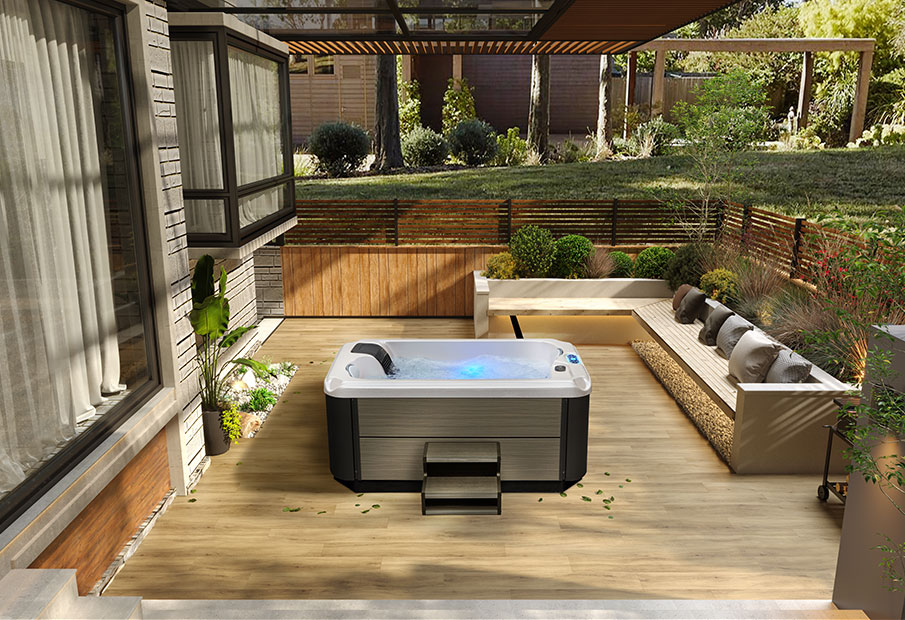
The Fspa BD-016 Hot Tub, designed for 2 adults, offers luxurious comfort with a spacious interior, powerful 1.5kW massage pump, 0.35kW filter pump, 2kW heater, customizable water flow with 14 jets, ozone sanitation, LED lighting, comfortable pillows, and a total power of 3.85kW, providing a tranquil escape for ultimate relaxation.
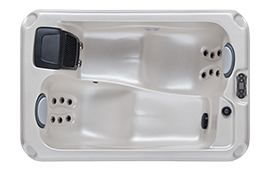
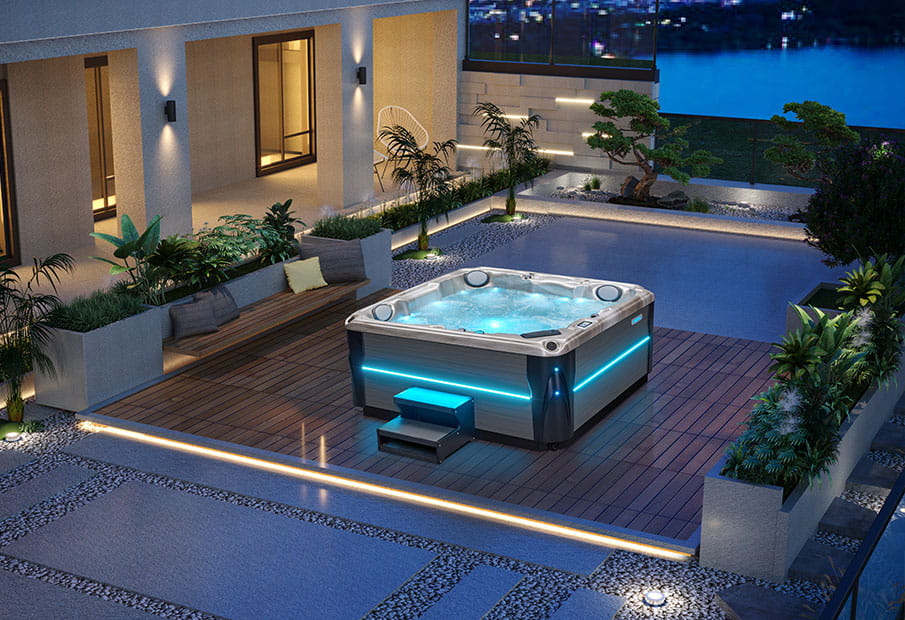
The Fspa BD-006Pro Hot Tub, with its compact spacious design for 5 adults, advanced massage system, 80 water & 18 air bubble jets, efficient heating and filtration, ozone sanitization, and sleek design, offers unparalleled luxury, relaxation, and convenience for both residential and commercial use.
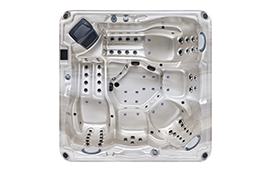
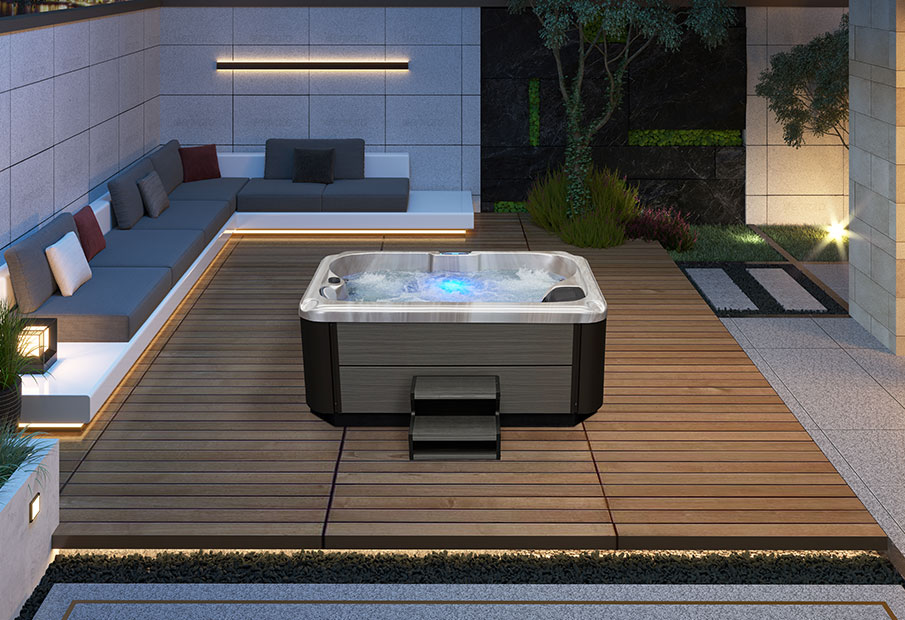
Our luxurious Fspa BD-003 spa tub, designed for 3 adults with ample space (1870x1330x800mm), features a comprehensive control system, powerful massage pump, gentle filter pump, temperature control, clean water filter, LED lighting, 16 massage jets, and sanitation ozone system, offering a perfect therapeutic escape for you and your loved ones.
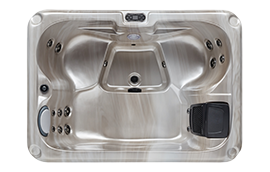
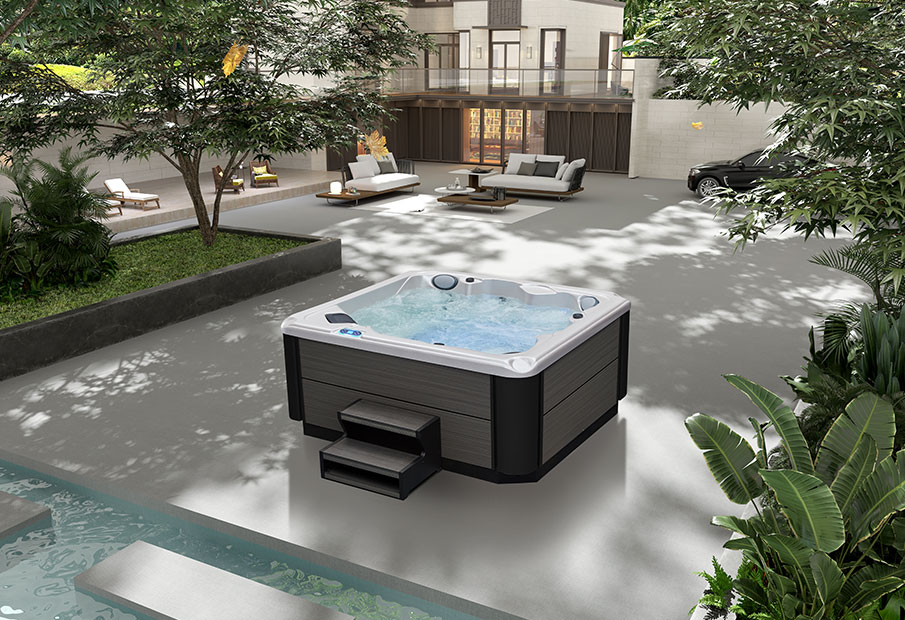
Our Fspa BD-007 Hot tub, measuring 2160x2160x900mm and accommodating 5 adults, combines luxury and comfort with a robust control system, powerful massage jets, sanitized water, ambient LED lighting, adjustable pillows, and energy efficiency, making it perfect for wellness enthusiasts in both residential and commercial settings.
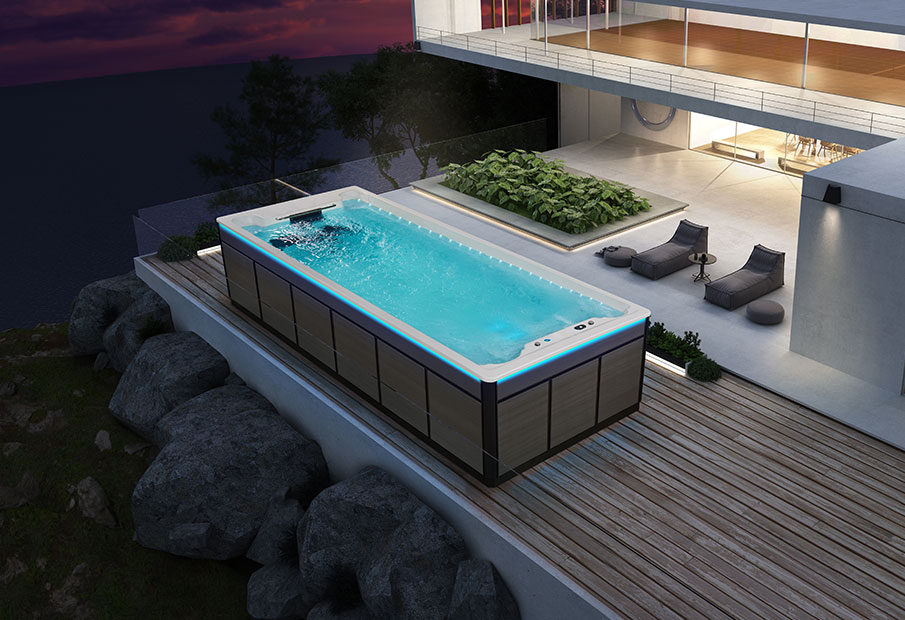
The Infinipool Fspa IP-005Pro is a state-of-the-art, spacious hot tub with advanced features, offering an unparalleled spa retreat for residential and commercial use.
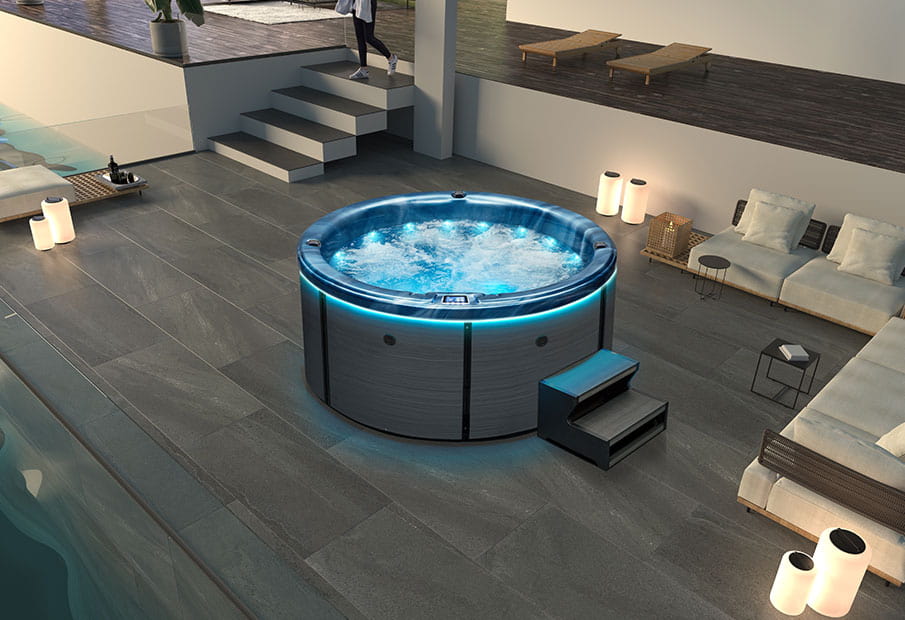
The Fspa BD-009Pro Hot Tub, a compact 2000x900mm spa for up to 6 adults, combines power and efficiency with luxurious features like a 7.97kW system, 50 water & 20 air bubble jets, LED lighting, and music speakers, making it ideal for residential and small commercial spaces.
PRODUCTS
INQUIRY
Thank you for your message!Our Chinese New Year holiday from 7th Feb to 28th Feb. Apologise to make your inconvenience so that responses may be delayed during this period. We'll back to you with regular service on 2th March .Thank you for understanding.


