A world record cold plunge sounds like an extreme feat reserved for athletes chasing headlines. But the physiology behind it explains something far more practical: why cold exposure has become a mainstream recovery tool. Understanding what happens to the body during record-setting cold immersion helps ordinary users set realistic goals, avoid injury, and choose equipment that actually supports safe, repeatable cold therapy at home.
Record attempts in cold water immersion typically measure either duration in near-freezing water or full-body submersion time in ice baths under supervised conditions. These events are usually documented by organizations like Guinness World Records, with strict protocols for water temperature, medical monitoring, and verification.
For most people, though, the number that matters isn’t a record time. It’s a sustainable routine. Elite cold exposure athletes train for years to tolerate extended immersion, and their bodies adapt through repeated, gradual exposure rather than a single dramatic attempt. Trying to replicate record-length sessions without that conditioning is where injuries happen.
Cold water immersion triggers a rapid physiological cascade. Skin receptors detect the temperature drop and send signals that cause blood vessels to constrict, redirecting blood toward the body’s core. Heart rate and breathing rate spike almost immediately.
This response, often called the cold shock response, is strongest in the first 60 to 90 seconds of immersion. It’s also the most dangerous window for untrained individuals, since involuntary gasping can lead to water inhalation if the face is submerged. Record holders spend months acclimating their bodies to blunt this reflex before attempting long-duration sessions.
Once past the initial shock, the body shifts into a longer adaptation phase. Circulation patterns stabilize, and many users report a sense of calm alertness. This is the phase most home cold plunge routines are designed around, not the extreme edge that record attempts push toward.
People searching for cold plunge world record information are often curious about extremes, but the underlying appeal usually comes back to recovery, mental clarity, or muscle soreness relief. It helps to separate the two goals clearly.
Once this distinction is clear, the equipment question becomes less about extremes and more about what supports a routine someone can actually stick with.
A record-chasing cold water event and a backyard recovery routine share the same starting ingredient: reliable, consistent water conditions. Without stable temperature control, users either undershoot the benefit or push themselves into genuinely risky territory without realizing it.
This is where spa and hydrotherapy equipment designed for controlled temperature and filtration becomes relevant, even outside the cold plunge conversation specifically. Many outdoor spa units, including hydrotherapy-focused models, are built around digital control panels that let users monitor and adjust water temperature precisely rather than guessing.
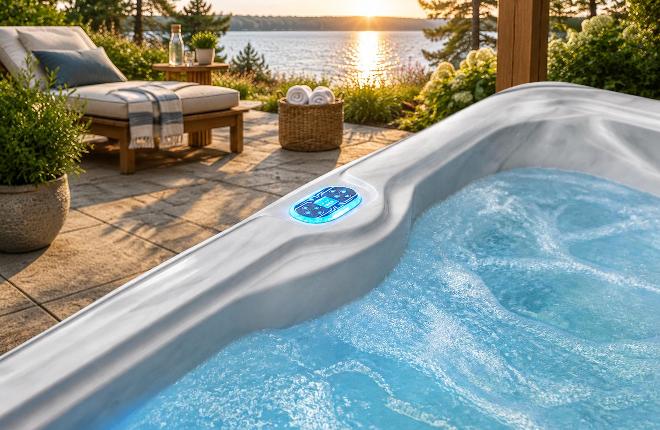
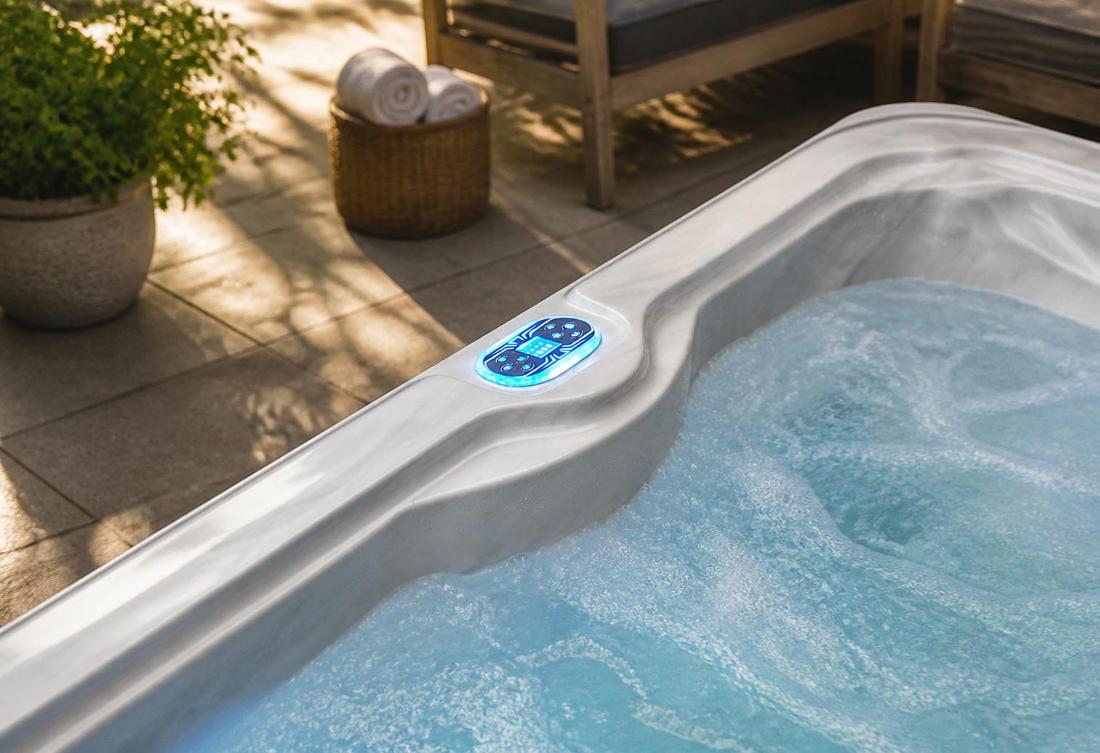
Take a hydrotherapy spa like the BD-001 as an example of how this control layer works in practice. According to the manufacturer’s specifications, it uses a blue-lit digital control panel for temperature monitoring, paired with a 3kW heater and a dedicated 0.35kW filter pump with ozone filtration to keep water clean between sessions. While this particular unit is built for warm hydrotherapy rather than cold immersion, the underlying principle, precise digital temperature control, is exactly what separates a safe recovery routine from guesswork.
Cold exposure rarely works in isolation. Athletes who attempt cold water endurance records often pair their training with contrast therapy, alternating between cold immersion and warm hydrotherapy to manage circulation and muscle recovery. This contrast approach is grounded in basic vascular response, not a proprietary technique.
For home users, this often means owning or accessing both a cold plunge setup and a warm hydrotherapy spa. The warm side of that equation benefits from jet-based massage systems that target sore muscles after intense cold exposure or physical training.
A unit like the BD-001 illustrates this with its 31-jet hydrotherapy system driven by a 2.2kW massage pump, described by the manufacturer as designed to relieve muscle tension across the back and shoulders. According to the manufacturer’s specifications, the seating layout accommodates up to 6 adults, with 4 integrated pillows positioned to support the neck and align the spine during use.
| Feature | Specification |
|---|---|
| Dimensions | 2100 x 2100 x 900mm |
| Capacity | 6 Adults |
| Water Capacity | 1000L |
| Jets | 31pcs |
| Massage Pump | 2.2kW |
| Heater | 3kW |
| Filter Pump | 0.35kW |
| Certifications | CE, CTUVus, CB, SAA |
For someone building a full recovery routine around cold exposure, having a warm hydrotherapy option nearby makes the contrast therapy portion far easier to sustain consistently.
Choosing between cold plunge equipment and hydrotherapy spa units depends heavily on how someone plans to use them. A few questions help narrow the decision.
Answering these honestly prevents an expensive mismatch, like buying a large social hydrotherapy spa when the real goal was solitary cold immersion training, or the reverse.
Is it safe to try to break a cold plunge world record without training? No. Documented record attempts involve extensive acclimation and medical supervision. Attempting extended cold immersion without that preparation carries real risk, including hypothermia and cardiac stress.
How does hydrotherapy support cold exposure routines? Warm hydrotherapy, using jet systems and heated water, helps manage the vasodilation phase after cold exposure, supporting circulation and easing muscle tightness through contrast therapy.
What should I look for in a hydrotherapy spa if I already do cold plunges? Focus on precise digital temperature control, adequate jet coverage for the muscle groups you train, and filtration systems like ozone treatment that keep water hygienic between uses.
Do I need a large spa if I only use it for personal recovery? Not necessarily. Sizing should match how many people will use it and available outdoor or balcony space, not just record-chasing ambitions.
The appeal of a world record cold plunge lies in what it reveals about the body’s limits, but very few people need to approach those limits to benefit from cold therapy. What matters more is consistency, proper acclimation, and pairing cold exposure with adequate warm recovery support.
For households or facilities serious about building this kind of routine, whether at a fitness center, wellness retreat, or private backyard, having both cold immersion and hydrotherapy equipment on hand turns an occasional cold plunge attempt into a genuinely sustainable recovery habit, one grounded in physiology rather than spectacle.
Choosing a 2 Person Swim Spa: What Actually Matters
A 2 person swim spa sounds like a contradiction at first. Swim spas are usually associated with long, lap-friendly tanks built for exercise, while the phrase "2 person" suggests something smaller and more intimate. In practice, most buyers searching this term aren’t hunting for a lap pool at all. They want a compact hydrotherapy unit sized for a couple, something that fits a balcony, a small backyard, or a corner of a hotel courtyard without demanding a full renovation. Understanding that distinction early saves a lot of wasted browsing.
Swim spas, by the traditional definition, combine a resistance current with a long tub so a swimmer can move in place. A 2 person swim spa, by contrast, usually refers to a compact hot tub or spa pool built for two occupants that still delivers a hydrotherapy session through jets rather than a current. The jets replicate the muscle-loosening sensation of a massage without needing several meters of water to do it.
This matters because square footage is the single biggest constraint for most residential buyers. A unit like the BD-001, at 2100x2100x900mm, occupies roughly the same footprint as a large dining table. That’s a realistic fit for an indoor balcony or a modest backyard corner, which is exactly where this search term tends to lead people.
Before comparing specs, it helps to separate the buyer types, since their priorities diverge quite a bit.
Each of these use cases points toward the same underlying need: consistent water therapy in a footprint that doesn’t require major structural changes.
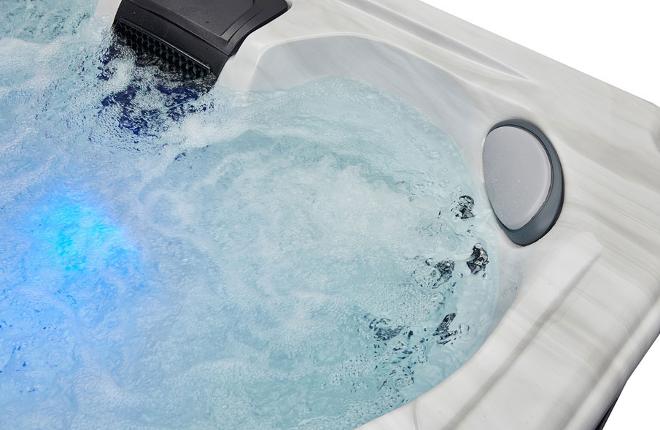
Jet count gets thrown around as a marketing number, but the real question is placement and pump capacity. The BD-001, for example, uses 31 jets powered by a 2.2kW massage pump, arranged around the seating shell to target the back, shoulders, and legs rather than firing randomly, according to the product’s specifications. This kind of ergonomic layout is what separates a therapeutic session from just sitting in agitated water.
Four integrated pillows support the neck and help align the spine while seated, which matters more than it sounds. Poor neck support during a 20-minute soak can leave someone with more tension than they started with, especially after a long flight or a day of manual labor. This is a detail hotels in particular should weigh carefully, since guest comfort during a short stay depends on getting these small ergonomic choices right.
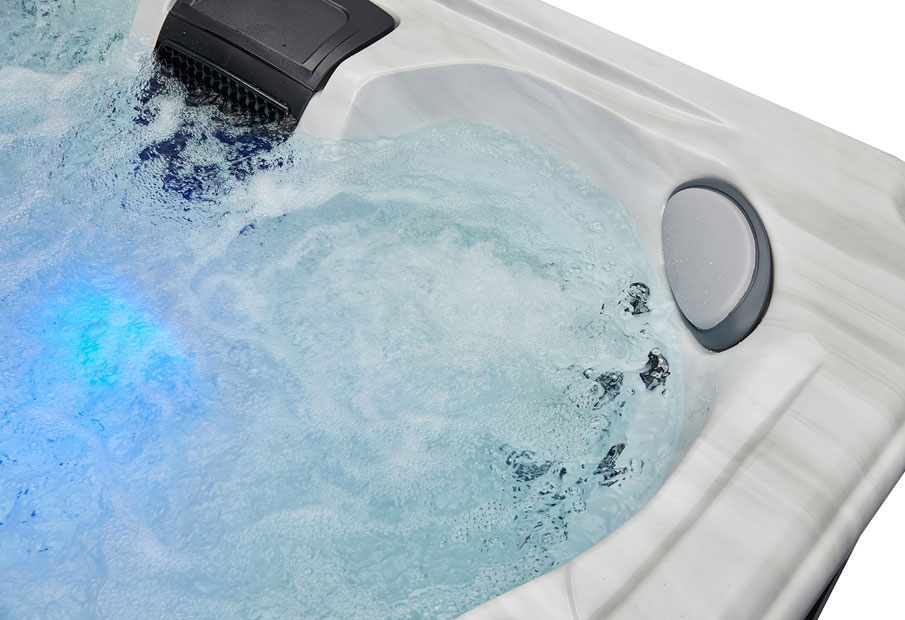
Water quality and temperature stability are the two things that quietly determine whether a spa gets used daily or becomes an expensive backyard ornament. A 3kW heater needs to recover temperature after the cover comes off, particularly in cooler climates where heat loss happens fast. Filtration, meanwhile, runs continuously in the background, and a dedicated 0.35kW filter pump paired with an ozone system helps keep water clear between full changes.
Below is a snapshot of the core specifications worth checking when comparing any compact spa pool.
| Specification | Detail |
|---|---|
| Dimensions | 2100 x 2100 x 900mm |
| Seating Capacity | Up to 6 adults |
| Water Capacity | 1000L |
| Net Weight | 268kg |
| Total Power | 5.55kW |
| Massage Pump | 2.2kW |
| Filter Pump | 0.35kW |
| Heater | 3kW |
| Jet Count | 31 |
| Certifications | CE, CTUVus, CB, SAA |
Note that this particular model comfortably seats up to 6 adults, so it works equally well for a couple wanting quiet evenings or a small household hosting guests. That flexibility is worth factoring in even if the initial search was for something strictly built for two.
A spa is only as convenient as its control panel. Digital interfaces with a backlit display let users adjust temperature and pump settings without guesswork, which matters most in the first few weeks of ownership when routines are still forming. The BD-001’s blue-lit panel is mounted directly into the rim, keeping the controls within reach of the seating area rather than tucked into a side cabinet.
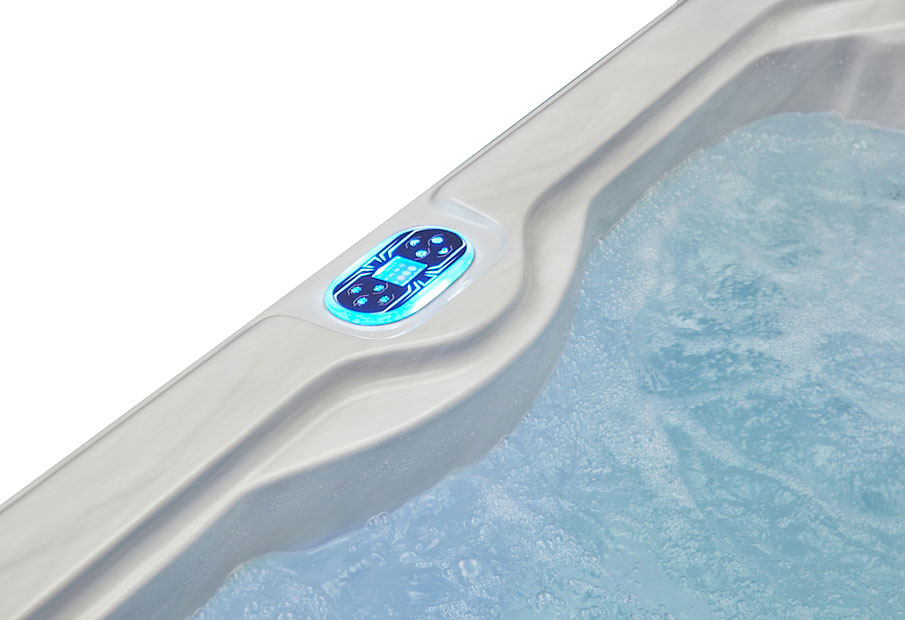
LED lighting and biomagnetic elements, including blue bottom lighting, are described in the product’s own materials as features intended to enhance ambiance, though such effects are more about atmosphere than measurable function. Ambiance does affect how often a spa gets used. A unit that looks inviting at dusk tends to see more regular use than one that only gets switched on for special occasions.
Placement decisions should follow a simple sequence rather than guesswork.
Skipping any of these steps is how homeowners end up with a spa that technically fits but strains the deck or trips the breaker during peak use.
Does a 2 person swim spa require a dedicated electrical circuit?
Given the combined draw of the heater, massage pump, and filter pump, most compact spas need a properly rated circuit. Always verify the total power figure against local electrical codes before installation.
Can a compact unit like this handle more than two people occasionally?
Yes, in many cases. A model rated for up to 6 adults offers headroom for social use even if daily use is just two people, which adds practical value for hosting.
Is ozone filtration a replacement for regular water changes?
No. Ozone systems support water clarity between changes but don’t eliminate the need for periodic maintenance and chemical balance checks.
How much clearance is needed around the unit?
Clearance requirements depend on cabinet design and service access points, so checking the manufacturer’s installation guide is essential before finalizing placement.
Cost comparisons often stop at the sticker price, but the more useful comparison factors in certifications, warranty coverage, and long-term energy draw. A 1-year warranty combined with internationally recognized certifications like CTUVus and SAA gives some assurance around build quality, even if it doesn’t guarantee zero maintenance over the years.
For hospitality applications, the calculation shifts again. A hotel weighing guest experience against operating costs needs to consider how often the unit will be used, how quickly it recovers temperature between guests, and whether the aesthetic fits the property’s outdoor or indoor design. A dark wood-grain cabinet paired with a marble-effect shell, for instance, tends to suit a boutique or villa setting better than a stark, purely utilitarian tub.
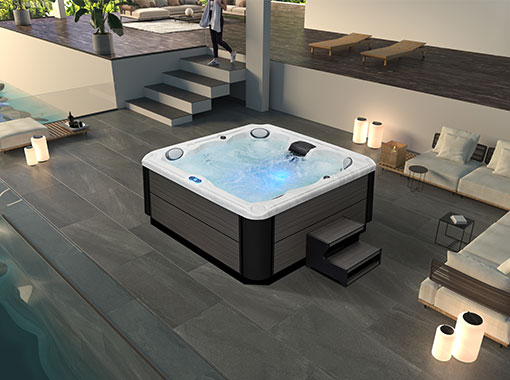
The appeal of a 2 person swim spa isn’t really about swimming at all. It’s about compressing the sense of a wellness retreat into a footprint that fits ordinary homes, balconies, and boutique properties. Buyers who focus on jet placement, heater recovery time, and filtration reliability tend to end up far happier with their purchase than those who choose based on looks alone. For companies like us, working across villa, hotel, and rehabilitation applications, the goal has consistently been matching the right compact unit to the space it needs to serve, rather than pushing the largest tub possible. Anyone comparing options should treat a 2 person swim spa less as a scaled-down pool and more as a purpose-built hydrotherapy tool suited to smaller, more personal spaces.
Rectangular Pools with Spa: Choosing a Layout That Actually Works
Rectangular pools with spa combinations remain the most requested layout among homeowners, hoteliers, and wellness operators for one simple reason: geometry solves problems that curved shells cannot. A rectangular footprint stacks cleanly against property lines, fits standard deck materials without custom cuts, and leaves a defined corner or end for a spa module. This guide breaks down how to plan that pairing, what technical factors matter, and where a portable spa unit fits into the equation when a built-in isn’t practical.
A straight-edged pool gives designers a fixed reference line. That matters more than it sounds. Curved pools force a spa into an awkward tangent, often wasting deck space around the seam. Rectangles avoid that entirely.
Placing the spa at one narrow end creates a natural flow: laps in the long axis, soak at the short end. This layout also simplifies plumbing runs, since straight pipe paths between filtration equipment and the spa jets reduce friction loss compared to curved routing. For contractors working on tight lots, that efficiency translates into shorter install timelines and fewer custom fittings.
There’s also a psychological angle worth mentioning. Rectangular geometry reads as calm and orderly, which is part of why hotels and spas gravitate toward it. A homeowner soaking after a long day doesn’t need visual noise; a clean edge against water does more for relaxation than an elaborate shape ever could.
Not every rectangular pool project has room, budget, or structural approval for a poured-in-place spa. Retrofitting an existing rectangular pool with a built-in spa often means breaking concrete, rerouting plumbing, and waiting weeks for curing. That’s a lot of disruption for a feature meant to add relaxation.
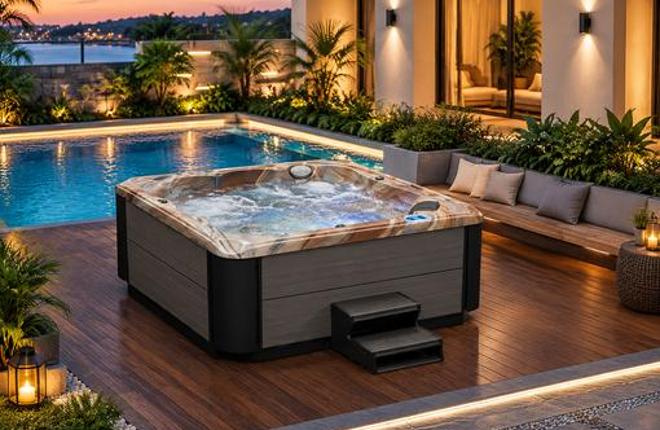
This is where a standalone portable hot tub earns its place. Positioned at the end of a rectangular pool deck, a unit like the Fspa BD-004 delivers the soaking experience without touching the pool’s structure. It ties into the same outdoor space visually while staying completely independent mechanically, which matters if the pool ever needs resurfacing or plumbing work later.
Before adding a spa element next to a rectangular pool, it helps to know what a mid-size unit actually offers on paper. Below is a breakdown of a 6-person configuration, the size most commonly paired with residential rectangular pools.
| Specification | Detail |
|---|---|
| Capacity | 6 adults |
| Dimensions | 2350 x 2350 x 900 mm |
| Total power draw | 5.55 kW |
| Massage pump | 2.2 kW x 1 |
| Filter pump | 0.35 kW x 1 |
| Heater | 3 kW x 1 |
| Jet count | 35 |
| Water capacity | 1450 L |
| Net weight | 317 kg |
| Certifications | CE, CTUVus, CB, SAA |
That jet count and pump split matter for a practical reason. A dedicated 2.2 kW massage pump keeps hydrotherapy pressure separate from filtration, so water clarity doesn’t suffer while jets are running. Homeowners who’ve dealt with underpowered spas know the frustration of weak jets whenever the filter cycle kicks in; separating the two circuits avoids that entirely.
Deciding where a spa unit sits relative to the pool shape isn’t just aesthetic. It affects deck traffic, sightlines, and even electrical routing. A few placement patterns work consistently well:
Each approach has tradeoffs. End-cap placement looks the most integrated but requires more careful deck leveling. Separated zones sacrifice visual unity for easier maintenance access, since a technician can reach the equipment bay without stepping around pool furniture.
Jet count gets quoted often, but it’s not the only spec that determines comfort. Seat contouring, lighting, and water treatment all shape the actual experience once someone steps in.
The BD-004, for example, uses ergonomically contoured seats and backrests designed to follow the body’s natural curve, which reduces pressure points during longer soaks. Headrests use a padded pillow design intended to support neck alignment, a detail that sounds minor until you’ve sat in a spa with a flat, unsupported rim.
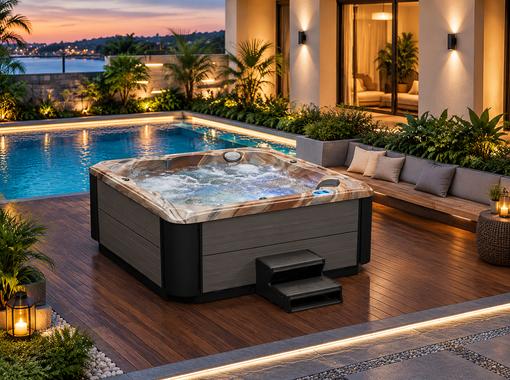
Lighting plays a role too, though more for ambiance than function. Bottom-mounted blue LED lighting, as used in this model, creates a calm visual tone rather than a functional therapeutic effect. It’s worth being clear about that distinction: LED lighting sets mood, while jet placement and pump power handle the actual massage performance.
Running a rectangular pool and a spa side by side doubles the water chemistry work unless the spa handles part of it independently. This is where sanitization method matters more than people expect during initial planning.
An integrated ozone system, included in the BD-004, is designed to support water circulation and cleanliness, which according to the product specifications can reduce how often chlorine or bromine levels need manual adjustment. That’s a meaningful convenience for a hotel gym or a B&B where staff turnover means maintenance routines can’t rely on specialized knowledge every shift.
For homeowners, the practical benefit is fewer weekend hours spent testing water. Pools already demand regular monitoring; a spa that manages part of its own sanitization removes one more recurring task from the list.
Does a spa next to a rectangular pool need its own separate filtration system?
Yes, in nearly all portable spa setups. The spa’s pump and heater run independently from the pool’s circulation, which is actually a benefit — it means one system going down for service doesn’t shut off the other.
Can a portable spa be installed on the same deck as an in-ground rectangular pool without structural changes?
Generally yes, provided the deck surface can support the unit’s filled weight. A 6-person spa with 1450 L of water plus a 317 kg shell adds meaningful load, so checking deck rating before installation is a reasonable step.
Is a rectangular pool shape better for lap swimming when paired with a spa?
Rectangular shapes do provide a straighter, unobstructed swim path compared to freeform designs, which is part of why fitness centers and natatoriums favor them even before a spa is added to the plan.
How much power does a typical spa add to a property’s electrical load?
A unit in the 5.55 kW range, like the BD-004, needs a dedicated circuit sized appropriately by a licensed electrician. This is separate from the pool pump’s circuit and should be planned during the same electrical review.
Different environments call for different priorities when selecting a spa to pair with a rectangular pool. A villa backyard benefits most from a visually integrated end-cap placement, since the setting already emphasizes calm and privacy. A hotel gym, by contrast, prioritizes recovery function over aesthetics, making jet configuration and durability the deciding factors over lighting or shell finish.
A seaside homestay sits somewhere in between: guests want the view as much as the soak, so placement near a rail or open sightline outweighs strict alignment with the pool’s rectangle. Recognizing which category a property falls into before shopping specs saves time and avoids overpaying for features that won’t get used.
Choosing rectangular pools with spa add-ons comes down to matching structural reality with how the space will actually be used. A straight-edged pool gives flexibility that curved designs don’t, and a well-specified portable spa, whether it’s a compact two-person unit or a 6-person model like the BD-004, extends that flexibility without demanding structural changes to the existing pool. For us, having worked across villa, hotel, and homestay installations, the pattern holds consistently: plan the spa’s placement around real usage first, then let the rectangular geometry do the organizing work it’s naturally suited for.
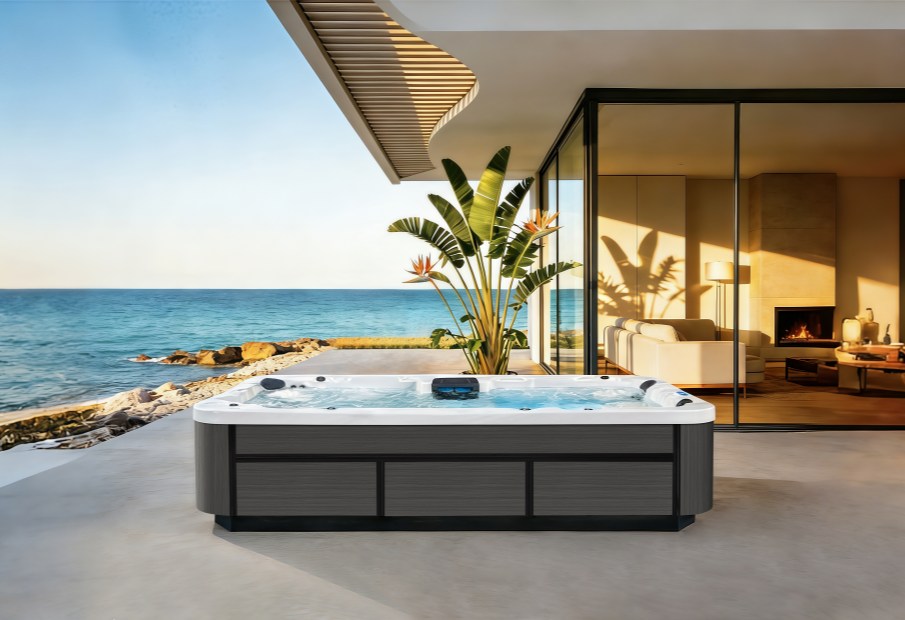
The Fspa BD-020 Hot Tub, designed for 5 adults with spacious dimensions and powered by a 4.85kW system, includes a 1.5kW massage pump, 0.35kW filter pump, 3kW heater, 28 customizable water jets, LED lighting, an ozone sanitation system, and easy maintenance features, providing unparalleled relaxation and comfort.
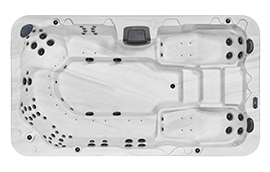
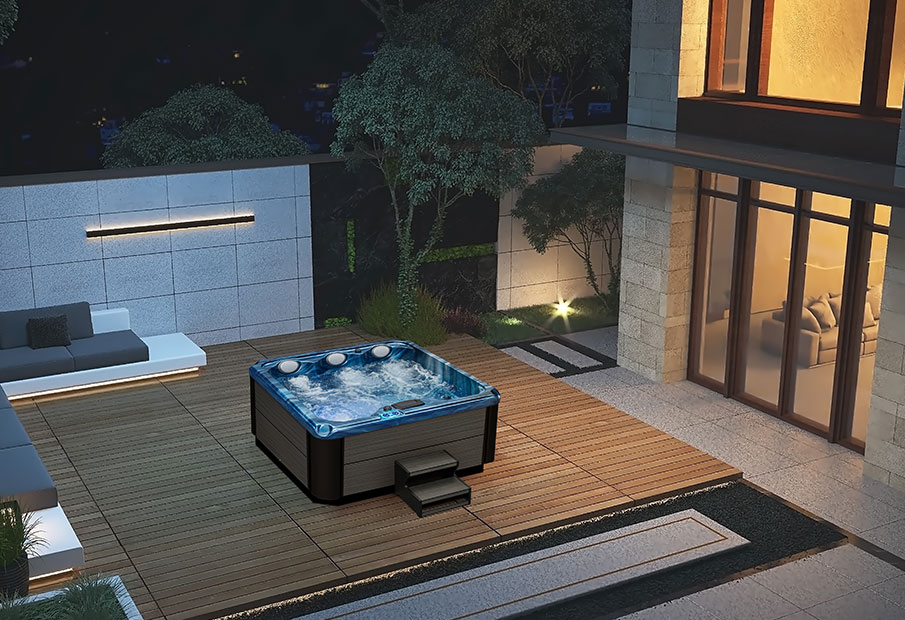
The Fspa BD-013 hot tub, with its spacious design for 6 adults, advanced 2.2kW massage pump with 35 jets, robust 3kW heater, energy-efficient filter pump, ambient LED lighting, and ozone system, offers ultimate relaxation and transforms any space into a private spa retreat, ideal for both residential and commercial use.
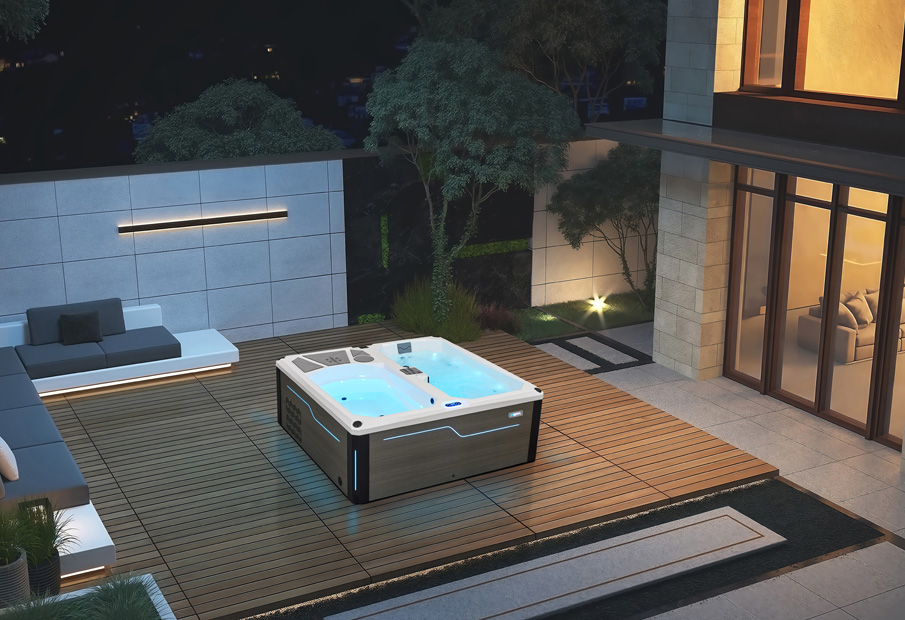
Welcome lights up as you approach, All in one design, plug and play, snowflake pattern, Include filter, circuit pump, Ozone, ice-blue underwater light, and high-efficiency chilling system.
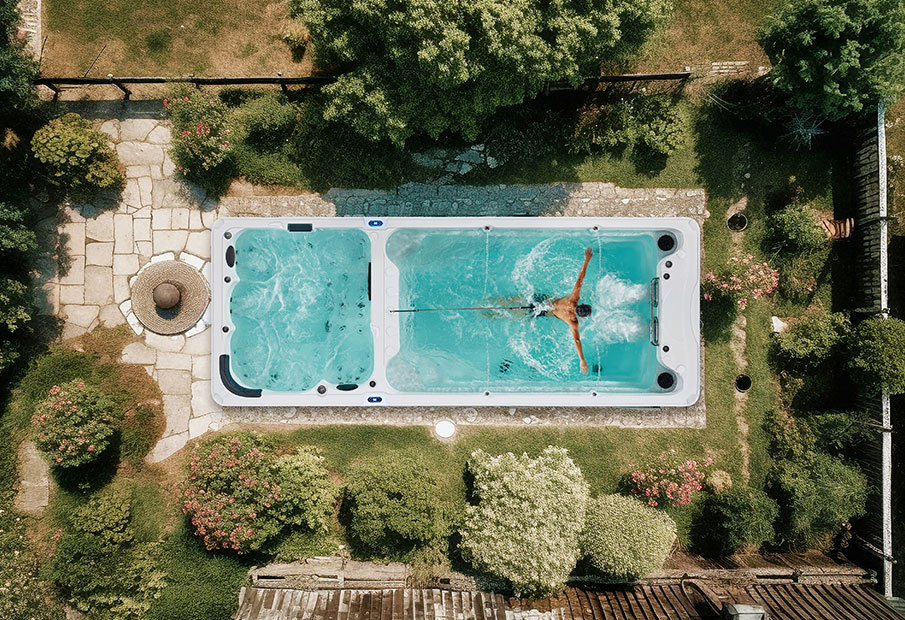
The Infinipool Fspa IP-007 enhances backyard experiences with exceptional performance, style, and a range of optional accessories.
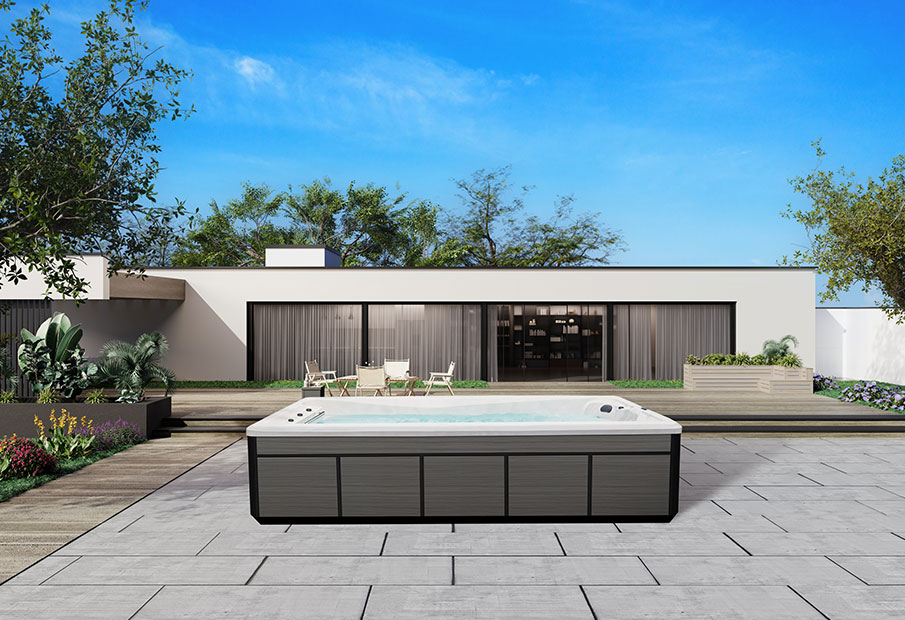
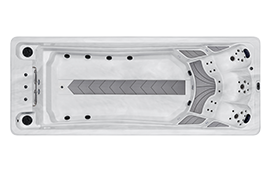
The Infinipool Fspa IP-003 provides a superior swimming experience in both residential and commercial settings.
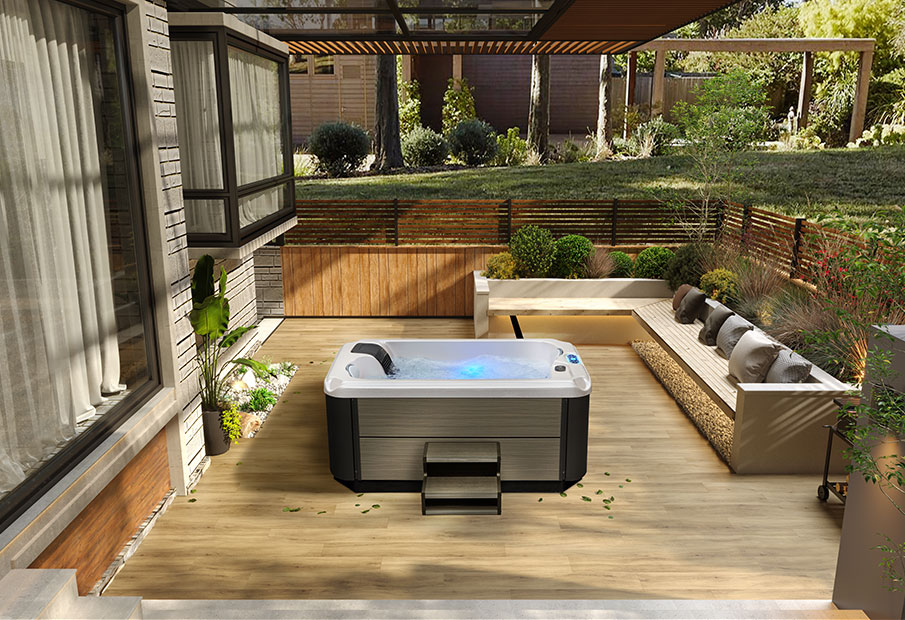
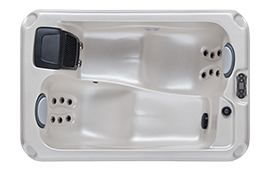
The Fspa BD-016 Hot Tub, designed for 2 adults, offers luxurious comfort with a spacious interior, powerful 1.5kW massage pump, 0.35kW filter pump, 2kW heater, customizable water flow with 14 jets, ozone sanitation, LED lighting, comfortable pillows, and a total power of 3.85kW, providing a tranquil escape for ultimate relaxation.
PRODUCTS
INQUIRY
Thank you for your message!Our Chinese New Year holiday from 7th Feb to 28th Feb. Apologise to make your inconvenience so that responses may be delayed during this period. We'll back to you with regular service on 2th March .Thank you for understanding.


