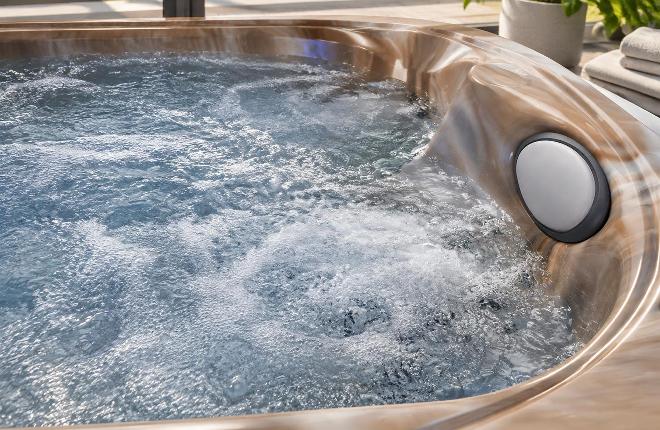
Anyone shopping for a compact soaking pool eventually runs into the same question: what actually drives small swim spa cost, and where does the money go? The answer isn’t a single number pulled from a brochure. It’s a mix of jet count, pump wattage, shell material, and how the unit gets installed on your property. Understanding these variables upfront helps you avoid paying for capacity you’ll never use, or worse, underbuying and feeling cramped every time you soak.
Most buyers assume bigger always means pricier, and that’s mostly true, but not in a straight line. A 6-person unit with a robust pump system can cost more per seat than an 8-person model built with lighter components. The real driver is what’s inside the shell, not just how many people fit around the rim.
Seating capacity is the first number most people look at, but it’s a rough proxy for cost, not a direct one. A compact 6-person spa, like the Fspa BD-004 with its 2350x2350x900mm footprint, needs less acrylic, less framing, and a smaller cabinet than a stretched 8-person lounger. Less material generally means a lower base price.
That said, capacity alone doesn’t tell the full story. Two spas with identical seating for six can differ by hundreds of dollars depending on jet count and pump horsepower. The BD-004, for instance, packs 35 massage jets into its shell, which requires a 2.2kW massage pump to keep water pressure consistent across every seat. Fewer jets with a smaller pump will always cost less, but you’ll feel the difference in massage intensity.
Here’s a rough way to think about how capacity interacts with price:
When people ask about small swim spa cost, they’re often picturing one lump sum. In reality, the price reflects several distinct systems working together, and each one carries its own cost weight.
The heater is a good example. A 3kW heater, like the one used in the BD-004, needs to bring over 1,450 liters of water up to temperature and hold it there through variable outdoor conditions. Underpowered heaters struggle in colder climates and take longer to recover heat after each use, which frustrates owners more than the upfront savings justify.
Filtration is another quiet cost factor. A 0.35kW filter pump running continuously does the unglamorous work of keeping water clear between deeper cleanings. Pair that with an integrated ozone sanitization system, and you reduce how often you need to shock the water with chemicals, which saves money on maintenance supplies over the unit’s lifespan even though it adds to the initial price.
| Component | Typical Role | Cost Impact |
|---|---|---|
| Massage Pump (2.2kW) | Drives jet pressure and flow | High, scales with jet count |
| Filter Pump (0.35kW) | Continuous water clarity | Low to moderate |
| Heater (3kW) | Maintains soak temperature | Moderate, climate-dependent |
| Ozone Sanitization | Reduces chemical maintenance | Moderate upfront, saves long-term |
| Shell Material | Structural durability, finish quality | Varies widely |
It’s tempting to treat jet count as a marketing number, but jet placement matters just as much as the total. A spa with jets clustered only around the perimeter feels different from one where jets are distributed to match actual seating positions.
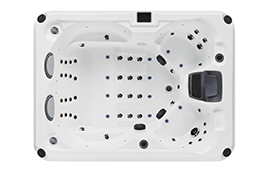
The BD-004’s ergonomic design places jets and controls according to the body’s natural seating posture, so pressure lands where muscles actually tense after a long day, not just wherever manufacturing made it easiest to drill a hole. This kind of layout planning doesn’t show up as a line item on a price sheet, but it shapes whether the spa feels worth the cost every time you use it.
Some models also include supportive headrest pillows designed to keep the neck aligned during use. According to the manufacturer’s specifications, the BD-004 includes this kind of ergonomic pillow system alongside its jet layout, aimed at reducing strain during longer soaks. These small design choices don’t dramatically change the sticker price, but they influence whether you’re happy with the purchase a year later.
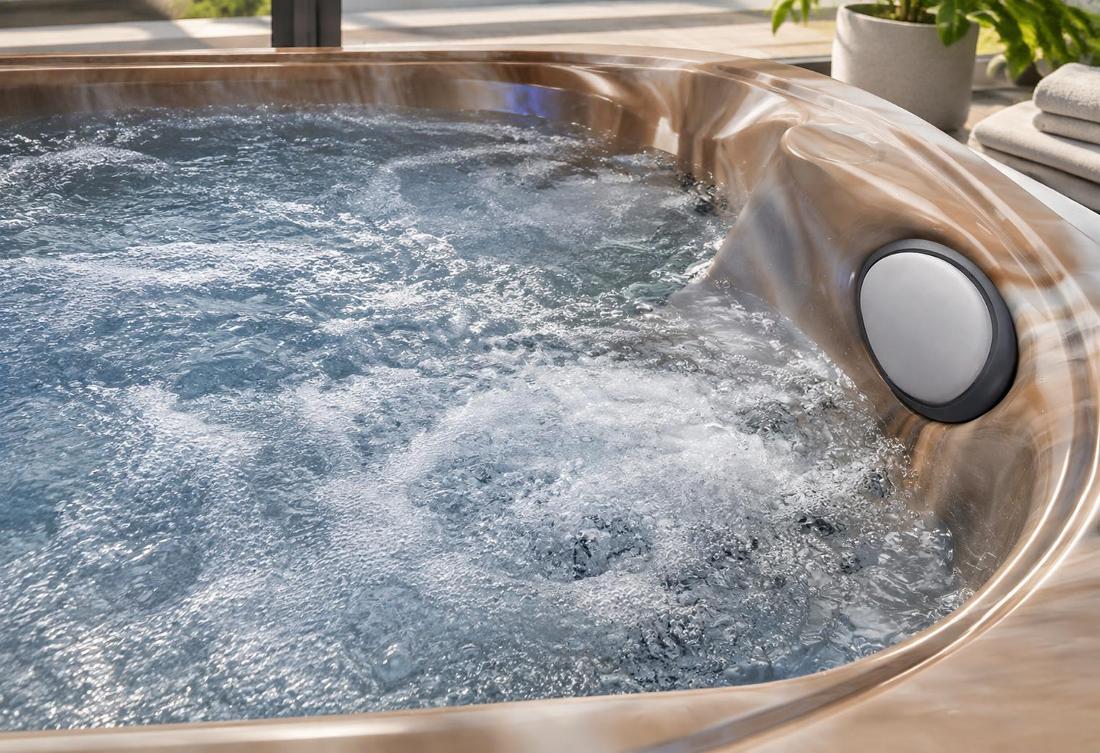
The unit price is only part of the equation. Where and how you install a small swim spa often adds a comparable chunk to your total budget, and it’s the part most first-time buyers underestimate.
A spa weighing 317kg empty, and considerably more once filled with 1,450 liters of water plus occupants, needs a stable, level surface. Wooden decks, concrete pads, and reinforced patios all come with different preparation costs. Skipping proper groundwork isn’t just a structural risk, it can void certain warranty terms depending on the manufacturer.
Consider these installation factors before finalizing your budget:
Sizing decisions should follow how you’ll actually use the spa, not just what fits in the yard. A hotel gym setting benefits from a compact unit that offers post-workout recovery without eating into limited outdoor space. A villa backyard, by contrast, often has room for the spa to serve as a visual centerpiece as much as a functional one.
Seaside homestays present a slightly different case. Guests want a hydrotherapy soak with a view, so smaller footprints that still deliver strong jet performance tend to outperform larger units that dominate a limited patio. In each of these scenarios, matching the spa’s scale to the space changes how much value you extract from the same dollar spent.
Certifications rarely make headlines in spa marketing, but they quietly affect price and, more importantly, safety compliance. Units carrying CE, CTUVus, CB, and SAA certifications have gone through independent testing for electrical safety and construction standards, which adds cost during manufacturing but reduces risk for the buyer.
Skipping certified units to save money upfront can backfire, particularly for commercial buyers like fitness centers or rehabilitation clinics, where insurance and local code compliance often require documented certification. If you’re weighing small swim spa cost against a cheaper, uncertified alternative, factor in whether that savings survives a compliance review.
Does a higher jet count always mean a better massage experience?
Not necessarily. Jet count matters, but placement and pump power determine how consistent the pressure feels across all seats. A well-designed 35-jet system with adequate pump wattage can outperform a higher jet count paired with a weak pump.
Why do two similarly sized spas have such different prices?
Differences usually come down to heater wattage, filtration systems, shell material quality, and whether features like ozone sanitization are included. Two spas can look nearly identical in size while differing significantly in what’s built into the mechanical systems.
Is ozone sanitization worth the added cost?
For most owners, yes, since it reduces how often chemical treatments are needed, which lowers ongoing maintenance spending even though it adds to the initial purchase price.
How much does installation typically add to the total budget?
It varies by site, but concrete pad preparation, electrical upgrades, and delivery access can meaningfully increase your total spend beyond the unit price alone, so it’s worth quoting these separately before committing.
Small swim spa cost isn’t just about finding the lowest number on a price tag. It’s about matching pump power, jet layout, heater capacity, and certification standards to how and where you’ll actually use the spa. A compact 6-person unit with a well-balanced 5.55kW system, like the BD-004, illustrates how thoughtful engineering can deliver strong performance without demanding a footprint or budget meant for larger installations. Weighing these factors against your site conditions and intended use will get you closer to a spa that earns back its cost in daily satisfaction, not just square footage saved.
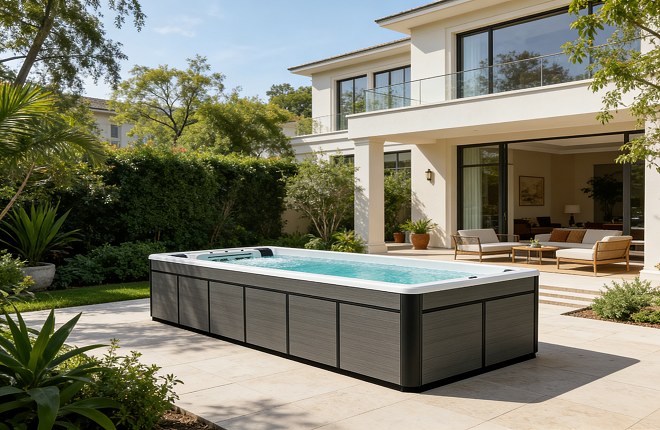
When evaluating swimming pool options, long-term ownership costs is a critical factor for homeowners. Acrylic integrated pools and traditional concrete pools represent two distinct approaches, each with unique financial implications over time.
Acrylic pools offer significant advantages in installation efficiency. Their prefabricated nature reduces on-site construction time by 30-50% compared to concrete, minimizing labor costs. While the initial material investment is higher—typically 15-20% more than concrete—the streamlined installation process often results in comparable upfront totals. The non-porous acrylic surface resists algae growth and chemical erosion, reducing annual maintenance expenses by approximately 25-30%. Routine care primarily involves basic cleaning and filter maintenance, with minimal need for acid washing or resurfacing.
Concrete pools, while initially appealing for their customization options, present higher long-term costs. The porous concrete structure requires regular chemical treatments to prevent staining and deterioration, increasing annual chemical expenses by 40-50% compared to acrylic. Every 5-7 years, concrete pools need resurfacing at a cost of 6000-10,000, a maintenance requirement virtually eliminated with acrylic’s durable surface. Concrete’s susceptibility to cracks also raises repair costs over time, with average repair expenses 3-4 times higher than acrylic pool fixes.
Energy efficiency further differentiates these options. Acrylic’s superior insulation properties reduce heating costs by 20-30%, maintaining water temperature with less energy consumption. Concrete’s thermal conductivity requires more frequent heating, increasing utility bills annually.
Over a 10-year period, industry data shows acrylic pools typically result in 20-25% lower total ownership costs compared to concrete pools. While concrete offers greater design flexibility, the long-term financial advantages of acrylic—lower maintenance, reduced repairs, and energy efficiency—make it a compelling choice for cost-conscious homeowners prioritizing durability and value retention.
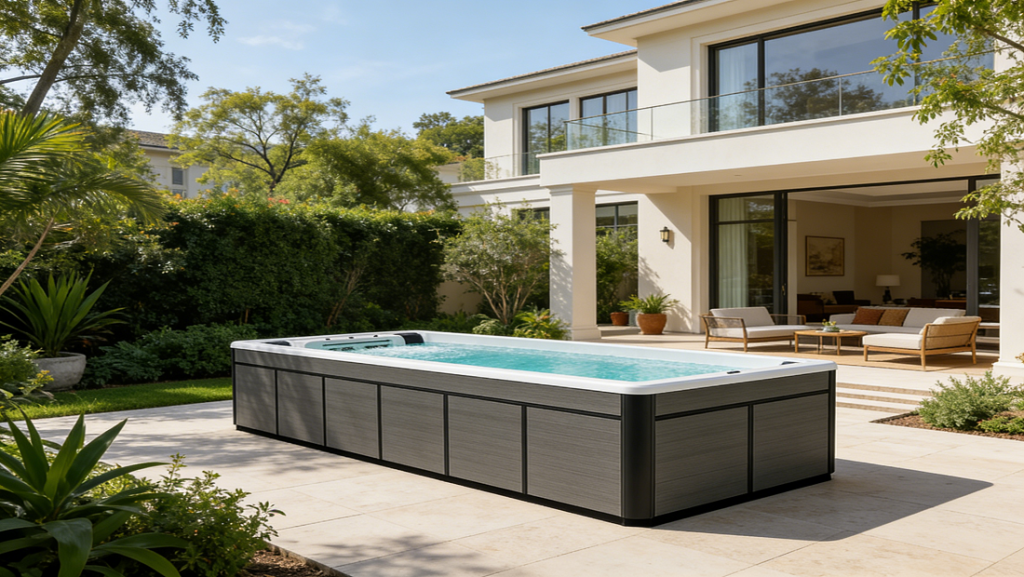
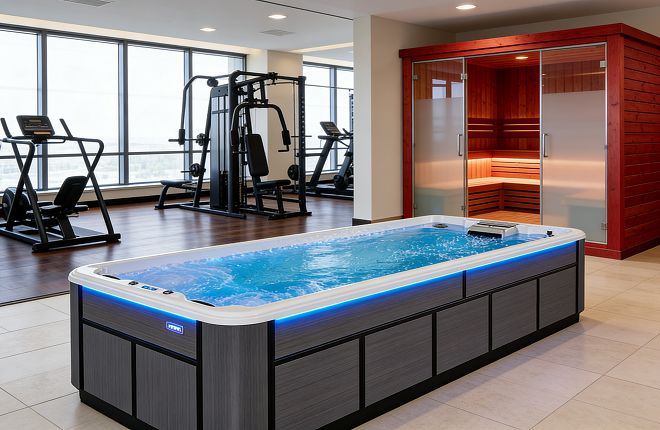
Choosing the Best Cold Plunge Solution for Comfort, Sustainability, and Budget
Cold water therapy has become increasingly popular among athletes, wellness enthusiasts, and homeowners looking to improve recovery and relaxation. Today, modern cold pliunge solutions are designed to fit different lifestyles, spaces, and budgets while offering efficient cooling performance and eco-friendly features. Whether you need a small cold plunge tub for personal use or a larger system for families or spas, there are many options available to meet your needs.
Brands like F-SPA continue to develop innovative and energy-saving cold plunge products that combine comfort, durability, and stylish design. From compact installations to multi-user systems, choosing the right plunge setup can improve both wellness and convenience.
One of the biggest trends in the wellness market is the rise of the eco-friendly cold plunge. Many consumers are now looking for sustainable products that reduce water and energy consumption without sacrificing performance. An eco-conscious cold plunge often includes insulated materials, efficient cooling systems, and environmentally friendly manufacturing processes.
For homeowners with limited space, a compact cold plunge is an excellent option. These smaller systems are ideal for apartments, patios, gyms, and home wellness rooms. A small cold plunge tub can still provide powerful recovery benefits while taking up minimal space. Many users also prefer a cold plunge for 1 person because it offers privacy, easier maintenance, and lower operating costs.
Another advantage of a 1 person cold plunge is portability and convenience. Smaller plunge tubs are easier to install and can fit into indoor or outdoor spaces without requiring major renovations. F-SPA designs several compact models that balance modern aesthetics with practical functionality.
Consumers interested in sustainability also appreciate the benefits of an eco cold plunge. These systems are built to reduce unnecessary energy usage while maintaining stable water temperatures. By using advanced insulation and efficient filtration technology, users can enjoy wellness benefits while supporting environmentally responsible living.
Cold therapy products are no longer limited to luxury wellness centers. Many buyers today are searching for a cold plunge on a budget that still offers durability and effective cooling performance. Affordable options allow more people to experience the benefits of cold therapy without overspending.
A cheap cold plunge does not necessarily mean poor quality. Many modern systems provide excellent temperature control, reliable filtration, and durable construction at competitive prices. Buyers should focus on insulation quality, maintenance requirements, and energy efficiency when comparing affordable plunge tubs.
For families, gyms, or wellness facilities, a cold plunge for multiple users can be a practical investment. Larger plunge systems are designed to accommodate several people while maintaining stable water conditions. These models are especially popular in fitness centers, recovery clinics, and spa environments where multiple users may need access throughout the day.
At the same time, individual users may still prefer a cold plunge for 1 person because it offers a more personalized recovery experience. Smaller plunge tubs generally use less water and electricity, making them more economical over time.
F-SPA continues to provide solutions for both individual and commercial customers by offering energy-efficient, stylish, and affordable cold plunge systems. Whether customers need a luxury setup or a cold plunge on a budget, there are products available for nearly every requirement.
A cold pliunge can help improve muscle recovery, reduce inflammation, support circulation, and enhance overall wellness after exercise or daily stress.
An eco-friendly cold plunge reduces energy consumption and water waste through efficient cooling systems and sustainable materials.
Yes. A small cold plunge tub is ideal for apartments, patios, and compact wellness spaces because it requires less installation space and maintenance.
Many manufacturers now offer a cheap cold plunge with reliable cooling performance, durable construction, and energy-saving features at affordable prices.
A cold plunge for multiple users is perfect for families, gyms, spas, and wellness centers because it can accommodate several people while maintaining stable water temperature and performance.
Modern cold plunge systems are becoming more accessible, energy-efficient, and versatile than ever before. Whether you need a compact cold plunge, an eco cold plunge, or a cold plunge on a budget, there are many high-quality solutions available to match your lifestyle and wellness goals. From personal recovery to commercial spa applications, F-SPA offers reliable options designed for comfort, sustainability, and long-term performance.
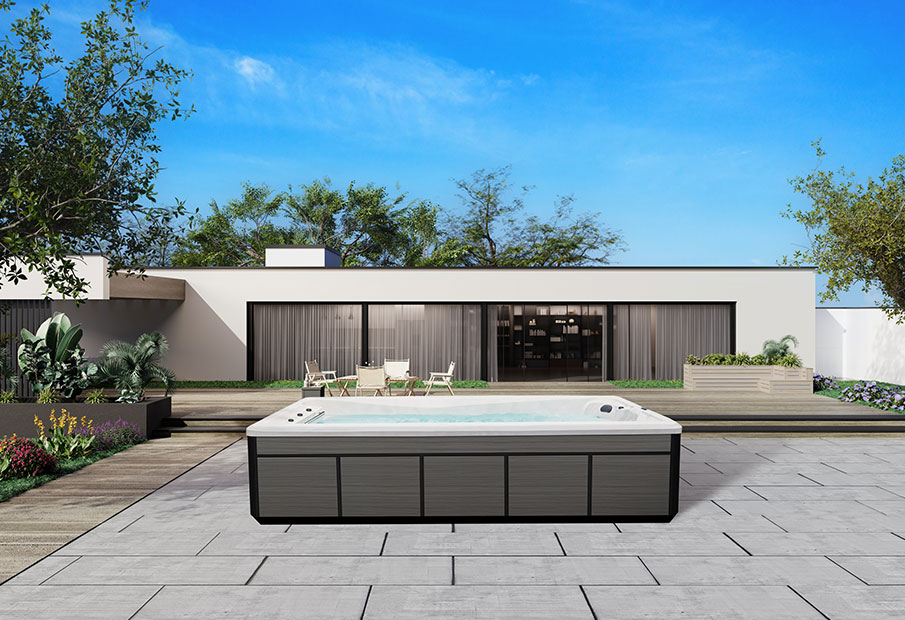
The Infinipool Fspa IP-003 provides a superior swimming experience in both residential and commercial settings.
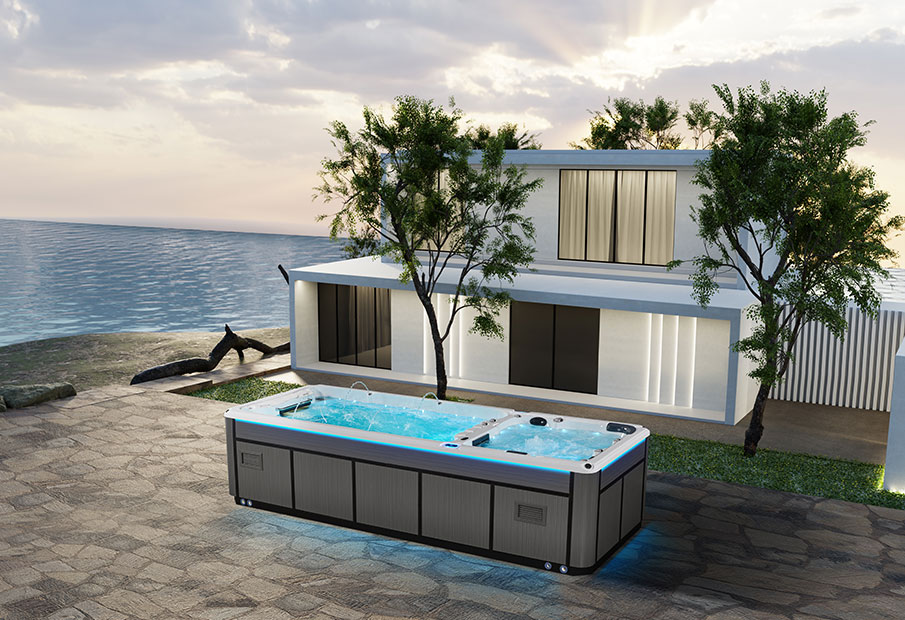
The Infinipool Fspa IP-007Pro is a versatile, luxurious hot tub and swim spa combo, featuring dual systems and customizable options for a complete spa and aquatic therapy experience.
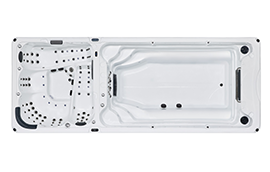
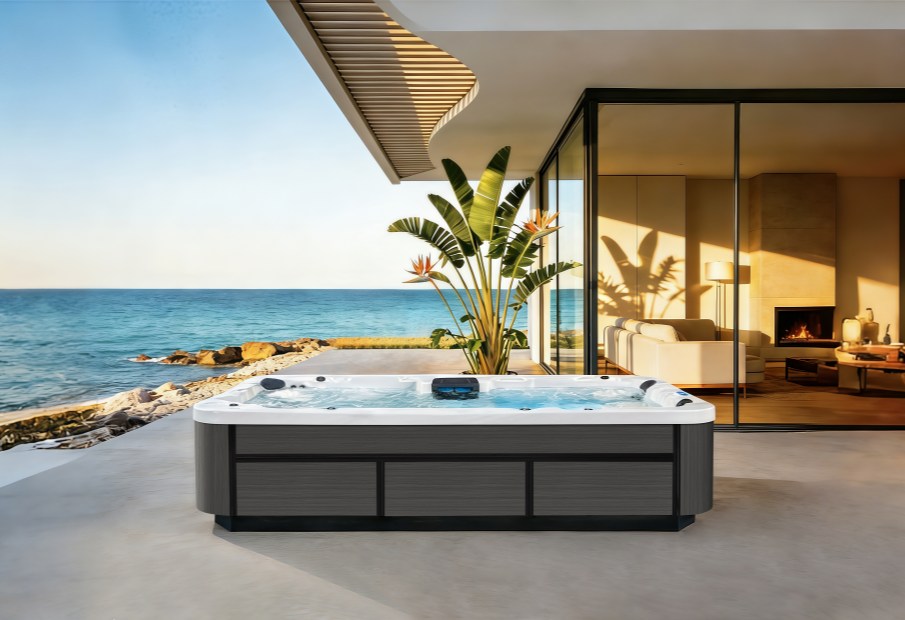
The Fspa BD-020 Hot Tub, designed for 5 adults with spacious dimensions and powered by a 4.85kW system, includes a 1.5kW massage pump, 0.35kW filter pump, 3kW heater, 28 customizable water jets, LED lighting, an ozone sanitation system, and easy maintenance features, providing unparalleled relaxation and comfort.
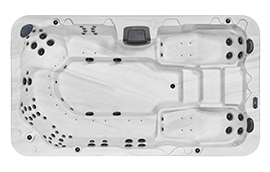
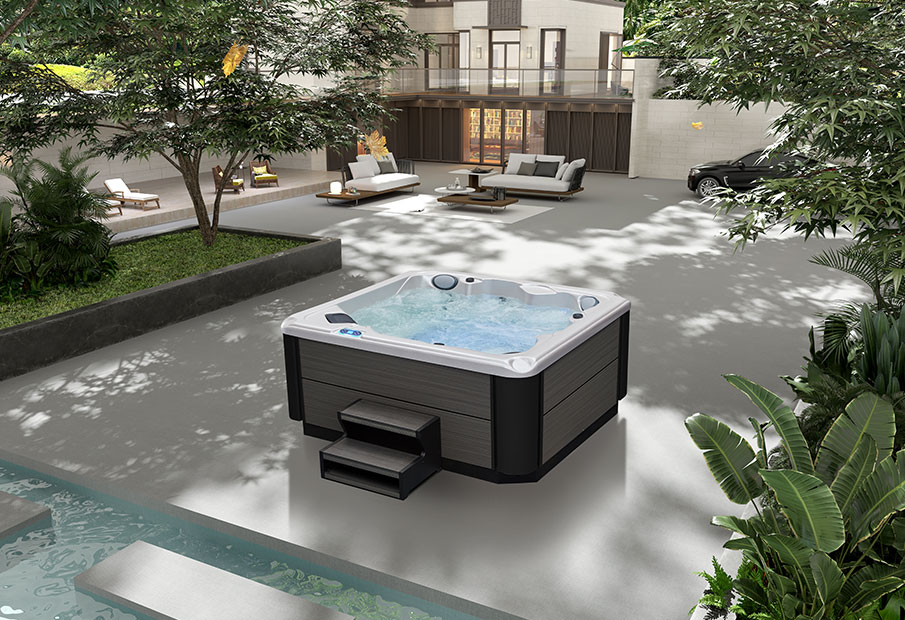
Our Fspa BD-007 Hot tub, measuring 2160x2160x900mm and accommodating 5 adults, combines luxury and comfort with a robust control system, powerful massage jets, sanitized water, ambient LED lighting, adjustable pillows, and energy efficiency, making it perfect for wellness enthusiasts in both residential and commercial settings.
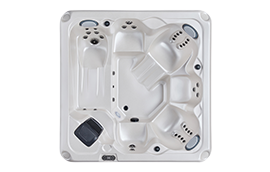
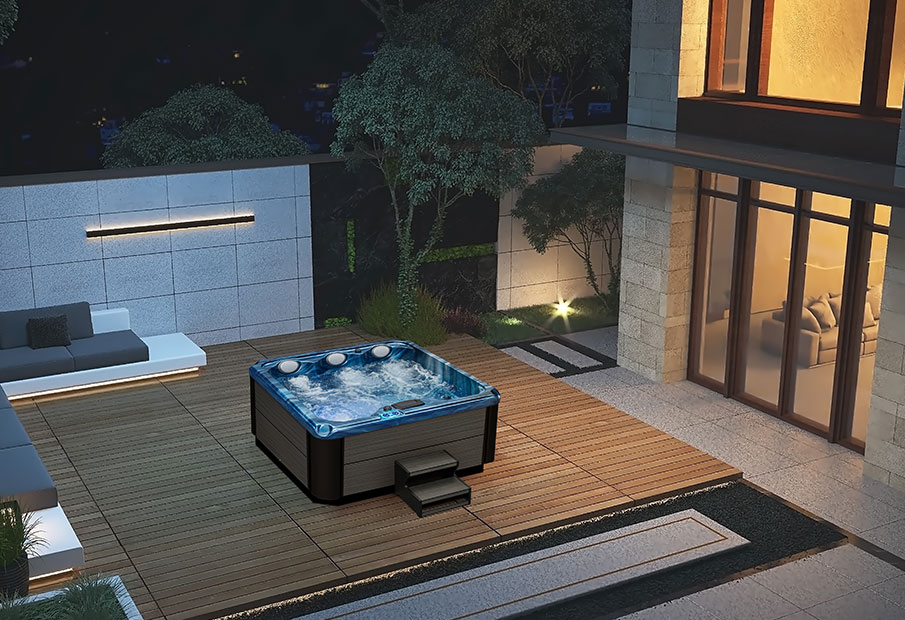
The Fspa BD-013 hot tub, with its spacious design for 6 adults, advanced 2.2kW massage pump with 35 jets, robust 3kW heater, energy-efficient filter pump, ambient LED lighting, and ozone system, offers ultimate relaxation and transforms any space into a private spa retreat, ideal for both residential and commercial use.
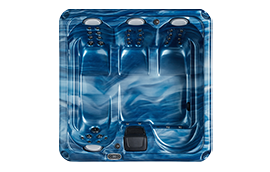
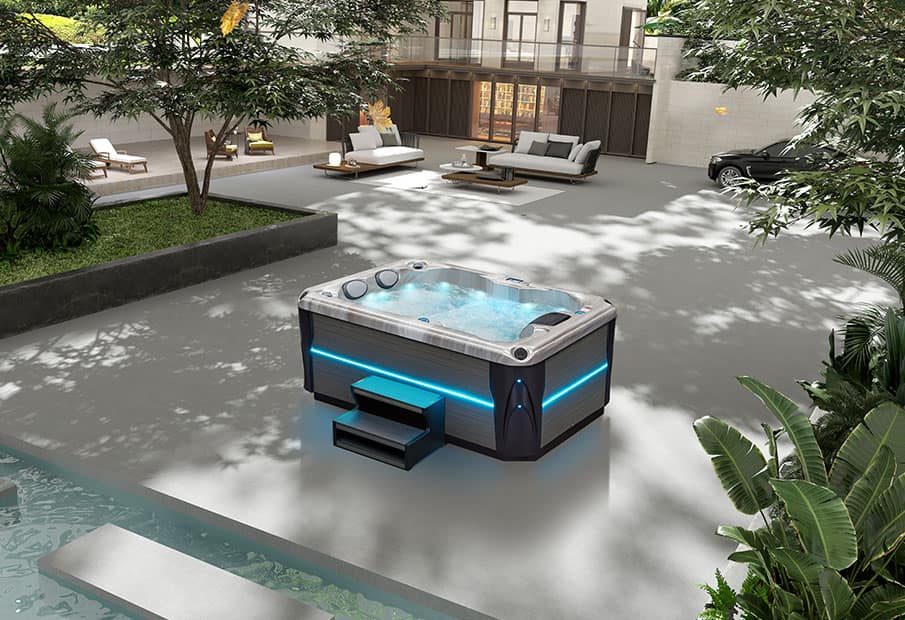
The Fspa BD-015Pro Hot Tub, designed for up to 4 adults, offers ultimate relaxation with its robust control system, invigorating massage features, consistent water temperature, modern amenities, advanced filtration, and suitability for indoor or outdoor use.
PRODUCTS
INQUIRY
Thank you for your message!Our Chinese New Year holiday from 7th Feb to 28th Feb. Apologise to make your inconvenience so that responses may be delayed during this period. We'll back to you with regular service on 2th March .Thank you for understanding.


