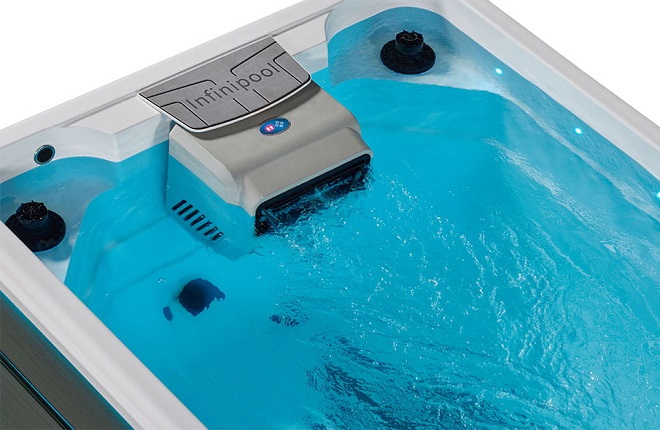
When shopping for a hot tub, it’s easy to be drawn to models boasting the highest number of massage jets. At first glance, more jets seem to promise a deeper, more customized, and more luxurious experience. But as someone who has owned and tested multiple spas, I’ve learned that jet count alone is a misleading metric. In reality, the quality, placement, and performance of those jets matter far more than the quantity.
A hot tub with an excessive number of jets but an underpowered pump is like having a dozen faucets running on low water pressure—none of them will feel satisfying. The pump is the heart of the system; it’s what delivers the force and volume of water needed to create a therapeutic massage. If the pump can’t keep up, those 50 or 60 jets will produce little more than a weak, bubbly stream. You’re left with a lukewarm soak rather than a targeted, muscle-relieving hydrotherapy session.
Furthermore, thoughtful jet placement is crucial. A few well-positioned jets targeting key muscle groups—like the lower back, glutes, neck, and calves—are infinitely more valuable than dozens of jets placed randomly where they don’t provide meaningful contact. Everyone soaks differently; some prefer a deep tissue massage on their shoulders, while others need relief for tired legs.
A quality tub offers adjustable, directional jets in strategic zones, allowing you to personalize the experience. A high jet count often looks impressive on a spec sheet, but if half of them are in spots that don’t align with your body, they’re essentially decorative.
There’s also the practical side to consider: energy efficiency and maintenance. More jets require a more powerful pump and more complex plumbing, which inevitably leads to higher energy consumption. Your electricity bill will reflect that. Additionally, each jet is a potential point for leaks or future maintenance.
Simpler systems with fewer, high-quality jets are often more reliable and cheaper to operate in the long run. Ultimately, the goal of a hot tub is relaxation and therapy, not to win a numbers game.
When you test a tub, close your eyes and focus on how it feels. Does the pressure meet your needs? Can you direct the flow where you want it? That’s what truly matters. Don’t be swayed by marketing that promises “the most jets.” Instead, look for a balanced system designed for performance, comfort, and efficiency. Your back—and your wallet—will thank you.
What Drives Above Ground Swim Spa Cost and How to Budget Wisely
Anyone comparing prices online quickly notices how wide the range is. Above ground swim spa cost depends on size, jet count, pump configuration, and insulation quality, not just brand labels. Understanding these variables helps buyers avoid overpaying for features they won’t use, or underbuying a unit that can’t handle daily demand from a family or a commercial guest rotation.
A six-person spa with 35 jets and a 5.55kW system draws more power and material than a compact two-seat unit. Manufacturing cost scales with water capacity, acrylic shell size, and pump horsepower. A spa built to hold 1450 liters of water, for instance, needs a sturdier cabinet frame and a heater rated to bring that volume up to temperature without long wait times.
Jet count matters too, but not in a straight line. Adding jets increases pump load, which means the massage pump has to work harder or a second pump gets added. The BD-004 model uses a 2.2kW massage pump paired with a separate 0.35kW filter pump, splitting the workload so filtration keeps running even when the jets are idle. That kind of layered pump design costs more upfront but tends to reduce strain on any single component over years of use.
Certifications also factor into price. Units carrying CE, CB, SAA, or CTUVus marks have gone through electrical and safety testing that adds to production cost. Buyers shopping only by sticker price sometimes skip this detail, then run into compliance issues when installing near a pool deck or in a rental property.
It helps to separate the spa’s price into functional categories rather than treating it as one number. Here’s how the main cost drivers typically break down:
| Cost Factor | What It Affects | Why It Matters |
|---|---|---|
| Shell size and seating capacity | Base unit price | Larger tubs need more acrylic, structural bracing |
| Pump and heater wattage | Energy use, performance | Higher wattage heats water faster, costs more to run |
| Jet count and placement | Massage intensity | More jets mean more plumbing and pump demand |
| Cabinet material | Weather resistance, longevity | Wood-grain panels vs basic finishes affect durability |
| Sanitization system | Ongoing maintenance cost | Ozone systems reduce chemical use over time |
| Control system | Ease of use | Digital panels add manufacturing cost but simplify operation |
Looking at it this way, someone furnishing a hotel gym recovery area might prioritize pump durability and sanitization over seat count. A homeowner planning quiet evening soaks might care more about lighting ambiance and ergonomic seating than raw jet numbers.
Where the spa goes affects cost indirectly, through electrical work, decking, and structural support. A wooden deck built to hold a 317kg empty shell, plus 1450 liters of water at roughly one kilogram per liter, needs to support close to a ton and a half once occupants step in. Skipping this calculation is one of the more common mistakes first-time buyers make.
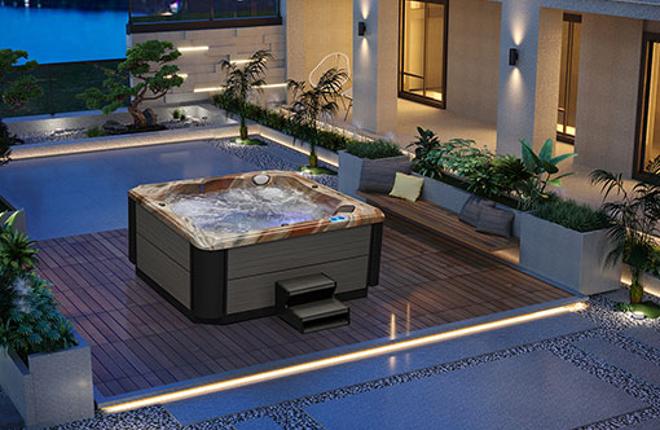
Villa backyards, seaside homestays, and hotel fitness centers each bring different structural and electrical demands. A seaside property may need corrosion-resistant fittings given salt air exposure. A hotel gym setting usually runs the spa longer hours daily, which puts more emphasis on pump reliability and filtration efficiency than on aesthetic lighting.
Consider these placement factors before finalizing a budget:
Purchase price is only part of the equation. Water treatment, electricity, and occasional part replacement add up over the years a spa stays in service. According to the manufacturer’s product documentation, the BD-004 uses an integrated ozone sanitization system intended to reduce the amount of chemical treatment needed and ease overall maintenance. That kind of system, when present, can lower recurring costs compared to spas relying solely on manual chemical dosing.
Filtration also plays into running costs. A dedicated 0.35kW filter pump running separately from the massage pump means water can stay clean without needing the full system powered on constantly. That’s a meaningful distinction for anyone trying to estimate monthly electricity draw, since running a 2.2kW massage pump around the clock would be wasteful and unnecessary for most households.
Heater wattage is another line item worth watching. A 3kW heater bringing over a thousand liters up to soaking temperature takes time, and running it during off-peak electricity hours can meaningfully reduce utility bills in regions with time-of-use pricing.
Buying more spa than you need is a common way budgets get wasted. Someone using the spa mainly for quiet solo relaxation doesn’t need six-person capacity or 35 jets running full blast every session. On the other hand, a boutique hotel or B&B expecting multiple guests daily benefits from higher capacity and robust pump systems, since underbuilt equipment wears out faster under frequent use.
The product documentation describes ergonomic seating contoured to support the body’s natural posture, along with supportive headrest pillows intended to help align the spine during use. Features like these matter more in settings where guests soak for extended periods, such as physiotherapy or rehabilitation-focused applications, compared to quick, casual use.
Lighting is another area where preference diverges. Blue LED lighting positioned at the base of the tub, as included in this model, creates a calming visual effect that appeals to buyers focused on ambiance. That said, lighting has no bearing on massage performance, so buyers chasing therapeutic value over atmosphere shouldn’t let LED features drive their decision.
Does a higher jet count always mean better massage quality?
Not necessarily. Jet placement and pump power matter as much as raw count. A well-positioned set of jets targeting the back, calves, and shoulders can outperform a higher jet count spread thinly across a shell.
Is a portable above ground spa cheaper to run than an in-ground pool with spa features?
Generally yes, since above ground units use less water and cover a smaller footprint, which reduces heating and chemical costs. This is one reason the category appeals to buyers with limited yard space or renters who can’t install permanent structures.
Do certifications like CE or SAA add real value, or are they just paperwork?
They indicate the unit passed electrical and safety testing relevant to the regions those marks apply to. For anyone installing near water or renting the property out, this isn’t just paperwork, it affects insurance and code compliance.
Should I prioritize capacity or power efficiency when comparing models?
It depends on use frequency. A spa used daily by a family or commercial guests benefits from checking total wattage and pump separation, since that affects both performance consistency and electricity bills over time.
Settling on the right spa comes down to matching structural specs, power draw, and feature set to how the unit will actually be used, not to the longest features list on a spec sheet. A six-person unit with a 5.55kW system, separated massage and filter pumps, and ozone sanitization, like the configuration described in the BD-004’s documentation, suits settings with frequent or extended use, such as hotel recovery areas or busy vacation rentals.
For quieter residential use, a smaller footprint with fewer jets may deliver better value without paying for capacity that sits unused most of the year. Either way, understanding above ground swim spa cost means looking past the sticker price toward pump wattage, water capacity, certification coverage, and how those numbers align with daily habits. Buyers who work through that checklist tend to end up with equipment that fits their space, their budget, and their actual soaking routine, rather than a spa that looks impressive in a showroom but underperforms at home.
Finding the Right 4 Seater Swim Spa Without Overpaying for Space You Won’t Use
Shopping for a 4 seater swim spa usually starts with a simple question: how many people actually use the tub at once? Most households land on two to four people on a typical evening, which makes anything larger than a 6-person model overkill. The market, though, is thin on true 4-seat units, and buyers often end up comparing 6-person spas instead, wondering if the extra capacity is worth the added footprint and running cost.
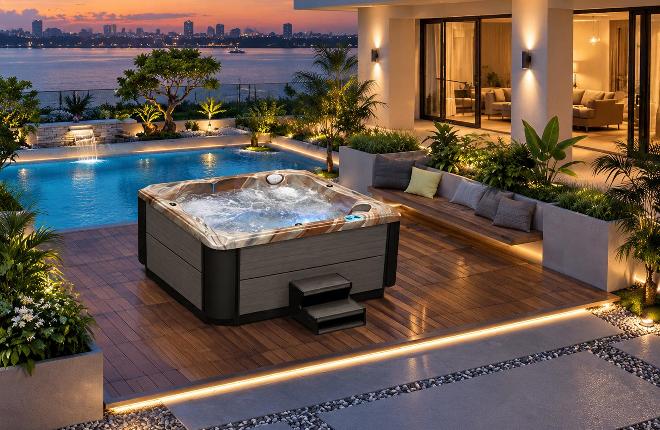
That comparison isn’t wasted effort. A well-built 6-person hot tub can serve a 4-person household better than a cramped 4-seater ever could, especially if seating layout and jet placement are done right. The Fspa BD-004 is one example worth walking through, since its dimensions and hydrotherapy features illustrate what to look for regardless of brand.
Manufacturers rate capacity by how many adults can physically fit inside a shell, not by how many people will comfortably soak together on a weekday night. A spa listed for 6 adults, like the BD-004 at 2350 x 2350 x 900mm, gives a 4-person family room to spread out rather than sit shoulder to shoulder.
This matters because cramped seating is a common complaint in hot tub reviews. Buying slightly above your household size, rather than exactly at it, tends to produce a better daily experience. Think of it the way you’d think about a dining table: a table sized exactly for four leaves no room for elbows.
Marketing copy loves to lead with jet counts, but the number alone tells you little about how a soak will actually feel. What matters is where those jets sit relative to the body, and whether the seating geometry lines up with them.
The BD-004 uses 35 jets across six ergonomically contoured seats, with controls and nozzles positioned according to natural body curves rather than evenly spaced around the shell. For a 4-person group, this means two seats can sit unused or be reserved for stretching out, while the remaining four get full jet coverage on shoulders, lower back, and calves.
A few things worth checking when comparing jet layouts across spas:
Every additional seat and jet adds load to the pump and heater, so it’s worth looking at total system power before assuming bigger always means costlier to run. The BD-004 runs on a 5.55kW total system, split between a 2.2kW massage pump, a 0.35kW filter pump, and a 3kW heater.
| Component | Rating | Role |
|---|---|---|
| Massage Pump | 2.2kW | Drives the 35 jets |
| Filter Pump | 0.35kW | Circulates water for filtration |
| Heater | 3kW | Maintains set water temperature |
| Total System | 5.55kW | Combined draw under full operation |
For context, that’s roughly in line with a household electric water heater running on high, but the heater doesn’t run continuously once temperature is reached. Households comparing a 4 seater swim spa against a 6-person unit should weigh this power draw against usage frequency rather than seat count alone, since the heater cycles on and off regardless of how many seats are filled.
Water chemistry is the part of spa ownership nobody enjoys, and it’s also where buyers most often underestimate the ongoing time commitment. A spa with a standalone ozone sanitization system, as the BD-004 has, reduces how often chemical sanitizers need topping up by helping break down organic contaminants before they build up.
This doesn’t eliminate the need for chlorine or bromine testing, but according to the manufacturer’s product information, it does ease the maintenance burden compared to chemical-only systems. For a family soaking several times a week, that translates into fewer trips to check test strips and less risk of the cloudy water that comes from neglected chemistry.
A 4-person household’s spa needs look different depending on where the unit goes, and this is where application scenario matters as much as seat count.
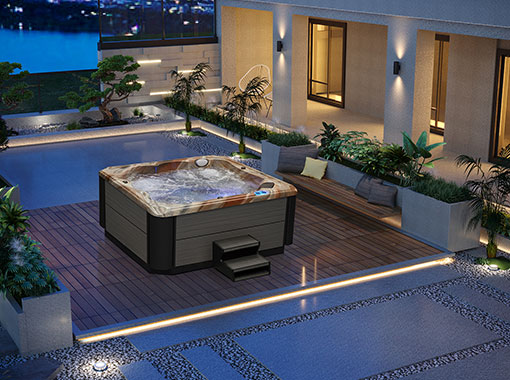
LED lighting inside a spa shell isn’t purely decorative. Positioned at the base, as it is on the BD-004, it illuminates the water evenly and makes evening or nighttime soaks easier to use safely, since seat edges and jet locations remain visible even after dark.
According to the manufacturer, the lighting is also intended to support a calmer atmosphere during use, which lines up with why most buyers request LED options in the first place: the visual effect matters for relaxation as much as water temperature does.
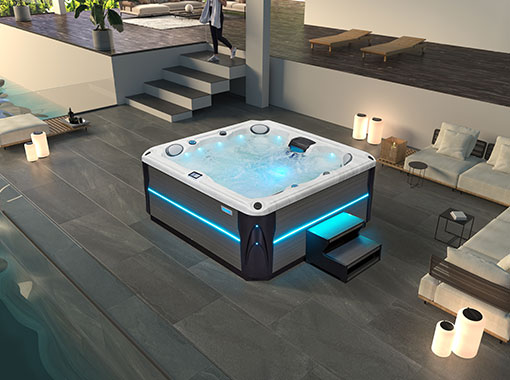
Complaints about hot tub comfort rarely trace back to water temperature. They trace back to seat depth, backrest angle, and whether the headrest actually supports the neck instead of leaving it to float. The BD-004’s seating is contoured to follow the body’s natural curves, with headrests built into corner seats for added neck support.
For a 4-person family, this is where the choice between a true 4-seat spa and a larger unit gets interesting again. Fewer seats mean less flexibility in choosing where to sit, while a 6-person shell lets each person pick the seat geometry that suits their build, whether that’s a deeper lounger-style seat or an upright corner position.
When narrowing down options, it helps to line up hard numbers side by side rather than relying on marketing descriptions alone. Below is what a household should confirm before purchasing any spa marketed toward a 4-person group.
| Spec | Why It Matters |
|---|---|
| Water capacity (liters) | Affects fill time and heating cost |
| Net weight | Determines deck or floor reinforcement needs |
| Jet count and placement | Impacts how much of the body gets massage coverage |
| Certifications (CE, CB, SAA, etc.) | Confirms electrical and safety compliance for your region |
| Total power draw | Determines circuit requirements and running cost |
The BD-004, for reference, holds 1450L of water, weighs 317kg empty, and carries CE, CTUVus, CB, and SAA certifications, which cover major electrical safety compliance requirements recognized across North America, Europe, and Australia.
Is a 6-person spa overkill for a 4-person household?
Not necessarily. Extra seats mean more room to move and choose seating position, and the pump and heater sizing is usually proportional to the shell rather than to how many people sit in it at once.
Does ozone sanitization replace chemical treatment entirely?
No. It reduces the workload on chemical sanitizers by helping manage organic contaminants, but water testing and periodic chemical dosing are still required.
How much floor or deck reinforcement does a spa like this need?
Filled weight matters more than empty weight. With roughly 1450L of water on top of a 317kg shell, total loaded weight approaches 1.8 metric tons, so deck load capacity should be checked with a structural professional before installation.
Can this type of spa be used indoors as well as outdoors?
Yes, provided ventilation and electrical requirements are met, which is why certifications covering multiple regional standards are worth checking before purchase.
Choosing between a compact 4 seater swim spa and a larger 6-person unit ultimately comes down to how the household actually uses the space, not just how many people technically fit. For us, working with buyers across villas, B&Bs, and fitness facilities has shown that slightly oversized, well-engineered spas tend to outperform tightly sized ones in daily satisfaction, which is worth weighing before finalizing any 4 seater swim spa purchase.
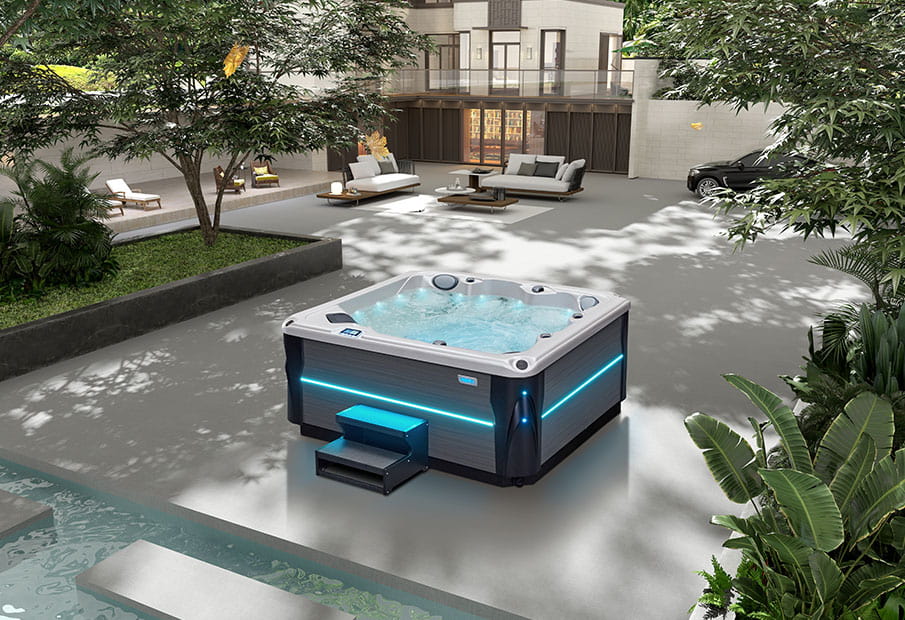
The Fspa BD-007Pro Hot Tub, with its spacious design for 6 adults, powerful massage system, 61 water & 19 air bubble jets, efficient heating and filtration, built-in ozone sanitization, sleek design, and amenities like speakers and coasters, offers unparalleled luxury, relaxation, and rejuvenation for both residential and commercial use.
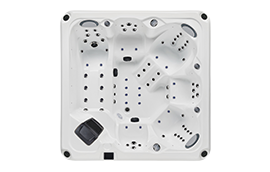
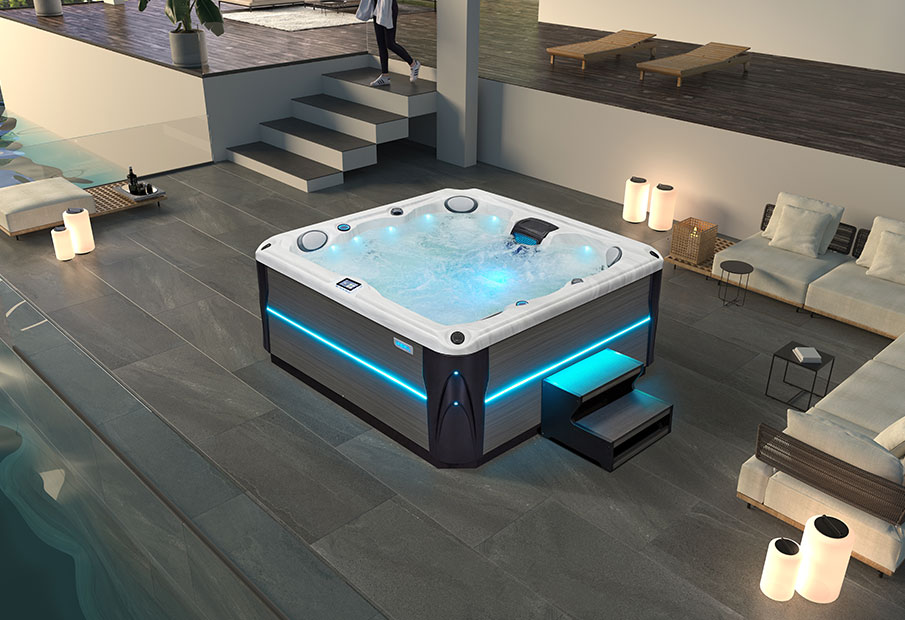
The Fspa BD-001Pro Hot Tub customizable water flow, ozone sanitization, and luxurious features for an unparalleled relaxation experience.
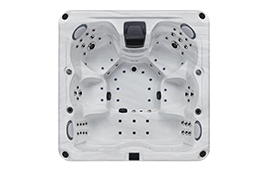
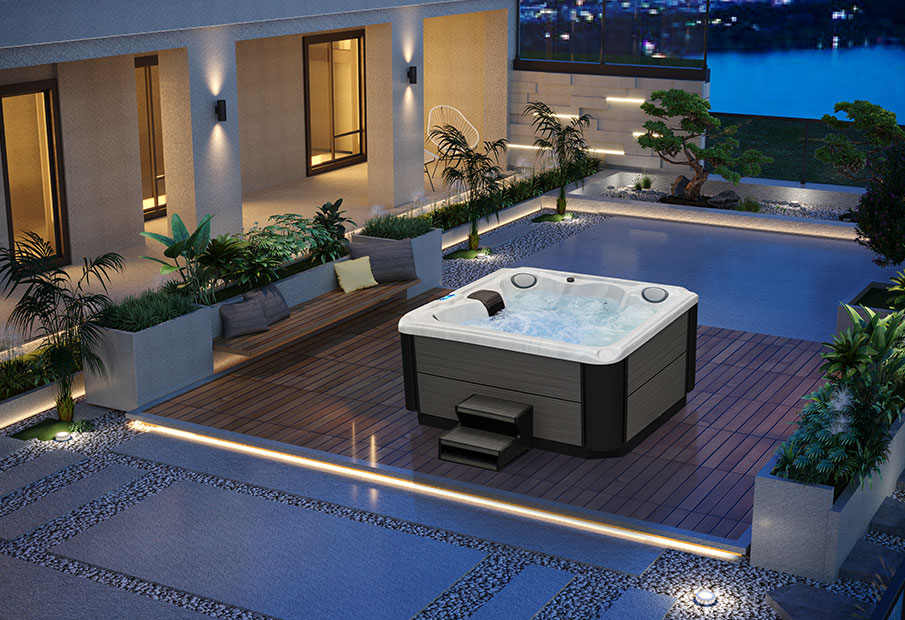
The Fspa BD-008 hot tub, with its spacious design for 6 adults, advanced control system, powerful massage pump, 3kW heater, high-efficiency filter, 35 strategic jets, LED lighting, adjustable features, and ozone sanitation, offers a luxurious and therapeutic spa experience at home, suitable for both residential and commercial settings.
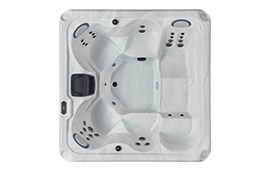
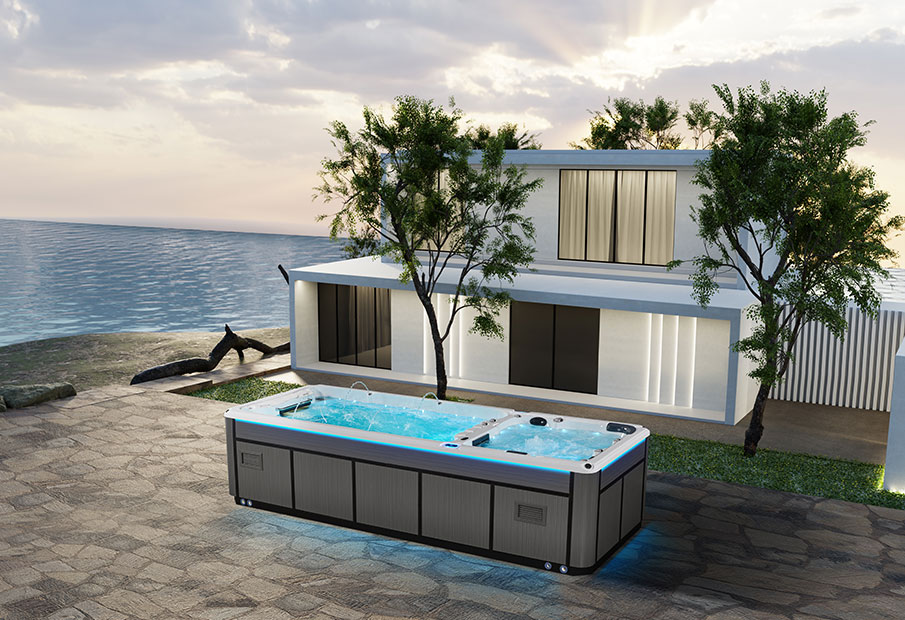
The Infinipool Fspa IP-007Pro is a versatile, luxurious hot tub and swim spa combo, featuring dual systems and customizable options for a complete spa and aquatic therapy experience.
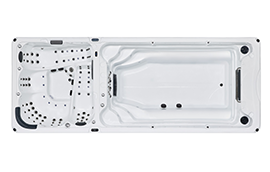
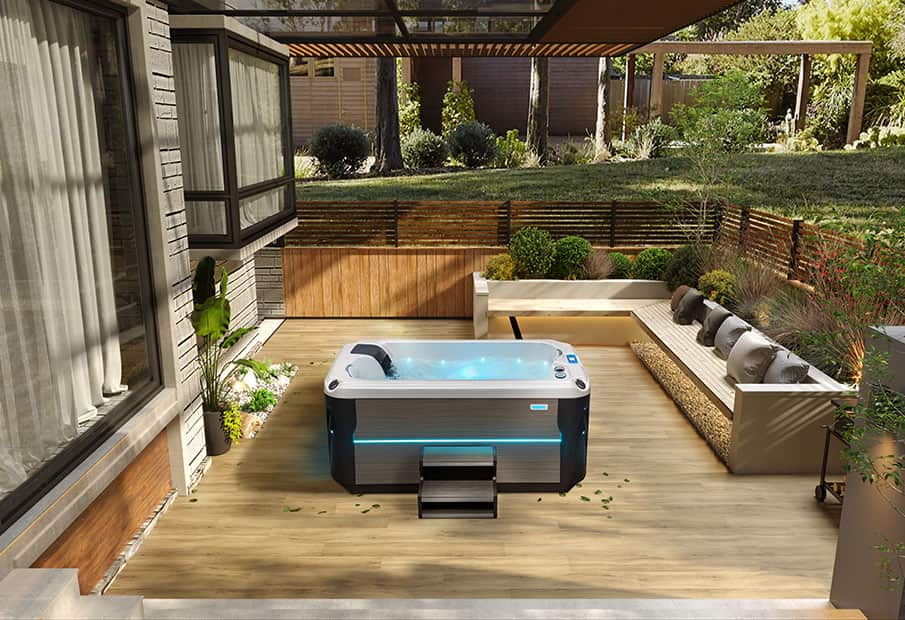
The Fspa BD-016Pro Hot Tub, a compact spa for up to 2 adults, offers a rejuvenating experience with an efficient control system, soothing massage features, consistent water temperature, modern amenities, advanced filtration, and suitability for indoor or outdoor placement.
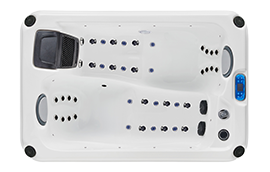
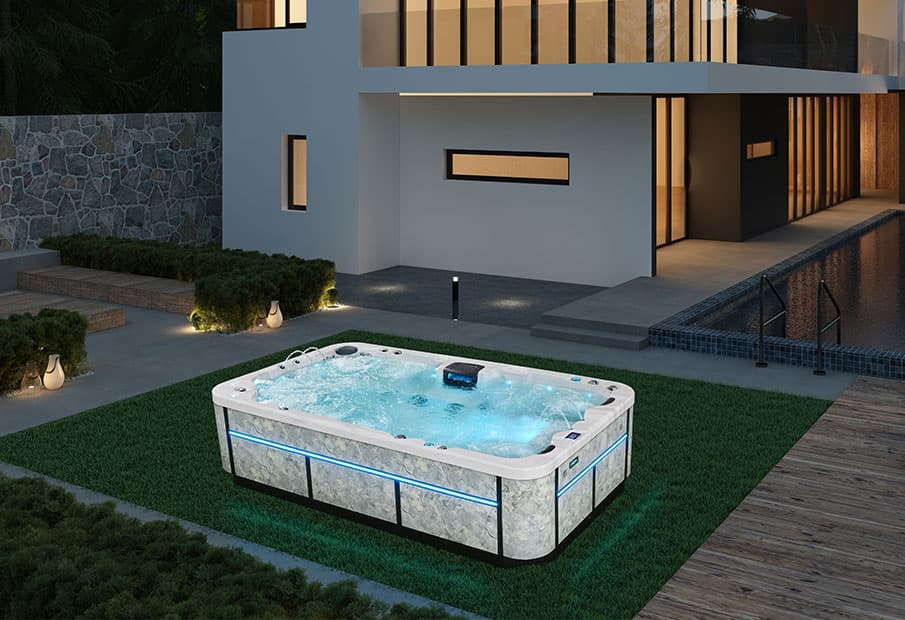
The Fspa BD-020Pro Hot Tub, accommodating up to 9 adults, is a luxurious and therapeutic indoor/outdoor spa featuring a powerful massage system, advanced filtration, modern conveniences, and water features, making it the ultimate choice for relaxation and wellness at home.
PRODUCTS
INQUIRY
Thank you for your message!Our Chinese New Year holiday from 7th Feb to 28th Feb. Apologise to make your inconvenience so that responses may be delayed during this period. We'll back to you with regular service on 2th March .Thank you for understanding.


