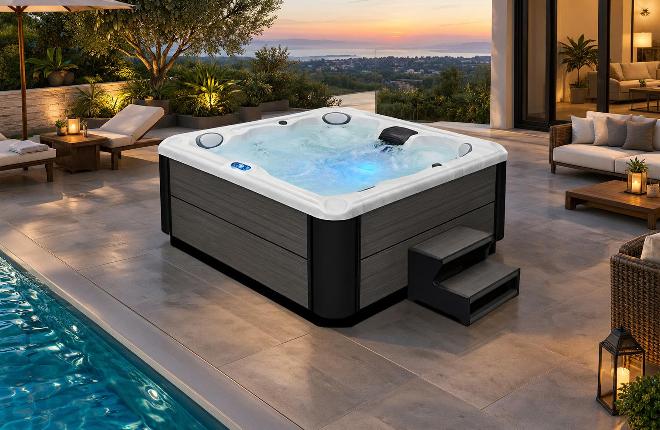
Cold weather changes how a hot tub behaves, and a winter outdoor spa only rewards owners who understand that shift. Heaters work harder, covers matter more, and water chemistry drifts faster than most people expect. Whether you already own a spa or are weighing one for the season ahead, knowing what winter demands will save you money and frustration.
Heat loss accelerates once air temperature drops well below the water temperature. A spa sitting at 38°C in freezing air loses heat through the shell, the cover seams, and any exposed plumbing far faster than it would in milder weather. This is simple thermodynamics, not a flaw in the equipment.
That heat loss puts direct pressure on the heater and pump cycle. Most residential units use heaters in the 2kW to 3kW range, and in winter these run longer and more often just to hold a set temperature. Owners who don’t account for this sometimes assume something is broken when really the system is just working against a bigger temperature gap.
Wind adds another variable that’s easy to underestimate. A spa positioned in an open, exposed yard will shed heat faster than one tucked near a wall or fence line. Something as simple as a windbreak can measurably reduce how often the heater cycles on.
Not every hot tub is equally suited to sub-zero nights. Shell insulation, cabinet sealing, and pump quality all affect how a unit holds up once temperatures fall consistently below freezing.
When comparing options for winter use, a few technical points are worth checking before purchase:
| Feature | Why It Matters in Winter |
|---|---|
| Heater output (2kW–3kW) | Determines recovery speed after cover is opened |
| Total system power (up to 5.55kW) | Affects how pumps and heater run together without tripping circuits |
| Jet count (16 to 80 jets) | More jets mean more plumbing runs that need freeze protection |
| Capacity (3 to 6 adults) | Larger volume holds heat longer once warmed |
| Shell construction | Durable, well-sealed shells resist heat loss and cold-cracking |
Fspa’s hot tub lineup, for instance, ranges from compact 3-person models suited to a couple sharing a quiet balcony soak, up to 6-person family spas built for longer winter gatherings. The larger units, with their bigger water volume, tend to hold temperature more steadily between heating cycles, simply because there’s more thermal mass resisting the cold.
Picking the right size and spot isn’t just about aesthetics. It directly affects running cost and comfort once the weather turns. A few practical steps help narrow the decision:
Getting these decisions right before installation avoids costly retrofits once the first cold front arrives.
Cold air holds less moisture, and steam rising off a heated spa can evaporate quickly in dry winter conditions, which may concentrate dissolved minerals and disinfectant byproducts faster than in summer. That means water testing shouldn’t be skipped just because it’s cold outside.
Ozone-based sanitization systems, which are integrated into several Fspa models, help offset this by continuously treating water without relying solely on manual chemical dosing. According to the product documentation, this ozone treatment supports clearer water and reduces the frequency of manual chemical top-ups, which matters when cold weather already makes maintenance visits less appealing.
Still, ozone systems don’t eliminate the need for periodic manual checks. pH drift, in particular, tends to be more noticeable in winter because top-off water (often colder tap water) can shift balance more abruptly than warmer seasonal refills.
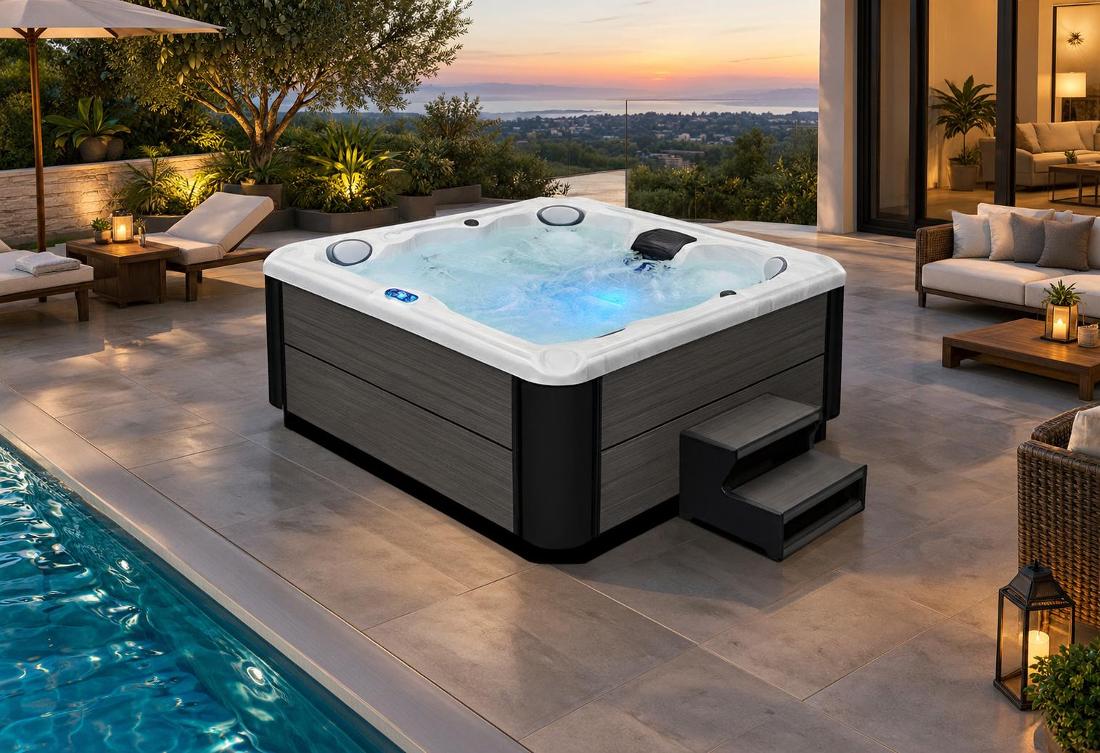
A spa cover does more work in winter than any other component besides the heater itself. It’s the main barrier against heat loss, and a poorly sealed or waterlogged cover can noticeably raise heating costs.
Owners should watch for a few warning signs that a cover is underperforming:
None of these issues are unique to any one brand. They’re mechanical realities of foam-core covers exposed to freeze-thaw cycles. Wiping snow off promptly, rather than letting it compact into ice, extends cover life meaningfully.
Cabinet panels also deserve a look. Durable, weather-resistant shells and panel materials matter more in climates with hard freezes, since repeated expansion and contraction from temperature swings stresses seams and fittings over time.
Within the Fspa lineup, standard and Pro-tier models differ mainly in jet density, lighting, and control features rather than core heating capability. For someone deciding what actually matters for winter use, it helps to separate cosmetic upgrades from functional ones.
None of these differences change the underlying physics of heat loss. They shape comfort and convenience, not whether the spa can handle cold weather at all.
One common misunderstanding involves how long a spa takes to reach temperature after being opened in cold weather. Opening the cover on a freezing day releases stored heat quickly, and recovery time depends on ambient temperature, wind, and heater output.
A 2kW heater will simply take longer to recover lost heat than a 3kW unit, all else equal. This isn’t a defect; it’s a straightforward function of thermal load versus heating capacity. Owners expecting instant reheating regardless of heater size are working from an unrealistic baseline.
Minimizing cover-open time, and using a floating thermal blanket under the hard cover where compatible, are simple habits that reduce how hard the heater has to work to recover.
Does a hot tub need to be drained in winter if it’s not being used?
Not necessarily. Many manufacturers recommend keeping the system running and heated through freeze cycles rather than draining it, since standing water in idle plumbing risks freeze damage. If a spa will sit unused for an extended period, follow the manufacturer’s specific winterization procedure rather than draining it without guidance.
Will snow damage the spa shell or cabinet?
Occasional snow accumulation isn’t typically harmful if it’s cleared before it compacts into ice, but prolonged weight on a cover, or ice buildup in cabinet vents, can stress seals over time.
Is ozone sanitization enough on its own in winter?
Ozone systems reduce, but don’t eliminate, the need for periodic water testing. Cold, dry air changes evaporation rates and can shift chemical balance faster than expected.
Does a bigger spa cost more to heat in winter?
Generally yes, in absolute terms, since more water volume requires more energy to heat initially. However, larger volumes also hold temperature more steadily between cycles, which can offset some of that cost over time.
Cold weather doesn’t have to be a liability for hot tub owners. It’s simply a different set of conditions that reward attentive maintenance and sensible equipment choices. Heater sizing, cover condition, placement, and water chemistry all interact, and understanding those relationships turns winter from a challenge into just another season of regular use.
For anyone weighing a new purchase or troubleshooting an existing setup, the underlying goal stays the same: match the equipment and habits to the climate rather than fighting against it. A well-placed, well-maintained winter outdoor spa, whether a compact 3-person unit or a larger 6-person model, can perform reliably through the coldest months when these basics are respected.
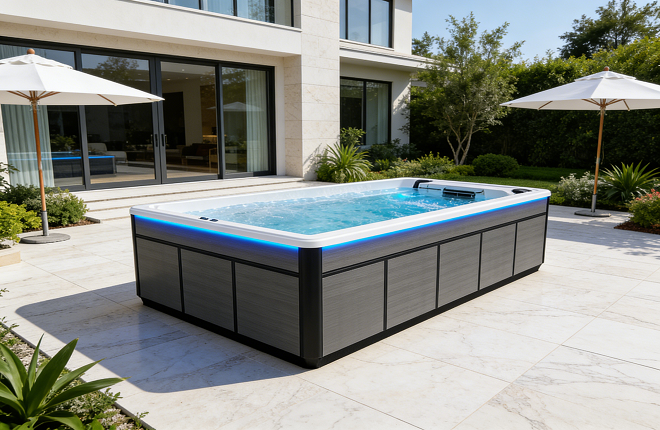
Complete Production And Delivery Process Of Acrylic Integrated Swimming Pool
The production of acrylic integrated swimming pools begins with tailored design and material selection. Engineers collaborate with clients to analyze site dimensions, usage scenarios, and aesthetic preferences, creating 3D models using CAD software. High-quality cast acrylic sheets (minimum thickness 15mm) are chosen for their superior impact resistance, UV stability, and transparency, ensuring durability and visual clarity.
Next, the acrylic sheets undergo precision cutting and thermoforming. Computer-controlled cutting machines slice the material into designated shapes with tolerances within ±0.5mm. For curved sections, sheets are heated to 160-180°C in ovens, then molded using custom jigs under controlled pressure (3-5 bar) to achieve seamless, watertight contours. Reinforcement rings and support structures are integrated during this phase to enhance structural integrity.
Assembly and quality inspection follow. Thermoformed components are bonded using specialized acrylic adhesives, cured at 50°C for 24 hours to form molecularly fused joints. Each pool undergoes rigorous testing: water pressure tests (1.2x operating pressure for 48 hours), leak detection via ultrasonic scanning, and surface finish checks to ensure no scratches or optical distortions.
Finally, logistics and on-site installation complete the process. Pools are packaged in shock-absorbent crates with custom foam padding, transported via climate-controlled vehicles to prevent material stress. On-site, a professional team positions the pool using laser leveling tools, connects filtration systems, and conducts final water circulation tests. Client training on maintenance protocols ensures long-term performance, marking the successful delivery of a premium acrylic swimming pool solution.
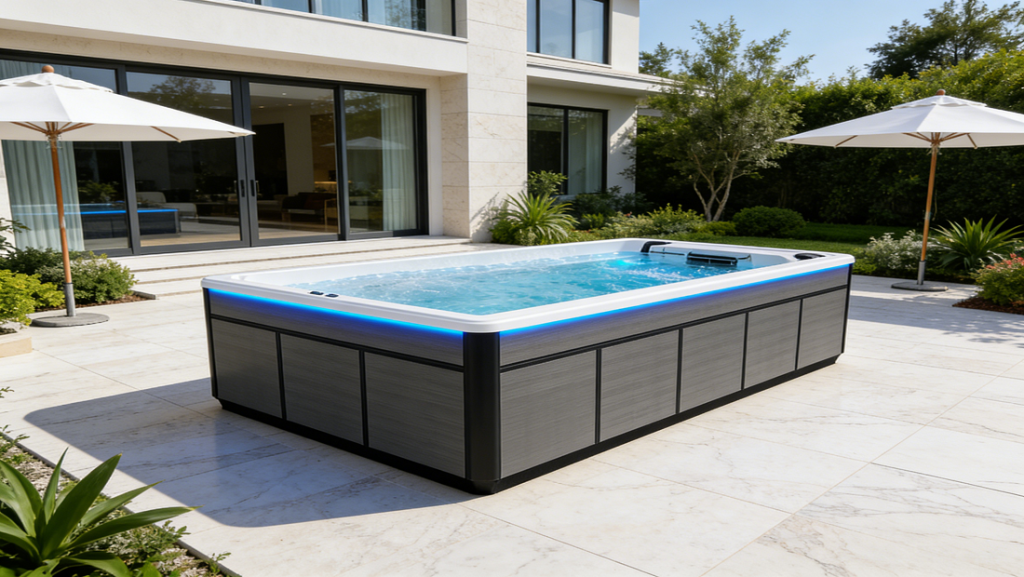
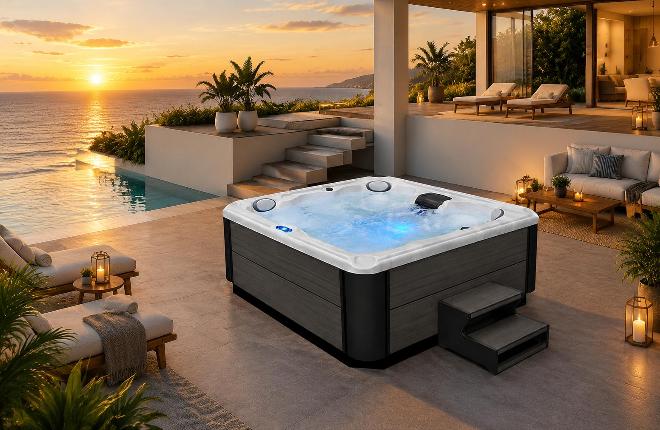
Choosing the Best Swim Spa with Hot Tub for Year-Round Use
Anyone comparing pools, hot tubs, and swim spas usually starts with the same question: which one actually fits daily life? A swim spa blends both worlds, giving you a lane for resistance swimming and a warm zone for muscle recovery in one shell. That combination is why the best swim spa with hot tub features tends to appeal to people who want fitness and relaxation without building two separate structures.
Traditional hot tubs are built purely for soaking. Swim spas add a current or jet system strong enough to swim against, plus a heated seating area for after the workout. For homeowners with limited yard space, this dual function often matters more than raw square footage. You get therapy and training in a footprint that would otherwise fit only one.
The tradeoff is complexity. More jets, more pumps, and more plumbing mean more things to maintain. Buyers should weigh that against the convenience of not needing a separate hot tub and pool.
Not every household needs both functions. Athletes recovering from training benefit most, since cold-to-warm contrast and jet massage speed up recovery between sessions. Physical therapy clinics use similar setups for low-impact rehabilitation, where warm water reduces joint strain during movement.
Hospitality businesses see a different value. Hotels, bed and breakfasts, and boutique fitness centers use these units as a guest amenity that photographs well and justifies a premium room rate. A single installation can serve both the wellness crowd and the leisure crowd without dedicating space to two separate features.
Homeowners with smaller courtyards or villa gardens fall into a third category. They want the lifestyle benefit of a pool without the excavation cost, and a swim spa with integrated hot tub seating gives them that in a prefabricated shell.
Massage performance depends on jet count, placement, and the ratio of water jets to air jets. Units in this category typically range from 16 jets on compact models up to 80 jets on larger family-sized spas. More jets do not automatically mean better therapy. Placement relative to shoulders, lower back, and calves matters more than raw quantity.
Air flow customization is another factor buyers overlook. Adjustable air injection lets you soften or intensify the massage without changing pump speed, which keeps energy use predictable while still tailoring the experience to different bathers.
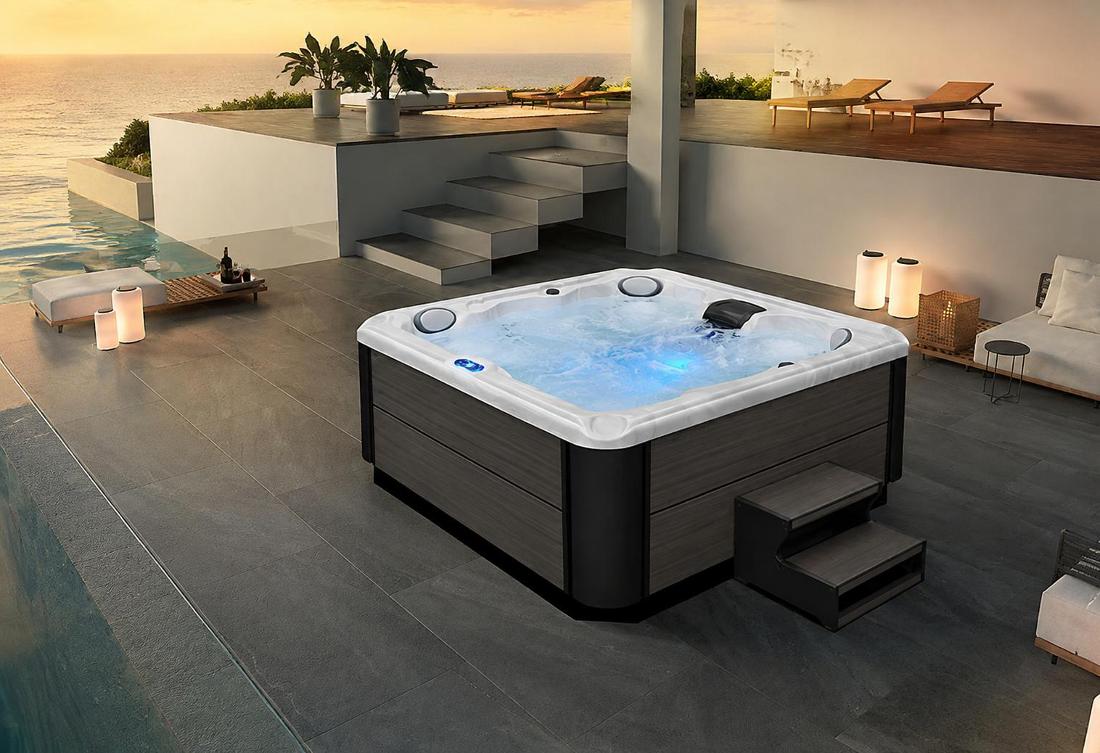
Lighting and audio are comfort features rather than therapeutic ones, but they shape how the unit gets used. Integrated LED lighting and built-in audio systems, available on select models in this lineup, extend evening use and make the spa feel like a destination rather than just equipment in the yard.
Skin irritation and cloudy water are the two complaints that drive most negative reviews of hot tubs and swim spas alike. Both usually trace back to inadequate sanitization rather than a design flaw. Ozone-based systems address this by breaking down organic contaminants without relying entirely on chlorine or bromine.
According to the manufacturer’s product documentation, the Fspa Hot Tub series integrates an ozone sanitization system across its lineup, which is intended to keep water clearer between full chemical treatments. This does not eliminate the need for routine water testing, but it does reduce how often bathers notice the sharp chemical smell associated with over-chlorinated water.
Filter placement also affects clarity. A dedicated filter housing positioned near the center of the shell, as seen in several models in this range, helps circulate water evenly across all seating zones instead of leaving stagnant corners where bacteria can build up.
Capacity is the first decision point, and it should be based on realistic daily use rather than the largest number you can afford. A spa built for three adults suits a couple or small household focused on recovery soaks. A six-person unit makes more sense for families or commercial settings where multiple guests use it simultaneously.
| Capacity | Typical Dimensions | Heater Output | Jet Range | Best Fit |
|---|---|---|---|---|
| 3 adults | 1870 x 1330 x 800mm | 2kW | 16-42 jets | Compact backyard, apartment patio |
| 4-5 adults | ~2100 x 1800 x 850mm | 2.5kW | 42-60 jets | Family home, small B&B |
| 6 adults | 2530 x 2300 x 900mm | 3kW | 60-80 jets | Villa courtyard, wellness center |
Heater wattage should scale with tub volume. A 2kW heater in a compact 3-person shell will keep pace with heat loss just fine, but the same heater in a 6-person unit will struggle in cooler climates. Total system power on larger models in this category can reach up to 5.55kW, which reflects the combined draw of pumps, heater, and auxiliary features running together.
Placement decisions often get made after purchase, which causes problems. A rooftop or balcony installation, like a rectangular hot tub positioned to overlook a city skyline, requires structural load calculations before delivery, not after. Weight when filled with water and occupants can exceed a thousand kilograms.
Ground-level villa courtyards and garden patios have more flexibility, but drainage and electrical access still need planning ahead of installation day. Commercial settings such as fitness centers, natatoriums, and rehabilitation clinics face additional considerations: slip-resistant decking around the unit and accessible entry points for clients with mobility limitations.
Common installation environments include:
Shell material and pump reliability determine how long a unit lasts before major repairs are needed. A marbled acrylic interior, common across this product range, resists staining better than lower-grade acrylic and holds up to sustained UV exposure in outdoor installations.
Pump and heater quality is harder to judge from photos alone, so buyers should ask directly about component sourcing. Reliable heaters and high-performance pumps, as described in the manufacturer’s specifications for this series, are the parts most likely to fail first if underrated for the tub’s volume.
Exterior paneling matters for climate resistance too. Grey-paneled exteriors on wooden decks need to tolerate moisture cycling without warping, which is a more practical concern in humid regions than in dry ones.
Several manufacturers, including this one, offer a standard tier and a "Pro" tier within the same shell size. The difference usually comes down to jet density, lighting integration, and control interface sophistication rather than capacity.
Deciding between tiers should depend on how the unit will be used. A recovery-focused athlete may value jet density more than lighting. A hospitality buyer furnishing a guest suite may prioritize the ambiance that lighting and audio integration provide.
Does a swim spa need a separate filtration system from the hot tub side?
No. In integrated units, filtration typically runs through one shared system, with the filter housing positioned centrally to circulate water across both the swim current area and the seating zones.
How often does ozone sanitization replace manual water treatment?
It does not replace it entirely. Ozone systems reduce the burden on chemical sanitizers and help maintain clarity, but periodic testing and top-up treatment are still necessary for water safety.
Can a 3-person spa be upgraded to more jets later?
Generally no. Jet count and placement are built into the shell during manufacturing, so capacity and jet configuration should be chosen based on anticipated long-term use rather than assumed later upgrades.
Is a rooftop installation always possible?
Only after structural verification. Filled weight plus occupants can be substantial, and a professional assessment of the rooftop or balcony’s load capacity should happen before ordering.
The best swim spa with hot tub functionality is not the one with the most jets or the flashiest lighting. It is the one sized correctly for your household or business, sanitized well enough to stay low-maintenance, and installed on a surface built to handle its filled weight.
Buyers who take the time to match capacity, heater output, and installation site to their actual routine tend to get years of reliable use out of these units. For those still comparing options, working through capacity charts and jet configurations side by side, as outlined above, is a more reliable path to satisfaction than choosing based on the largest model available. A well-matched best swim spa with hot tub setup should feel proportional to the space and the people using it, not oversized for the sake of features nobody ends up using.
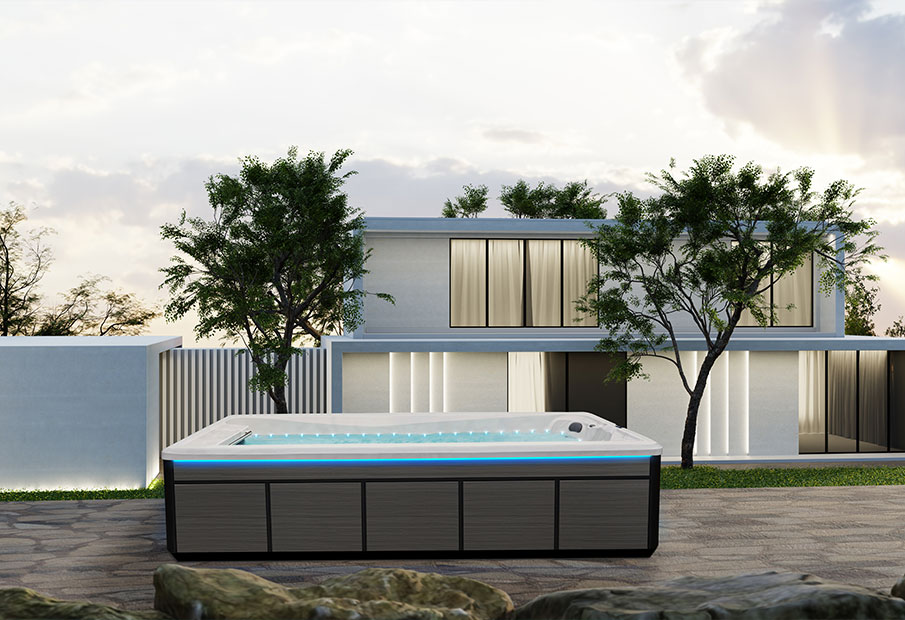
The Infinipool Fspa IP-003Pro is a cutting-edge hot tub with a spacious design, providing an unparalleled and customizable spa experience for residential and commercial use.
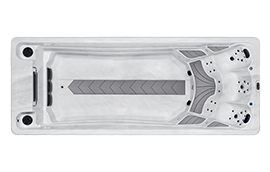
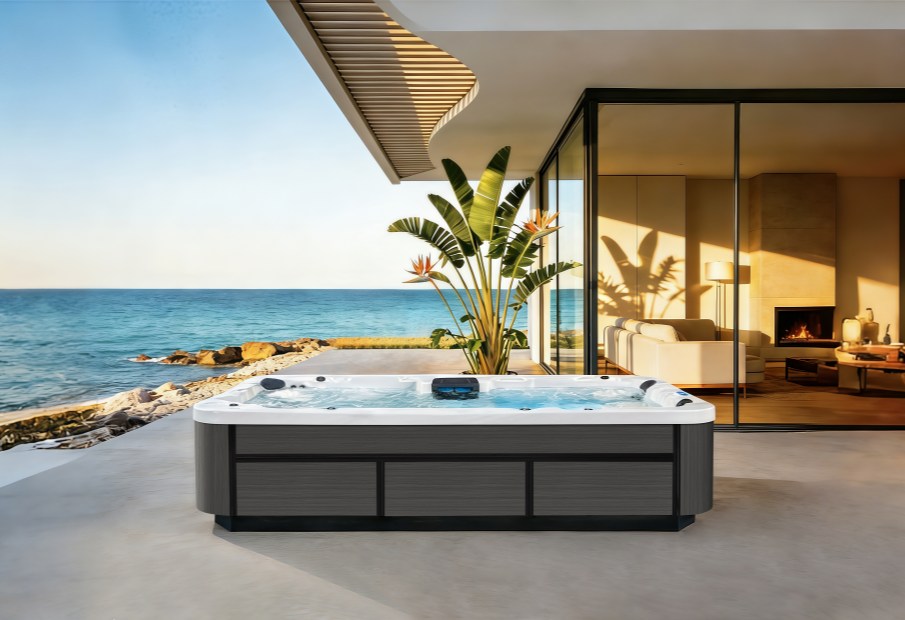
The Fspa BD-020 Hot Tub, designed for 5 adults with spacious dimensions and powered by a 4.85kW system, includes a 1.5kW massage pump, 0.35kW filter pump, 3kW heater, 28 customizable water jets, LED lighting, an ozone sanitation system, and easy maintenance features, providing unparalleled relaxation and comfort.
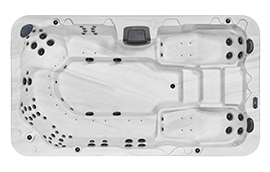
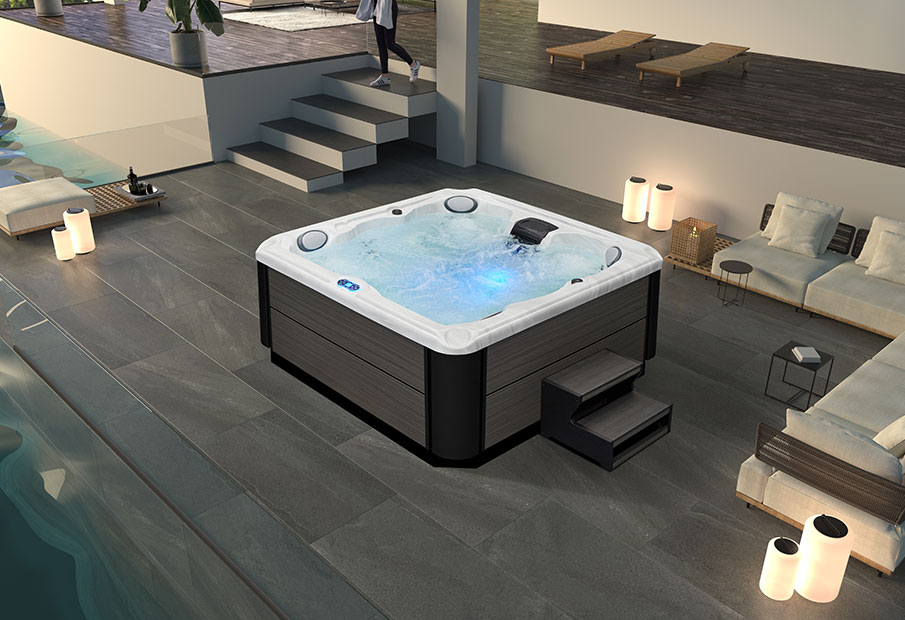
Fspa BD-001, a 2100x2100x900mm spa pool for 6 adults, features a comprehensive control system, powerful pumps, a 3kW heater, advanced filtration, LED lighting, and 31 jets, transforming any space into a luxurious, private oasis.
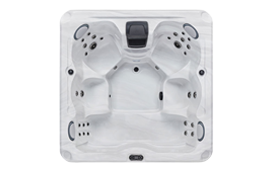
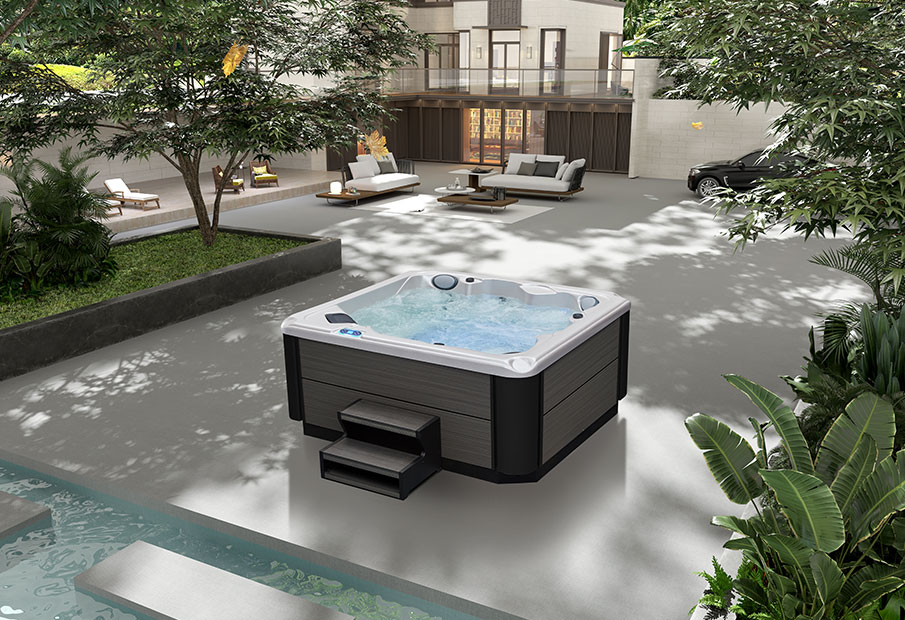
Our Fspa BD-007 Hot tub, measuring 2160x2160x900mm and accommodating 5 adults, combines luxury and comfort with a robust control system, powerful massage jets, sanitized water, ambient LED lighting, adjustable pillows, and energy efficiency, making it perfect for wellness enthusiasts in both residential and commercial settings.
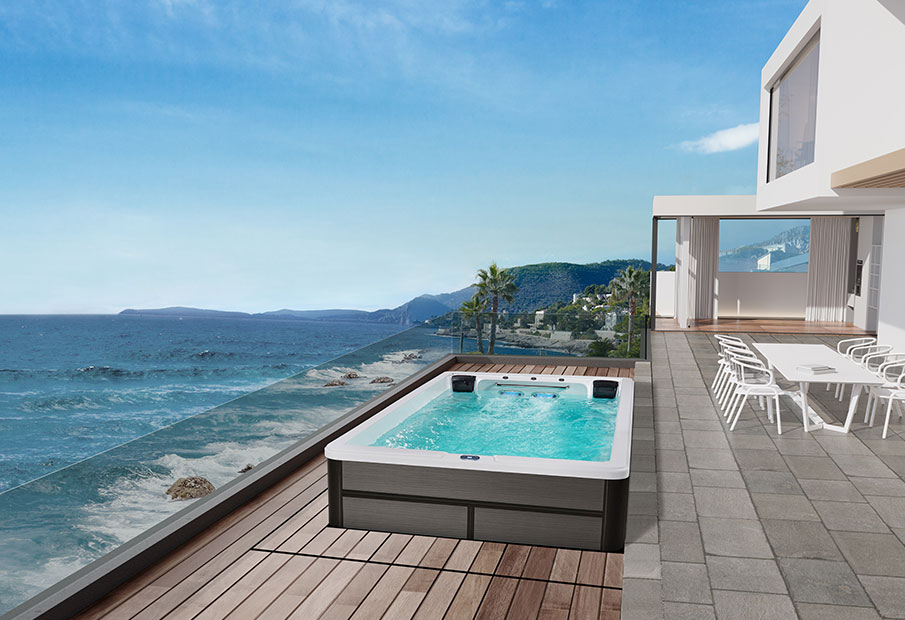
The Infinipool Fspa IP-001 is the ideal choice for anyone seeking a premium swimming experience at home or in a fitness facility.
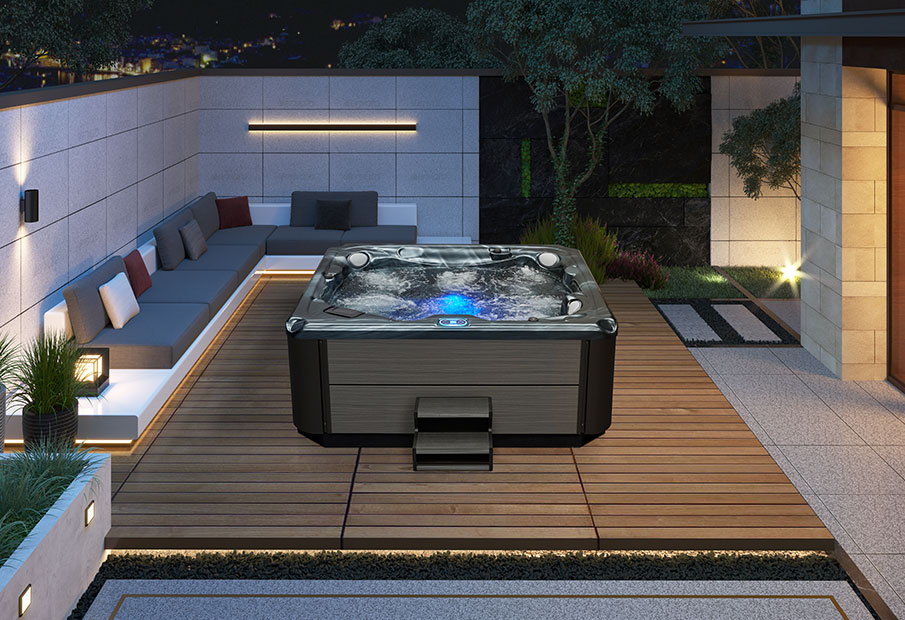
The Fspa BD-005 hot tub, accommodating 6 adults with advanced features including a 2.2kW massage pump, 0.35kW filter pump, 3kW heater, 42 jets, and ozone purification, offers ultimate relaxation in a spacious 2530x2300x900mm pool.
PRODUCTS
INQUIRY
Thank you for your message!Our Chinese New Year holiday from 7th Feb to 28th Feb. Apologise to make your inconvenience so that responses may be delayed during this period. We'll back to you with regular service on 2th March .Thank you for understanding.


