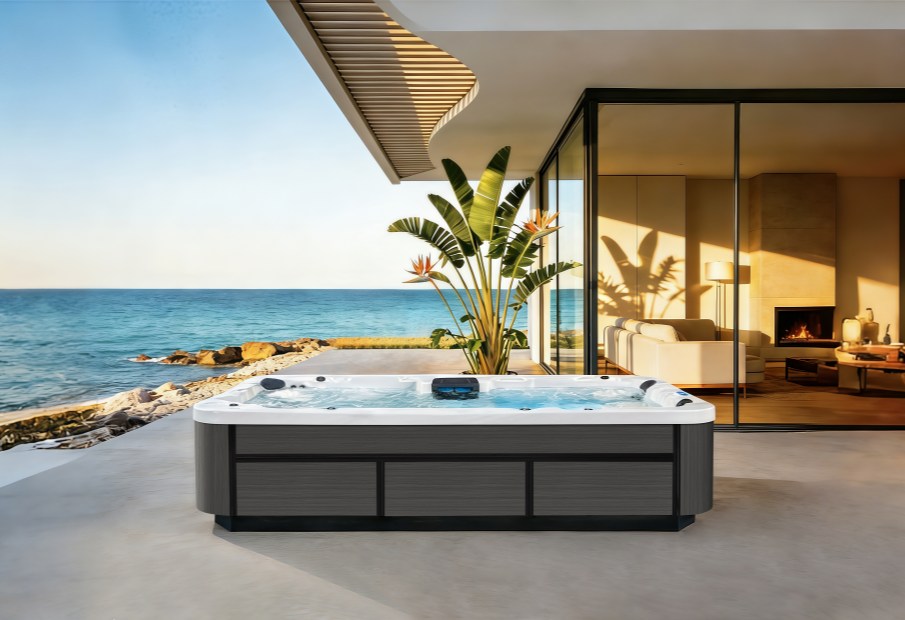
Outdoor relaxation has become a defining feature of modern living. A garden jacuzzi transforms an ordinary backyard into a personal wellness retreat, offering therapeutic benefits and aesthetic enhancement. Whether choosing a compact round jacuzzi or a luxurious big jacuzzi tub, homeowners increasingly invest in outdoor hydrotherapy as part of their lifestyle.
FSPA specializes in premium spa solutions, delivering high-quality home jacuzzi tub installations that combine comfort, durability, and design excellence. By integrating modern materials and ergonomic engineering, FSPA helps homeowners create outdoor sanctuaries that promote relaxation and well-being.
This article explores the advantages of hydrotherapy, design considerations for different jacuzzi styles, and practical insights for choosing the ideal jacuzzi outdoor tub.
Hydrotherapy has long been recognized for its therapeutic properties. A well-designed garden jacuzzi provides relief from muscle tension, improves circulation, and supports mental relaxation. Warm water therapy reduces stress and enhances overall wellness, making outdoor jacuzzis an increasingly popular home investment.
Unlike traditional indoor bathtubs, a jacuzzi outdoor tub combines relaxation with nature. Fresh air and outdoor scenery enhance the therapeutic experience, allowing users to unwind in a peaceful environment. FSPA designs outdoor spa solutions that integrate seamlessly with various landscaping styles, ensuring both functionality and visual appeal.
For individuals with active lifestyles, hydrotherapy aids muscle recovery and reduces post-exercise soreness. The combination of warm water and massage jets promotes relaxation and accelerates physical recovery. A big jacuzzi tub offers ample space for family members or guests, transforming outdoor relaxation into a shared experience.
Beyond wellness benefits, a home jacuzzi tub enhances property value and outdoor aesthetics. Landscaped gardens with integrated spa features create visually appealing outdoor spaces that attract potential buyers and increase home desirability.
FSPA’s design expertise ensures that jacuzzi installations complement existing outdoor environments. Whether incorporating natural stone surrounds or modern decking, FSPA solutions prioritize both style and functionality. A well-designed garden jacuzzi becomes a focal point of outdoor living, elevating the overall property experience.
Homeowners increasingly view outdoor spas as long-term investments. Unlike temporary entertainment features, a durable jacuzzi installation delivers ongoing value through relaxation and property enhancement. The versatility of options—including round jacuzzi designs—allows customization to suit individual preferences and spatial requirements.
Selecting between a garden jacuzzi and an indoor home jacuzzi tub depends on lifestyle preferences and available space. Outdoor installations provide an immersive nature-based experience, while indoor solutions offer year-round convenience.
FSPA specializes in both indoor and outdoor spa systems, delivering customized solutions tailored to client requirements. A jacuzzi outdoor tub enhances garden aesthetics and outdoor functionality, whereas a home jacuzzi tub integrates seamlessly with interior wellness spaces.
For homeowners seeking versatility, hybrid solutions offer the best of both worlds. Modern spa technology allows flexible installations that adapt to seasonal preferences and spatial constraints. FSPA’s expertise ensures optimal design and installation outcomes, maximizing customer satisfaction.
Design considerations play a crucial role in selecting the ideal spa solution. A round jacuzzi provides a compact and stylish option, ideal for smaller outdoor spaces. Its symmetrical design promotes social interaction and ergonomic comfort, making it a popular choice for modern gardens.
Conversely, a big jacuzzi tub offers spacious relaxation for families and groups. Larger models accommodate multiple users, enhancing social and recreational experiences. FSPA’s product range includes various sizes and configurations, allowing homeowners to select solutions that align with their needs.
Durability and material quality are equally important. Outdoor spas must withstand environmental exposure while maintaining performance and aesthetic appeal. FSPA utilizes premium materials and advanced engineering techniques to ensure long-lasting spa solutions that deliver exceptional value.
A garden jacuzzi represents more than a luxury addition—it embodies modern wellness and outdoor living innovation. Whether choosing a compact round jacuzzi or a spacious big jacuzzi tub, homeowners benefit from enhanced relaxation, aesthetic improvement, and property value growth.
FSPA leads the industry in spa design and installation, offering tailored solutions that combine functionality with elegance. From jacuzzi outdoor tub systems to comprehensive spa landscaping integration, FSPA delivers expertise and quality at every stage.
Investing in a home jacuzzi tub transforms outdoor and indoor spaces into wellness sanctuaries. With thoughtful design and professional installation, homeowners can enjoy the therapeutic benefits of hydrotherapy while enhancing their living environment.
A garden jacuzzi provides relaxation, muscle recovery, and mental well-being while enhancing outdoor aesthetics and property value. Hydrotherapy promotes stress relief and physical recovery, making outdoor spas a valuable wellness investment.
A jacuzzi outdoor tub offers nature-based relaxation and landscape integration, while a home jacuzzi tub provides year-round indoor convenience. FSPA delivers customized solutions for both environments.
A round jacuzzi maximizes space efficiency and social interaction. Its ergonomic design promotes comfort and aesthetic appeal, making it ideal for modern gardens and outdoor relaxation areas.
A big jacuzzi tub accommodates multiple users and offers spacious hydrotherapy experiences. FSPA provides various size options to meet individual preferences and spatial requirements.
FSPA specializes in premium spa solutions, offering expert installation, durable materials, and customized designs. Whether for a garden jacuzzi or indoor spa system, FSPA ensures quality and performance.
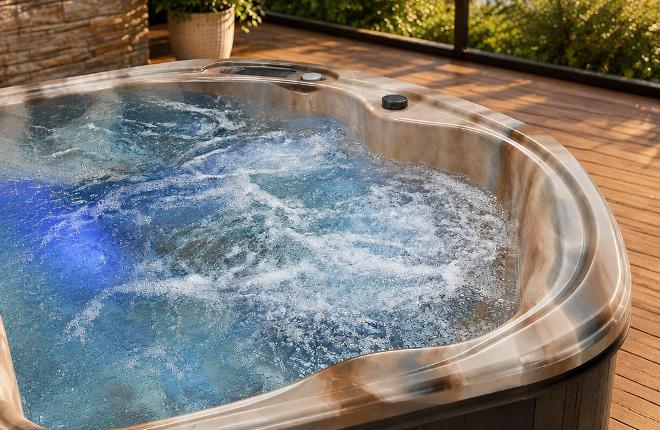
What Drives Outdoor Swim Spa Cost and How to Budget Accurately
Anyone comparing an outdoor swim spa cost against a traditional pool quickly runs into a wall of conflicting numbers. Quotes range from a few thousand dollars to well over twenty thousand, and the spread makes it hard to know what you are actually paying for. The truth is that swim spa pricing depends on a handful of measurable factors: size, pump configuration, jet count, cabinet materials, and installation complexity. Once you understand how these pieces fit together, the cost stops feeling arbitrary and starts looking like a straightforward equation.
A swim spa is not one product category, it is a spectrum. On one end sit compact plug-and-play units meant for light hydrotherapy. On the other end sit larger, multi-person systems built for both swimming resistance and massage therapy, closer in complexity to a small mechanical room than a simple tub.
That spread in function is the main reason quotes vary so widely. A unit with a single pump and a dozen jets will always cost less than one with dual massage pumps, a dedicated filtration pump, and thirty-plus jets. The BD-004, a 6-person portable spa built by our team, runs a 5.55kW total system split across a 2.2kW massage pump, a 0.35kW filter pump, and a 3kW heater. That kind of load distribution is typical of mid-to-large hydrotherapy spas, and it directly affects both purchase price and ongoing electricity use.
Before comparing quotes, it helps to separate the spa itself from everything around it. Buyers often anchor on the sticker price and forget that delivery, electrical work, and a suitable base can add a meaningful percentage on top.
| Cost Component | What It Covers | Typical Impact on Total Cost |
|---|---|---|
| Unit price | Shell, pumps, jets, heater, control system | Largest single line item |
| Electrical hookup | Dedicated circuit, GFCI protection, wiring to panel | Moderate, varies by distance to panel |
| Base or pad | Reinforced concrete, paver, or deck-rated platform | Moderate, depends on ground conditions |
| Delivery and placement | Crane or manual placement depending on access | Low to moderate, site-dependent |
| Water and chemicals | Initial fill plus ongoing sanitization | Low, recurring |
| Cover and accessories | Insulated cover, steps, cabinet skirting | Low to moderate |
Skipping the base or underestimating electrical needs is where budgets usually go wrong. A unit like the BD-004 weighs 317kg dry and holds 1450L of water, which adds up to well over a ton once filled. That weight has to rest on something rated for it, not a patch of lawn.
Capacity is the first number most shoppers look at, and it should be. A 2-person spa and a 6-person spa are not scaled versions of the same product, they are different mechanical systems entirely.
Larger capacity means more water volume, which means a stronger heater is needed to bring the spa up to temperature in a reasonable window. It also means more jets, which means either a bigger single pump or multiple pumps working in parallel. The BD-004, for example, uses 35 jets across a 2350x2350x900mm shell designed for six adults. Every one of those jets draws hydraulic pressure from the pump system, so jet count and pump size have to be matched carefully by the manufacturer, not left to guesswork.
Buyers shopping purely by seat count often miss this. Two spas rated for six people can carry very different pump specifications, and that difference shows up both in the purchase price and in the monthly power bill.
Jets get the marketing attention, but pumps are where the engineering complexity lives. Splitting massage and filtration into separate pumps, rather than running everything off one motor, lets the filtration cycle run quietly and continuously without competing for pressure against the massage jets.
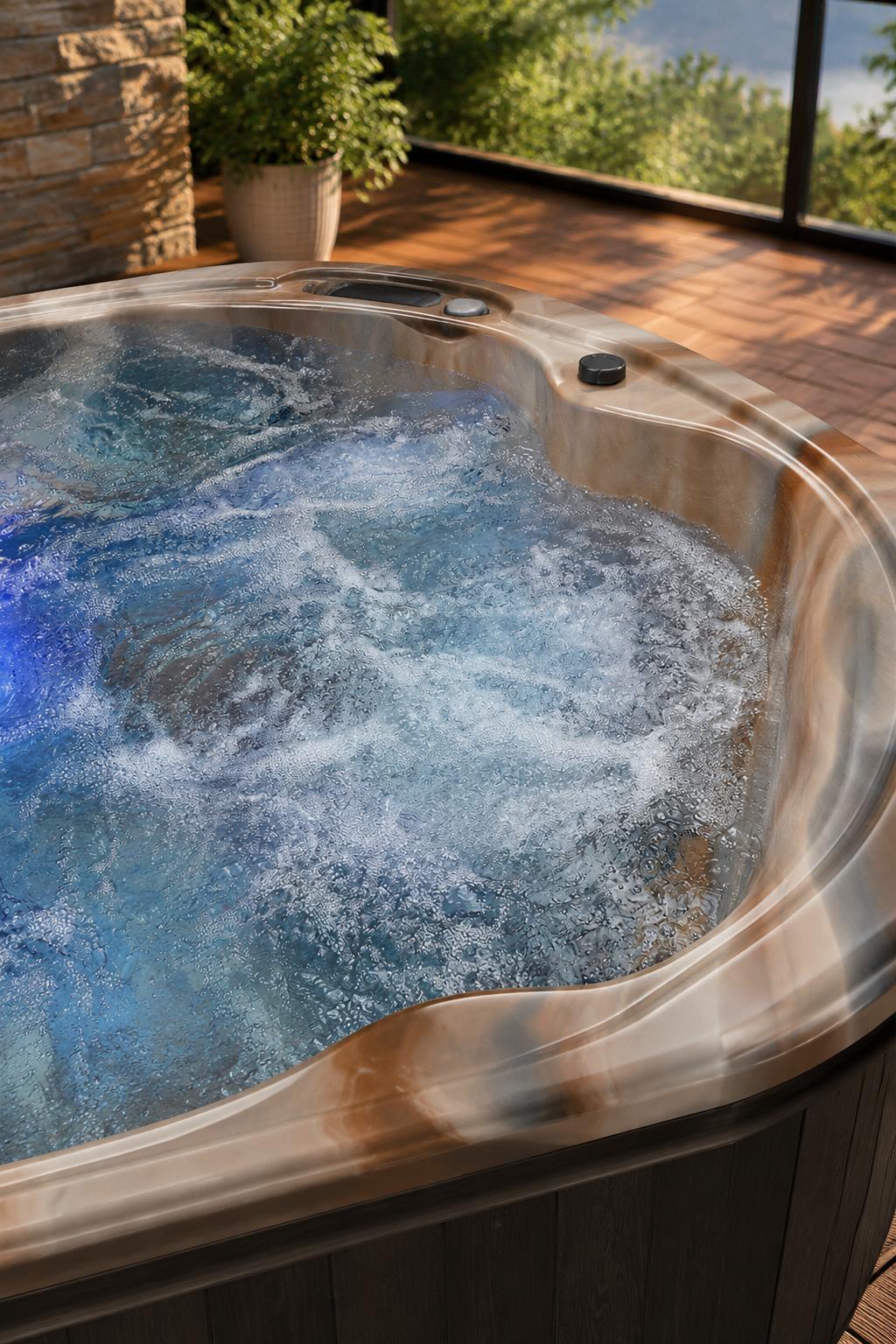
Here is what typically separates a basic setup from a more capable one:
This is also where ergonomic seating comes into the pricing conversation. Contoured seats and backrests, paired with headrests positioned to support the neck, require more precise mold tooling during manufacturing. That tooling cost is spread across the unit price, which is part of why well-shaped acrylic shells cost more than flat, generic ones.
The cabinet, the outer skirting around the shell, plays a bigger role in outdoor swim spa cost than most buyers expect. Outdoor placement means constant exposure to UV, moisture, and temperature swings, so cabinet material choice is not cosmetic, it is functional.
Wood-grain composite panels, like those used on the BD-004’s dark grey cabinet, resist warping better than raw wood while still giving a natural appearance. That composite construction typically costs more than basic plastic skirting but avoids the recurring cost of repainting or replacing warped panels every few seasons. Buyers planning a long-term outdoor installation should weigh this against a lower sticker price on units with thinner cabinet materials.
Water treatment is an ongoing cost that rarely gets discussed until after purchase. Manual chemical dosing works, but it demands regular attention and a steady supply of sanitizing product.
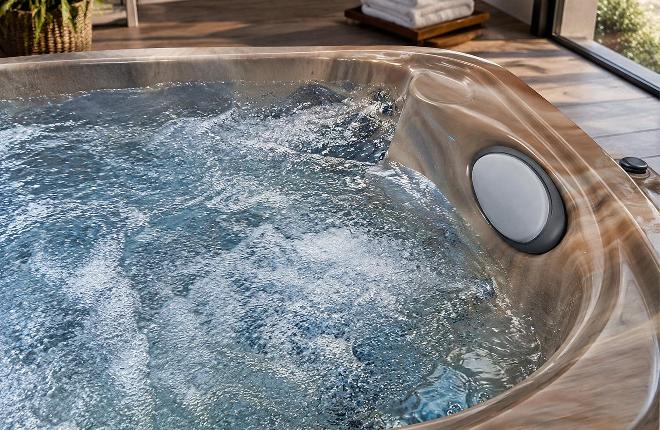
An integrated ozone system, included on the BD-004, reduces how often chemical sanitizers need to be added by helping break down organic contaminants during water circulation. According to the manufacturer’s specifications, this lowers hands-on maintenance time without eliminating the need for periodic water testing. For owners installing a spa at a hotel gym or a rental property, where maintenance visits are limited, that reduction in manual upkeep can matter more than the jet count.
Certification labels are easy to skim past on a spec sheet, but they carry real weight for both safety and resale value. CE, CB, and SAA certifications indicate the unit has been evaluated against recognized electrical and safety standards in their respective regions. CTUVus specifically covers North American electrical safety compliance.
For commercial buyers, certifications are often non-negotiable, insurance providers and local building codes may require them outright. For residential buyers, certifications are a reasonable proxy for manufacturing quality control, since passing these evaluations requires consistent production standards.
Application context changes what "good value" even means. A unit sized and priced for a backyard retreat is not necessarily the right fit for a commercial fitness center, and vice versa.
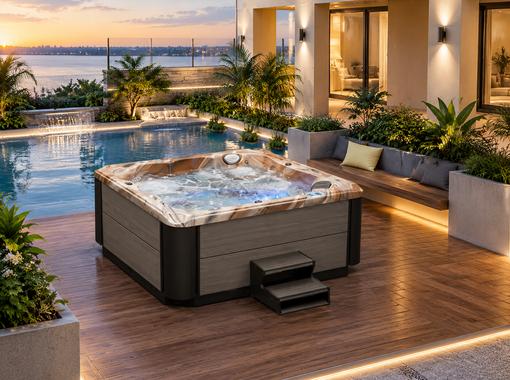
Matching the spa’s build to its intended setting prevents the common mistake of buying based on price alone, then discovering the unit was never designed for that environment’s demands.
Does outdoor swim spa cost include installation?
Not usually. Most quotes cover the unit itself. Electrical hookup, base preparation, and delivery are typically priced separately and should be requested as a full estimate before committing.
Is a bigger spa always more expensive to run?
Generally yes, since more water volume requires more heating energy, but the gap narrows with efficient insulation and a well-matched heater size relative to the shell.
Do more jets always mean better hydrotherapy?
Not necessarily. Jet placement and pump pressure matter more than raw count. A well-engineered 35-jet layout can outperform a poorly balanced 50-jet system.
How long does an outdoor cabinet typically last?
This varies by material and climate exposure. Composite wood-grain panels generally outlast basic plastic skirting in outdoor conditions, though exact lifespan depends on regional weather and maintenance.
The most reliable way to evaluate outdoor swim spa cost is to request an itemized quote that separates the unit price from installation extras. Ask specifically about pump configuration, water capacity, and certification status, since these three factors explain most of the price variation between comparable-looking units. For us, working across hotel, villa, and rehabilitation center installations has shown that the buyers who ask these questions upfront avoid the budget surprises that come later. Treat the initial quote as a starting point, not the final number, and the real outdoor swim spa cost will be far easier to predict.
What Drives Dual Swim Spa Cost and How to Budget for One
A dual swim spa splits one shell into two zones, usually a swim lane and a hot tub side, so a household gets exercise and recovery without installing two separate structures. Dual swim spa cost tends to surprise first-time buyers because it folds together plumbing, heating, and jet systems that would otherwise be priced separately. Understanding what actually drives that number helps you avoid paying for capacity or features you won’t use.
A standalone hot tub only needs to heat and circulate water for one purpose: relaxation. A dual swim spa asks the same footprint to also generate current or resistance for swimming, which means a second pump, a different plumbing layout, and often a longer shell. That extra hardware is the main reason dual units sit above single-zone spas in price.
The heater has to work across a larger water volume too. A 6-person hot tub like the BD-004, for reference, holds 1,450 liters and runs on a 3kW heater paired with a 2.2kW massage pump. Scale that up to a dual swim spa’s combined swim-and-soak volume, and you’re often looking at proportionally larger heating and pump capacity, which raises both the purchase price and the monthly electric bill.
Breaking dual swim spa cost into its components makes the number less abstract. Buyers are typically paying for these elements, whether they realize it or not.
None of these are optional extras bolted on to inflate price. They’re structural to how a dual-purpose unit functions, which is why comparing sticker prices without checking these specs leads to bad decisions.
Two spas priced within a few hundred dollars of each other can differ enormously in what they deliver. Before treating price as the deciding factor, line up the actual numbers.
| Spec | Entry-Level Single Zone | Mid-Range Dual Function |
|---|---|---|
| Capacity | 4-6 adults | 6+ adults, split zones |
| Total Power | 3-4kW | 5-6kW |
| Jet Count | 12-20 | 30-40 |
| Water Volume | 800-1,100L | 1,400L+ |
| Sanitization | Chemical only | Ozone-assisted |
A 6-person unit such as the BD-004 draws 5.55kW total, combining a 2.2kW massage pump, a 0.35kW filter pump, and a 3kW heater. That’s a useful reference point even for buyers looking at dual swim spas, since it shows how power draw scales once you add current-generation hardware on top of massage jets.
The unit price on a spec sheet is rarely the final number you pay. Site preparation, electrical work, and delivery logistics can add a meaningful percentage on top, sometimes more than buyers expect going in.
Skipping these steps to save money upfront usually costs more later, either through a cracked foundation or an electrical inspection failure that delays installation.
It helps to look at how individual features translate into real usage rather than treating spec sheets as marketing filler. Ergonomic seating with jet clusters positioned at shoulder, lower back, and calf level, for instance, changes how a soak actually feels compared to jets scattered without regard to body position. On the BD-004, jets are set into contoured seating designed around natural body curves, which is a different engineering approach than simply drilling more holes into a flat wall.
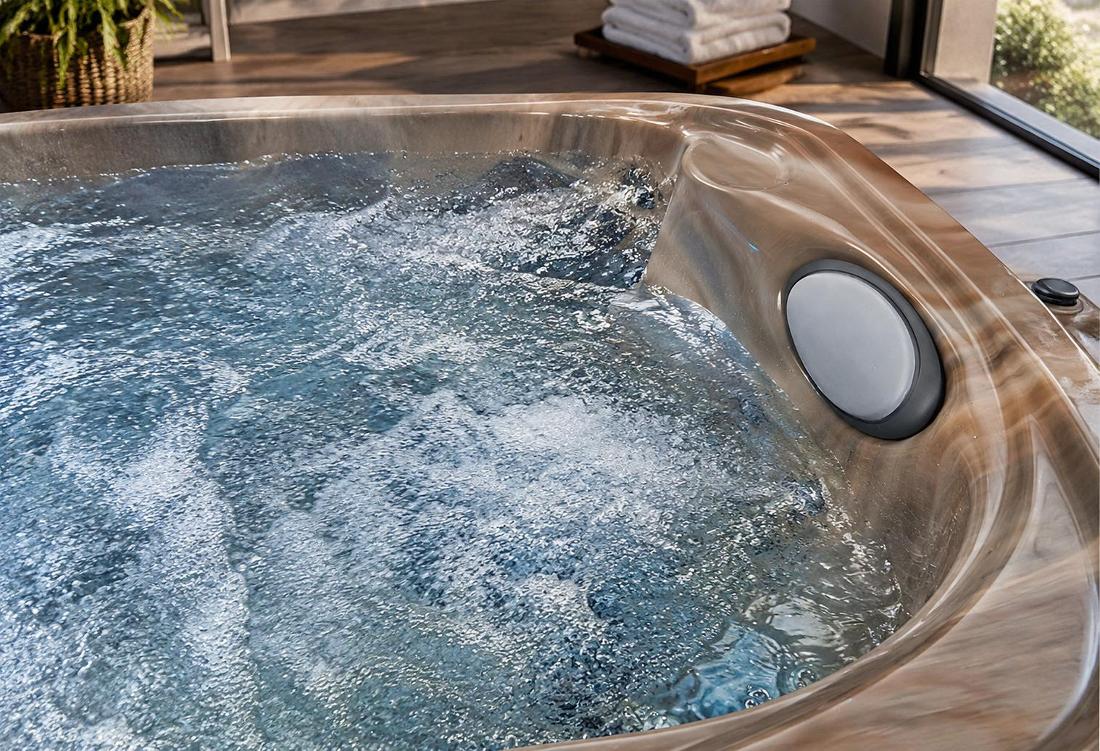
Lighting is another feature that sounds cosmetic but has a documented use case. Ambient LED lighting positioned at the base of the tub is described by manufacturers as supporting a calmer soaking atmosphere, which matters for evening use when harsh lighting works against relaxation. That’s a comfort feature, not a therapeutic claim, and it’s worth treating it that way when comparing spec sheets.
Sanitization is where operating cost quietly adds up over a year. An integrated ozone system reduces how much chlorine or bromine you need to buy and dose manually, which cuts down on weekly maintenance time. It doesn’t eliminate chemical use entirely, but it does reduce the volume, which is a meaningful difference for anyone who has managed a spa through a full season.
Dual swim spa cost only makes sense in context of where the unit will live and who will use it. A few scenarios illustrate how the same core technology gets applied differently.
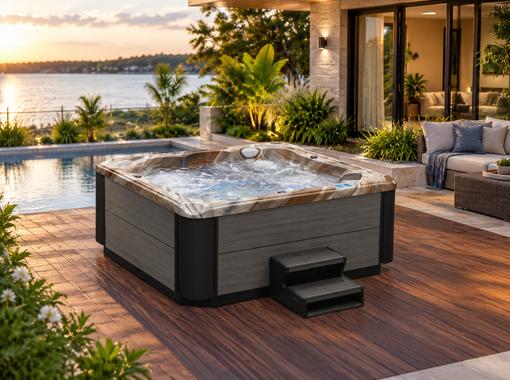
If your household is mainly interested in muscle recovery and social soaking rather than lap swimming, a straight hot tub, like a 6-person model with a strong jet count, may deliver better value than paying for swim-lane hardware you’ll rarely use.
Does a bigger jet count always mean a better spa?
Not necessarily. Jet placement matters as much as raw count. Thirty-five jets arranged ergonomically across contoured seating will outperform a higher count scattered without attention to body position.
Is ozone sanitization a replacement for chemicals?
No. It reduces the chemical dosage needed for water clarity but doesn’t eliminate the need for a sanitizer entirely. Think of it as a maintenance-reducing addition, not a substitute.
How much does electrical draw affect running costs?
A system in the 5-6kW range, running heater and pumps together during active use, will draw noticeably more than a basic 3kW single-zone spa, particularly in colder climates where the heater cycles more often.
Are certifications like CE or SAA worth checking before buying?
Yes. These certifications indicate the unit has been evaluated against recognized electrical and safety standards, which matters given the amount of water and power involved in operation.
Dual swim spa cost isn’t one number, it’s a range shaped by shell size, pump configuration, jet layout, and what your installation site requires before the unit even arrives. Buyers who compare power draw, water volume, and jet placement side by side, rather than sticker price alone, generally end up with a spa that matches their actual routine instead of one that just looked good in a showroom. Whether you land on a full dual swim spa or a high-capacity hot tub built for six, the goal is the same: paying for hardware that fits how the space will actually be used, not just what the spec sheet promises.
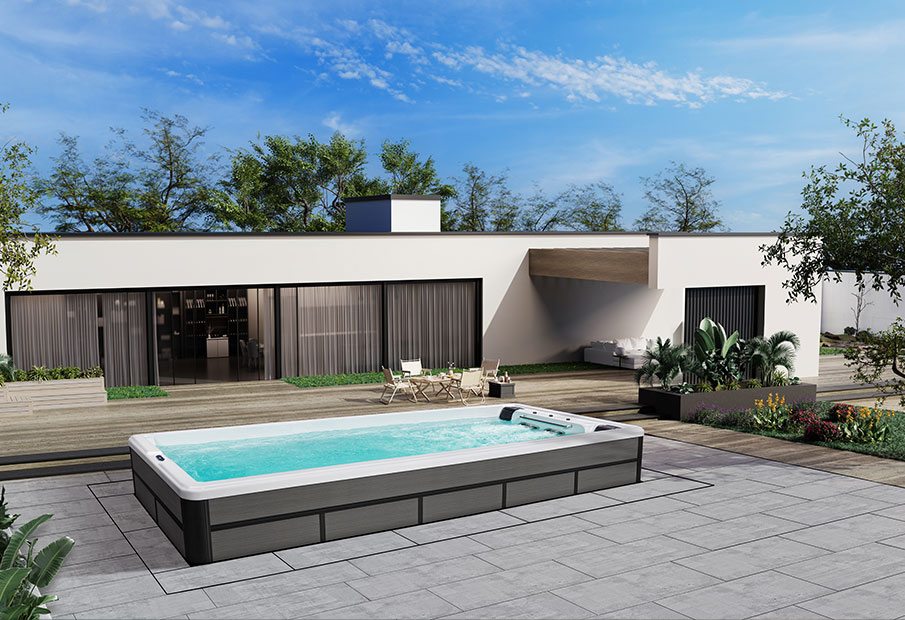
The Infinipool Fspa IP-002 offers a premium swimming experience ideal for residential and commercial use.
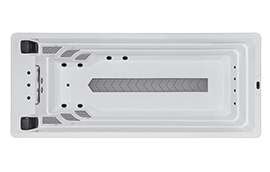
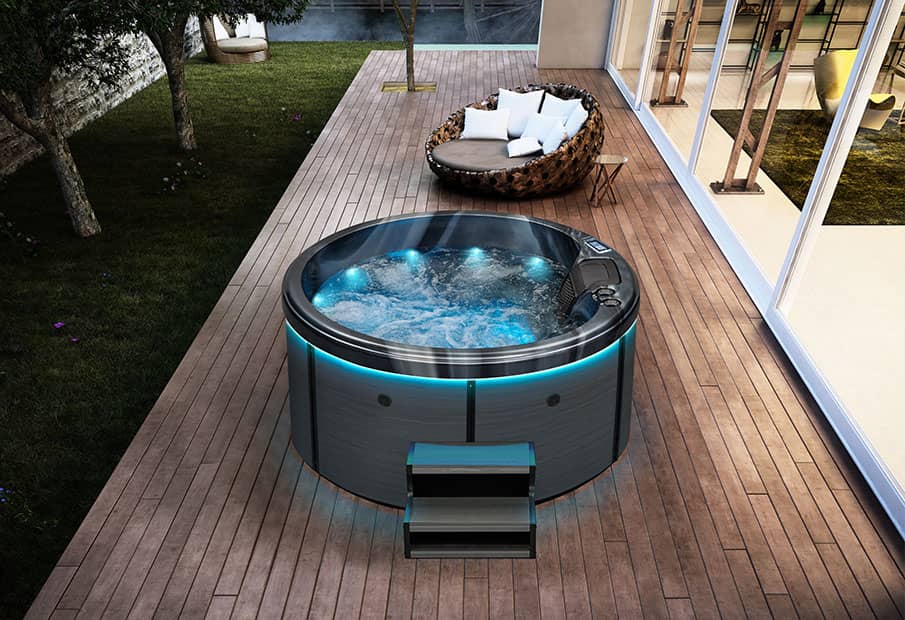
The Fspa BD-017Pro Hot Tub, spacious enough for 5 adults, offers a serene and rejuvenating experience with advanced controls, powerful massage and filtration systems, modern amenities, and suitability for indoor or outdoor use.
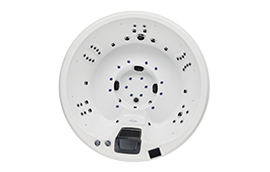
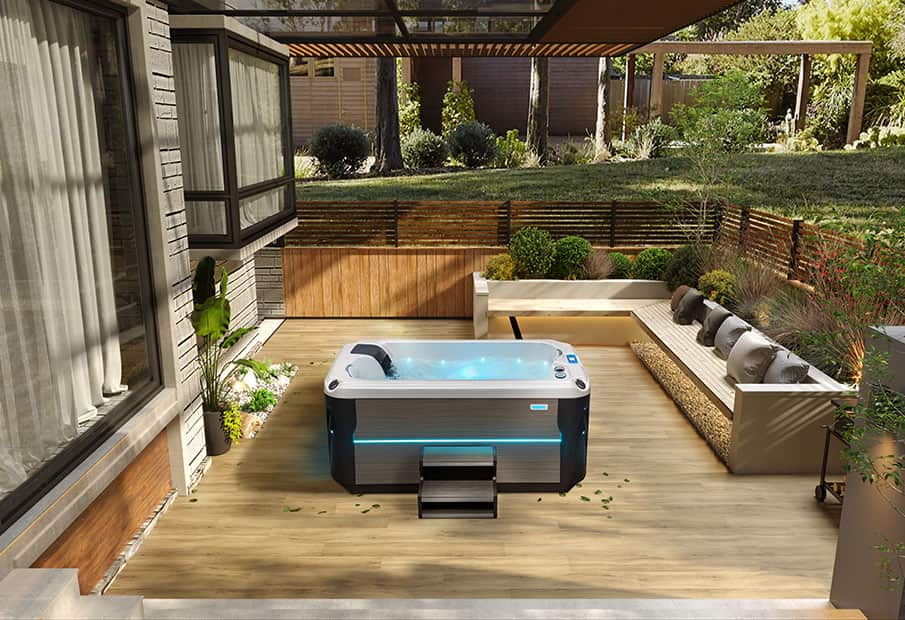
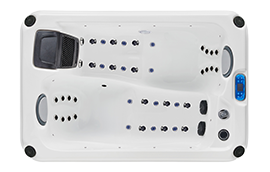
The Fspa BD-016Pro Hot Tub, a compact spa for up to 2 adults, offers a rejuvenating experience with an efficient control system, soothing massage features, consistent water temperature, modern amenities, advanced filtration, and suitability for indoor or outdoor placement.
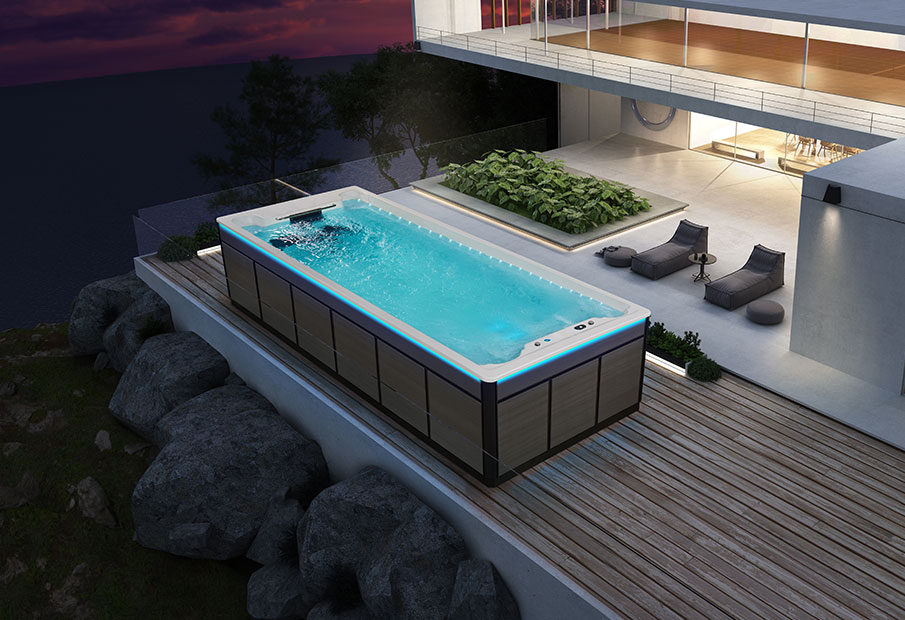
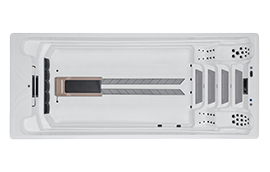
The Infinipool Fspa IP-005Pro is a state-of-the-art, spacious hot tub with advanced features, offering an unparalleled spa retreat for residential and commercial use.
The Fspa BD-020 Hot Tub, designed for 5 adults with spacious dimensions and powered by a 4.85kW system, includes a 1.5kW massage pump, 0.35kW filter pump, 3kW heater, 28 customizable water jets, LED lighting, an ozone sanitation system, and easy maintenance features, providing unparalleled relaxation and comfort.
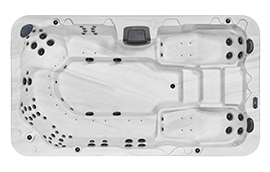
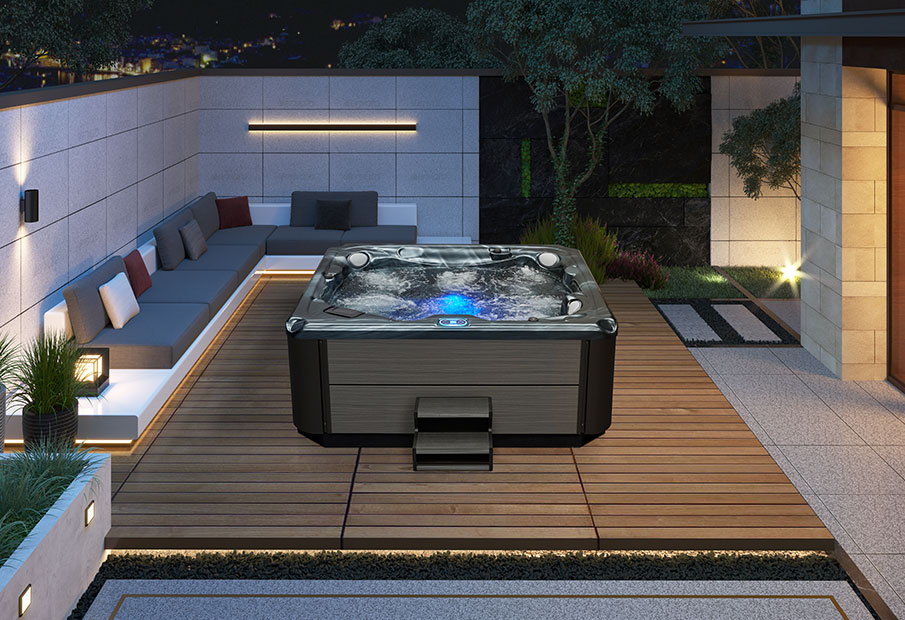
The Fspa BD-005 hot tub, accommodating 6 adults with advanced features including a 2.2kW massage pump, 0.35kW filter pump, 3kW heater, 42 jets, and ozone purification, offers ultimate relaxation in a spacious 2530x2300x900mm pool.
PRODUCTS
INQUIRY
Thank you for your message!Our Chinese New Year holiday from 7th Feb to 28th Feb. Apologise to make your inconvenience so that responses may be delayed during this period. We'll back to you with regular service on 2th March .Thank you for understanding.


