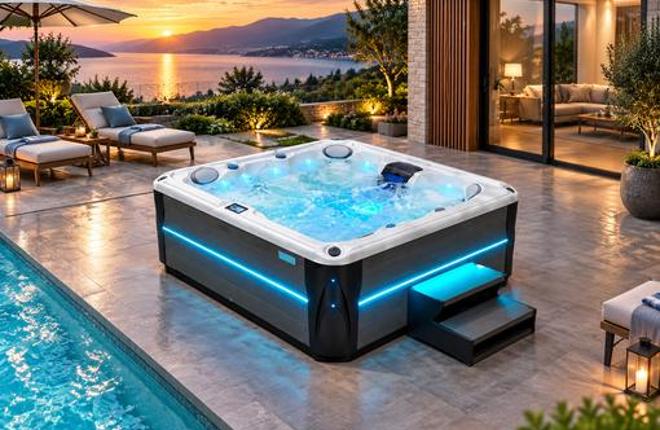
A fitness swim spa sits in an odd category. It’s not quite a lap pool, not quite a hot tub, and that in-between identity confuses a lot of buyers before they even start comparing units. The confusion usually comes from expecting one product to do two very different jobs at once: cardiovascular training and muscle recovery. Once you separate those two goals, choosing the right setup gets a lot simpler.
The term gets used loosely, so it helps to define it before shopping. A true fitness swim spa is built around a resistance current, letting you swim in place against moving water rather than covering distance. Some hybrid models pair that swim function with a separate hydrotherapy seating area, so the same footprint handles both the workout and the wind-down.
That second category, the hydrotherapy side, is where most home gyms and small hospitality properties actually spend their time. A hotel gym, for instance, rarely needs a lap current. What guests want after a workout is heat, jet pressure, and a place to sit still for fifteen minutes. That’s a recovery spa, not a swim spa, even though the two get lumped together in marketing copy.
Training load without recovery just accumulates fatigue. Warm water immersion increases local blood flow and can ease the sensation of muscle tightness after exertion, which is why physiotherapy centers and rehab clinics have used hydrotherapy pools for decades. It’s not a substitute for medical treatment, but as a post-exercise habit, it’s a well-established one.
This is the gap a portable hot tub fills for facilities that don’t have room or budget for a dedicated hydrotherapy pool. A compact multi-person unit can sit in a hotel gym corner, a physiotherapy center treatment room, or a villa courtyard, and deliver the same warm-water recovery function without construction work or plumbing overhauls.
To make this concrete, look at how a purpose-built recovery spa is actually specified. The Fspa BD-004 is a 6-person portable hot tub designed for hydrotherapy rather than lap swimming, and its spec sheet reflects that priority.
| Specification | Detail |
|---|---|
| Capacity | 6 adults |
| Dimensions | 2350 x 2350 x 900 mm |
| Total power | 5.55 kW |
| Massage pump | 2.2 kW x 1 |
| Filter pump | 0.35 kW x 1 |
| Heater | 3 kW x 1 |
| Jet count | 35 |
| Water capacity | 1450 L |
| Net weight | 317 kg |
| Certifications | CE, CTUVus, CB, SAA |
Thirty-five jets across a 6-seat layout means each person gets meaningful coverage rather than a couple of shared nozzles fighting for pressure. The 2.2kW massage pump is what actually drives that jet pressure, while the 0.35kW filter pump runs quietly in the background to keep water circulating between sessions.
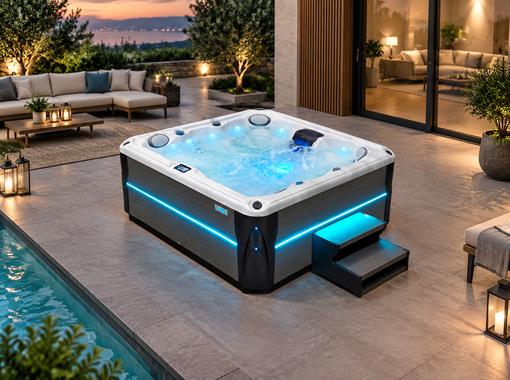
Application context matters more than spec sheets alone. According to the manufacturer, the BD-004 is positioned for three fairly distinct settings, each with a different reason for wanting it.
None of these are lap-swimming use cases. That’s worth pointing out plainly, because if your primary goal is swim training, a resistance-current pool is the correct category, not a seated jet spa. Buyers who skip this distinction end up disappointed with either product.
Manufacturer literature for the BD-004 describes several named features, and it’s worth translating what each one does in plain terms rather than repeating the label.
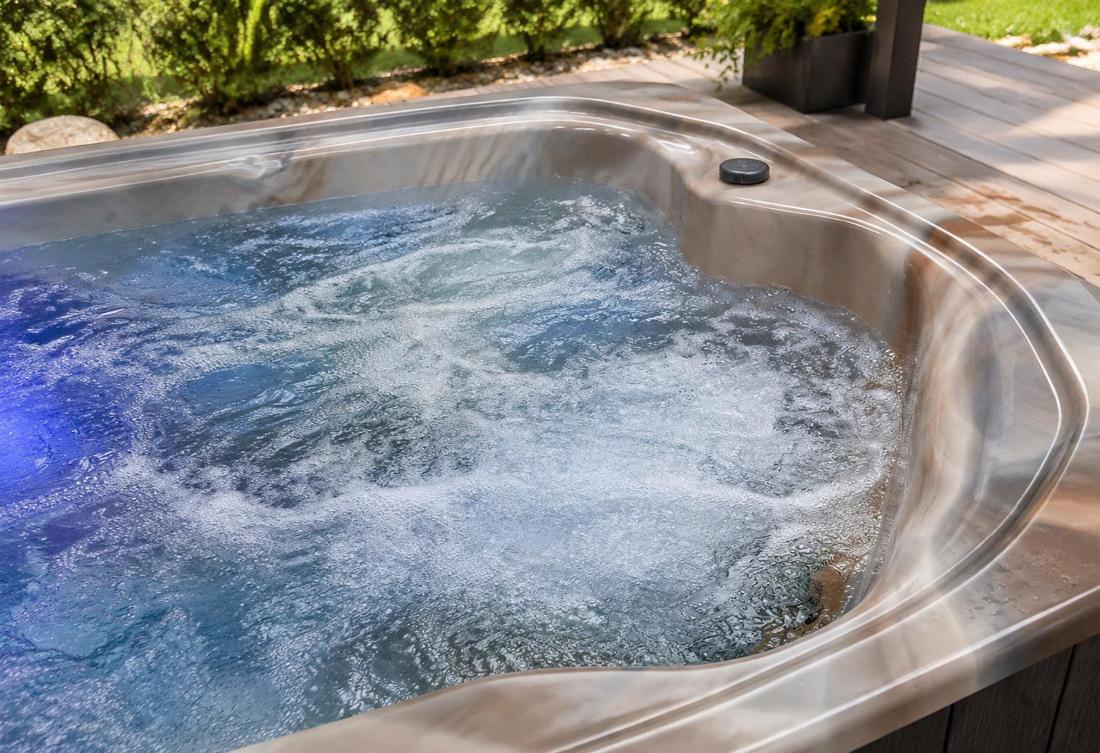
If you’re deciding what to actually install, the decision usually comes down to how you answer three questions.
Buyers often underestimate upkeep. A portable spa still needs regular water testing, filter cleaning, and periodic draining, even with ozone sanitization running. Ozone reduces bather load on chemical sanitizers, it doesn’t eliminate the need for them. Budgeting for that ongoing care, not just the purchase price, is part of choosing the right unit.
Energy draw is the other overlooked factor. A 3kW heater cycling to maintain temperature, plus a 2.2kW massage pump running during sessions, adds up over a billing cycle. It’s not an alarming figure for a single unit, but a hotel running one continuously for guest use should factor it into utility forecasts rather than being surprised later.
Does a fitness swim spa replace a lap pool for training?
Not for serious swim training. A resistance-current swim spa can support conditioning work, but a seated hydrotherapy spa like the BD-004 is built for recovery, not distance swimming.
Can a portable spa be installed both indoors and outdoors?
Yes, provided the surface can support the filled weight and there’s power access matching the unit’s requirements. The BD-004, for example, weighs 317kg net and needs a 5.55kW power supply.
Is ozone sanitization enough on its own?
No. It reduces the workload on chemical sanitizers and helps keep water clearer between treatments, but standard water testing and periodic chemical balancing are still necessary.
How many people can realistically use one at a time?
Match seating to your actual traffic. The BD-004 seats 6, which suits small group use in a gym or villa setting, but high-traffic facilities may need more than one unit.
The honest answer to "which fitness swim spa should I get" depends entirely on what happens after the workout ends, not just during it. For most hotel gyms, villas, and homestays, the real need is a place to sit, warm up, and let jets work on tired muscles, which a compact multi-seat hydrotherapy spa handles well within a manageable footprint and water draw. If lap-distance training is the actual goal, that’s a different product category entirely, and it’s worth being clear about that difference before signing off on a purchase. Either way, matching the unit’s capacity, power draw, and maintenance demands to your actual usage pattern is what separates a good fitness swim spa investment from one that sits unused by week three.
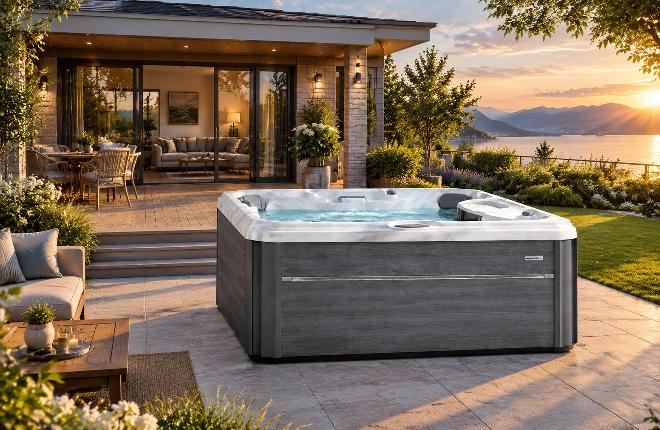
What Drives Large Swim Spa Cost and How to Budget Wisely
Anyone shopping for a backyard swim spa eventually runs into the same wall: prices swing wildly between listings, and it’s hard to tell why one large unit costs twice as much as another. Large swim spa cost depends on far more than tank size. Pump count, heating capacity, jet configuration, and build quality all pull the number in different directions. This guide breaks down what actually drives the price tag so you can compare quotes without guessing.
A bigger shell means more acrylic, more water, and a stronger frame to support the load, but that’s only part of the equation. Two spas with identical dimensions can differ by thousands of dollars once you factor in jet count, pump horsepower, and control electronics.
Manufacturers often scale features alongside size. A 6-person spa built for family use, for instance, tends to carry a wider jet array and a higher-output heater than a compact 3-person model, simply because there’s more water volume to circulate and more bodies to massage at once. That combination of surface area and mechanical load is where large swim spa cost really accumulates.
Every quote for a large hot tub or swim spa breaks down into a handful of cost centers. Understanding each one helps you spot where a supplier is cutting corners or, conversely, charging fairly for genuine capability.
None of these line items exist in isolation. A stronger pump paired with weak insulation just burns more electricity without improving comfort, so it pays to look at how the whole system fits together rather than any single spec in isolation.
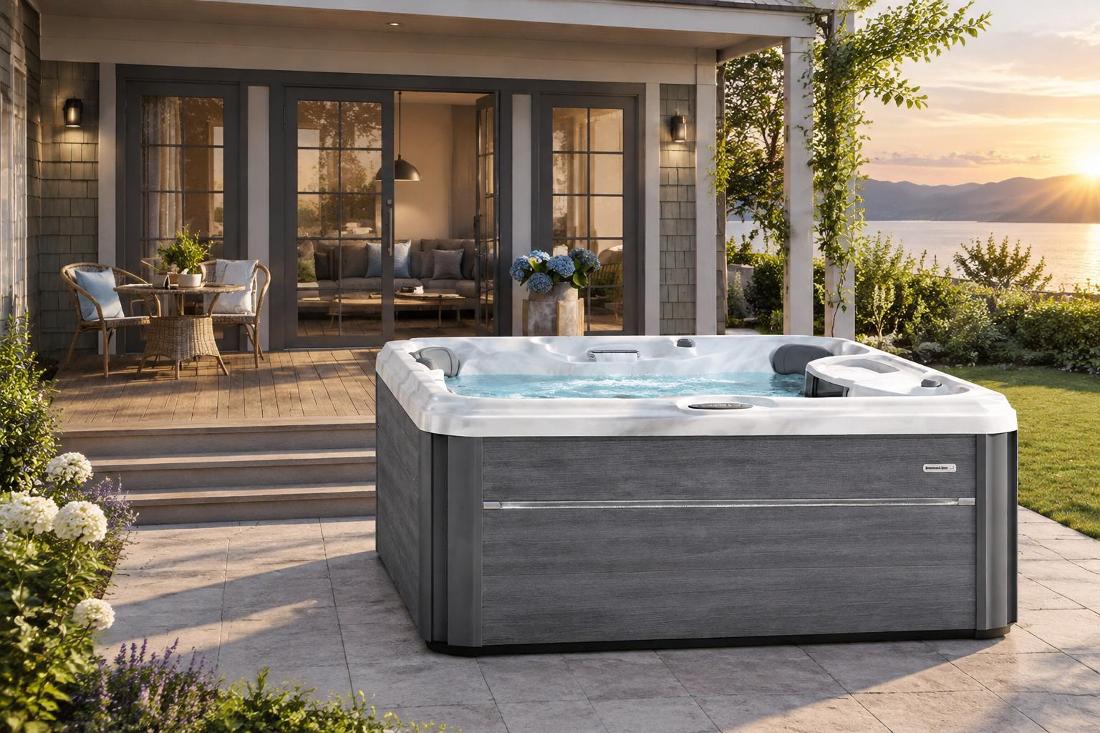
Swim spas and large hot tubs are sold across a fairly wide capacity range, generally from 3-person compact units up to 6-person family spas. Dimensions scale accordingly, with larger models running from roughly 1870x1330mm on the small end to 2530x2300mm for the biggest layouts.
That size jump isn’t just about fitting more people. Larger shells need more robust seating geometry to keep water circulation even across every position, and manufacturers who design well will mold ergonomic seating and footwells rather than just stretching a smaller shape. A model built for 6 adults typically distributes jets across more zones, so no single seat feels like an afterthought.
The table below outlines how typical feature tiers differ, based on common specification ranges seen across residential swim spa and hot tub lines.
| Feature | Entry Tier | Mid Tier | Premium Tier |
|---|---|---|---|
| Capacity | 3 adults | 4-5 adults | 5-6 adults |
| Jet Count | 16-30 | 30-50 | 50-80 |
| Heater Output | 2kW | 2kW-3kW | 3kW |
| Sanitization | Basic chemical | Ozone-assisted | Ozone-assisted |
| Extras | Minimal | LED lighting | LED lighting, audio |
Premium tiers add sensory features like integrated LED lighting and built-in audio, turning the unit into more of a lifestyle fixture than a pure therapy device. Those additions raise large swim spa cost, but they also change how the spa gets used day to day, shifting it from occasional recovery tool to a regular evening destination.
Sticker price only tells half the story. Operating cost matters just as much once the spa is installed and running through its first few seasons.
This is the part buyers underestimate most often. A cheaper unit with weak insulation can cost more over five years than a pricier one that holds heat efficiently, so the purchase price is really just the entry fee, not the full bill.
Where the spa goes changes what you should be paying for. A villa with a large deck can accommodate a 6-person unit with room to spare, while a townhouse courtyard might only fit a compact 3-person footprint. Hotels, boutique B&Bs, and fitness centers face a different calculus entirely, since a commercial setting sees heavier daily use and benefits from the more robust pump and heater specs found in higher tiers.
Rehabilitation and physiotherapy centers lean toward configurations with a denser jet layout, since targeted hydrotherapy is the actual point of the purchase rather than a bonus feature. In that context, paying more for a higher jet count isn’t a luxury upgrade, it’s the functional requirement the whole purchase is built around.
Does a larger swim spa always cost proportionally more than a smaller one?
Not exactly. Size drives up material and water volume cost, but jet count, pump power, and added features like lighting or audio often account for a bigger share of the price difference than shell dimensions alone.
Is ozone sanitization worth the extra cost?
For most owners, yes, since it reduces how often chemicals need to be purchased and dosed manually, which lowers the maintenance burden over the life of the spa.
What’s the biggest hidden cost people forget when budgeting?
Electricity and heat retention. A spa with a high-output heater and a poorly insulated cover will run up utility costs well beyond what the purchase price suggested.
How many jets do I actually need?
It depends on use case. Family relaxation can be well served by 30-40 jets, while therapeutic or rehabilitation-focused use often benefits from denser configurations in the 50-80 range.
Budgeting for a large swim spa means separating genuine performance upgrades from features that just look good in a showroom. Focus first on capacity that actually matches your household or facility, then check heater output and pump power against your climate, and only after that weigh in the sensory extras.
For us, and for most manufacturers building intelligent outdoor spa and swimming pool systems for residential and commercial use, the goal of transparent specifications is to let buyers make that comparison honestly. When you know what’s driving large swim spa cost, from jet density to sanitization method to shell construction, you stop comparing sticker prices and start comparing actual value.
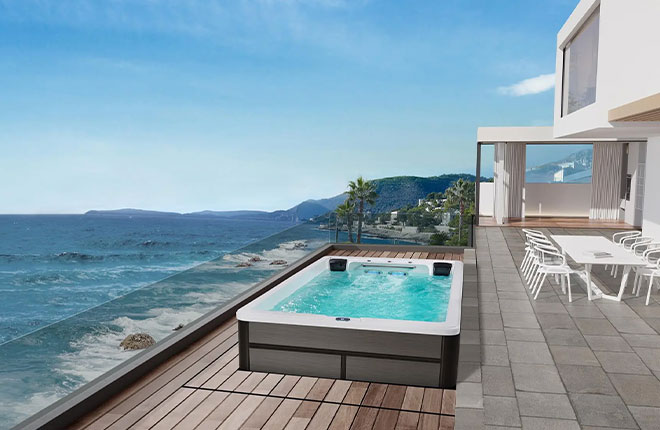
Global Popularity of Swim Spas: Where They Thrive Around the World
Swim spas have emerged as a popular choice for aquatic enthusiasts and wellness seekers alike, offering a unique blend of fitness and relaxation benefits in a compact package. These versatile units have garnered widespread popularity across several countries and regions, catering to diverse climates and lifestyles.
United States: In the United States, swim spas have found a strong foothold, particularly in states with varying climates such as California, Florida, and Texas. They appeal to homeowners looking for a year-round swimming solution without the space requirements of a traditional pool. The versatility of swim spas also fits well with the American emphasis on health and fitness.
Australia: Known for its outdoor lifestyle, Australia has embraced swim spas as a practical alternative to traditional pools. They are particularly popular in urban areas where space is limited and in regions with warm climates like Queensland. Australians appreciate the dual functionality of swim spas for exercise and relaxation.
United Kingdom: Despite the unpredictable weather, swim spas have gained popularity in the UK. They provide a compact swimming solution suitable for both exercise and leisure. Their appeal lies in offering a year-round aquatic experience without the extensive space and maintenance demands of a full-sized pool.
Canada: In Canada, where the climate varies greatly from region to region, swim spas have become increasingly popular. They allow Canadians to enjoy swimming and hydrotherapy year-round, even in colder climates. Swim spas are valued for their compact size and ability to provide therapeutic benefits at home.
Scandinavian Countries: Countries like Sweden, Norway, and Denmark have embraced swim spas as well. They offer a practical solution for enjoying warm water activities outdoors, even in colder climates. Swim spas are popular in both residential settings and spa resorts, catering to the wellness-oriented Scandinavian lifestyle.
New Zealand: Similar to Australia, New Zealand has seen an uptick in the popularity of swim spas. They appeal to homeowners seeking a versatile aquatic solution that combines fitness and relaxation benefits. Swim spas are valued for their compact design and ability to complement the outdoor lifestyle.
Japan: In densely populated urban areas of Japan, swim spas have gained traction among individuals seeking a space-efficient aquatic experience. They offer a compact alternative to traditional pools and appeal to those interested in fitness and hydrotherapy benefits at home.
Swim spas continue to evolve with advanced features such as adjustable current speeds, ergonomic seating, and integrated hydrotherapy jets, making them attractive to a global audience. Their popularity across various countries and regions underscores a growing trend towards compact, multifunctional aquatic solutions that cater to diverse needs and lifestyles. As more people prioritize health, fitness, and relaxation at home, swim spas are likely to remain a popular choice worldwide. If you want to customize a swim spa, you can choose FSPA Swim Spa.
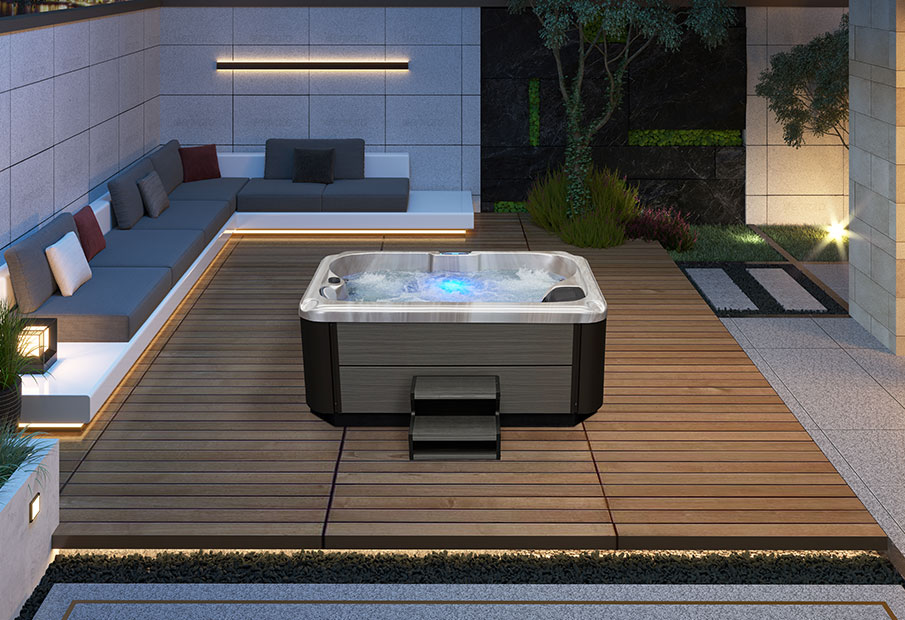
Our luxurious Fspa BD-003 spa tub, designed for 3 adults with ample space (1870x1330x800mm), features a comprehensive control system, powerful massage pump, gentle filter pump, temperature control, clean water filter, LED lighting, 16 massage jets, and sanitation ozone system, offering a perfect therapeutic escape for you and your loved ones.
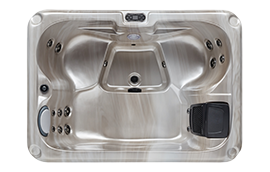
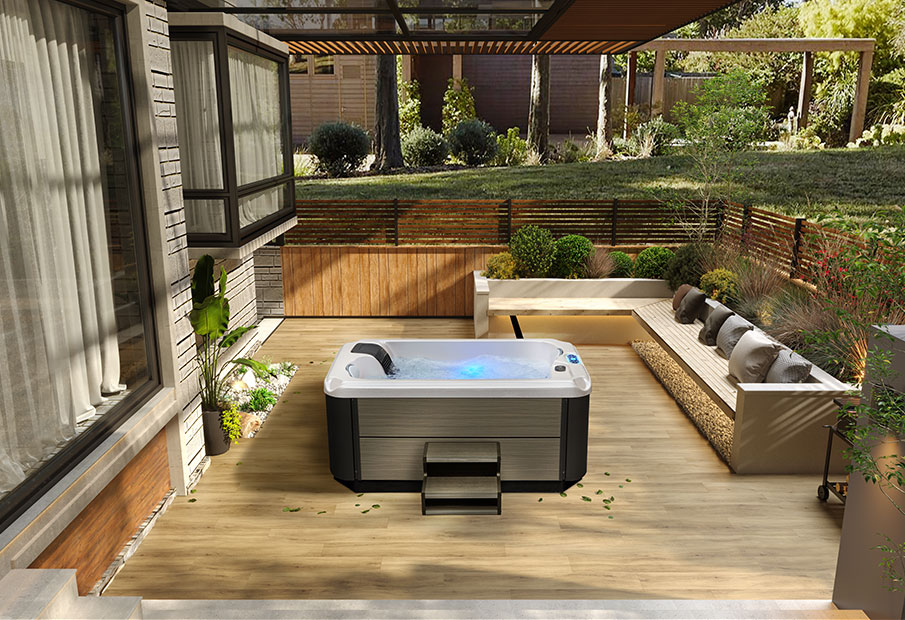
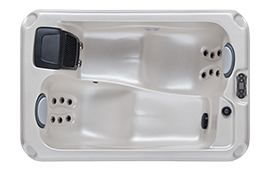
The Fspa BD-016 Hot Tub, designed for 2 adults, offers luxurious comfort with a spacious interior, powerful 1.5kW massage pump, 0.35kW filter pump, 2kW heater, customizable water flow with 14 jets, ozone sanitation, LED lighting, comfortable pillows, and a total power of 3.85kW, providing a tranquil escape for ultimate relaxation.
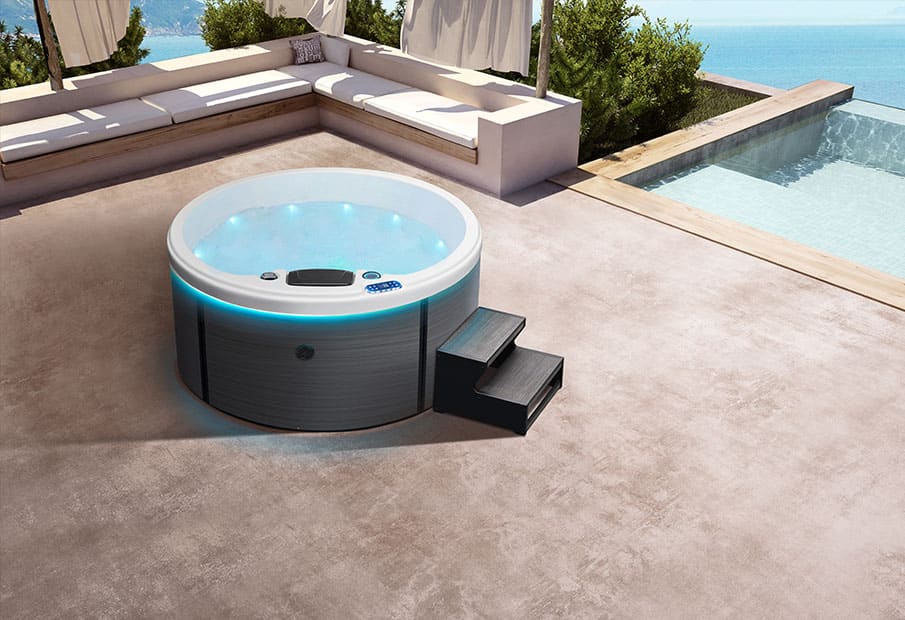
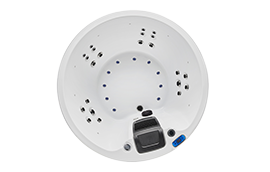
The Fspa BD-018Pro Hot Tub is a stylish, spacious spa for 5 adults, featuring a powerful massage system, modern amenities, and an advanced filtration system for a luxurious, relaxing, and healthy indoor/outdoor retreat.
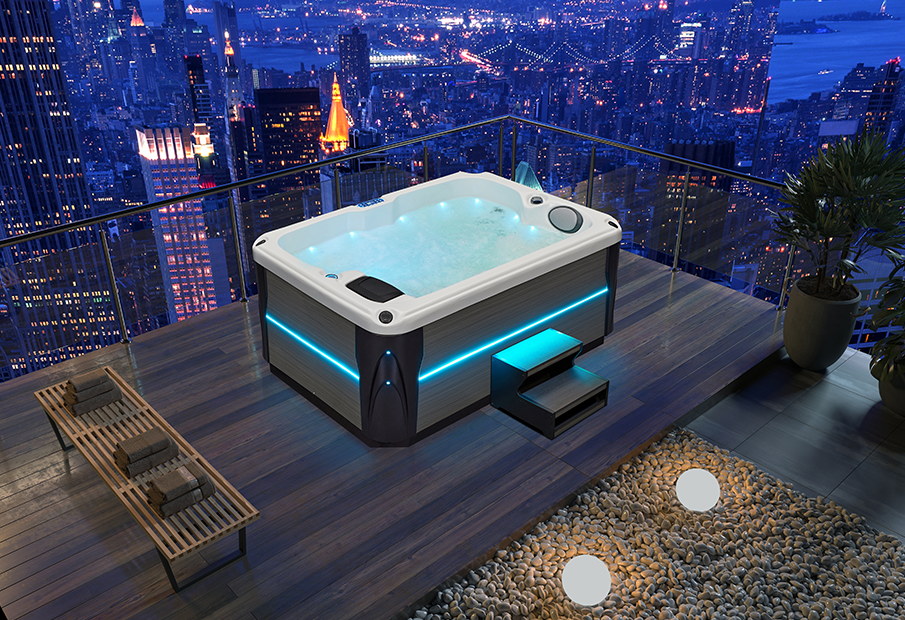
The Fspa BD-002Pro Hot Tub, boasts a powerful massage system, crystal-clear water filtration, customizable water flow, luxurious features, an ozone sanitization system, and immersive audio for the ultimate relaxation experience.
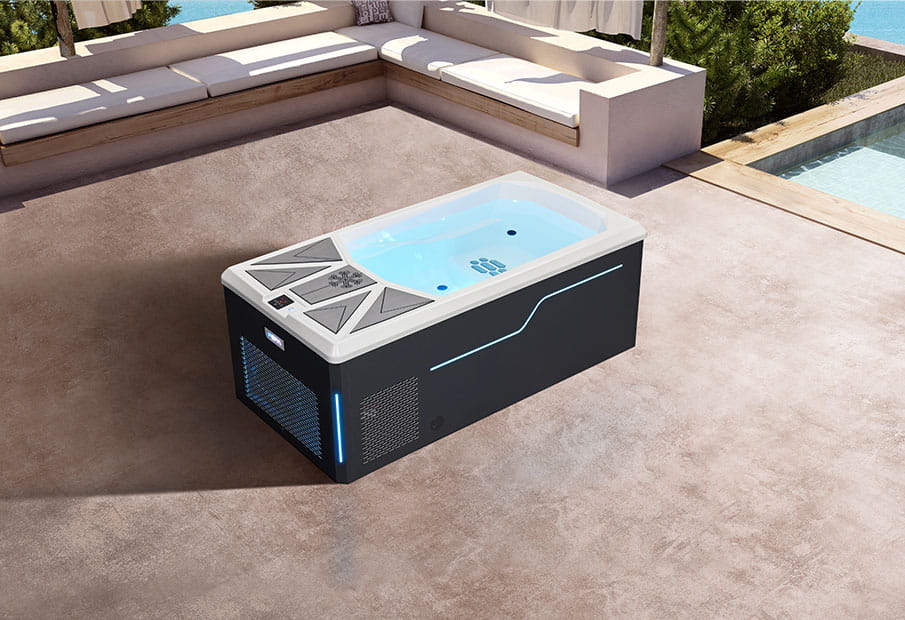
All in one design, plug and play, snowflake pattern, Welcome lights up as you approach Include filter, circuit pump, Ozone, Ice-blue underwater light, and high-efficiency chilling system.
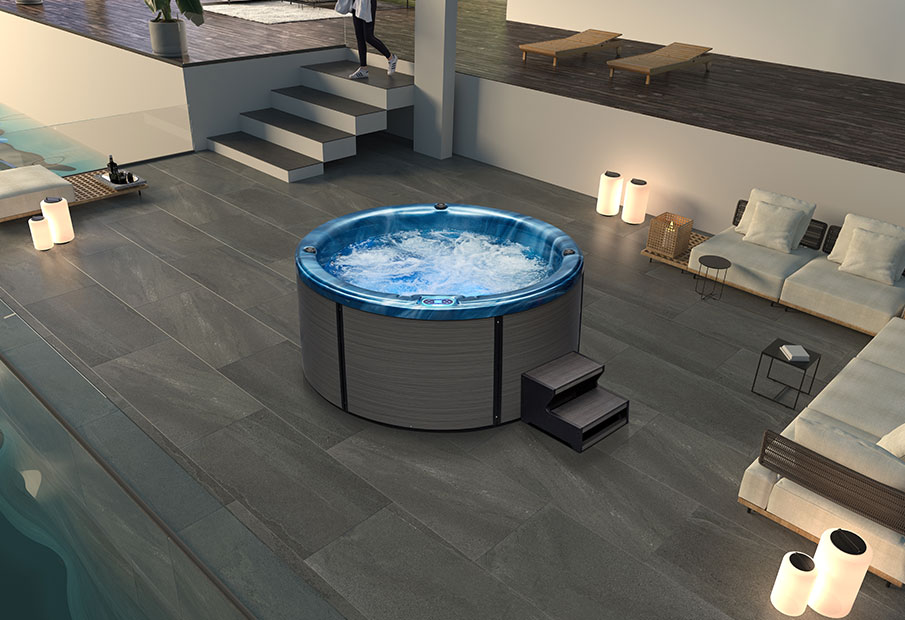
The Fspa BD-009 hot tub, designed for style and functionality, offers unparalleled comfort for up to 6 adults with its spacious size, robust control system, powerful pumps, consistent water temperature, strategic jet placement, and enhanced ambiance and water quality features.
PRODUCTS
INQUIRY
Thank you for your message!Our Chinese New Year holiday from 7th Feb to 28th Feb. Apologise to make your inconvenience so that responses may be delayed during this period. We'll back to you with regular service on 2th March .Thank you for understanding.


