Finding the right swim spa manufacturer matters more than most buyers expect going in. A pool built for a backyard soak has different plumbing, jet placement, and structural demands than a swim spa meant for daily hydrotherapy or resistance training. Getting this wrong means costly retrofits, wasted floor space, or a system that underperforms the moment real usage starts. This guide walks through the technical and practical factors that separate a dependable supplier from one that will leave you stuck mid-project.
A swim spa is not a simple appliance. It combines structural engineering, water chemistry management, and mechanical systems that all need to work in sync for years without failure. When a manufacturer controls design, tooling, and assembly in-house, tolerances stay tighter and quality issues get caught before a unit ships. Buyers sourcing through fragmented supply chains often discover inconsistent shell thickness or mismatched plumbing fittings only after installation, when fixing it costs far more than catching it early would have.
Scale also matters here, though not in the way marketing materials usually frame it. A facility large enough to run parallel production lines can maintain consistent acrylic curing times and cabinet fitting across batches, which directly affects how a unit ages under sun exposure or heavy daily cycling. This is less about size for its own sake and more about whether the process behind each unit stays repeatable.
Certifications get treated as a checkbox in a lot of buying guides, but for wet electrical equipment they reflect something concrete: independent verification that wiring, grounding, and pump systems meet defined safety thresholds. CE certification confirms compliance with European safety and electromagnetic standards. CB and CTUVus extend that verification for broader international acceptance, which matters if a hotel chain or distributor is sourcing units across multiple countries. SAA certification specifically addresses Australian electrical safety requirements, relevant for any project shipping into that market.
A manufacturer that pursues multiple certifications simultaneously, rather than the single minimum required for its home market, is usually running a more disciplined engineering process across the board. It is worth asking directly which certifications apply to the specific unit under consideration, since certification can vary by model and market destination.
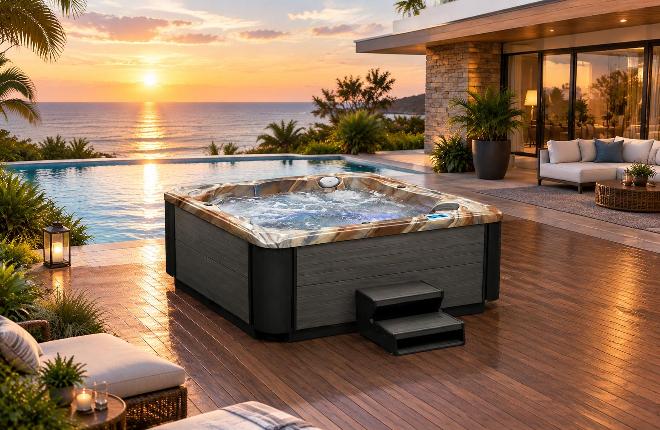
Jet count and placement get treated as a spec-sheet bragging point, but the real question is whether the layout matches how the space will be used. A unit built for six adults soaking after dinner needs a different jet distribution than one meant for solo hydrotherapy sessions. Consider a portable hot tub configuration like the Fspa BD-004, which houses 35 massage jets across a 2350 x 2350 x 900mm shell rated for six adults, drawing from a 1450L water capacity.
That water volume figure is not trivial. Higher water volume relative to jet count generally means gentler, more diffused water pressure per seat, while lower volume with the same jet count concentrates force more intensely. Neither is universally "better," but mismatching the configuration to the intended user group, athletes wanting deep tissue pressure versus guests wanting a calm soak, is a common and avoidable mistake.
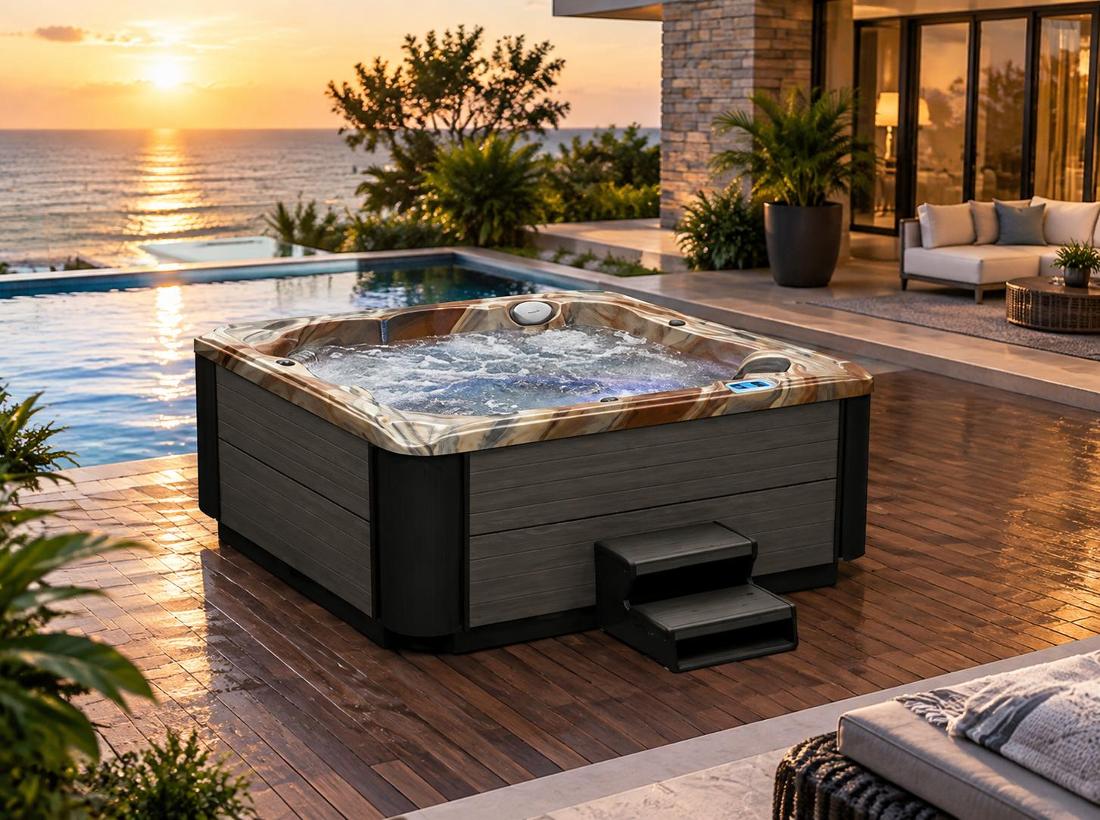
Every swim spa or hot tub draws power across at least three separate systems: the massage pump, the filter pump, and the heater. These rarely run at the same time or at the same duty cycle, so total connected load and actual running cost are two different numbers. On the BD-004, the massage pump draws 2.2kW, the filter pump 0.35kW, and the heater 3kW, for a combined system rating of 5.55kW.
Understanding this breakdown helps with two practical decisions. First, it determines what electrical circuit capacity a property needs before installation, which matters for hotels retrofitting existing gyms or villas without dedicated spa wiring. Second, it clarifies that the heater, not the jets, is usually the largest single draw, so climate and how often the unit needs reheating affects operating cost more than massage usage does.
| Specification | BD-004 Detail |
|---|---|
| Capacity | 6 Adults |
| Dimensions | 2350 x 2350 x 900mm |
| Total Power | 5.55kW |
| Massage Pump | 2.2kW x 1pc |
| Filter Pump | 0.35kW x 1pc |
| Heater | 3kW x 1pc |
| Jet Count | 35pcs |
| Water Capacity | 1450L |
| Net Weight | 317kg |
| Certifications | CE, CTUVus, CB, SAA |
Laying specs out this way makes it easier to sanity-check a quote. If two suppliers list similar jet counts but wildly different total power ratings, that discrepancy is worth asking about directly rather than assuming one number is a typo.
Water maintenance is where a lot of buyer regret shows up months after installation, not at the point of sale. Manual chemical dosing works, but it demands consistent attention, and skipping a week during a busy season can lead to cloudy water or biofilm buildup. According to the manufacturer’s product documentation, the BD-004 includes an integrated ozone sanitization system designed to support water circulation and reduce the frequency of manual chemical upkeep. For a hotel gym or B&B running the unit daily for guests, that reduction in hands-on maintenance can be the difference between a system staff actually manages properly and one that gets neglected.
Jet count gets all the attention in sales conversations, but seat geometry decides whether a soak actually feels restorative. According to product specifications, the BD-004’s seating and backrests are contoured to follow the body’s natural curves, with jets and controls positioned around that shape rather than the shape being fitted around a generic seat mold afterward. The unit also includes headrest pillows intended to support neck and spine alignment during longer sessions.
This sequencing, body shape first, hardware placement second, is the detail that separates a spa that feels considered from one that feels assembled from a parts catalog. It rarely shows up in a spec sheet, but it shows up immediately in how a session feels after twenty minutes.
Not every application calls for the same configuration, and matching the unit to the setting avoids overspending on features that go unused. Common placements include:
Each of these settings puts different demands on duty cycle, so it is worth discussing expected daily usage hours with a supplier before finalizing a model.
Does a higher jet count always mean a stronger massage?
Not necessarily. Jet count matters, but nozzle design, pump power, and water volume all influence how forceful the massage feels. A unit with fewer, larger jets can feel more intense than one with many small jets spread across a bigger shell.
Can a swim spa or hot tub run on a standard household circuit?
This depends entirely on the unit’s total power rating and local electrical code. A 5.55kW system, for example, typically requires a dedicated circuit sized by a licensed electrician rather than a standard outlet.
Is ozone sanitization a replacement for all chemical treatment?
Ozone systems reduce the frequency and intensity of manual chemical dosing according to manufacturer documentation, but most installations still require some baseline water testing and periodic chemical balancing.
How much does indoor versus outdoor placement affect the decision?
Outdoor units face UV exposure and temperature swings that affect shell material and cabinet finish over time, while indoor units need to account for ventilation and humidity management in the surrounding room.
Before committing to a supplier, it helps to ask a short list of direct questions rather than relying on brochure claims. Confirm which certifications apply to the exact model being quoted, not just the manufacturer’s general certification list. Ask for the breakdown between pump power and heater power so the property’s electrical planning is accurate from day one. Clarify warranty terms on the shell, cabinet, and control system separately, since these components often carry different coverage periods.
Sourcing from an established swim spa manufacturer that handles design, certification, and manufacturing under one roof tends to reduce the back-and-forth that comes with fragmented supply chains. For us, that means operating across a 32,000 square meter facility with over 60,000 square meters of manufacturing space, holding CE, CB, SAA, and ETL certifications, and serving both international and domestic markets across villas, hotels, natatoriums, and rehabilitation centers. Whatever supplier a buyer ultimately chooses, working with a swim spa manufacturer that can document its engineering process and certification scope consistently makes the difference between a purchase that performs for years and one that becomes a maintenance headache.
Finding the Right Leisure Swim Spa for Your Outdoor Space
Anyone shopping for a leisure swim spa quickly runs into the same problem: the market blurs the line between a basic hot tub and a true swim spa, and the marketing copy rarely clears things up. A leisure swim spa sits in the middle ground. It’s meant for soaking, socializing, and light hydrotherapy rather than lap swimming, which changes what you should actually look for when comparing units.
The confusion usually starts with sizing. A 6-person unit sounds like a lot of room, but jet placement, seat depth, and cabinet dimensions matter more than headcount alone. Before looking at brochures, it helps to know what a hydrotherapy spa is actually doing mechanically, because that determines whether it fits your deck, your patio, or your hotel courtyard.
Manufacturers use "swim spa" loosely. Some units are built for continuous current swimming, others are strictly stationary soaking tubs with massage jets. A leisure swim spa, in the way most residential and hospitality buyers use the term, falls into the second category.
That distinction isn’t just semantics. If you’re buying for post-workout recovery at a gym, or for a villa backyard where guests want to unwind rather than train, a stationary hydrotherapy tub does the job better than a swim-current model, and it’s usually far less complex to install and maintain.
The Fspa BD-004 is a good example of this category. It’s built as a 6-adult hot tub with 35 massage jets, not a lap-swimming unit, and its dimensions (2350 x 2350 x 900mm) reflect that intent. Understanding this upfront saves buyers from comparing apples to oranges when reading spec sheets.
Jet count gets thrown around as a headline number, but placement matters just as much as quantity. Jets clustered around the lower back, calves, and shoulders address the muscle groups people actually complain about after a workout or a long flight.
The BD-004’s 35 jets are distributed across an ergonomic shell where seats and backrests are contoured to the body’s natural curves, according to the manufacturer. Controls and nozzles are positioned to align with common pressure points rather than scattered evenly, which is the more useful design approach for recovery-focused soaking.
For a hotel gym or fitness center, this kind of targeted jet layout supports post-workout recovery in a way generic bubble jets don’t. It’s a subtle difference, but it’s the reason two tubs with the same jet count can feel completely different once you’re sitting in them.
Total system power is one of the more misunderstood specs on a swim spa. Buyers often assume more kilowatts means better performance, but it’s really a balance between heating speed, pump strength, and running cost.
Here’s how the BD-004’s power budget breaks down:
| Component | Rating |
|---|---|
| Massage Pump | 2.2kW x 1 |
| Filter Pump | 0.35kW x 1 |
| Heater | 3kW x 1 |
| Total System Power | 5.55kW |
| Jet Count | 35 |
| Water Capacity | 1450L |
| Net Weight | 317kg |
A 3kW heater paired with a 1450L water volume gives a reasonable heat-up time without demanding an oversized electrical circuit, which matters for retrofitting into an existing villa or B&B where rewiring is expensive. The 2.2kW massage pump is doing the real hydrotherapy work, while the smaller filter pump keeps water circulating between sessions without running up electricity costs.
Ask anyone who’s owned a hot tub for more than a season, and they’ll tell you sanitation is the chore that eats the most time. Chlorine dosing, pH balancing, filter cleaning, it adds up fast, especially for a hospitality property running multiple soaks a day.
An integrated ozone system, like the one included in the BD-004, reduces how often chemical sanitizers need to be added. Ozone oxidizes organic contaminants in the water, which cuts down on the manual dosing routine without eliminating filtration entirely. It’s not a replacement for a filter pump, it’s a supplement that reduces the maintenance burden on staff or homeowners.
For a seaside homestay or B&B running frequent guest turnover, this translates into fewer hours spent on pool chemistry and more consistent water clarity between cleanings.
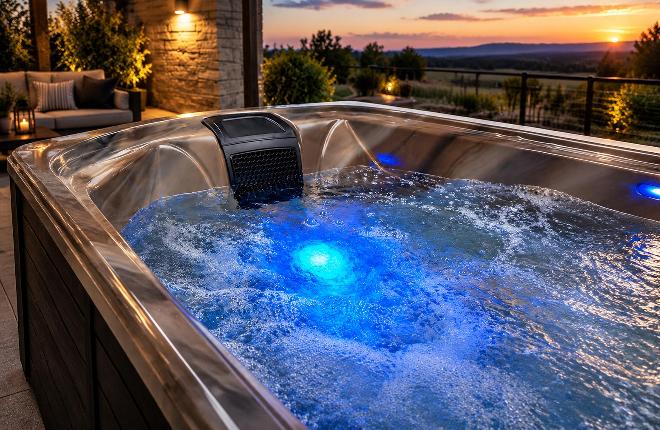
LED lighting in a leisure swim spa often gets dismissed as a gimmick, but it does have a functional role in how the soak experience feels, particularly in the evening. The BD-004 uses bottom-positioned blue LED lighting, described by the manufacturer as part of a system it markets as "biomagnetic therapy," intended to create a calming visual atmosphere.
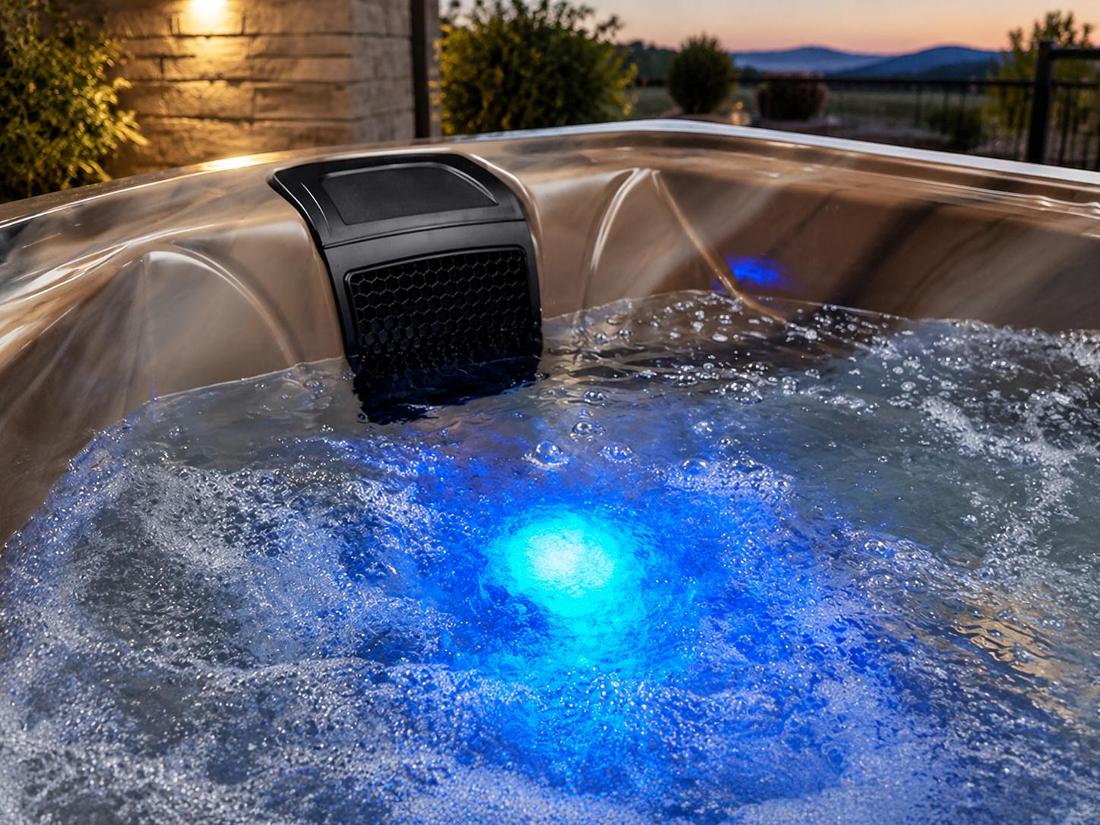
Whether this lighting carries any measurable biomagnetic or therapeutic effect is not independently verified, and that claim should be treated as a manufacturer description rather than an established mechanism. Soft, glowing water at dusk changes how a space feels, and for a villa backyard or a rooftop lounge, that ambience is part of what justifies the investment. It’s worth noting this as a design and mood feature rather than treating it as a clinical claim.
Comfort during a 20 to 30 minute soak comes down to how well the seat supports the spine and neck, not just how many jets are firing. The BD-004 includes contoured seating and a pillow-and-headrest system the manufacturer markets under the name "wave propulsion system," described as intended to support spinal alignment and reduce strain during longer sessions.
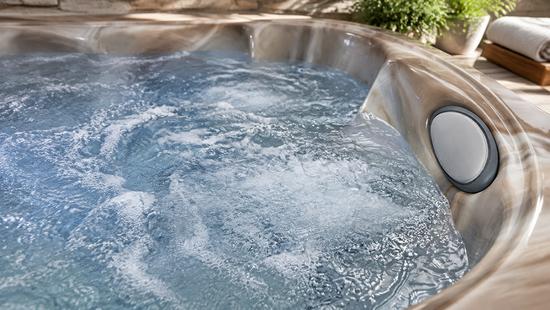
A few practical seating details worth checking before buying any leisure swim spa:
These details rarely show up in marketing photos, but they’re the difference between a tub that gets used weekly and one that ends up covered most of the year.
Not every buyer needs the same configuration. A hotel gym, a private villa, and a seaside B&B all have different usage patterns, and that should drive the decision more than brand comparisons.
For any of these settings, checking certifications is a practical first filter. The BD-004 carries CE, CTUVus, CB, and SAA certification, which is worth confirming against your local electrical and safety code requirements before installation, particularly for commercial properties like hotels or rehabilitation centers.
Does a leisure swim spa need a dedicated electrical circuit?
Most units in this power range, including 5.55kW systems, require a dedicated circuit sized to the total load. Always confirm requirements with a licensed electrician based on local code, since this varies by region.
How long does water typically last before needing a full change?
This depends heavily on usage frequency and sanitation method. An integrated ozone system extends the interval between full water changes by keeping organic buildup lower, though periodic draining is still standard practice.
Can a 6-person leisure swim spa be installed indoors?
Yes, provided the space has adequate ventilation and drainage. The BD-004, for instance, is designed for both indoor and outdoor placement according to its specifications.
Is LED lighting purely decorative, or does it serve a function?
It’s primarily an ambience feature. Manufacturers may describe therapeutic intent behind specific lighting systems, but the clearest, verifiable benefit is the atmosphere it creates for evening or nighttime use.
Choosing a leisure swim spa isn’t about chasing the highest jet count or the biggest power rating on the spec sheet. It’s about matching seat ergonomics, sanitation upkeep, and power draw to how you’ll actually use the tub, whether that’s a quiet villa retreat, a busy hotel gym, or a seaside B&B trying to keep guests relaxed and coming back. We manufacture units like the BD-004 with those real-world use cases in mind, but the broader lesson applies across the category: read past the headline numbers, and check how the design actually holds up to your specific setting before committing to a leisure swim spa.
Home Swim Spa Cost: What Actually Drives the Price
Anyone shopping around quickly learns that home swim spa cost swings wildly between listings. A basic plunge pool might run a few thousand dollars, while a fully equipped hydrotherapy unit climbs into five figures. The gap isn’t random. It reflects real differences in jet count, pump horsepower, shell material, and the electrical work needed to run the thing safely.
Before comparing prices, it helps to separate the spa itself from the installation costs around it. A deck, electrical hookup, and site prep can add thousands beyond the sticker price. Buyers who only budget for the unit often get caught off guard later.
More jets sound like a simple upgrade, but each one draws water through a pump, and pumps consume electricity. A model with 35 jets, like the BD-004 from our lineup, runs on a 2.2kW massage pump paired with a 0.35kW filter pump, alongside a 3kW heater, totaling 5.55kW across the system. That’s the kind of number worth checking before you commit, since it directly affects your utility bill and the size of electrical circuit your home needs.
Higher jet density usually means a larger shell too, since designers need room to place nozzles without crowding the seats. A 6-person unit measuring roughly 2350 x 2350 x 900mm, holding around 1450 liters of water, sits at a different price tier than a 2-person soaking tub simply because of the material and pump capacity required to fill and heat that volume.
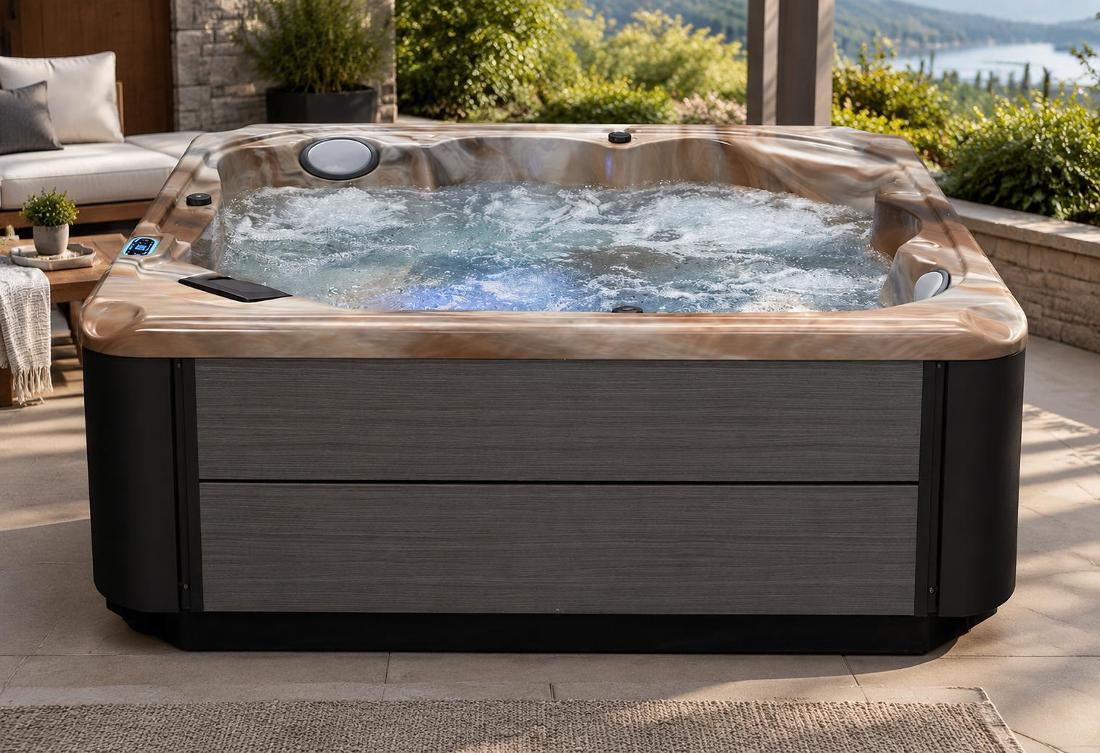
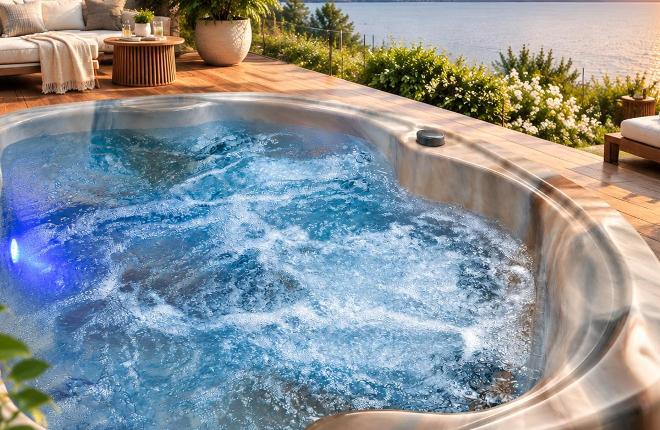
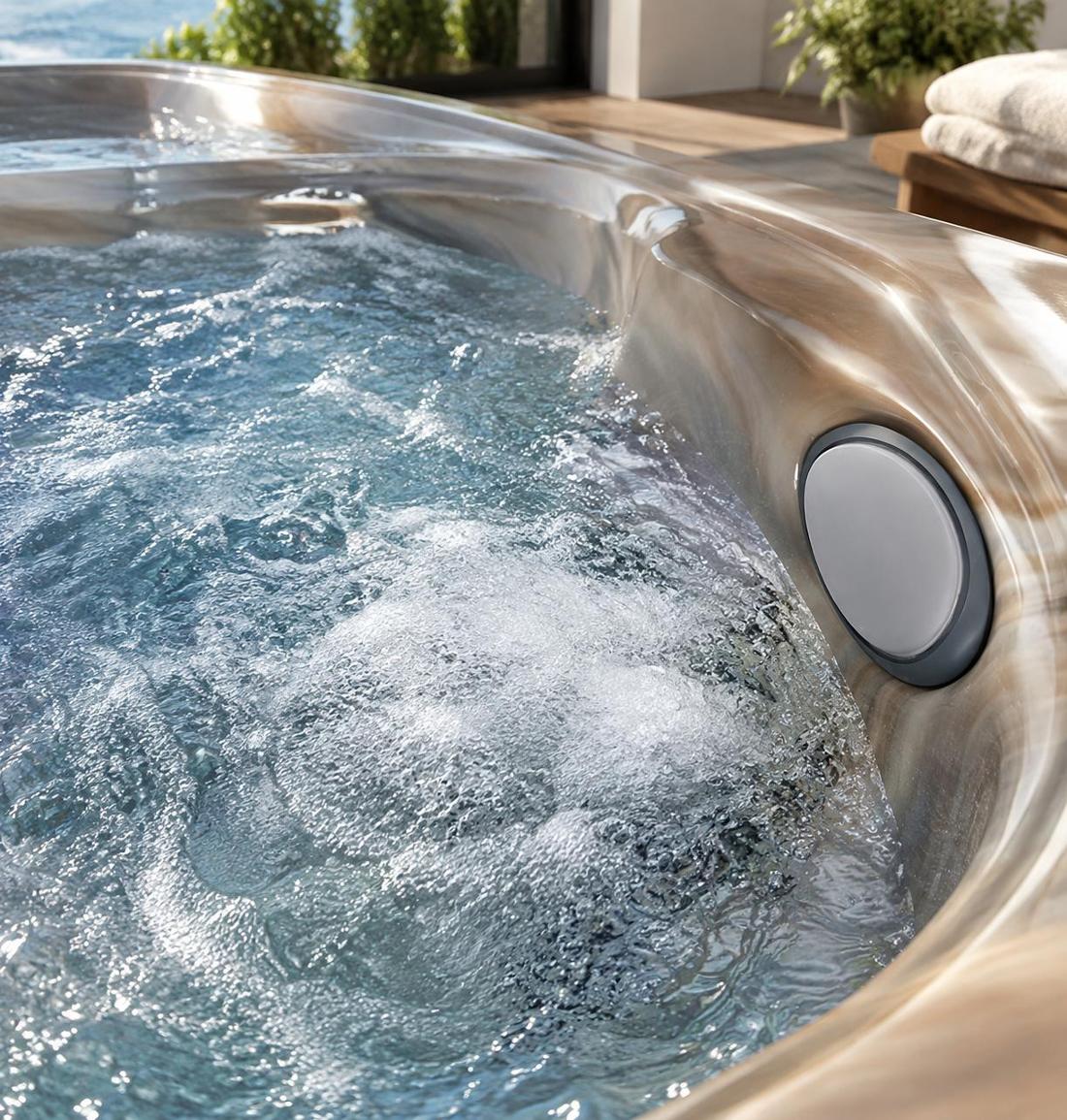
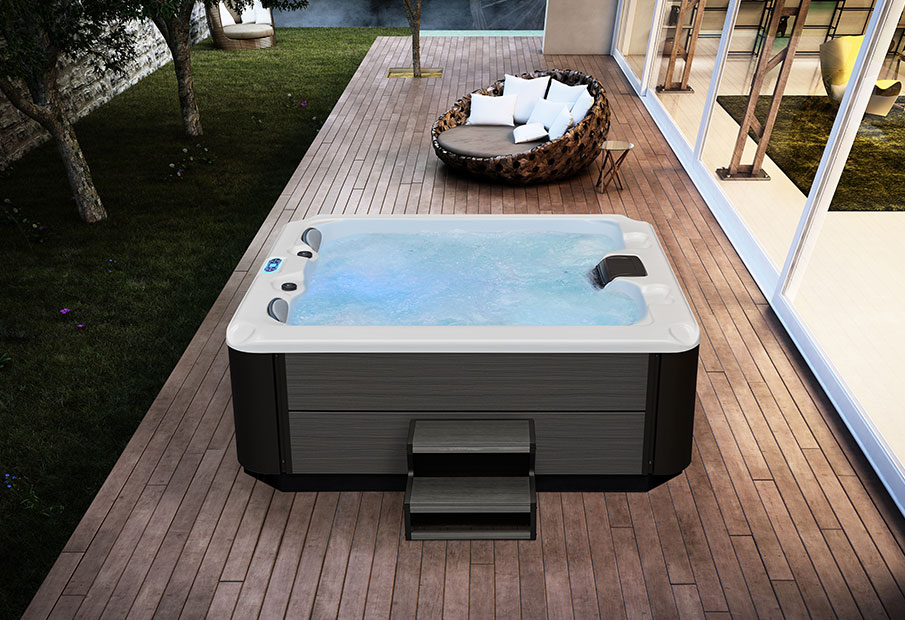
Acrylic shell quality is one of those details that separates a spa lasting a decade from one that fades and cracks within a few seasons. Marbled acrylic finishes, like the brown and cream pattern used on some tubs, aren’t just decorative. Thicker acrylic resists UV degradation better, which matters more for outdoor installations than shoppers usually expect.
Cabinet panels matter almost as much. Wood-grain composite panels handle weather better than raw wood, since they don’t absorb moisture the way traditional lumber does. When comparing home swim spa cost across brands, ask what the cabinet is actually made from rather than assuming "wood-look" means real wood.
A 3kW heater is fairly standard for mid-size spas, but how quickly it brings water back up to temperature depends on insulation quality and how often the cover gets left open. Ozone sanitization systems, which several models now include, reduce how often you need to shock the water with chemicals. That’s a maintenance cost worth factoring into the total picture, not just the upfront price tag.
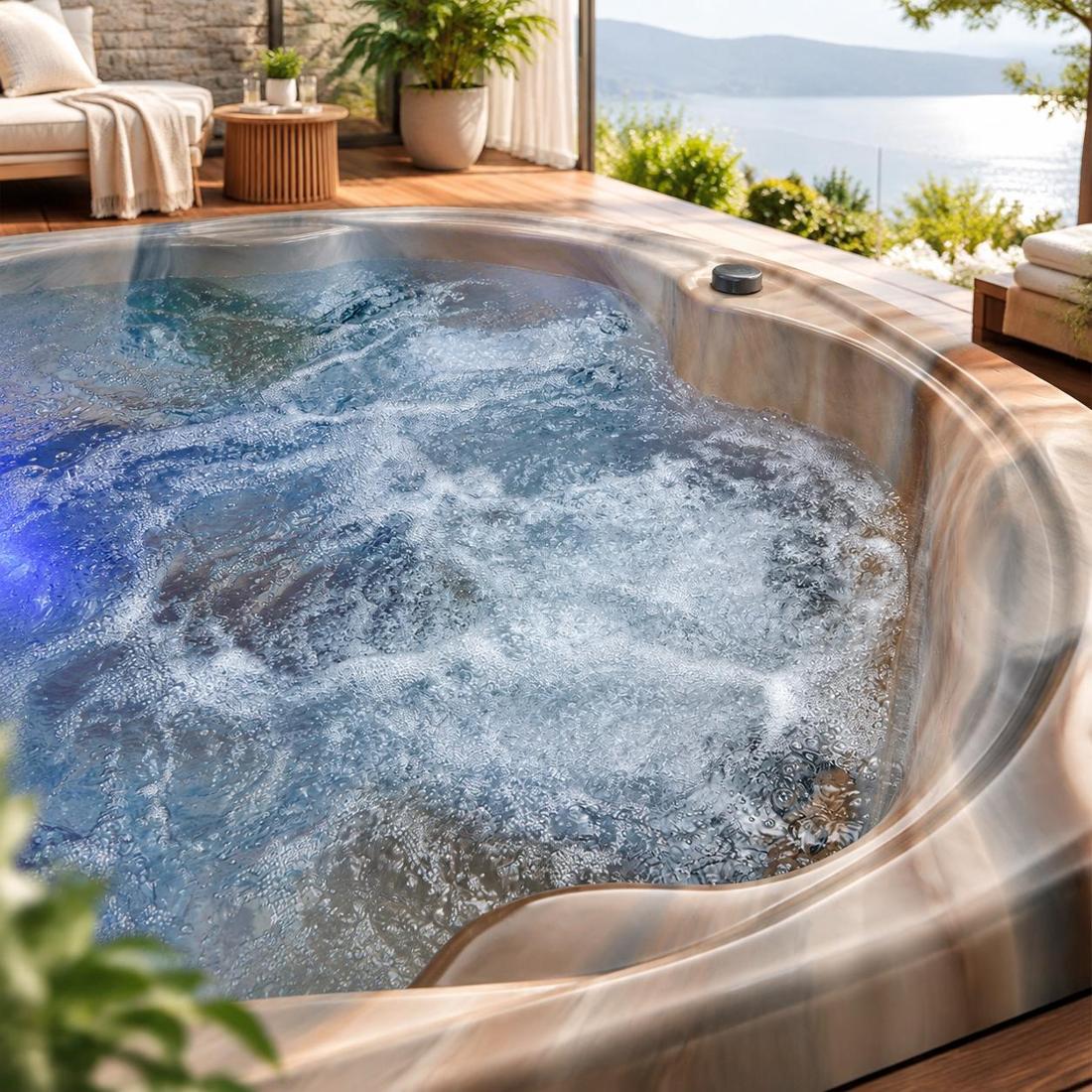
Control panels have gotten more intuitive over the years too. A backlit oval panel that displays temperature and function icons at a glance saves the guesswork that older analog dial systems used to require.
Different living situations call for different spa configurations. Here’s a rough breakdown of how spa type tends to align with typical household needs:
| Household Type | Recommended Capacity | Key Priority |
|---|---|---|
| Couple or small household | 2-4 person | Compact footprint, lower water volume |
| Family with guests | 6 person | Balanced jet count, moderate power draw |
| Hospitality or rental property | 6+ person | Durability, easy-clean surfaces |
| Fitness or recovery focus | 4-6 person | Higher jet density, targeted massage zones |
Seat contouring isn’t a cosmetic detail. Poorly shaped seats force bathers to slide or brace themselves, which defeats the point of a relaxation product. Ergonomic seating, according to product specs from our BD-004 line, is contoured to follow the body’s natural curves, with jets positioned around those contours rather than scattered evenly across the shell.
Headrests deserve a second look too. A supportive pillow system that aligns the neck and spine, as described in the product’s wave propulsion feature, changes how long someone can comfortably sit before needing to shift position. Fifteen minutes versus forty-five minutes makes a real difference for anyone using the spa for actual muscle recovery rather than a quick soak.
Not every spa on the market carries the same safety certifications, and this is one area where cutting corners has real consequences. Electrical components submerged near water need rigorous testing. Look for certifications such as CE, CB, SAA, or CTUVus, which indicate the unit has passed independent electrical safety testing relevant to different regions.
This matters more for buyers outside the manufacturer’s home country. A spa certified only for one region’s voltage standards might not be safe, or even legal, to install elsewhere without modification. Confirming certification alignment with your local electrical code should happen before purchase, not after installation.
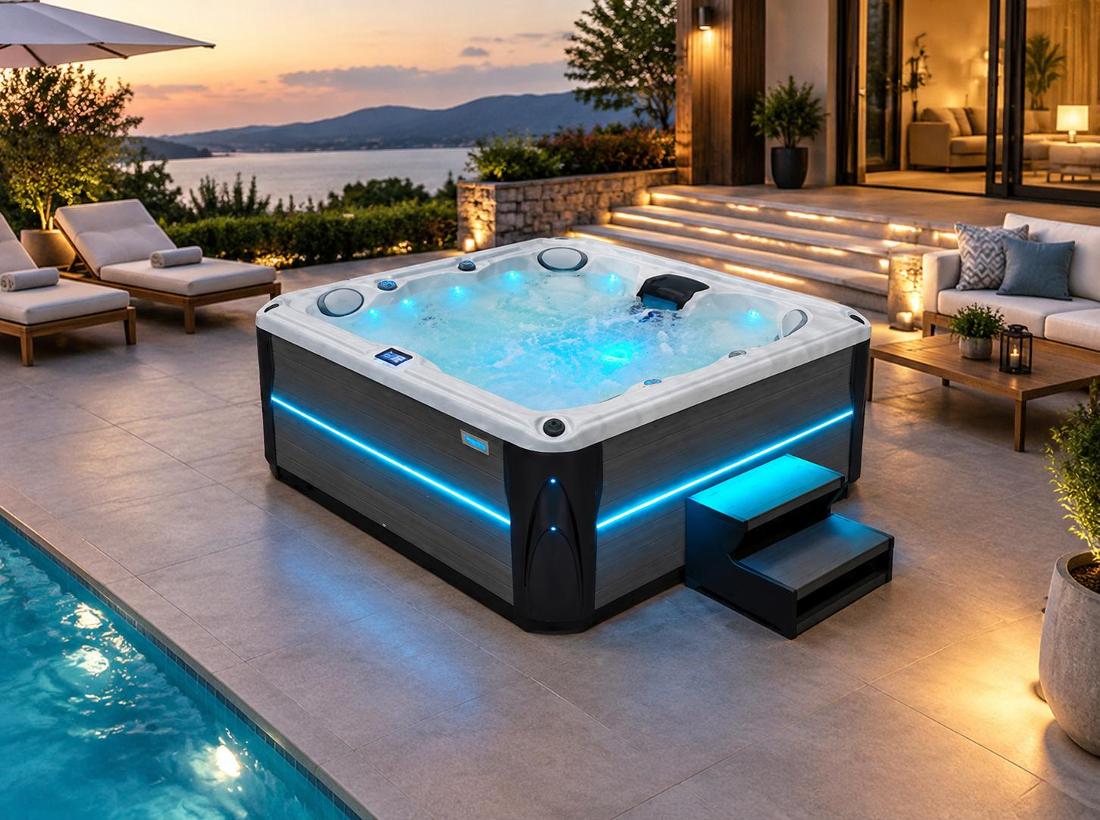
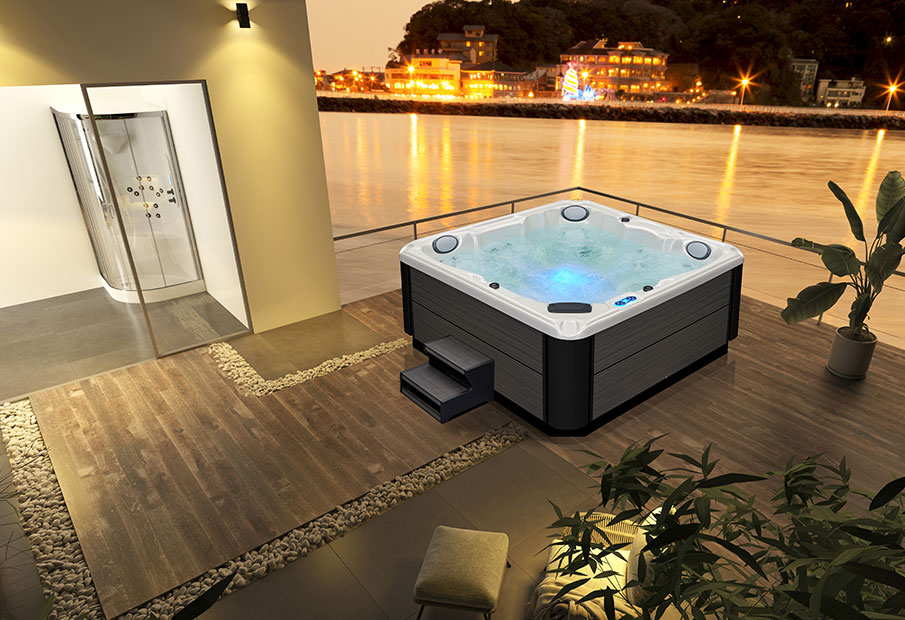
Home swim spas aren’t limited to residential backyards anymore. Boutique hotels use them for post-workout recovery near gym facilities, giving guests a hydrotherapy option without building a full spa wing. Villas often position a unit as a visual centerpiece on a wooden deck, paired with landscaping and outdoor lighting for evening use.
Seaside guesthouses have picked up on this trend as well, offering guests a hot soak with an ocean view after a day of travel. The appeal here isn’t just relaxation. It’s giving smaller hospitality operators a way to compete with larger resorts that have dedicated spa facilities, without the square footage or staffing costs that come with a full spa department.
Does a higher price always mean better quality?
Not necessarily. Price often reflects jet count, shell size, and certifications, but two spas at similar price points can differ significantly in build quality. Always check the pump specs and shell material rather than relying on price alone.
How much does installation add to home swim spa cost?
This varies by site. A reinforced deck, dedicated electrical circuit, and any plumbing for drainage can add a meaningful percentage on top of the unit price. Getting a site assessment before purchase avoids surprises.
Do LED lighting features affect running costs?
LED systems draw minimal power compared to pumps and heaters, so their impact on electricity bills is small. Their main value, based on product descriptions from several manufacturers, is creating a calming atmosphere rather than any therapeutic electrical effect.
Is ozone sanitization enough on its own?
Ozone systems reduce chemical maintenance but typically work alongside, not instead of, standard sanitizers. Check manufacturer guidance for your specific model before skipping chemical treatment entirely.
Ultimately, home swim spa cost should be weighed against how the unit will actually get used. A family that soaks a few times a week values durability and low maintenance over jet count. A household focused on muscle recovery after workouts might prioritize jet placement and pump strength instead.
For us, working across both outdoor spa and swimming pool product lines has shown that buyers get the best value when they match capacity and features to actual usage patterns rather than chasing the highest spec sheet. Whether the goal is a quiet backyard retreat or a feature for a boutique hospitality property, understanding what drives home swim spa cost helps buyers spend on what matters and skip what doesn’t.
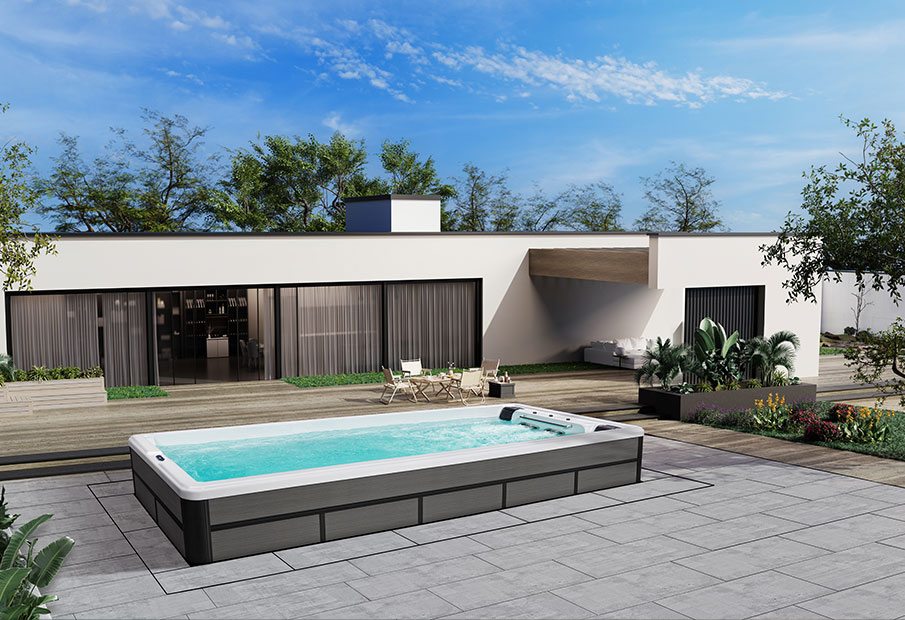
The Infinipool Fspa IP-002 offers a premium swimming experience ideal for residential and commercial use.
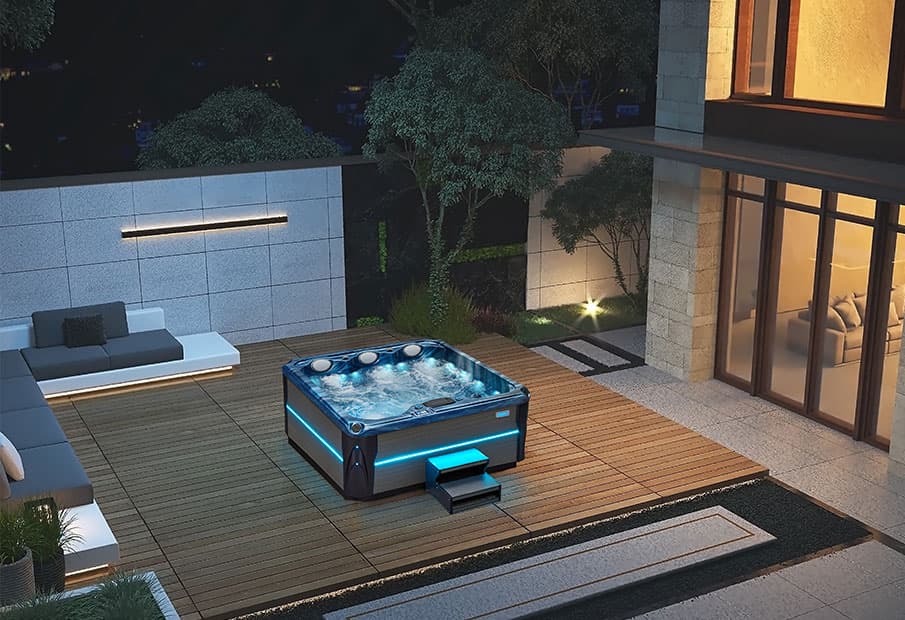
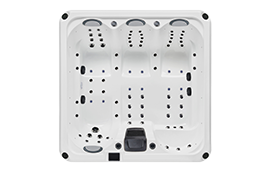
The Fspa BD-013Pro Hot Tub, a spacious and stylish premium spa for residential and commercial use, offers a luxurious and rejuvenating experience with its powerful massage system, pristine water quality, customizable water flow, calming LED lighting, music speakers, and comfort accessories.
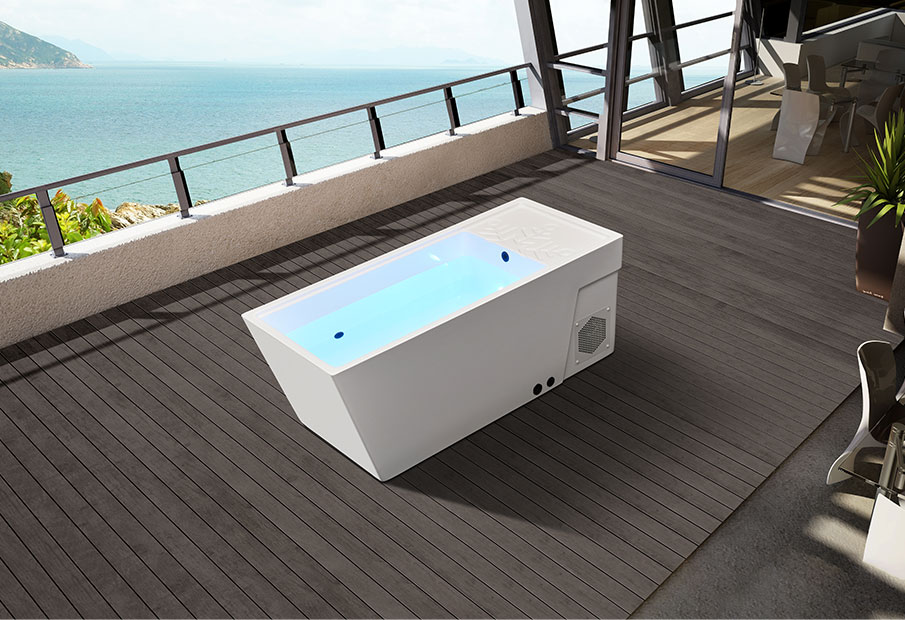
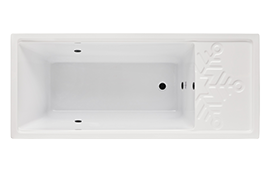
All in design, plug and play, Snowflake pattern, Include filter, circuitpump, Ozone, Ice-blue underwater light, and high-effciency Chilling system.
Our premium spa, spacious enough for 5 adults, combines luxury and functionality with a robust control system, high-performance components, advanced filtration and ozone sanitization, 36 jets, adjustable air pillows, and user-friendly controls for ultimate relaxation at home.
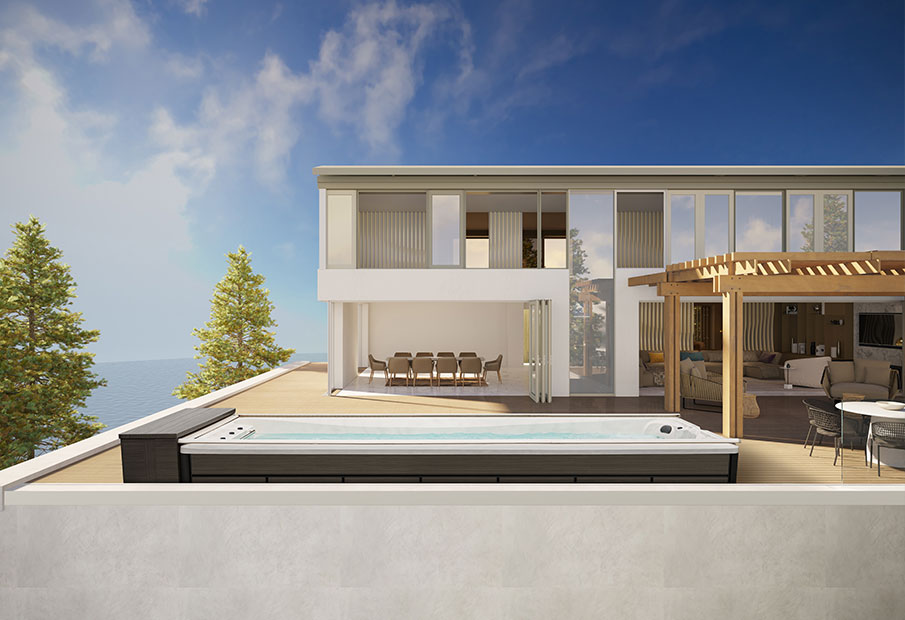
The Infinipool Fspa IP-004 is a luxurious, spacious, and technologically advanced swimming pool.
The Fspa BD-014 hot tub, designed for ultimate relaxation and luxury, offers a spacious interior for 4 adults, a powerful 2.2kW massage pump, 35 strategically placed jets, a 3kW heater, calming LED lighting, and an ozone system for clean water, making it the perfect choice for tranquility in your home.
PRODUCTS
INQUIRY
Thank you for your message!Our Chinese New Year holiday from 7th Feb to 28th Feb. Apologise to make your inconvenience so that responses may be delayed during this period. We'll back to you with regular service on 2th March .Thank you for understanding.


