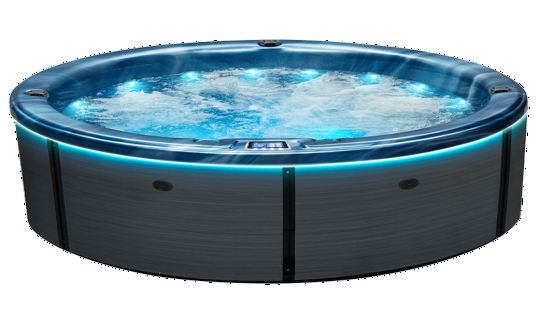
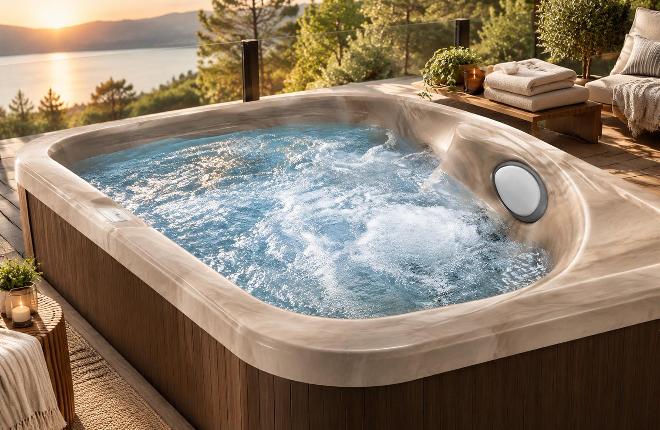
Hot tub shape is often treated as a style decision, yet it changes the way people use the water. Square tubs organize users into corners and clearly defined seats. Round tubs feel less directional; people naturally face one another, which can suit social evenings and relaxed garden settings. They can also soften a patio dominated by rectangular walls, paving, and furniture.
A circular footprint does not automatically save space. The diameter, access route, surrounding step zone, and cover handling still need to be measured. In a narrow courtyard, a rectangle may use the available width more efficiently. In an open lawn or broad terrace, a round form can become a deliberate centerpiece rather than a compromise.
FSPA’s BD-009Pro is listed at approximately 2000 mm in diameter and 900 mm high. The specification includes 50 water jets, 20 air-bubble jets, two massage pumps, a 3 kW heater, filtration, ozone support, speakers, and lighting. The curved shell gives it a very different visual character from the company’s square family spas.
For buyers planning a round outdoor spa, the key is to check where users step in and how they circulate around the perimeter. A circular tub beside a curved deck edge or planted island can look integrated, while the same tub pushed tightly into a square corner may create unusable wedges of space.
The strongest setting is often one where the shape is allowed to be visible. A pool deck, garden pavilion, roof terrace, or open patio can give the tub enough breathing room. In these spaces, an round hot tub can act almost like a piece of outdoor furniture, defining a gathering zone without the rigid orientation of a square shell.
Privacy screening should follow the user experience rather than the outline of the tub. People seated around a circle may face several directions, so one tall screen on a single side is not always enough. A combination of planting, slatted panels, and carefully placed lighting can create privacy without enclosing the whole area.
Water chemistry, filtration, heating, and routine cleaning remain important whether the shell is circular or rectangular. What changes is the way the cabinet meets surrounding construction. Curved cabinetry can be awkward to box into straight decking, so removable access should be planned from the beginning.
An outdoor spa tub also needs a stable foundation and drainage that moves splash water away from the base. If the spa is partially recessed, the installer should still be able to reach pumps, controls, and plumbing. Attractive hardscaping becomes expensive very quickly if it has to be dismantled for routine service.
Couples who normally sit side by side may prefer a compact rectangular spa. Larger groups who talk across the water may enjoy the more communal feeling of a circle. Some buyers want a jacuzzi spa that visually disappears into a minimalist terrace; others want it to become the focal point of the garden.
There is no universal winner between round and square. The better choice is the one that fits the site’s geometry, the number of regular users, maintenance access, and the atmosphere the owner wants. Shape should be selected early enough that paving, screens, steps, and lighting can be designed around it rather than added after delivery.
Cover design is worth checking carefully on a circular spa. A large round cover can be more awkward to handle than a folding rectangular one, particularly when the tub is close to a wall or planting bed. Buyers should ask how the cover is divided, where it rests when removed, and whether one person can manage it comfortably. If opening the spa feels like a chore, even a beautiful installation may be used less often than expected.
Furniture placement also changes around a circle. Straight benches and dining tables can create tight corners if they are pushed too close to the tub, while movable lounge chairs and small side tables usually work better. Allowing a little open deck around the spa makes the curved form easier to appreciate and gives wet users a safer route to towels, robes, or the house. In hospitality settings, that extra circulation space also helps staff clean the area without moving heavy furniture.
Finally, think about the view when the spa is not operating. For much of the day it may be covered, so the cabinet, cover color, and relationship with the landscape remain visible even when the water is hidden. A round spa that echoes a circular fire pit, planting bed, or pavilion can make the entire design feel coordinated. This is a small architectural decision, but it often has more lasting visual value than adding another decorative accessory.
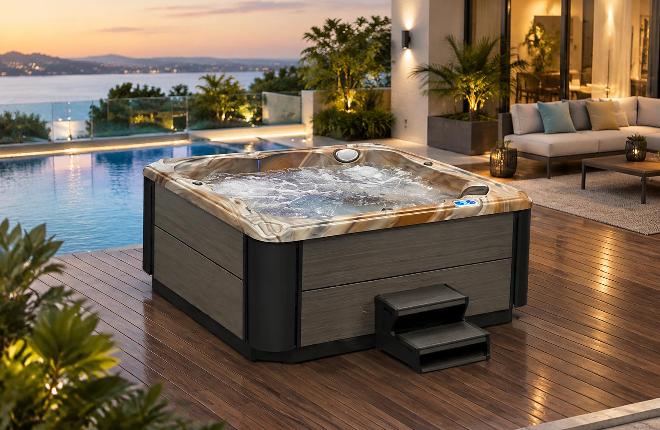
What Actually Makes a Swim Spa the Best Value Swim Spa
Shopping for a swim spa usually starts with a spreadsheet of jet counts and horsepower ratings, then quietly turns into a question of trust. Buyers want to know if the unit sitting in a backyard for the next decade will actually earn its price tag, not just look good in a showroom. The phrase "best value swim spa" gets thrown around by nearly every manufacturer, but value is not a marketing label. It is a ratio between what the tub delivers in daily use and what it costs to own over time, including energy bills, water treatment, and the inevitable service call.
This piece breaks down what genuinely separates a well-priced swim spa from an overpriced shell, using a mid-size hydrotherapy tub as a working example. We will look at capacity, jet layout, sanitation systems, and where a unit like this actually fits into a household or a hospitality business, so the decision comes down to facts rather than adjectives.
A low sticker price on a swim spa often hides deferred costs. Thin acrylic shells crack under seasonal temperature swings, undersized pumps struggle to maintain heat, and weak filtration means more chemicals and more manual cleaning. None of that shows up until months after installation.
Real value comes from matching the equipment to the actual use case. A 6-person unit built around a 5.55kW total power draw, for instance, is sized for households that want group soaking without the operating costs of a full lap-swimming spa. That distinction matters because oversizing a system wastes energy, while undersizing it leaves the water lukewarm on a cool evening.
Before comparing jets or lighting, the physical footprint decides whether a swim spa is even viable for a given yard, deck, or gym floor. A compact 6-adult model measuring roughly 2350 x 2350 x 900mm occupies a modest footprint compared to full-length swim spas that can stretch well beyond four meters.
That smaller footprint opens up placement options that longer units cannot use:
Water capacity follows the same logic. At around 1450L, this size class fills and heats faster than larger swim spas, which shortens the wait after a refill and keeps the heater’s 3kW element from running excessively long.
Jet count gets quoted constantly, but placement determines whether those jets actually reach sore muscles or just churn water. A layout built around 35 jets distributed across contoured seating targets the lower back, shoulders, and calves differently at each seat, rather than repeating the same pattern six times.
The seating itself plays an equally large role. Contoured seats and backrests that follow the body’s natural curve keep bathers positioned correctly against the jets instead of sliding out of range, which is a common complaint with flat-bottomed, budget tubs. According to the manufacturer’s product documentation, this model also includes ergonomic headrests and pillow supports intended to help align the spine during longer sessions, a detail aimed at users doing post-exercise recovery rather than a quick dip.
Total system power is where long-term value either holds up or falls apart. This unit runs on a combined 5.55kW load, split across a 2.2kW massage pump, a 0.35kW filter pump, and a 3kW heater. That split matters more than the headline number.
| Component | Power Rating | Function |
|---|---|---|
| Massage Pump | 2.2kW x 1 | Drives the 35 jets |
| Filter Pump | 0.35kW x 1 | Continuous water circulation |
| Heater | 3kW x 1 | Maintains target temperature |
| Total System | 5.55kW | Combined operating load |
Running the filter pump continuously at 0.35kW costs far less than cycling the full massage system all day, which is why most owners run jets in short sessions and let the smaller pump handle circulation between uses. Understanding this split helps buyers estimate electricity costs before installation instead of guessing after the first bill arrives.
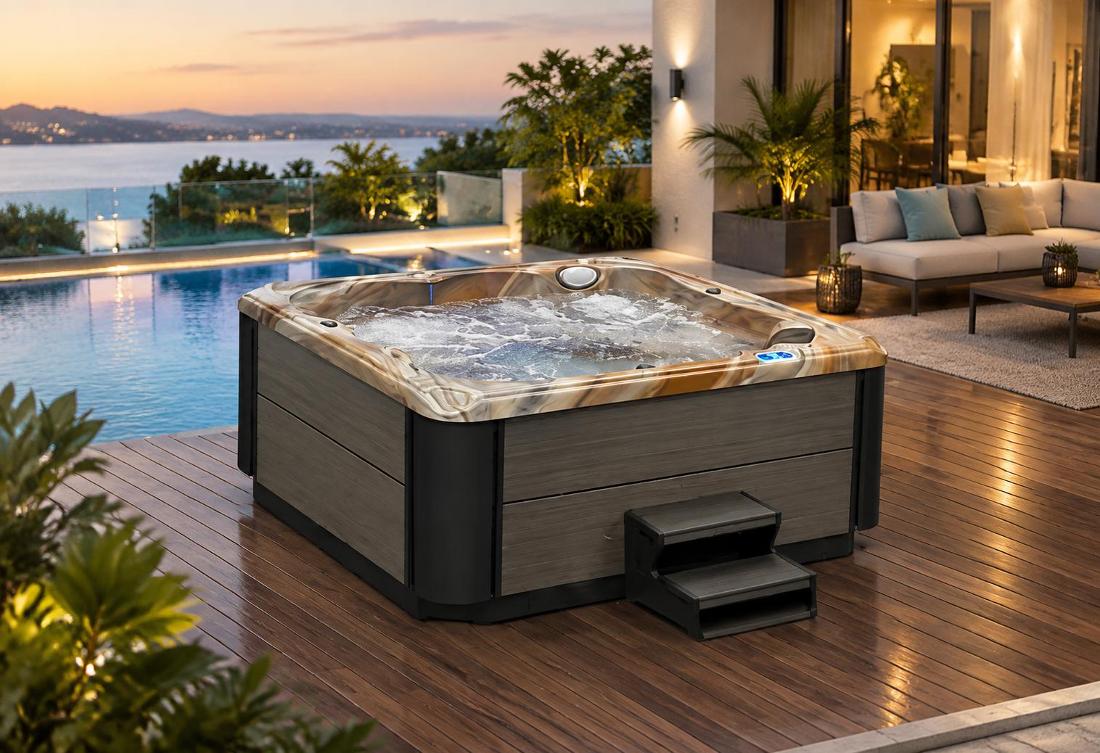
Water chemistry is the least glamorous part of swim spa ownership and the most frequent source of regret. Chlorine-only systems demand constant monitoring, and skipping a week of testing often means cloudy water or a rotten-egg smell that nobody wants near a hot tub.
An integrated ozone sanitization system, as included in this model, works alongside standard sanitizer rather than replacing it entirely. Ozone breaks down organic contaminants in the water before they build up, which reduces how often chemical levels need adjusting and how quickly filters clog. For anyone weighing swim spa cost against swimming pool cost long term, this is one of the few features that directly cuts recurring maintenance time.
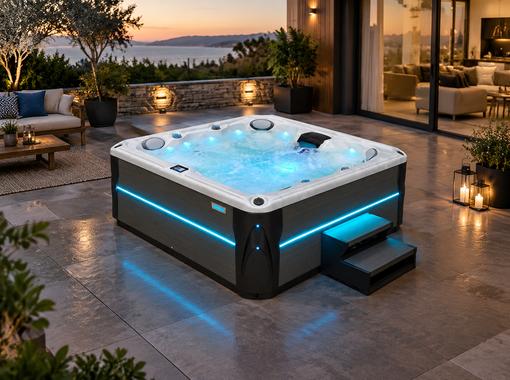
Blue LED lighting positioned at the base of the tub is a common addition across the mid-to-premium tier of the market, and it serves a purpose beyond aesthetics. Soft lighting at night makes it easier to gauge water clarity and creates a calmer environment for evening use, which is why hospitality buyers in particular request it for guest-facing installations.
The manufacturer’s materials describe this lighting as part of what they call a "biomagnetic therapy system," a proprietary term specific to their product line. Buyers should treat that label as a branded feature name rather than an independently verified therapeutic mechanism, and evaluate it primarily as ambient lighting with a calming visual effect rather than a clinical treatment.
Application context tells you more about a swim spa’s real-world value than any spec sheet. Three settings come up repeatedly for compact, 6-person hydrotherapy tubs:
Each scenario shares one requirement: the tub needs to be reliable with minimal onsite technical support, since hotels and homestays rarely have a dedicated maintenance team standing by.
Certification marks get listed on spec sheets constantly, but few buyers know what each one covers. For electrical and safety compliance, look for markings such as CE, CB, SAA, or CTUVus, which indicate the unit has been tested against recognized electrical safety standards in their respective regions.
These certifications confirm electrical and construction safety. They do not verify massage performance, water clarity claims, or how long a shell will last outdoors. Treat them as a baseline requirement rather than a differentiator, since any legitimate manufacturer selling internationally should hold equivalent certification for their target markets.
Narrowing down options gets easier with a short, ordered process rather than comparing every spec side by side:
Does a lower jet count always mean a weaker massage?
Not necessarily. Jet placement and pump pressure matter more than raw count. A well-positioned 35-jet layout can outperform a poorly distributed 60-jet system.
Is ozone sanitization a replacement for chlorine or bromine?
No. Ozone systems reduce the workload on chemical sanitizers by breaking down contaminants faster, but most manufacturers still recommend a low-level chemical sanitizer alongside it.
How much space does a 6-person swim spa actually need?
For a unit sized around 2350 x 2350mm, plan for the footprint plus clearance on at least two sides for panel access during servicing.
Do LED lighting features affect running costs significantly?
LED lighting draws minimal power compared to the heater and pumps, so its impact on the electricity bill is negligible.
Buyers chasing the best value swim spa are better served comparing power draw, sanitation design, and seat ergonomics than chasing the highest jet count or flashiest lighting package. For us, and for most manufacturers building in this mid-size category, the goal is a unit that holds up under daily use without demanding constant attention. That balance, more than any single spec, is what actually defines value in this market.
Finding the Right Heated Swim Spa for Year-Round Water Therapy
A heated swim spa sits in an odd spot between a hot tub and a swimming pool, and that in-between status is exactly why so many buyers get stuck comparing options. Some homeowners want laps, others want jets against a sore shoulder, and a lot of them want both without building two separate structures in the yard. Understanding what a heated swim spa actually does, and how it differs from a standard hot tub, makes the shopping process far less confusing.
The core difference comes down to purpose. A hot tub is built almost entirely around seated hydrotherapy, while a swim spa adds a longer footprint meant for movement, even if that movement is just a few feet against a current. Heated units close the gap further by keeping water at a therapeutic temperature so muscles loosen up before or after any activity.
That said, not every product marketed as a swim spa is built for serious swimming. Many are closer to an oversized hot tub with extra seating and multiple massage zones, which suits people who want relaxation more than exercise. The BD-004, a 6-person portable unit from our lineup, falls into this category. It measures 2350 x 2350 x 900mm, which is roomy for group soaking but not intended for lap swimming.
Heat is not a luxury add-on in these products, it is the mechanism that makes hydrotherapy work. Warm water dilates blood vessels, which improves circulation and helps flush out the metabolic waste that builds up in tired muscles after physical activity or a long day of standing.
Consistent heating also affects comfort in ways people do not expect. Water that drops even a few degrees below the intended range feels noticeably less soothing, especially on the lower back and shoulders. This is why heater capacity should never be an afterthought when comparing units. According to the product specifications, the BD-004 uses a 3kW heater as part of its 5.55kW total power draw, a configuration meant to hold temperature steady even while jets are running.
Jet count gets thrown around as a marketing number, but distribution matters more than raw quantity. A tub with jets clustered only around the shoulders leaves calves and lower back without any targeted relief. The BD-004 spreads 35 jets across six seating positions, aiming to cover a wider range of muscle groups rather than concentrating pressure in one zone.
According to the product specifications, the unit runs a 2.2kW massage pump alongside a separate 0.35kW filter pump. Splitting these functions means the filtration system can keep running at a lower, steadier power draw without being tied to the more demanding massage cycle. That separation is common in multi-person spas because it keeps water clarity consistent even when the jets are switched off.
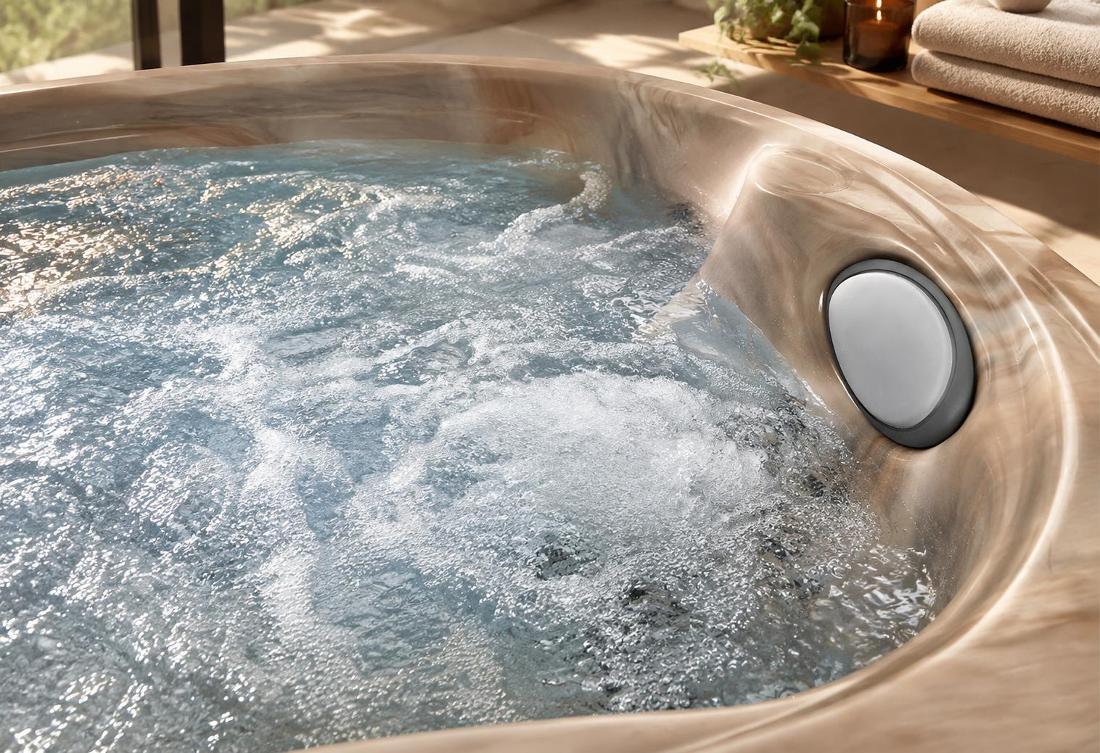
Seating shape is easy to overlook in photos, but it decides whether a 45-minute soak feels restorative or just uncomfortable. Contoured seats that follow the spine’s natural curve reduce strain on the lower back, particularly for anyone who spends the session upright rather than reclined.
The BD-004’s seating is designed around this idea, with backrests shaped to match the body rather than a flat, generic mold. One corner seat includes a headrest with a honeycomb-textured grill, positioned near multiple jets for neck and shoulder focus. Pillow-style headrests, listed among the unit’s features as part of its wave propulsion system, add support for the neck during longer sessions, which matters most for people using the spa for recovery rather than casual soaking.
Chemical upkeep is the single biggest reason people abandon spa ownership within the first year. Manual dosing, testing strips, and constantly adjusting pH levels turn a relaxation product into a chore. This is where integrated ozone sanitization earns its place in a buyer’s checklist.
Ozone systems work by oxidizing contaminants in the water, which reduces how often chlorine or bromine needs to be added by hand. The BD-004 includes this as a built-in feature, aimed at cutting down the manual maintenance load without eliminating water care entirely. Owners still need to monitor water chemistry, just less frequently and with smaller margin for error.
LED lighting inside a spa often gets dismissed as a cosmetic feature, but there is a reasonable case for its role in relaxation. Dim, colored lighting lowers visual stimulation, which can help the body shift into a more restful state before sleep. The BD-004 places blue LED lighting at the bottom of the shell, described in its product materials as part of a biomagnetic therapy system intended to support a calmer atmosphere during use. That specific therapeutic mechanism is a manufacturer claim rather than an independently verified medical effect, though the ambient lighting itself is a straightforward, well-understood comfort feature.
| Specification | BD-004 Detail |
|---|---|
| Capacity | 6 Adults |
| Dimensions | 2350 x 2350 x 900mm |
| Total Power | 5.55kW |
| Massage Pump | 2.2kW x 1pc |
| Filter Pump | 0.35kW x 1pc |
| Heater | 3kW x 1pc |
| Jet Count | 35 |
| Water Capacity | 1450L |
| Net Weight | 317Kg |
| Certifications | CE, CTUVus, CB, SAA |
This kind of table is useful precisely because heated swim spa shopping tends to involve comparing several nearly identical-sounding products. Numbers cut through vague marketing language faster than paragraphs do.
Application context changes what "the right spa" even means. A hotel gym installing a unit for guest recovery has different priorities than a homeowner putting one on a backyard deck. Based on how the BD-004 is positioned, three settings come up most often.
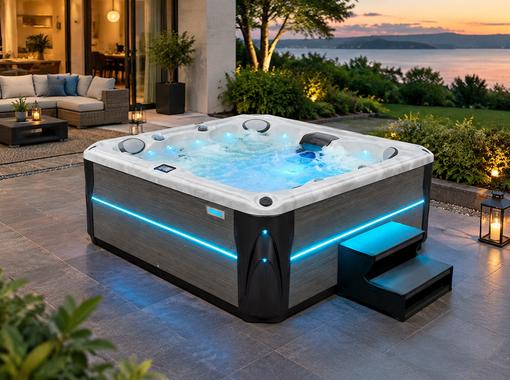
Each setting shares one requirement though: reliable heating performance, since a spa that runs lukewarm defeats the purpose regardless of where it sits.
Buyers comparing multiple heated swim spa options should work through a short mental checklist rather than getting pulled in by whichever unit has the highest jet count.
None of these factors work in isolation. A spa with a strong heater but poor jet placement still leaves users unsatisfied, and one with great ergonomics but weak sanitization becomes a maintenance burden within months.
Is a heated swim spa the same as a swim-only pool with a heater added?
Not exactly. Most heated swim spas, including compact models like the BD-004, are built primarily for hydrotherapy and soaking rather than continuous lap swimming, even though the term "swim spa" gets applied broadly across the market.
Does more jets always mean better therapy?
Not necessarily. Jet placement across different muscle groups matters more than the raw count, since concentrated jets in one area do little for muscles elsewhere on the body.
How much maintenance does ozone sanitization actually eliminate?
It reduces the frequency of manual chemical dosing but does not remove the need for water testing entirely. Ozone systems oxidize contaminants continuously, which lightens the workload rather than removing it.
Can a portable heated swim spa be installed indoors?
Many compact units are suited for both indoor and outdoor placement, though electrical and drainage requirements should be checked against local building codes before installation.
Choosing a heated swim spa comes down to matching the unit’s actual design intent with the buyer’s real use case, not chasing the biggest spec sheet. A 6-person unit built for hydrotherapy, like the BD-004, suits villas, hospitality settings, and recovery-focused households far better than someone hoping for a lap-swimming pool substitute. For us, the goal has been supplying units where heater capacity, jet distribution, and sanitization actually align with how people use the product day to day, rather than treating each feature as a separate selling point. Anyone comparing options should treat the spec sheet as a starting point, then weigh it against where the spa will sit, who will use it, and how much maintenance they are realistically willing to do. That combination, more than any single feature, determines whether a heated swim spa becomes a daily habit or an expensive deck ornament.
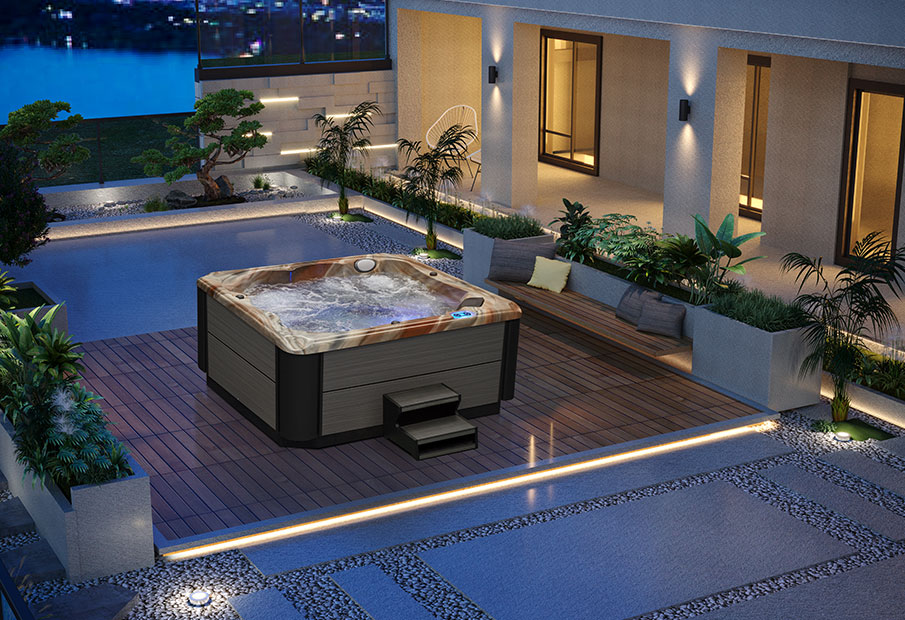
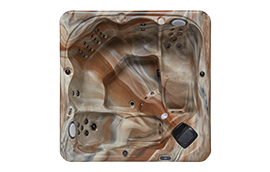
Fspa BD-004 spa, designed for ultimate relaxation, comfortably accommodating 6 adults with a powerful 5.55kW system, 35 targeted massage jets, clean water circulation, calming LED lighting, customizable air flow, ozone sanitization, and easy maintenance features.
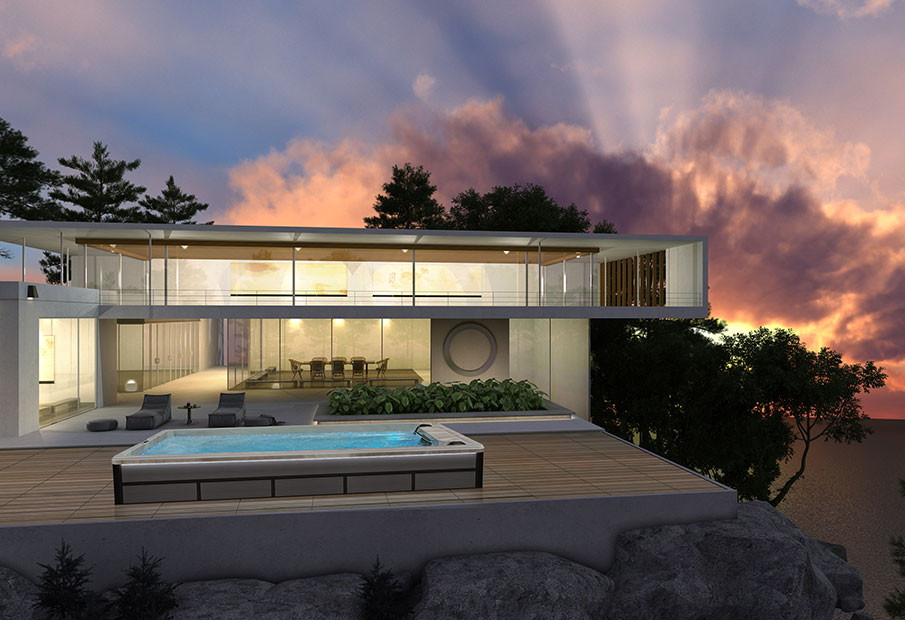
The Infinipool Fspa IP-002Pro is a luxurious and versatile hot tub, featuring a powerful filtration system, 28 massage jets, ozone sanitization, insulation, and optional accessories, designed to provide a soothing and rejuvenating experience in any outdoor space.
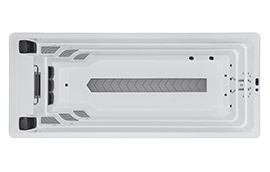
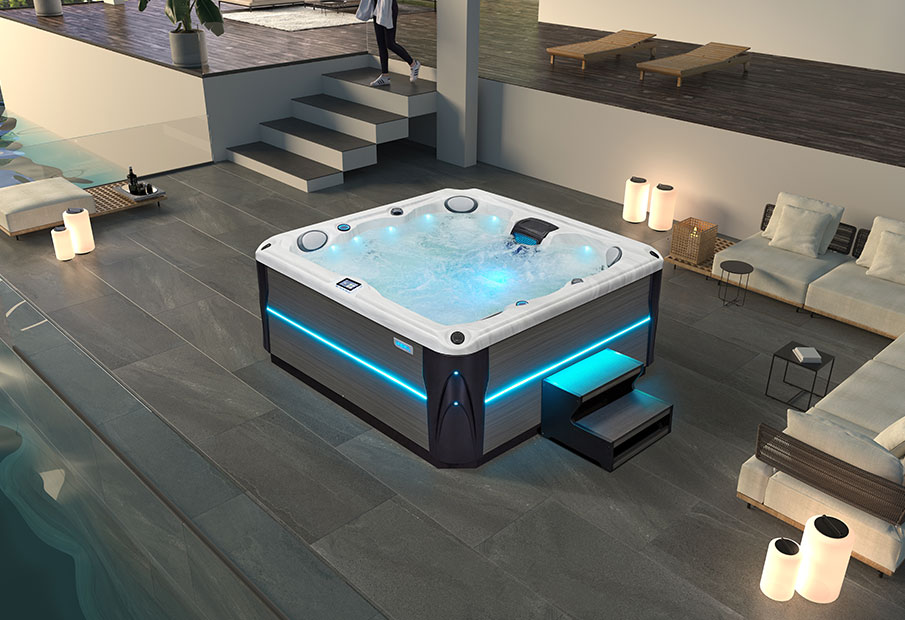
The Fspa BD-001Pro Hot Tub customizable water flow, ozone sanitization, and luxurious features for an unparalleled relaxation experience.
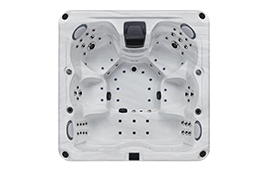
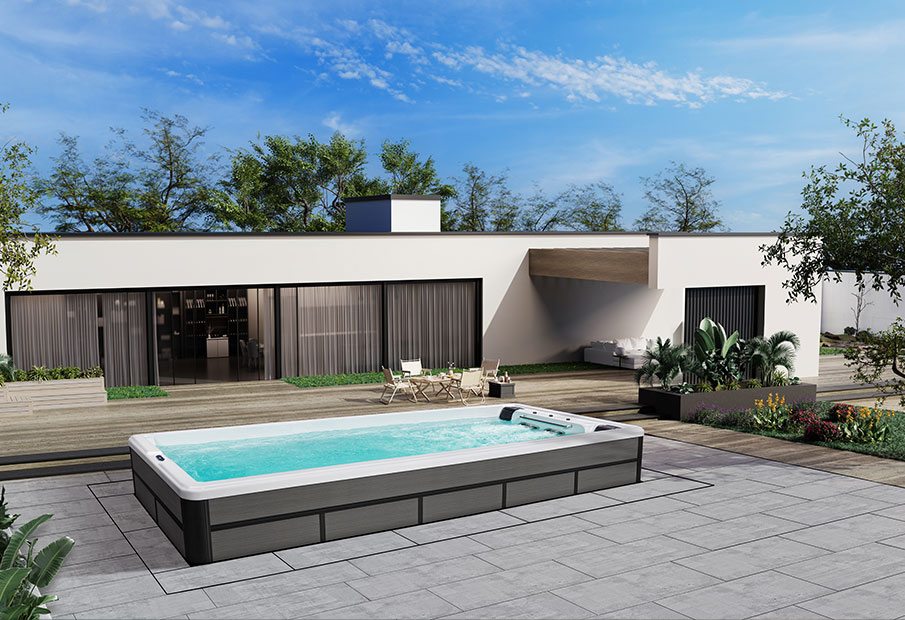
The Infinipool Fspa IP-002 offers a premium swimming experience ideal for residential and commercial use.
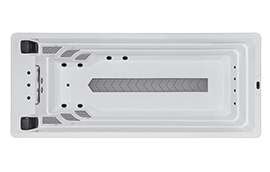
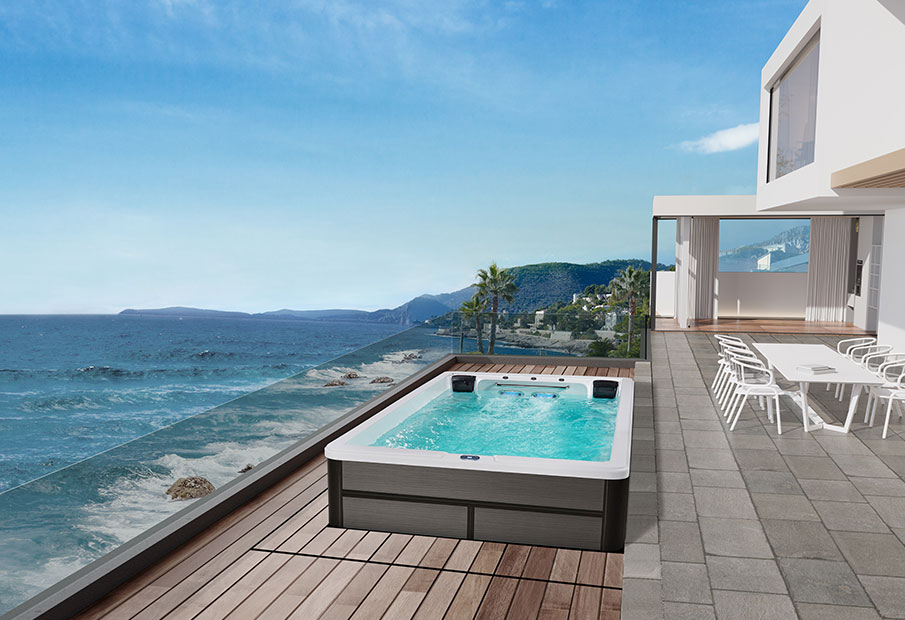
The Infinipool Fspa IP-001 is the ideal choice for anyone seeking a premium swimming experience at home or in a fitness facility.
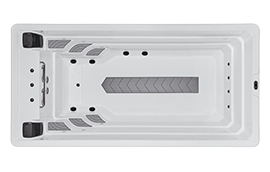
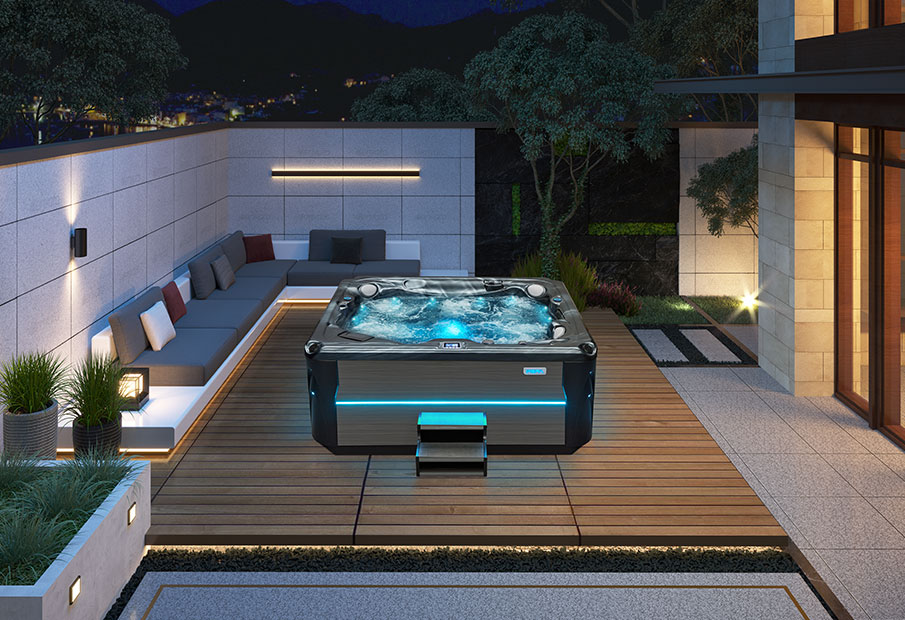
The Fspa BD-005Pro Hot Tub, accommodating up to 6 adults with a spacious 2530x2300x900mm design, boasts robust massage systems, pristine water clarity, an array of premium features, and efficient water sanitization, making it an ideal choice for both residential and commercial outdoor settings.
PRODUCTS
INQUIRY
Thank you for your message!Our Chinese New Year holiday from 7th Feb to 28th Feb. Apologise to make your inconvenience so that responses may be delayed during this period. We'll back to you with regular service on 2th March .Thank you for understanding.


