Anyone comparing backyard upgrades eventually runs into the same wall: the cost of a swim spa with hot tub varies so widely that quotes rarely make sense side by side. One listing shows a compact unit under a few thousand dollars, another shows a swim spa combo pushing well past twenty thousand, and nothing on either page explains why. The gap usually comes down to jet count, pump horsepower, shell construction, and how much swimming space is bolted onto the therapy end. Once you can read those variables, the price tag stops looking arbitrary and starts looking like a spec sheet.
A basic hot tub and a full swim spa with hot tub combo are not the same category of purchase, even though marketing pages sometimes blur the line. A hot tub is built around seating and jets. A swim spa adds a current-generating section long enough to swim against, which means a bigger shell, a stronger pump, and more structural reinforcement.
That size difference alone explains a lot of the spread. A 3-person tub with a couple dozen jets and a modest 2kW heater costs far less to manufacture than a unit built for six adults with eighty jets and a 3kW heater pushing through a larger volume of water. Materials scale with size, and so does labor.
Capacity is the first number worth checking on any spec sheet, not the price. A 3-person model and a 6-person model can differ in footprint by nearly a meter in every direction, and that difference cascades into every other component.
Four systems account for most of the manufacturing cost, and each one shows up as a line item in the final price whether the retailer spells it out or not.
None of these four systems operates in isolation. A unit with 80 jets almost always pairs with the higher-wattage pump, because the plumbing simply needs the flow rate to keep pressure consistent across every jet.
Purchase price is only half the financial picture. Ongoing sanitization and energy use determine what you actually spend over the life of the unit, and this is where an ozone system earns its place on the spec sheet.
Ozone sanitization oxidizes contaminants in the water, which reduces how much chlorine or bromine you need to maintain clarity. Less chemical dosing means less frequent water changes and less time spent balancing pH by hand. It is not a replacement for a sanitizer entirely, but it cuts the workload noticeably compared to a chemical-only setup.
Running costs also track back to that heater wattage figure. A 3kW heater cycling to maintain temperature through a Canadian winter draws more power than a 2kW unit in a mild coastal climate, so location matters as much as model choice when you’re estimating monthly electric bills.
| Feature | Entry-Level Configuration | Premium Configuration |
|---|---|---|
| Capacity | 3 adults | 6 adults |
| Dimensions | 1870 x 1330 x 800mm | 2530 x 2300 x 900mm |
| Jet Count | 16 jets | Up to 80 jets |
| Heater | 2kW | 3kW |
| Total System Power | Lower draw | Up to 5.55kW |
| Extras | Standard interior | LED lighting, audio system |
This table isn’t meant to sell you on the premium row. A 3-person unit with 16 jets is genuinely the right call for a couple who wants quiet soaking time without a swim lane. The premium configuration earns its price when a household actually uses the swim function regularly, or when a commercial setting needs to accommodate more bathers at once.
The right size and feature set depends heavily on where the unit will live and who will use it.
A physiotherapy clinic and a backyard deck are solving different problems, even if the hardware looks similar on paper. Matching the unit to actual usage patterns avoids paying for jet arrays that never get used, or under-buying a pump that wears out under commercial-level demand.
Some models in this category add integrated LED lighting and audio systems, which shift the unit from a purely therapeutic tool toward a full sensory space. These features add cost, but they’re optional rather than structural, so buyers on a tighter budget can skip them without losing hydrotherapy performance.
Lighting and audio also tend to be the easiest place to trim a quote if a supplier’s initial price feels high. The core plumbing, heater, and shell are what deliver the therapy; everything layered on top is a comfort upgrade rather than a functional requirement.
Does a bigger swim spa always cost proportionally more than a smaller hot tub?
Not always proportionally, but generally yes in absolute terms. Larger shells need reinforced structural support and higher-output pumps, and both of those costs scale faster than the water volume itself.
Is ozone sanitization worth the added cost over a standard filtration setup?
For most owners, yes, because it reduces chemical purchases and maintenance time over years of use. The upfront cost difference is usually recovered through lower ongoing sanitizer spending.
Why do two units with the same jet count sometimes have different prices?
Shell material, pump brand, and included extras like lighting or audio account for most of that gap. Jet count alone doesn’t capture build quality.
Should I size for the number of people who live in my house or the number who visit?
Size for realistic regular use, not peak occasion. A unit that’s slightly too small for the occasional party is a smaller loss than one that’s oversized and rarely filled.
Once you separate a quote into its real components, the cost of a swim spa with hot tub stops feeling like a mystery. Capacity sets the baseline, jet count and pump power add to it, shell quality determines longevity, and optional extras like lighting sit on top as personal preference rather than necessity. For us, working across capacities from 3-person units to 6-person family spas has made one pattern clear: buyers who compare specs line by line, rather than sticker price alone, end up with equipment that matches how they actually plan to use it. That approach is the most reliable way to judge whether a given cost of swim spa with hot tub reflects real value or just a longer feature list.
Complete Production And Delivery Process Of Acrylic Integrated Swimming Pool
The production of acrylic integrated swimming pools begins with tailored design and material selection. Engineers collaborate with clients to analyze site dimensions, usage scenarios, and aesthetic preferences, creating 3D models using CAD software. High-quality cast acrylic sheets (minimum thickness 15mm) are chosen for their superior impact resistance, UV stability, and transparency, ensuring durability and visual clarity.
Next, the acrylic sheets undergo precision cutting and thermoforming. Computer-controlled cutting machines slice the material into designated shapes with tolerances within ±0.5mm. For curved sections, sheets are heated to 160-180°C in ovens, then molded using custom jigs under controlled pressure (3-5 bar) to achieve seamless, watertight contours. Reinforcement rings and support structures are integrated during this phase to enhance structural integrity.
Assembly and quality inspection follow. Thermoformed components are bonded using specialized acrylic adhesives, cured at 50°C for 24 hours to form molecularly fused joints. Each pool undergoes rigorous testing: water pressure tests (1.2x operating pressure for 48 hours), leak detection via ultrasonic scanning, and surface finish checks to ensure no scratches or optical distortions.
Finally, logistics and on-site installation complete the process. Pools are packaged in shock-absorbent crates with custom foam padding, transported via climate-controlled vehicles to prevent material stress. On-site, a professional team positions the pool using laser leveling tools, connects filtration systems, and conducts final water circulation tests. Client training on maintenance protocols ensures long-term performance, marking the successful delivery of a premium acrylic swimming pool solution.
What Makes a Cold Plunge the Coldest and How to Choose One
Cold plunge shoppers searching for the coldest cold plunge usually aren’t chasing a number for bragging rights. They want water cold enough to trigger a real physiological response, session after session, without babysitting a chiller or waiting hours for the tub to recover. Temperature alone doesn’t answer that. Recovery time, insulation, and consistent circulation matter just as much as the digits on the display.
A plunge that hits 39°F once and then limps back up to 55°F an hour later isn’t the coldest cold plunge in any meaningful sense. It’s a novelty. The tubs that earn the label combine strong chilling capacity with insulation and filtration that hold the temperature steady across back-to-back sessions.
This is where a lot of buyers get tripped up. Marketing copy loves to quote a minimum temperature, but that number means little without knowing how long the unit takes to recover after someone gets in and displaces a chunk of cold water with body heat. A gym or clinic running multiple plunges per day needs recovery speed more than it needs an extra two degrees of chill.
Three mechanical factors determine how cold and how consistent a plunge stays:
Skimping on any one of these undercuts the other two. A powerful chiller paired with poor insulation just runs constantly and wears out faster. Good insulation without adequate circulation still leaves uneven cold spots where a bather’s body heat lingers.
Cold plunge listings throw around a lot of numbers, and not all of them are comparable across brands. Before assuming one unit is objectively colder than another, check whether the spec sheet defines conditions the same way.
| Spec to check | What it tells you | Common pitfall |
|---|---|---|
| Minimum temperature | Lowest achievable water temp | Often tested at ideal ambient conditions, not real-world use |
| Chiller horsepower | Cooling speed and recovery | Bigger isn’t always better if insulation is weak |
| Recovery time | How fast temp resets after use | Rarely disclosed unless you ask directly |
| Insulation type | Heat retention in hot climates | Foam thickness varies widely between brands |
| Filtration flow rate | Water evenness, hygiene | Low flow can leave stagnant, less-cold zones |
Ask a seller for recovery time under repeated use, not just the headline low temperature. That single question separates serious cold therapy equipment from tubs that are cold once and then coast on ice for the rest of the session.
There’s a genuine fork in the road here, and it’s worth settling before spending money. Ice bath tubs rely on manually added ice or a basic insulated shell, while chiller-based plunges use a refrigeration unit to hold a set temperature indefinitely.
Neither approach is inherently wrong. A weekend athlete doing one plunge a week might do fine with ice. A rehab center running sessions all day needs mechanical refrigeration, full stop.
It’s worth noting that most manufacturers who build cold plunge equipment, including us, come from a background in heated spa and hydrotherapy hardware. The engineering overlap is real even though the temperature goals sit at opposite ends of the spectrum. Filtration pumps, ozone sanitation, and insulated cabinetry all transfer directly between hot and cold water equipment.
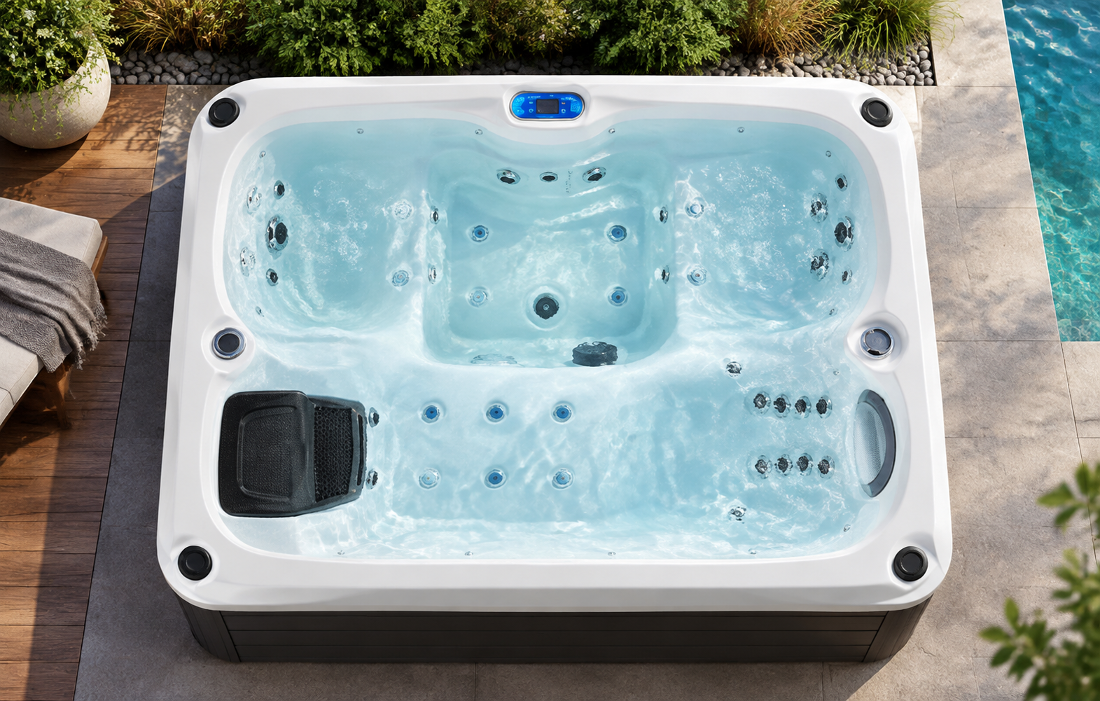
Take a heated hydrotherapy spa like the BD-001 as an illustration of what that shared engineering looks like in practice. According to its product specifications, it’s a 2100x2100x900mm unit built for up to 6 adults, running a 3kW heater alongside a 2.2kW massage pump feeding 31 jets. The dedicated 0.35kW filter pump and ozone system are there to keep water clean during heavy, repeated use, the same core problem a cold plunge filtration system has to solve, just on the opposite end of the thermostat.
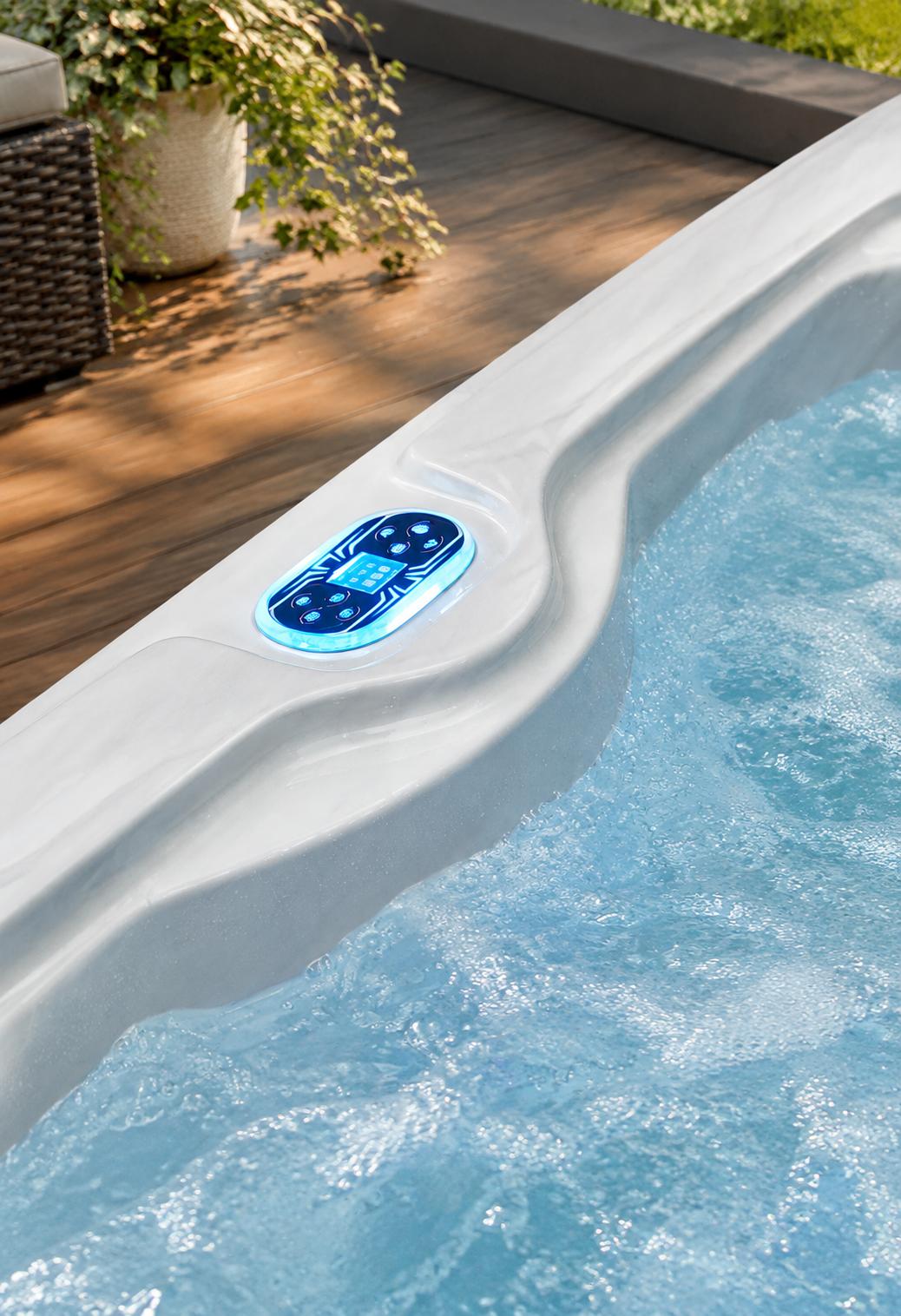
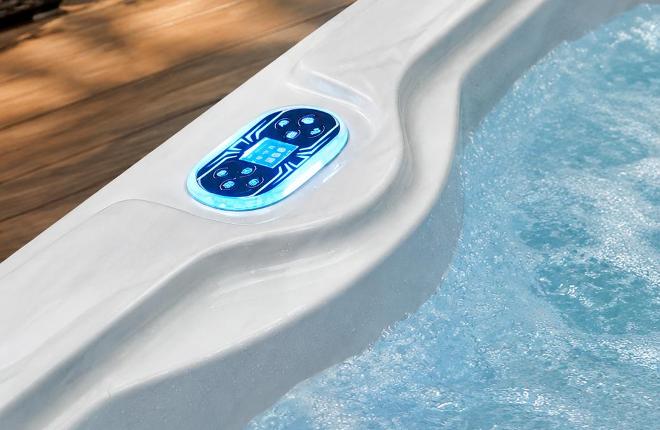
The BD-001’s digital control panel, with its blue-lit display for monitoring temperature and system status, reflects a broader trend across both hot and cold water equipment: precise, glanceable control matters more to users than a long feature list. Cold plunge buyers should look for the same clarity, a display that shows current temp and target temp without requiring a manual to interpret.
A tub’s exterior cabinet does more than look good on a patio. Materials and construction around the shell directly affect how much outside heat seeps in, particularly for cold plunges installed outdoors in warmer regions or direct sun.
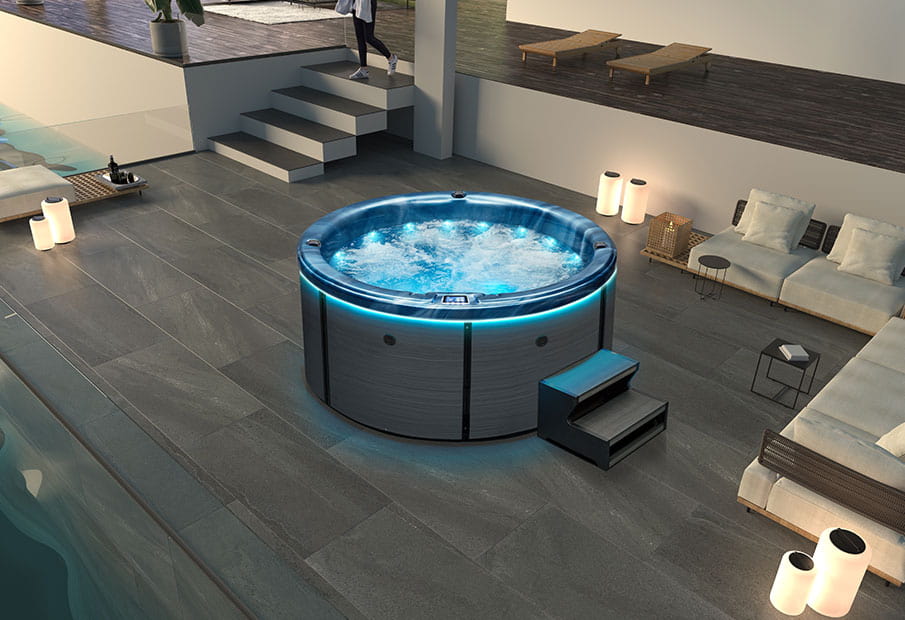
Wood-grain cabinet paneling, marble-effect acrylic shells, and sealed housing units aren’t purely cosmetic choices. They form a thermal barrier between the water and ambient air. On a heated spa, that barrier keeps warmth in; on a cold plunge, the same construction principle keeps unwanted heat out. Anyone comparing tubs should ask what the cabinet is made of and whether it’s a sealed, insulated design or a thin shell that will bleed temperature in either direction.
Cold plunges show up in a wider range of settings than most people assume, and the ideal spec sheet shifts depending on where the unit lives.
Matching intended frequency to chiller capacity avoids two common regrets: overspending on industrial-grade refrigeration for occasional home use, or underbuying a light-duty unit that can’t keep pace with a busy studio schedule.
How cold does the coldest cold plunge actually get?
Serious cold plunge units with dedicated chillers typically reach the high 30s to low 40s Fahrenheit. Anything colder starts approaching ice formation, which most manufacturers avoid for safety and equipment reasons.
Is a cold plunge with a chiller worth it over just using ice?
For anyone plunging more than a couple times a week, yes. The math on ice costs and hassle tends to favor a chiller fairly quickly, and the temperature stays consistent instead of drifting as ice melts.
Does insulation really change how cold a plunge can get?
Insulation doesn’t lower the minimum temperature by itself, but it determines how hard the chiller has to work and how fast the unit recovers after use, which matters more in daily use scenarios.
Can the same filtration technology used in hot spas apply to cold plunges?
Largely yes. Pump-driven circulation and ozone or UV sanitation systems solve the same water clarity and hygiene problems regardless of water temperature, which is why manufacturers with hot spa backgrounds often move into cold plunge equipment.
Choosing the coldest cold plunge isn’t really about chasing the lowest number on a spec sheet. It’s about finding a unit whose chiller, insulation, and filtration work together to hold a genuinely cold, clean temperature through the kind of daily or weekly use you actually plan to put it through.
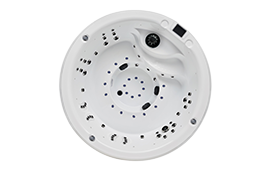
The Fspa BD-009Pro Hot Tub, a compact 2000x900mm spa for up to 6 adults, combines power and efficiency with luxurious features like a 7.97kW system, 50 water & 20 air bubble jets, LED lighting, and music speakers, making it ideal for residential and small commercial spaces.
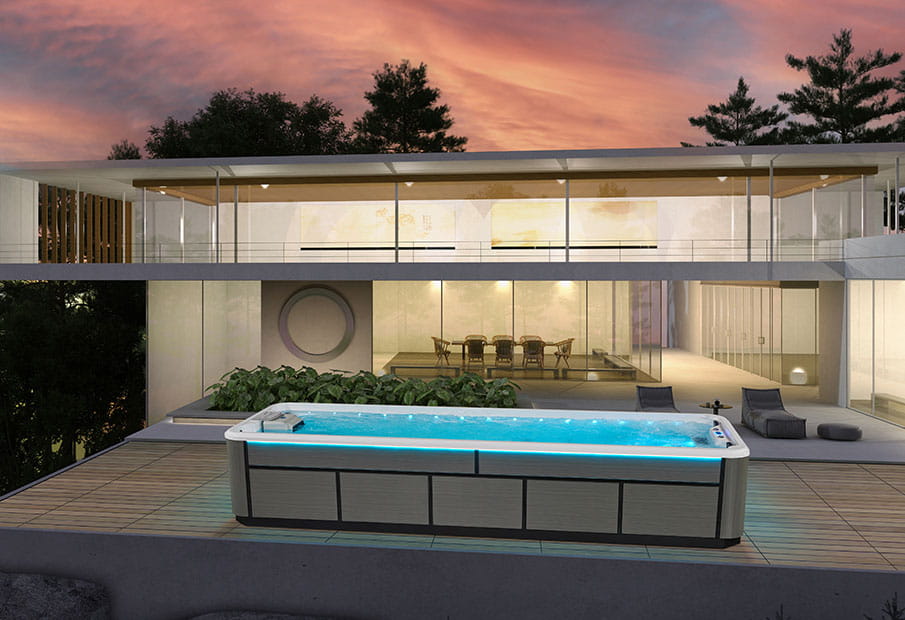
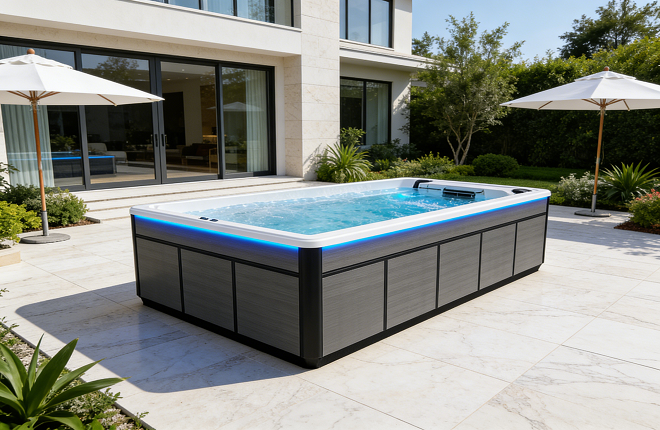
This contemporary infinity pool features dimensions of 7000mm in length, 2200mm in width, and 1335mm in height, highlighting its comprehensive and sophisticated functionality, including a high-efficiency filter pump, a powerful heater, and an advanced ozone system.
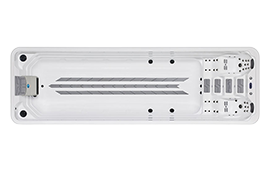
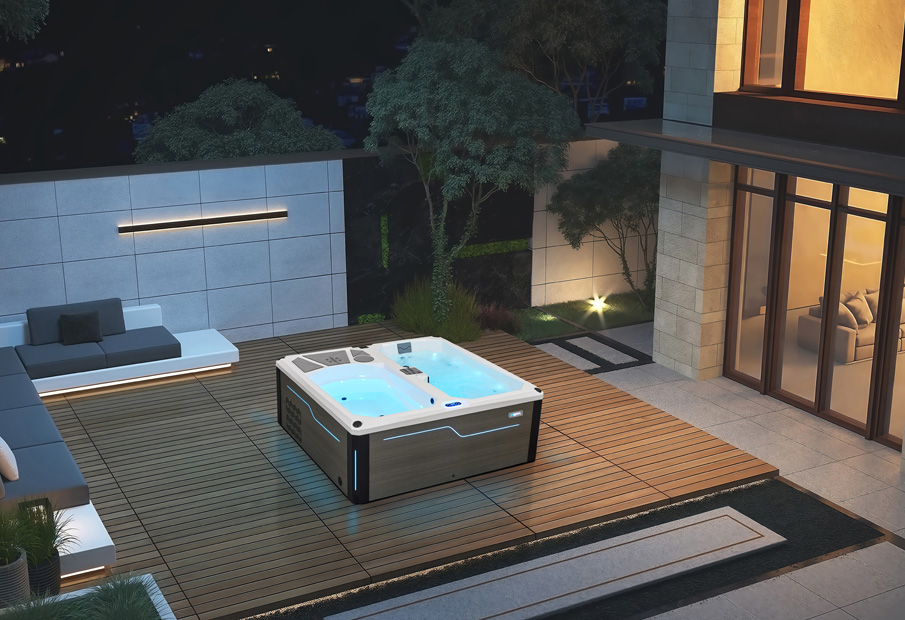
Welcome lights up as you approach, All in one design, plug and play, snowflake pattern, Include filter, circuit pump, Ozone, ice-blue underwater light, and high-efficiency chilling system.
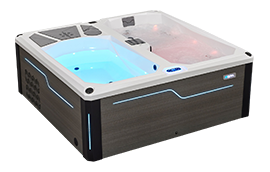
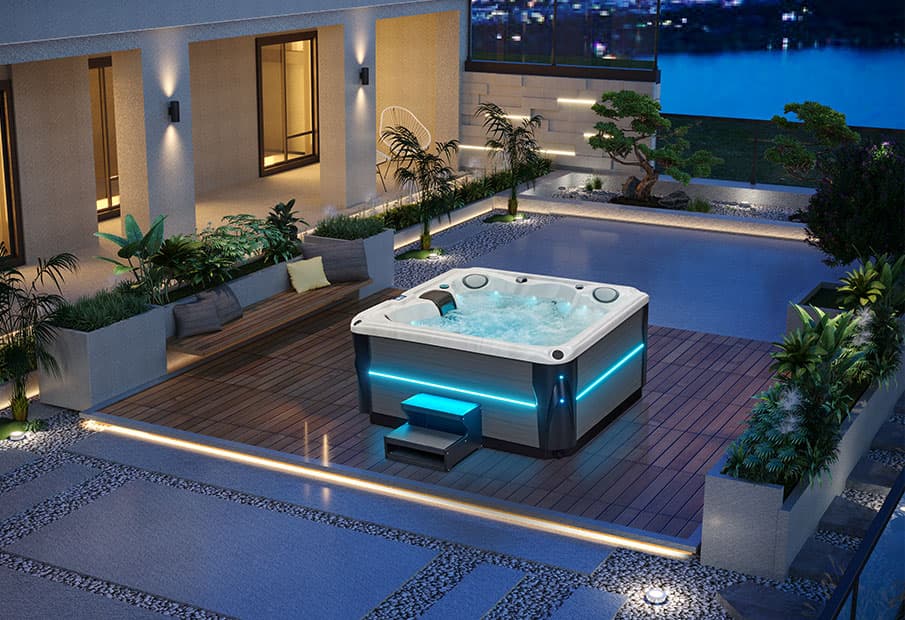
Introducing the Fspa BD-008Pro Hot Tub, a luxurious and spacious sanctuary designed for ultimate relaxation. With dimensions of 2080x2080x900mm, this hot tub comfortably fits up to 6 adults, making it perfect for family gatherings, parties, or a personal retreat.
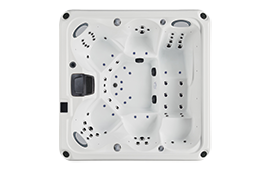
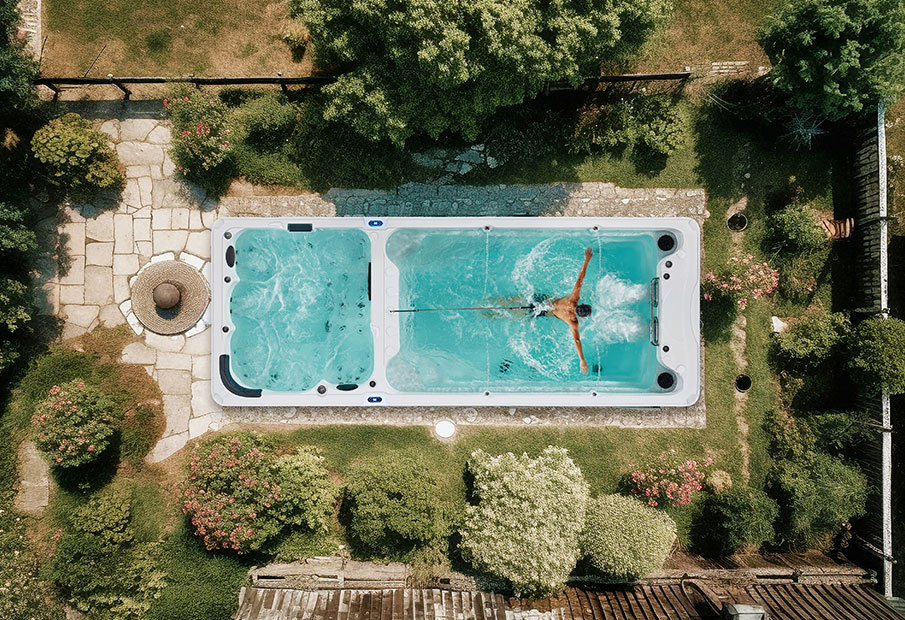
The Infinipool Fspa IP-007 enhances backyard experiences with exceptional performance, style, and a range of optional accessories.
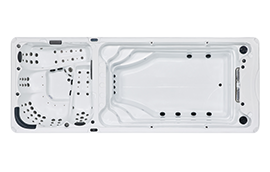
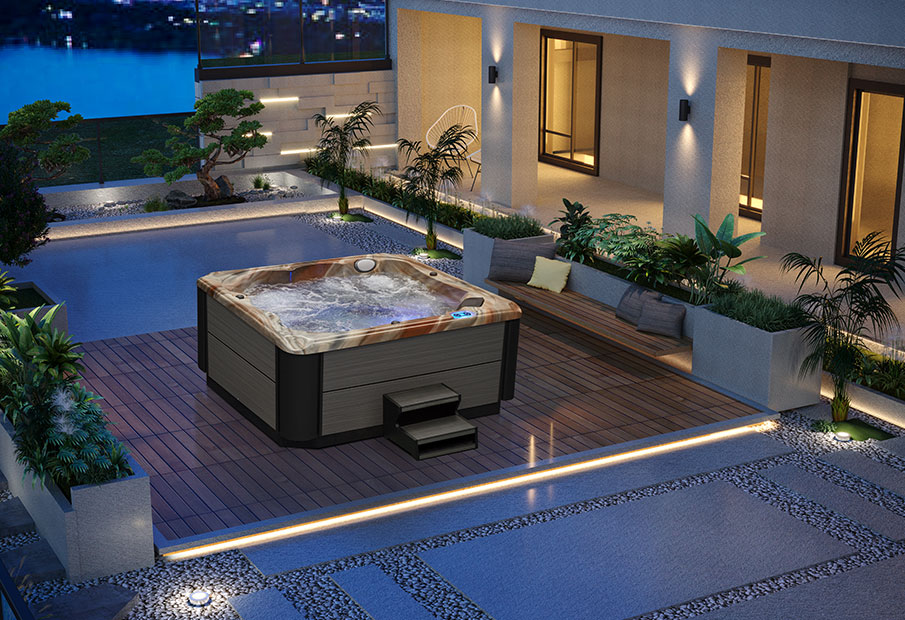
Fspa BD-004 spa, designed for ultimate relaxation, comfortably accommodating 6 adults with a powerful 5.55kW system, 35 targeted massage jets, clean water circulation, calming LED lighting, customizable air flow, ozone sanitization, and easy maintenance features.
PRODUCTS
INQUIRY
Thank you for your message!Our Chinese New Year holiday from 7th Feb to 28th Feb. Apologise to make your inconvenience so that responses may be delayed during this period. We'll back to you with regular service on 2th March .Thank you for understanding.


