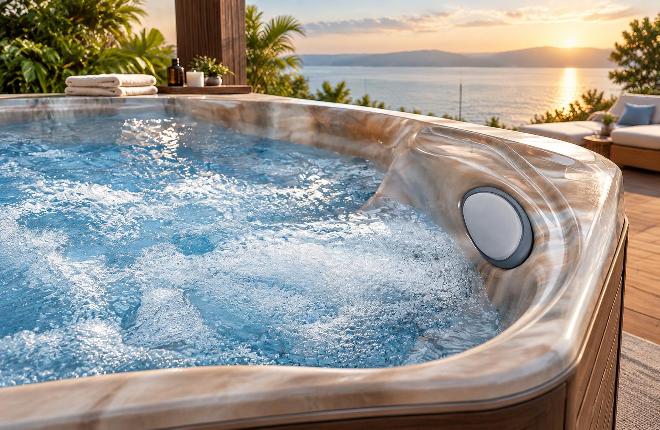
A luxury swim spa sits at an odd intersection of two different products. It needs the swimming resistance of a lap pool and the seated comfort of a hot tub, and most buyers only discover how hard that balance is to strike after they’ve already signed a contract. Before spending on a unit that will sit permanently in a backyard or hotel courtyard, it helps to understand what separates a genuinely capable spa from one that just looks good in photos.
The confusion usually starts with terminology. Some manufacturers use "swim spa" loosely to describe anything larger than a standard hot tub, even if it has no real hydrotherapy function. Others lean entirely into swim currents and skip massage capability altogether. A well-designed luxury swim spa should do both jobs credibly, not just one.
Most people shopping for outdoor water features start with a vague goal: something to relax in, maybe exercise in, maybe entertain around. That vagueness is exactly where mismatched purchases happen.
A hot tub, even a large 6-person model, is built around stationary hydrotherapy. The jets, seating, and water volume are all tuned for soaking, not swimming. A true swim spa, by contrast, needs enough length and current strength for continuous movement. When a product blurs this distinction in its marketing, buyers end up with something that’s too small to swim in and too jet-heavy to be a simple soaking tub.
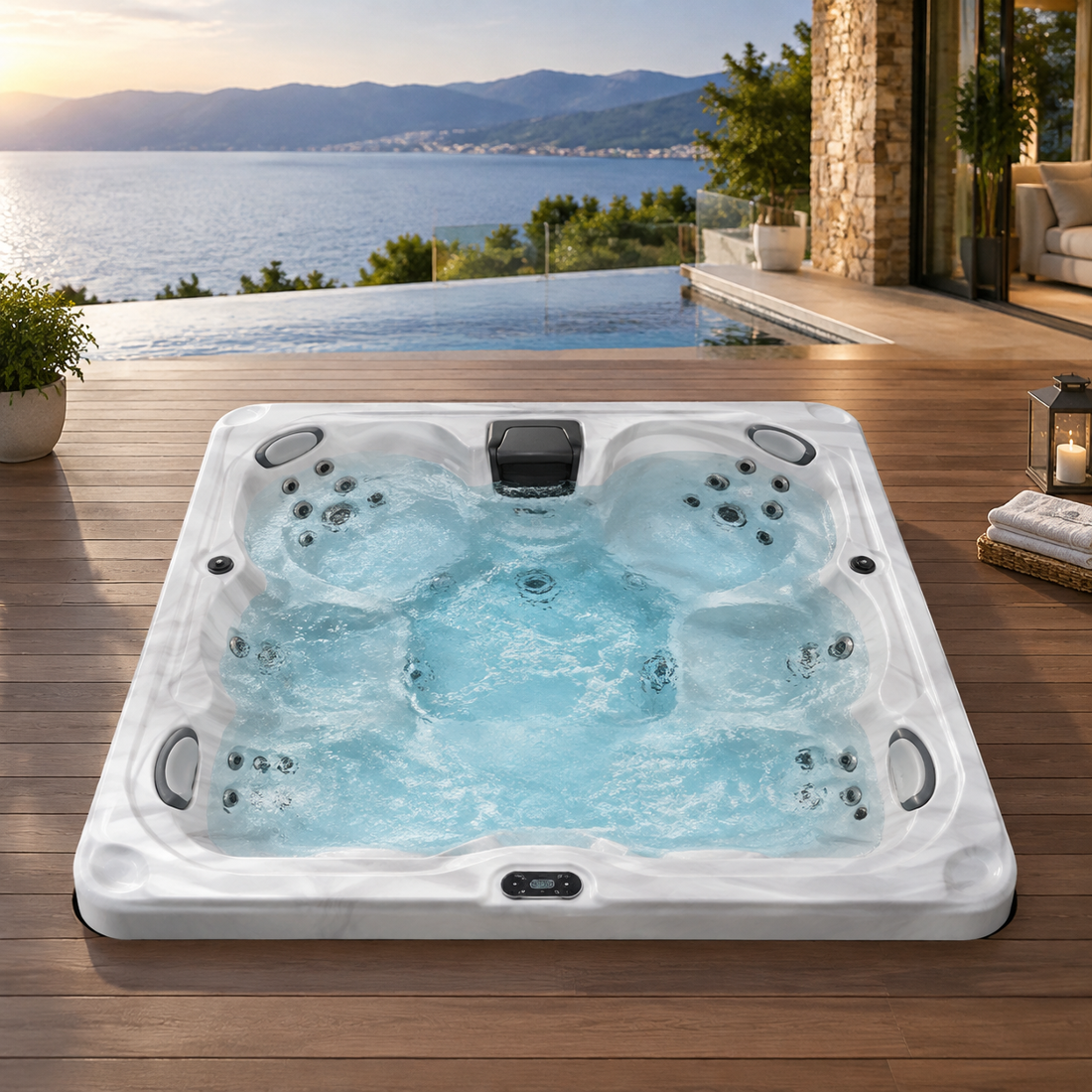
This matters because water capacity, pump configuration, and jet count all change depending on which function is prioritized. A 1450-liter, 35-jet unit like the Fspa BD-004, for example, is engineered around six-person hydrotherapy rather than lap swimming. That’s not a flaw. It’s a design decision, and knowing which category a product belongs to prevents disappointment after installation.
Jet count gets marketed heavily because it’s an easy number to compare. But the placement, pump power, and seating ergonomics behind those jets matter just as much as the total figure.
Consider how the BD-004 approaches this. Its 35 jets are paired with a 2.2kW massage pump, a separate 0.35kW filter pump, and a 3kW heater, adding up to 5.55kW of total system power. That separation between massage and filtration pumps is worth noting. Running filtration on its own smaller pump means the unit doesn’t need to fire the full massage system just to keep water clean, which typically translates to lower running costs during idle periods.
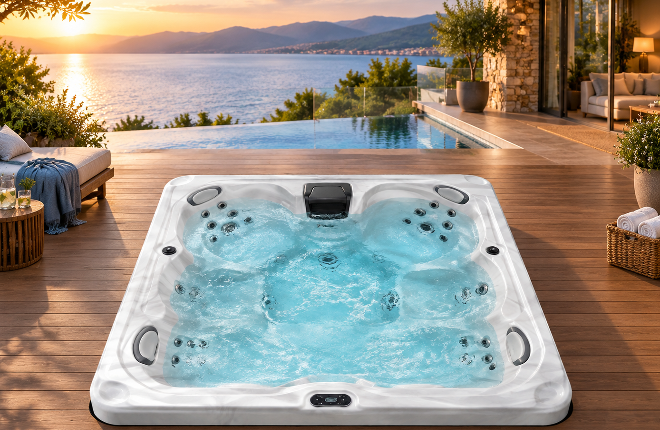
Seating design plays a similar supporting role. According to the manufacturer, the shell uses contoured seats and backrests intended to follow the body’s natural curves, with jets positioned to reach shoulders, lower back, and calves without requiring the bather to shift position constantly. Ergonomic shell design is a well-established feature in the hot tub industry, and it directly affects whether long soaks feel restorative or simply damp.
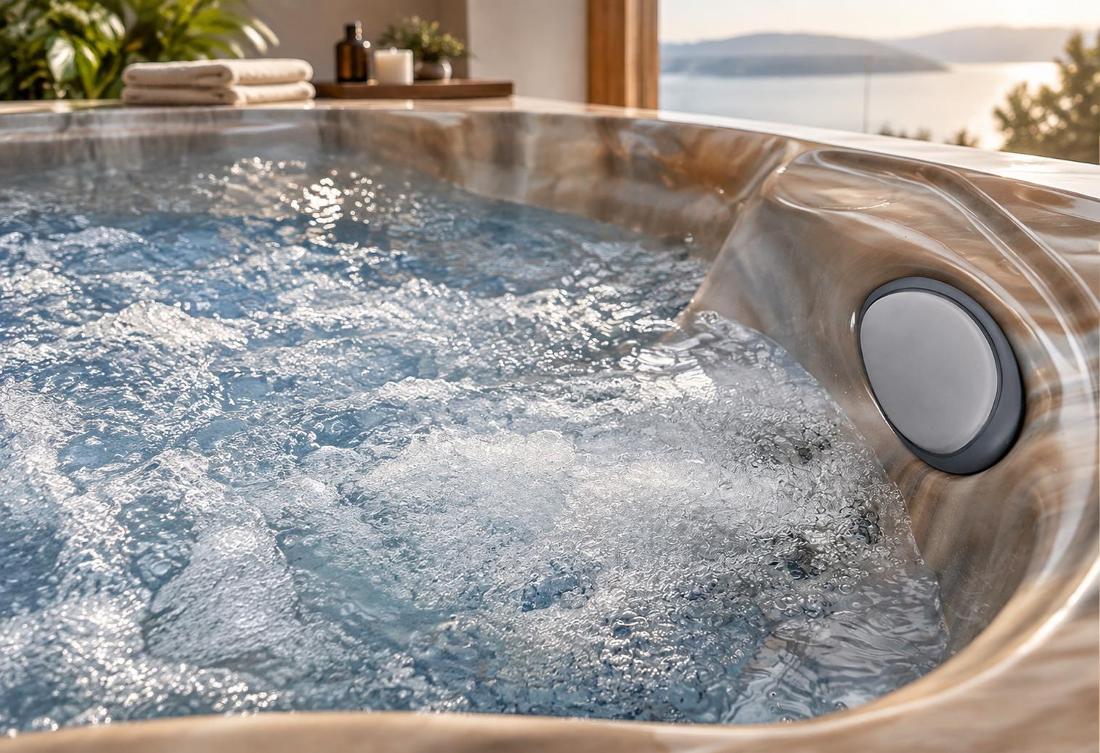
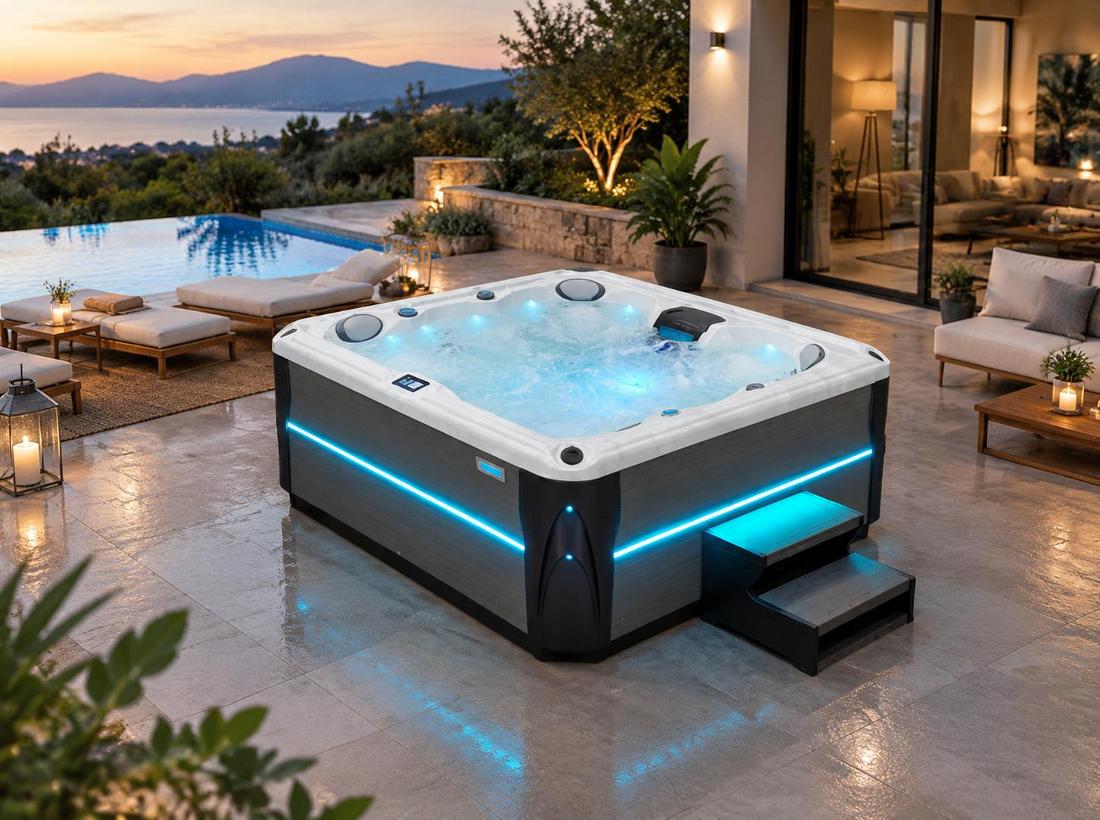
LED lighting inside a spa often gets dismissed as decoration, but it serves a practical purpose too. Low, indirect lighting positioned at the base of the shell, as used in the BD-004’s under-water LED setup, keeps the water visible at night for safety while avoiding the harsh glare of surface-mounted lights. The manufacturer describes this bottom-positioned blue lighting as intended to support a calmer, more immersive atmosphere during use, which is a reasonable claim for ambient lighting design generally, separate from any specific therapeutic mechanism.
Sanitization is the less glamorous half of this conversation, but it determines how much weekly maintenance a spa actually demands. An integrated ozone system, like the one built into this unit, works alongside chlorine or bromine to reduce the chemical load needed to keep water clear. Ozone treatment is a long-standing, widely used method in the spa industry for supplementing sanitization, not replacing it entirely.
When evaluating any luxury swim spa or high-capacity hot tub, a handful of specifications tell you more than marketing copy ever will:
| Specification | BD-004 Example | Why It Matters |
|---|---|---|
| Seating Capacity | 6 Adults | Determines suitability for families vs. couples |
| Dimensions | 2350 x 2350 x 900mm | Affects deck, patio, or indoor space planning |
| Total Power | 5.55kW | Impacts electrical circuit requirements |
| Jet Count | 35pcs | Indicates massage coverage, not intensity alone |
| Water Capacity | 1450L | Influences heating time and running cost |
| Net Weight | 317kg | Determines structural support needed for decks |
| Certifications | CE, CTUVus, CB, SAA | Confirms electrical and safety compliance testing |
Weight and dimensions deserve more attention than they usually get. A 317kg empty shell, once filled with 1450 liters of water and occupied by six adults, brings the total load to roughly 2 tons. Anyone installing on an elevated wooden deck should confirm the structure can bear that weight before delivery, not after.
Where a spa gets installed changes what actually matters in the buying decision. A few common scenarios illustrate this:
A luxury swim spa intended for a coastal B&B, for instance, needs different cabinet material considerations than one destined for an indoor rehabilitation center, even if the internal hydrotherapy components are identical.
Does a higher jet count always mean a stronger massage?
Not necessarily. Massage strength depends on pump power and jet design as much as quantity. A unit with fewer, well-placed jets on a strong pump can outperform one with more jets spread across a weak pump.
How much maintenance does an ozone-equipped spa still need?
Ozone systems reduce but don’t eliminate the need for regular sanitizer testing and water changes. Filter pumps still need periodic cleaning, and water chemistry should be checked weekly.
Can a 6-person spa like the BD-004 be used for actual swimming?
No. At 2350mm across, this falls into the hot tub and hydrotherapy category rather than the swim current category. Buyers wanting lap-style exercise need a longer, current-generating swim spa design.
Is indoor installation different from outdoor for these units?
Ventilation and moisture control become more important indoors, while outdoor installations need to account for weather exposure and deck load capacity.
Choosing between hydrotherapy-focused units and true swim-current spas comes down to how the space will actually be used day to day, not how it looks in a showroom. Buyers who want seated massage, ambient lighting, and multi-person capacity are better served by a hydrotherapy-first design, while those wanting exercise-length swimming need to look specifically for current-generation systems.
For hotels, villas, and wellness centers weighing these options, the practical path is matching seating capacity, power draw, and certification standards against the intended setting before comparing finishes or lighting extras. A luxury swim spa is a long-term structural and electrical commitment, and getting the fundamentals right upfront, from deck load to pump configuration, saves far more hassle than any lighting feature ever will.
Why Swim Jets Are Changing What People Expect From a Hot Tub
Hot tubs with swim jets sit at an odd intersection between two categories that used to stay separate. One side is relaxation, the warm water, the massage, the evening soak after a long day. The other is exercise, resistance training, and the kind of cardio you’d normally drive to a gym for. Swim jet systems merge both into a single footprint, and that shift is exactly why the search interest around this term keeps growing.
Anyone researching hot tubs with swim jets is usually trying to solve a space problem, a time problem, or both. A lap pool needs real square footage and a real budget. A spa alone gets boring if you’re trying to stay active. Swim jets close that gap by generating a current strong enough to swim against, inside a shell no bigger than a standard hot tub.
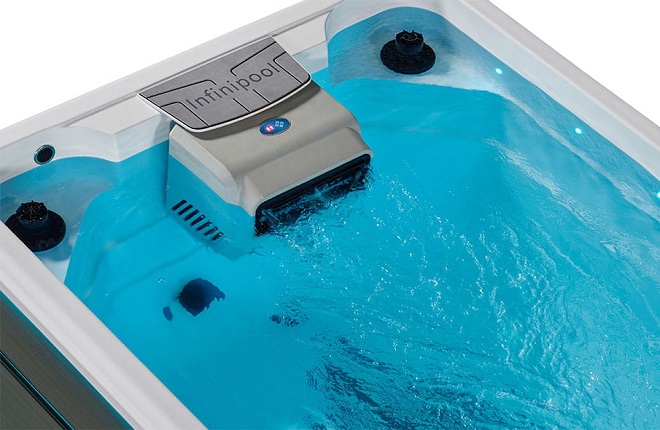
The mechanism is simpler than it sounds. A dedicated pump forces water through a nozzle at high velocity, creating a steady countercurrent in one section of the tub. You swim into that current, and the water pushes back. Distance becomes irrelevant. You’re not covering meters, you’re holding position against resistance, the same principle a rowing machine uses with water instead of a flywheel.
This differs from a standard massage jet in purpose, not just intensity. Massage jets are aimed at specific muscle groups, usually the lower back, shoulders, or calves, for therapeutic pressure. Swim jets are aimed at open water space, built to sustain a continuous flow rather than a pulsing one. Some tubs run both systems independently, so you can swim for twenty minutes and then switch to a seated massage cycle once the pump load shifts.
Not everyone needs a countercurrent system, and it’s worth being honest about that before spending on one. It tends to make the most sense for a few specific situations.
Sizing a swim spa comes down to balancing how many people will use it against how much open water you actually need for the current to feel usable. A tub built for six adults to sit and soak isn’t automatically good for swimming, because seating often eats into the clear swim lane.
Manufacturers address this in different ways. Some models pack in a dense jet array purely for hydrotherapy, favoring seat count over open water. Others reduce seating to widen the swim channel. Fspa’s hot tub lineup, for example, ranges from compact 3-person units around 1870x1330mm up to 6-person spas near 2530x2300mm, which gives buyers a spread between a tight therapeutic soak and a larger multi-use footprint.
| Model Tier | Typical Capacity | Jet Count | Heater Output | Best Fit |
|---|---|---|---|---|
| Compact | 3 adults | 16 jets | 2kW | Small patios, couples |
| Mid-size | 4-5 adults | 30-50 jets | 2-2.5kW | Family use, moderate space |
| Large | 5-6 adults | Up to 80 jets | 3kW | Multi-user households, rehab use |
Jet count alone doesn’t tell the full story. Eighty jets spread across a seated hydrotherapy layout does something entirely different from a smaller, concentrated swim current. Before comparing numbers, it helps to ask what the jets are actually positioned to do.
Running a swim spa harder and more often changes the water chemistry demands compared to a tub used mainly for evening soaks. More activity means more organic load entering the water, from sweat to skin oils, and that load needs consistent oxidation to keep things clear.
Ozone sanitization systems are the standard response here. According to Fspa’s product documentation, their hot tub series integrates ozone systems specifically to maintain water clarity and reduce the manual maintenance burden. Ozone works by oxidizing contaminants rather than relying solely on chlorine or bromine, which can lower the amount of chemical you need to add by hand, though it typically works alongside a residual sanitizer rather than replacing it outright.
A swim jet pump pulls noticeably more power than a standard circulation pump, since it has to move a large volume of water fast enough to create resistance. That has a direct effect on your heater sizing and your electrical planning, and it’s worth checking before installation rather than after.
Across the Fspa range, total system power reaches up to 5.55kW, with heaters specified between 2kW and 3kW depending on the model. Larger tubs generally need the higher end of that range, particularly in colder climates where the heater has to fight ambient heat loss while the swim pump is also running. If you’re on a standard residential circuit, this is exactly the kind of detail to confirm with an electrician before committing to a model.
Rather than comparing every spec side by side, it helps to work through a short sequence of questions.
Can you actually get a real workout in a swim jet hot tub?
Yes, within limits. The resistance is adjustable on most systems, and swimming against a countercurrent engages similar muscle groups to lap swimming. It won’t replicate open-water distance training, but for cardio and resistance work in a small footprint, it holds up.
Do swim jets and massage jets run at the same time?
On most dual-zone systems, no, they run on separate pump circuits so you can use one without overloading the system. Check the specific model’s plumbing layout, since some smaller units share a single pump across both functions.
How much space does installation actually require?
Beyond the tub’s footprint, you need clearance for the equipment bay, drainage access, and usually a reinforced pad or deck section to handle the added weight of water and the swim pump. A mid-size unit around 2000x2200mm typically needs a few hundred additional millimeters of clearance on the service side.
Is ozone sanitization enough on its own?
Not typically. It reduces the sanitizer load significantly, but most systems still call for a low residual level of chlorine or bromine to handle contaminants between ozone cycles.
The appeal of hot tubs with swim jets isn’t really about novelty. It’s about compressing two separate purchases, a spa and some form of home cardio equipment, into one installation that fits a backyard instead of a renovation project. That’s a meaningful trade-off for households short on space or short on time to maintain two separate systems.
We work across residential, hotel, and rehabilitation settings, and the pattern holds across all three: the buyers who end up satisfied are the ones who sized the swim zone to their actual routine, not just their guest count. If you’re comparing hot tubs with swim jets for a home installation, spend more time on the swim lane dimensions and pump specs than on jet count alone. That’s where the real difference in daily use shows up.
The Resurgence of the Outdoor Spa Experience
In an increasingly fast-paced world, the quest for a sanctuary—a private haven for relaxation, rejuvenation, and connection—has never been more pronounced. This fundamental human need has fueled a significant resurgence in the popularity of the outdoor spa. Far from being a mere luxury, these sophisticated hydrotherapy systems are transforming backyards and patios into personal wellness retreats, offering a potent blend of therapeutic benefits and lifestyle enhancement. Recent market analysis underscores this trend, with projections indicating a compound annual growth rate (CAGR) for the global spa market reaching 5.8% from 2021 to 2028, primarily driven by heightened consumer awareness of health and wellness, alongside an increasing disposable income. Specifically, the segment for at-home wellness solutions, including outdoor spas, has witnessed a remarkable surge, with sales volumes increasing by 18% year-over-year in the past three years across North America and Europe alone. This isn’t just about owning a hot tub; it’s about investing in a lifestyle that prioritizes mental clarity, physical well-being, and genuine connection with family and friends. The modern outdoor spa is a testament to innovation, blending cutting-edge technology with ergonomic design to deliver an unparalleled experience right in the comfort of your own home, offering an escape from daily stresses and a dedicated space for profound relaxation and restoration.
The engineering behind today’s outdoor spas represents a significant leap forward, moving far beyond simple bubbling tubs to sophisticated therapeutic instruments. At the core of their technical superiority are advanced jet systems. No longer are jets merely pushing water; they are precisely engineered to deliver targeted massage experiences. Manufacturers now offer a diverse array of jet types—from powerful rotational jets that mimic deep tissue massage to soft, pulsating jets designed for gentle muscle relief, and even specialized foot or wrist jets. These systems often incorporate adjustable flow rates and directional control, allowing users to customize their hydrotherapy precisely. Heating elements are equally advanced, utilizing energy-efficient titanium heaters or even heat pumps that significantly reduce operational costs. A well-insulated outdoor spa, often featuring multi-layered foam insulation and reflective thermal barriers, can retain heat exceptionally well, minimizing energy consumption by up to 30% compared to older models. Filtration and sanitization systems have also evolved dramatically. Beyond basic cartridge filters, many premium spas now integrate ozone generators, UV-C purifiers, or even salt water systems, drastically reducing the need for chemical additives and ensuring crystal-clear, hygienic water with minimal effort. Control systems have transitioned from simple button panels to intuitive, waterproof touchscreens and even integrated smart home compatibility via mobile apps, allowing users to control temperature, jets, lighting, and even schedule maintenance remotely. This convergence of precise hydrodynamics, efficient thermal management, superior water purification, and intelligent control defines the modern outdoor spa experience, offering not just relaxation but a robust, technically advanced wellness solution.
While the immediate allure of an outdoor spa is often relaxation, its benefits extend far deeper, profoundly impacting physical and mental well-being. Hydrotherapy, the therapeutic use of water, has been recognized for centuries, and modern spas leverage this ancient practice with scientific precision. The buoyancy of water reduces body weight by approximately 90%, significantly alleviating pressure on joints and muscles. This relief is invaluable for individuals suffering from arthritis, fibromyalgia, or recovering from injuries, with studies showing an average 40% reduction in joint pain after consistent hydrotherapy sessions. The combination of heat and targeted massage jets promotes vasodilation, improving blood circulation and accelerating the delivery of oxygen and nutrients to sore muscles, thus aiding faster recovery after physical exertion. Many professional athletes now incorporate regular spa sessions into their training regimens. Beyond the physical, the mental health benefits are equally compelling. The tranquil environment, coupled with the rhythmic sounds and sensations of the water, acts as a powerful stress reducer. Regular use has been shown to lower cortisol levels—the primary stress hormone—by up to 25%. Furthermore, the elevated body temperature followed by cooling post-spa can facilitate a smoother transition into deeper, more restorative sleep, with 60% of regular spa users reporting improved sleep quality within two weeks. Socially, an outdoor spa provides a unique gathering space, fostering connection and conversation, which are crucial for mental well-being and reducing feelings of isolation. Thus, an outdoor spa is not merely an amenity; it’s a holistic tool for enhancing vitality, promoting recovery, and cultivating mental serenity.
Choosing the right outdoor spa requires careful consideration of various factors, including build quality, feature sets, energy efficiency, and long-term support. The market offers a wide spectrum of manufacturers, each with its unique strengths and specialties. To illustrate the diversity and help in decision-making, let’s examine a comparison of hypothetical yet representative brands across key performance indicators. This comparative approach highlights how different manufacturers prioritize distinct aspects, from raw power and therapeutic intensity to eco-friendliness and smart integration. Understanding these nuances is crucial for aligning a spa’s capabilities with individual needs and preferences.
| Feature/Brand | LuxurySpa Elite | EcoHydro Serenity | AquaRelax Pro | Zenith HydroSystems |
| Primary Focus | Premium therapy, aesthetics | Energy efficiency, sustainability | Performance, robust build | Smart tech, customization |
| Seating Capacity | 5-7 Adults | 4-6 Adults | 6-8 Adults | 3-5 Adults |
| Total Jets | 60-75 (Varied types) | 35-45 (Hydro & Air) | 70-90 (Powerful) | 50-65 (Targeted, adjustable) |
| Insulation System | Full Foam + Thermal Blanket | Recycled Fiber + Heat Lock | Perimeter Foam + Heat Mirror | Quad-Layered Acoustic Foam |
| Heating System | Titanium Coil Heater (5.5kW) | Hybrid Heat Pump Ready | Stainless Steel Heater (6kW) | SmartFlow™ In-line Heater |
| Control System | Intuitive Touchscreen + App | Digital Panel + Basic App | Rugged Push-Button Panel | AI-Powered Voice & App Control |
| Water Purification | Ozone + UV-C + MicroFilter | Ozone + Mineral Cartridge | Dual Cartridge + Ozonator | Salt Water System + UV-C |
| Shell Material | Acrylic (Lucite® Cross-Linked) | Recycled Composites | Heavy-Gauge Acrylic | Proprietary Polycarbonate |
| Energy Efficiency (Avg. kWh/day) | 6-8 kWh | 4-6 kWh (with Heat Pump) | 8-10 kWh | 5-7 kWh |
| Warranty (Shell/Components) | 10-Year / 5-Year | 8-Year / 3-Year | 12-Year / 4-Year | 7-Year / 7-Year |
| Price Range (USD) | $15,000 – $25,000 | $10,000 – $18,000 | $12,000 – $20,000 | $18,000 – $30,000+ |
As evident from the table, “LuxurySpa Elite” focuses on a comprehensive, high-end therapeutic experience with robust features and aesthetics, targeting discerning buyers. “EcoHydro Serenity” prioritizes environmental consciousness and lower running costs through advanced insulation and heat pump integration. “AquaRelax Pro” is built for durability and powerful hydrotherapy, ideal for heavy use and larger gatherings. Finally, “Zenith HydroSystems” distinguishes itself with cutting-edge smart technology and deep customization options, albeit at a higher entry point. This comparative analysis underscores the importance of aligning your specific needs—whether it’s energy efficiency, therapeutic intensity, smart features, or budget—with the manufacturer’s core offering. Each brand offers a distinct value proposition, and selecting the optimal outdoor spa involves balancing these factors to achieve your ideal backyard retreat.
The modern outdoor spa experience is increasingly defined by personalization, allowing owners to tailor every aspect to their unique preferences and lifestyle. This goes far beyond choosing a shell color; it encompasses a myriad of options that can transform a standard spa into a bespoke hydrotherapy oasis. Aesthetic customization often begins with the shell and cabinet finishes. Shells are available in dozens of colors and textures, from classic whites and blues to sophisticated marbled patterns and earthy tones, allowing for seamless integration with existing landscaping or architectural styles. Cabinetry, once limited to basic wood or synthetic, now includes maintenance-free composite panels resembling natural wood, stone, or even modern brushed metal finishes, ensuring durability and visual appeal. Beyond looks, the therapeutic experience itself is highly customizable. Owners can select specific jet packages, opting for combinations that emphasize deep tissue massage, gentle relaxation, or targeted therapy for particular body areas. Advanced lighting systems with chromotherapy options allow users to set moods with an array of colors, enhancing relaxation or invigoration. Integrated sound systems, often Bluetooth-enabled, can turn the spa into an entertainment hub, while aromatherapy diffusers introduce essential oils directly into the air or water for an added sensory dimension. Practical enhancements such as cover lifters, custom steps with built-in storage, and handrails improve accessibility and convenience. For the tech-savvy, smart home integration allows for voice control or app-based management of all spa functions, from temperature to lighting, offering unparalleled ease of use. This extensive range of customization ensures that each outdoor spa can be a truly individual expression of comfort, style, and wellness.
The versatility of the outdoor spa makes it an adaptable addition to a wide array of settings, each benefiting from its unique blend of relaxation and utility. From bustling urban rooftops to serene rural retreats, the application cases are as diverse as the environments themselves. In a compact urban backyard, an outdoor spa transforms limited space into a valuable extension of the living area, offering a private escape from city life without requiring extensive landscaping. For suburban families, it becomes a dynamic hub for entertainment, allowing children to play safely while adults relax, fostering family bonding moments away from screens. Imagine a weekend barbecue effortlessly transitioning into a starlit soak. Luxury residential properties often integrate outdoor spas as a focal point of elaborate outdoor living spaces, complemented by fire pits, gourmet kitchens, and lavish seating, elevating the entire property’s value and appeal. Boutique hotels and resorts leverage spas to enhance guest experiences, offering a unique amenity that promotes relaxation and differentiates their offerings, often resulting in higher occupancy rates and positive reviews. Even in more remote or rustic settings, such as a cabin in the woods or a lakeside retreat, a ruggedly built outdoor spa provides a perfect counterpoint to nature, offering warmth and comfort after a day of hiking or skiing. Furthermore, specialized applications include therapeutic clinics or wellness centers, where the controlled environment of a spa is used for physical rehabilitation, pain management, or stress reduction programs, demonstrating its profound utility beyond pure leisure. Each scenario underscores the spa’s capacity to adapt, providing bespoke benefits whether it’s for personal solitude, vibrant social gatherings, or professional therapeutic use, proving its value across the spectrum of human need and lifestyle.
The journey to acquiring an outdoor spa is an investment not merely in a product, but in a lifestyle characterized by enhanced well-being, luxurious convenience, and lasting enjoyment. From the initial data showcasing its rising demand to the intricate technical advantages, profound health benefits, detailed manufacturer comparisons, boundless customization options, and diverse application cases, it becomes clear that a modern outdoor spa is far more than a recreational item. It is a thoughtfully engineered system designed to deliver consistent therapeutic relief, foster social connection, and elevate the aesthetic and functional value of any property. The commitment to energy efficiency, advanced purification systems, and durable materials ensures that this investment is both sustainable and long-lasting, providing years of trouble-free operation and enjoyment. As we navigate the complexities of modern life, the presence of a dedicated space for rejuvenation and peace becomes increasingly vital. An outdoor spa provides just that—a personal oasis that promotes physical recovery, mental serenity, and memorable moments with loved ones. It’s a testament to thoughtful living, offering an enduring allure that continues to reshape how we perceive home and personal wellness. Embrace the transformative power of hydrotherapy and discover how an outdoor spa can enrich your life, one blissful soak at a time, solidifying its place as an indispensable element of contemporary living.
1. How much does an outdoor spa typically cost?
The cost of an outdoor spa varies significantly based on size, features, brand, and installation requirements. Entry-level models can start around $5,000-$8,000, while mid-range spas typically fall between $10,000-$15,000. High-end, fully customized outdoor spas with advanced technology can range from $18,000 to $30,000 or more, not including potential electrical upgrades or landscaping.
2. What are the main benefits of owning an outdoor spa?
The primary benefits include stress reduction and mental relaxation, muscle pain relief through hydrotherapy, improved sleep quality, enhanced circulation, and a dedicated space for social gatherings or personal meditation. Many users also report significant relief from symptoms of arthritis and fibromyalgia.
3. How much electricity does an outdoor spa use?
Energy consumption for an outdoor spa depends on its size, insulation quality, heating efficiency, local climate, and frequency of use. Modern, well-insulated spas typically consume between 5-10 kWh per day, translating to an average monthly cost of $25-$75, though this can be higher in colder climates or with less efficient models. High-efficiency models or those with heat pumps can significantly reduce these costs.
4. What kind of maintenance does an outdoor spa require?
Regular maintenance for an outdoor spa involves checking and balancing water chemistry (pH, alkalinity, sanitizer levels) 2-3 times per week, cleaning filters bi-weekly or monthly, and draining and refilling the spa every 3-4 months. Some systems, like saltwater or ozone generators, can reduce the chemical management burden.
5. Can an outdoor spa be used year-round in cold climates?
Yes, modern outdoor spas are designed with robust insulation and powerful heaters to operate efficiently even in freezing temperatures. Many owners in cold climates particularly enjoy the experience of soaking in a warm outdoor spa surrounded by snow, making it a year-round luxury.
6. What’s the difference between a hot tub and an outdoor spa?
While often used interchangeably, “hot tub” can sometimes refer to more basic, portable units primarily focused on heating water for relaxation. “Outdoor spa” generally implies a more comprehensive, feature-rich hydrotherapy system with advanced jet configurations, sophisticated control systems, enhanced filtration, and often a more permanent or integrated installation, emphasizing therapeutic and wellness benefits.
7. What should I consider for the installation of an outdoor spa?
Key considerations for outdoor spa installation include a solid, level foundation (concrete slab, reinforced deck), access to appropriate electrical service (typically 240V/50A or 60A), adequate water supply, and proper drainage. Ventilation, privacy, and proximity to your home for convenience and safety are also important factors.
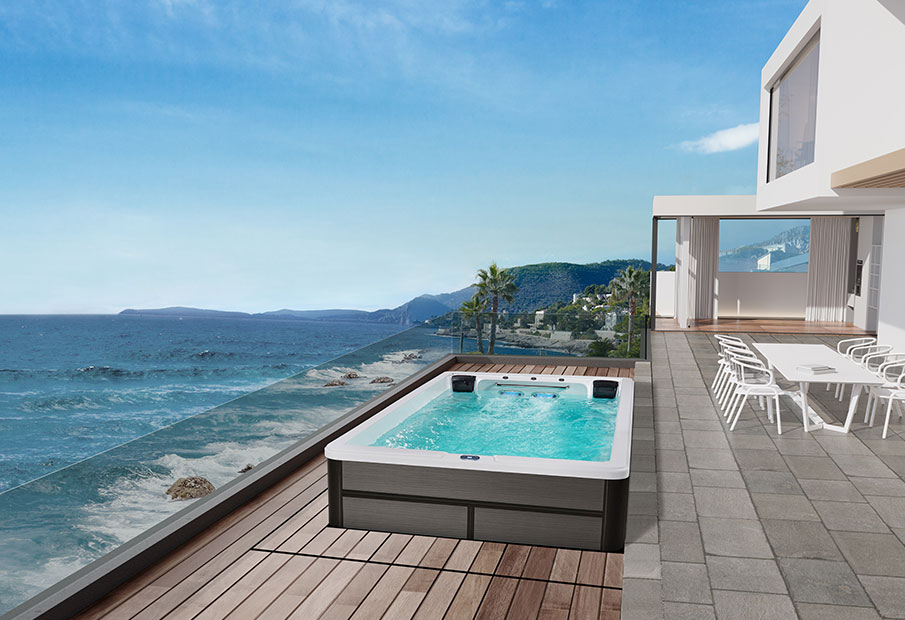
The Infinipool Fspa IP-001 is the ideal choice for anyone seeking a premium swimming experience at home or in a fitness facility.
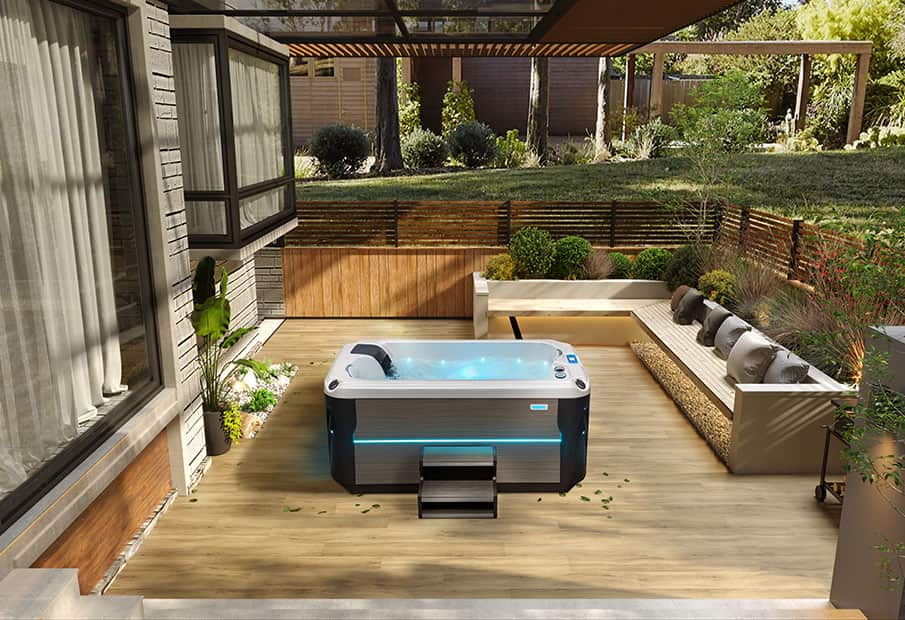
The Fspa BD-016Pro Hot Tub, a compact spa for up to 2 adults, offers a rejuvenating experience with an efficient control system, soothing massage features, consistent water temperature, modern amenities, advanced filtration, and suitability for indoor or outdoor placement.
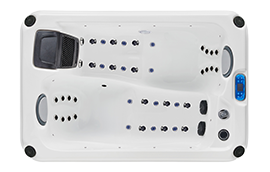
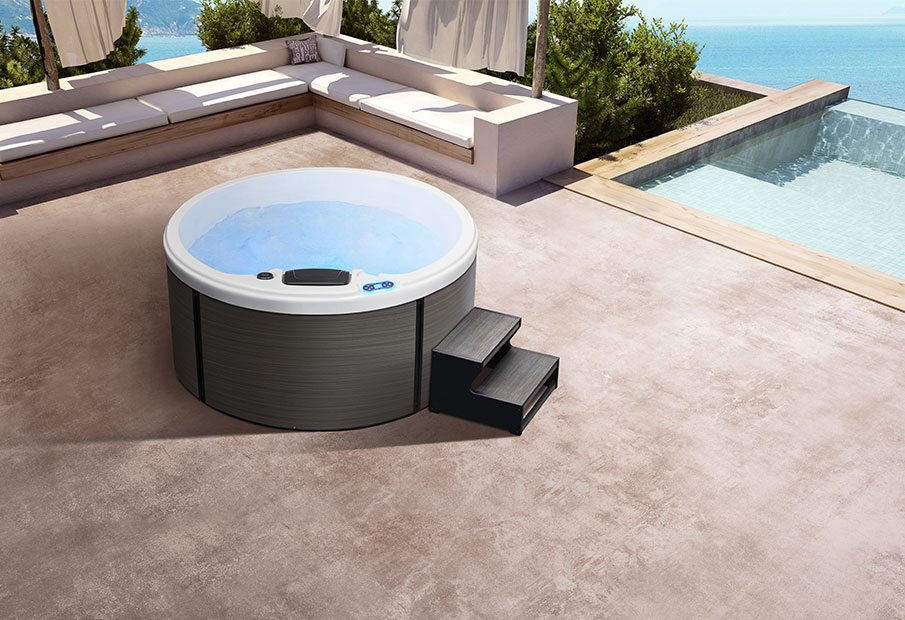
The Fspa BD-018 Hot Tub, designed for 2 adults with spacious dimensions, features a robust control system, 1.5kW massage pump, 0.35kW filter pump, 2kW heater, 14 customizable water jets, LED lighting, ozone sanitation, and a total power of 3.85kW, providing exceptional comfort and relaxation for a luxurious and rejuvenating soak.
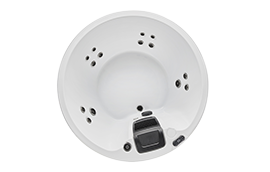
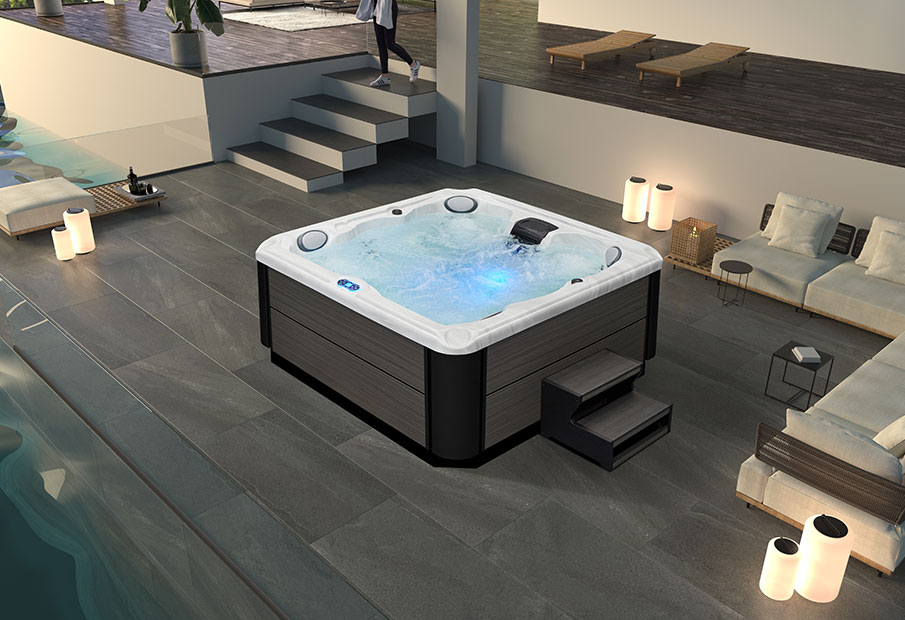
Fspa BD-001, a 2100x2100x900mm spa pool for 6 adults, features a comprehensive control system, powerful pumps, a 3kW heater, advanced filtration, LED lighting, and 31 jets, transforming any space into a luxurious, private oasis.
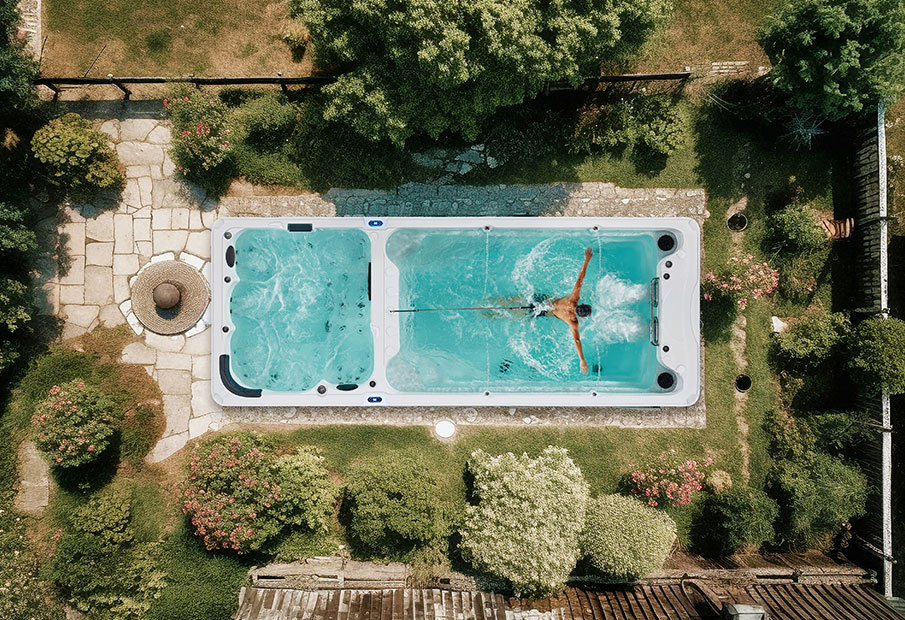
The Infinipool Fspa IP-007 enhances backyard experiences with exceptional performance, style, and a range of optional accessories.
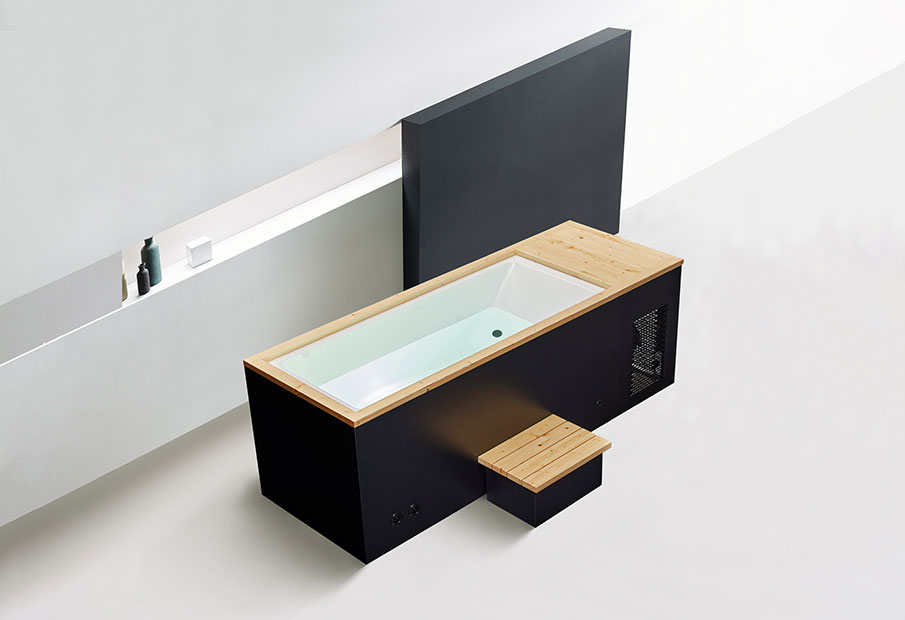
This ice-water bathtub is ideal for helping muscle recovery, adjust body temperature, improve mental health and enjoy a customized and convenient bathing experience.
PRODUCTS
INQUIRY
Thank you for your message!Our Chinese New Year holiday from 7th Feb to 28th Feb. Apologise to make your inconvenience so that responses may be delayed during this period. We'll back to you with regular service on 2th March .Thank you for understanding.


